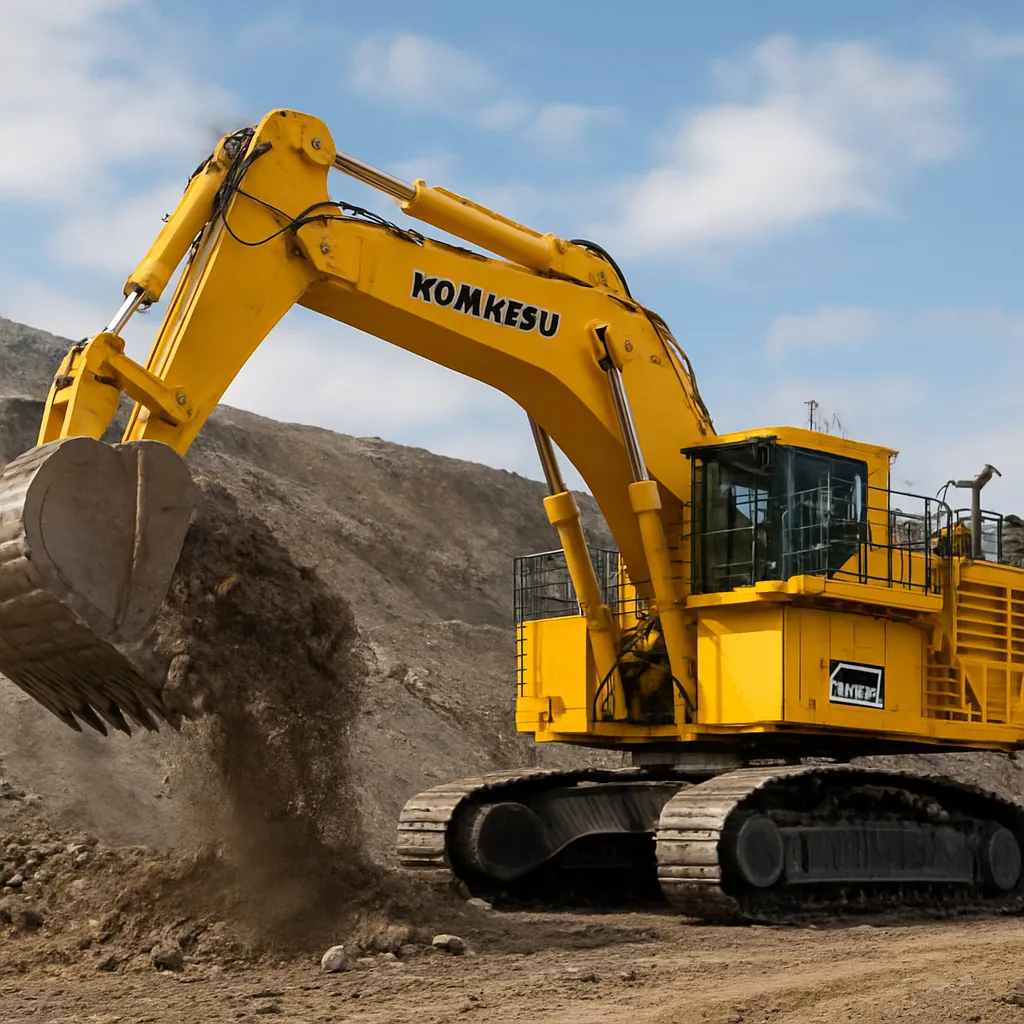
The Komatsu PC4000-11 is a heavy-duty, large-class hydraulic excavator designed primarily for high-production surface mining and large-scale earthmoving operations. Combining robust mechanical systems, advanced hydraulics, and operator-focused technologies, this machine is built to move vast volumes of material efficiently and reliably. The following article explores the machine’s design, typical applications, technical characteristics, operational considerations, and other noteworthy information that helps explain why the PC4000-11 is a widely respected piece of equipment in the mining industry.
Overview and design philosophy
Komatsu developed the PC4000-11 to serve mines and large civil engineering projects that demand continuous, high-capacity material handling. The model belongs to Komatsu’s line of large hydraulic excavators aimed at bulk material removal, stockpile management, and loading of ultra-class haul trucks.
The machine emphasizes a balance between raw power, serviceability, and operator comfort. Key design priorities include:
- High production capacity through large bucket volumes and powerful hydraulic systems.
- Durability with heavy-duty structures, reinforced booms and arms, and long-life components to withstand abrasive mining environments.
- Serviceability, featuring ground-level service points, modular components, and easy access to major systems to minimize downtime.
- Operator ergonomics and safety, including climate-controlled cabins, intuitive controls, and excellent visibility.
The PC4000-11 follows a modular approach where attachments and working tools can be matched to the customer’s needs—ranging from different bucket types to hydraulic and mechanical options. This adaptability makes the excavator suitable for both overburden removal and ore handling.
Technical characteristics and typical performance
Exact specifications can vary by market, configuration, and chosen option packages. The following figures are typical ranges and characteristics for the Komatsu PC4000-11 class machines and should be treated as representative rather than definitive for every unit.
- Operating weight: typically in the range of several hundred tonnes (this large-class excavator generally falls in the roughly 300–500 metric tonne class, depending on configuration).
- Bucket capacity: commonly configured with buckets in the approximate range of 20–50 cubic meters, depending on material density and application. Special buckets for coal, overburden, or heavy ore are available.
- Engine and power: high-output diesel powerpacks or powertrains are used to drive hydraulic systems; power ratings for machines in this class typically range from roughly 1,500 to over 3,000 kW depending on the exact configuration and market variant.
- Hydraulic system: high-flow, high-pressure hydraulic circuits with robust pumps and valves to deliver fast cycle times and strong digging forces.
- Digging force and breakout: designed for high breakout torque and lifting capacity to load large haul trucks efficiently; forces are tuned for severe-duty applications.
- Fuel consumption: fuel use varies with duty cycle, material hardness, and operator technique. Large mining hydraulic excavators consume significant amounts of fuel under full production conditions; Komatsu focuses on fuel-efficient hydraulic designs and engine management systems to reduce operating costs.
Manufacturers commonly provide multiple equipment options to optimize the excavator for specific payload targets, truck matches (payload/tonnage of haul trucks), and mine cycle requirements. Matching bucket size and digging profile to the fleet ensures optimum truck-shoveling productivity and minimizes idle or partial-load truck passes.
Primary applications and operational roles
The Komatsu PC4000-11 is used in a variety of heavy applications where large-volume material movement is required. Typical uses include:
- Open-pit mining: primary loader for loading haul trucks with overburden or ore.
- Strip mining: removing layers of surface material rapidly to expose target seams.
- Bulk material handling: stockpile reclaim, large-scale site preparation, and port or terminal loading when fitted with appropriate attachments.
- Civil megaprojects: dam and canal construction, major earthworks, and large excavation projects where high-cycle, high-volume excavation is required.
Within mining operations the PC4000-11 typically pairs with ultra-class haul trucks. Fleet planners select bucket sizes and hauler capacities to optimize shovel-truck match. For example, a shovel fitted with a very large bucket may be matched to large capacity haul trucks (100+ tonne payloads) to maximize the material moved per cycle.
Key systems and technological features
Komatsu equips its modern large excavators with a range of technologies to improve productivity, reduce operating costs, and simplify maintenance. Notable features commonly associated with the PC4000-11 and its class include:
Hydraulics and powertrain
- Advanced hydraulic pumps and valve control for precise, powerful movements.
- Hydraulic cooling systems designed for continuous heavy-duty operation and ambient temperature extremes.
- Optimized hydraulic circuits to reduce parasitic losses and improve fuel economy under load.
Engine management and emissions
- Modern engine control systems for fuel efficiency and compliance with regional emissions standards.
- Options for selective catalytic reduction (SCR), particulate trapping, and other emissions technologies to meet local regulations.
Telematics and fleet management (Komatsu Komtrax and equivalents)
- Remote monitoring systems that transmit machine hours, fuel consumption, location, and fault codes to fleet managers.
- Data-driven maintenance scheduling and productivity analytics to maximize uptime and monitor component life.
Operator systems and safety
- Comfortable, climate-controlled cabs with ergonomic controls and multi-function joysticks for long shifts.
- High-visibility layouts, cameras, and sensors to maintain a safe working environment around large trucks and personnel.
- Automatic or semi-automatic control aids for repetitive movements to reduce operator fatigue and increase consistency.
Maintenance, reliability and lifecycle management
For large mining excavators like the PC4000-11, lifecycle costs and availability typically matter more to owners than initial purchase price. Komatsu and major dealers emphasize integrated service offerings including preventive maintenance programs, genuine parts supply, and condition monitoring. Key maintenance and reliability considerations include:
- Wear components: buckets, teeth, side cutters, boom and arm pins, and undercarriage components wear rapidly in abrasive conditions and require regular inspection and replacement.
- Hydraulic component life: hydraulic hoses, pumps, and valves must be monitored for leaks, contamination, and wear to avoid catastrophic failures.
- Engine and emissions systems: regular servicing of fuel, air, and cooling systems ensures consistent performance and compliance with emissions rules.
- Scheduled downtime management: proactive planning for major inspections, component swaps, and rebuilds reduces unplanned outages and keeps production targets on track.
Fleet managers increasingly adopt condition-based maintenance, using telematics and sensor data to replace parts on predicted life rather than fixed intervals. This approach reduces spare parts inventory and can lower total cost of ownership by avoiding premature or late replacements.
Safety and operator considerations
Safety is paramount around large excavators. Komatsu emphasizes passive and active safety features designed to protect operators and ground crews, such as:
- High-visibility cab designs, elevated cab positions, and wide windows.
- Integrated camera systems and proximity detection to warn of personnel or equipment in danger zones.
- Lockout and isolation systems for safe servicing of high-energy systems.
- Operator training programs and simulation tools to improve competence in machine handling and emergency procedures.
Because of the scale of operations and potential hazards, companies operating the PC4000-11 often require strict site procedures, routine safety briefings, and clear communication protocols when shovels and haul trucks are working in proximity.
Productivity, matching and fleet optimization
Achieving high productivity with a Komatsu PC4000-11 depends on selecting the right bucket size, matching haul trucks, and optimizing cycle times. Some practical considerations include:
- Shovel-truck match: Ideally, the bucket is sized so that each shovel pass loads a truck to its intended payload target without excessive underfill or spillage. Overfilling can cause safety and handling issues, while underfilling wastes shovel capacity.
- Crew technique and training: experienced operators reduce cycle times and increase truck fill factors. Training and apprenticeship systems for operators pay dividends in fuel savings and reduced component wear.
- Benchmarking: Operators commonly use production metrics (tonnes per hour, shovel availability, and cost per tonne) to compare shifts and machines and to identify bottlenecks.
- Support systems: Fast and reliable maintenance turnaround, efficient truck haul road design, and coordinated dispatching systems all influence shovel productivity.
Environmental and economic aspects
Large excavators are sizeable contributors to site fuel consumption and emissions. Komatsu addresses environmental concerns through a combination of engineering and operational tools:
- Fuel-efficient hydraulics and engine tuning that aim to reduce liters per tonne moved under typical duty cycles.
- Emission control systems where required by local regulations, including aftertreatment technologies.
- Idle management and auto-shutdown features that minimize fuel waste during non-productive time.
- Lifecycle planning and remanufacturing programs to extend component life and reduce waste through parts remanufacture and recycling.
From an economic perspective, the highest value from a PC4000-11 comes in high-utilization environments where the machine operates long shifts at consistent duty cycles. In such settings, lower unit costs per tonne and predictable maintenance schedules help justify the capital and operating expenditures.
Comparisons and selection considerations
When selecting a large hydraulic excavator, buyers compare machines on metrics such as hourly production, fuel consumption per tonne, availability, parts support, and total cost of ownership. Factors that typically influence the decision to choose a Komatsu PC4000-11 include:
- Proven reliability in similar mining environments and availability of local service support.
- Compatibility with existing truck fleets and site logistics.
- Telematics and fleet management solutions for predictive maintenance and operational visibility.
- Resale value and the manufacturer’s global parts network.
Some operators may prefer rope shovels or electric shovels for extremely high-cycling open-pit loading depending on energy strategies and material characteristics; however, hydraulic mining excavators such as the PC4000-11 retain advantages in flexibility, mobility, and attachment options.
Upgrades, attachments and customization
One strength of the PC4000-11 platform is the ability to tailor the machine for specific tasks. Common options and upgrades include:
- Different bucket styles and capacities (coal, rock, ore, or overburden buckets).
- Wear packages and hardened materials for high-abrasion duties.
- Enhanced hydraulic packages for faster cycle times or higher lift loads.
- Cabin comfort packages, advanced monitoring, and integrated safety systems.
These options allow mine operators to tune the machine for target productivity and operating life, and to adapt the excavator as mine plans evolve.
Real-world performance and field experience
In practice, the PC4000-11’s performance depends on application specifics. Fleet operators report that key drivers of success are proper machine selection and ongoing optimization: matching bucket size to haul truck payload, ensuring competent operator staffing, and applying predictive maintenance. Telemetry data from Komatsu’s systems (where implemented) often reveals actionable improvements—reduced idling time, improved load cycles, and predictive replacement timing for major wear components.
Because mines vary widely in geology, climate and operational practices, manufacturers and dealers typically work closely with customers to supply field trials, adapt bucket geometry, and refine control settings before rolling machines into full production service.
Conclusion and final considerations
The Komatsu PC4000-11 is a heavy-duty hydraulic excavator built for demanding mining and earthmoving applications. Its strengths lie in high-volume material handling capability, modular configuration options, and integrated technologies for monitoring and maintenance. While exact technical figures vary according to customer specifications, the machine is positioned to offer strong productivity in operations that require consistent, large-scale excavation. Effective deployment demands careful attention to shovel-truck matching, operator training, and a robust maintenance regime to ensure that the PC4000-11 delivers optimal performance and cost-efficiency over its operating life.


)
)