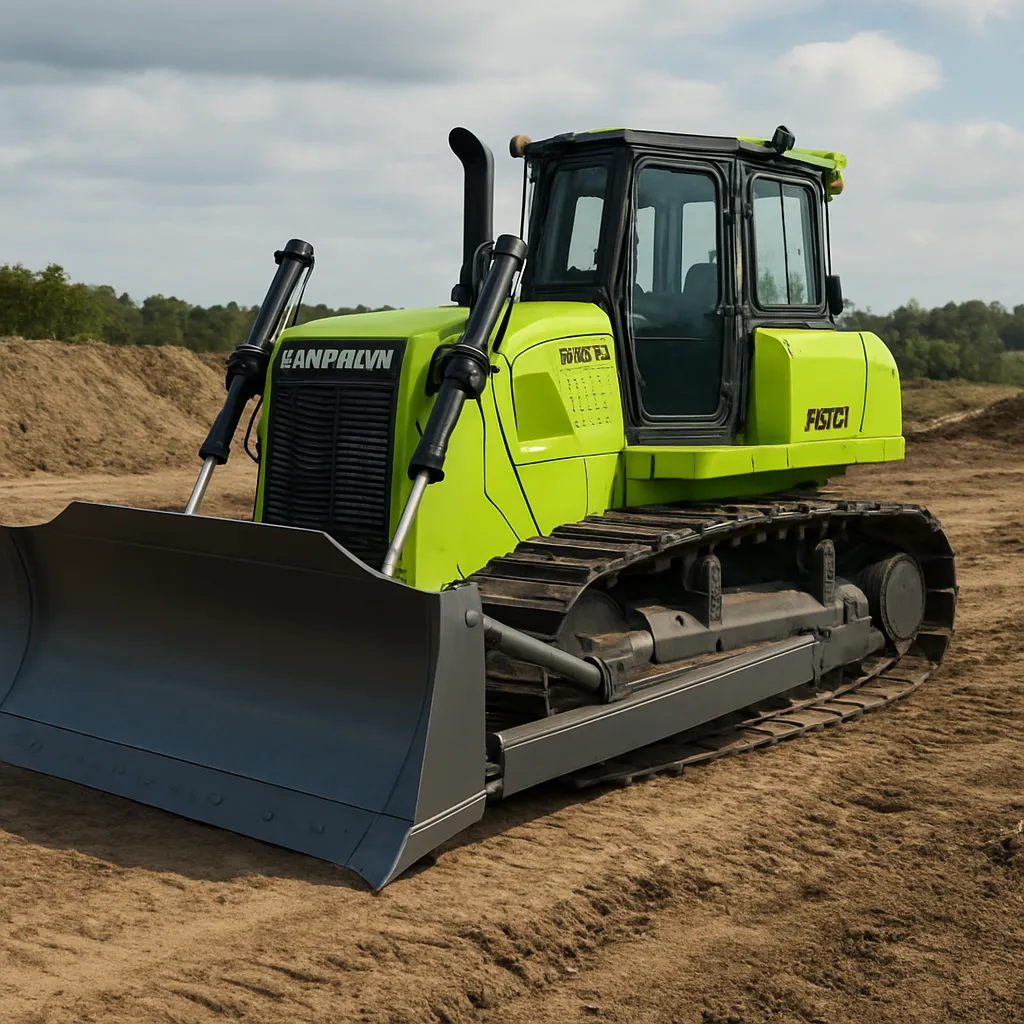
The Zoomlion ZD180 is a medium-class crawler dozer designed for earthmoving, site preparation and heavy-duty pushing tasks. Built by Zoomlion Heavy Industry — one of China’s prominent manufacturers of construction machinery — the ZD180 combines robust undercarriage components, a purpose-built blade and an operator-focused cab to deliver consistent performance across a variety of job sites. Below you will find an in-depth look at the machine’s typical characteristics, practical applications, operational considerations and other useful information for owners, operators and fleet managers.
Overview and positioning
The Zoomlion ZD180 sits in the mid-size category of crawler dozers. It is intended to offer a balance between mobility and power for contractors who need more capability than a compact dozer but do not require a large, heavy-duty machine. Typical uses include road construction, site grading, pipeline right-of-way preparation, land reclamation, quarry work and general civil engineering tasks.
Zoomlion markets the ZD180 as a reliable and cost-effective choice for customers seeking good fuel economy, easy serviceability and straightforward hydraulics. The machine’s configuration supports multiple blade types and optional attachments such as rippers, making it a flexible tool across seasons and projects. Its popularity grows among mid-sized contractors, municipal fleets and rental companies that prioritize uptime and low operating costs.
Typical technical specification (approximate)
Specifications may vary by market, year and optional configuration. The values below are typical figures for a ZD180-class dozer; always consult the manufacturer’s datasheet or an authorized dealer for precise numbers for a specific serial/model.
- Operating weight: approximately 17,000–19,000 kg (17–19 tonnes)
- Engine power: around 130–150 kW (175–200 hp) — commonly marketed as a “180” class in horsepower terms
- Blade capacity: 4.0–5.2 m3 depending on blade type (straight, semi-U, universal)
- Track gauge and undercarriage: heavy-duty track frame with wide-gauge options; track shoe widths typically from 500 to 700 mm
- Travel speed: around 10–12 km/h maximum forward speed in high gear
- Fuel tank capacity: typically in the 300–450 L range (model-dependent)
- Hydraulic system: closed-center or open-center hydraulic circuits for blade and ripper control; pump flow sized for responsive blade operation
- Optional equipment: multi-shank ripper, single-shank ripper, winch, canopy or enclosed ROPS/FOPS cab, air-conditioning, GPS-ready mounting points
- Emission standard: configured to meet regional tiers (e.g., Stage IIIA/Stage III B / Tier 2/3 equivalents) depending on engine selected and local regulations
Primary applications and industries
The ZD180’s combination of weight, traction and blade geometry makes it well-suited to several core industries. Use cases include:
- Road and highway construction: fine grading of subgrade, embankment shaping and shoulder formation.
- Site preparation and earthworks: clearing, spreading fill, creating level pads for buildings and infrastructure.
- Pipeline and utility work: right-of-way clearing, trench backfilling and access track establishment.
- Quarry and aggregate operations: stockpile management, bench stripping and access ramp maintenance.
- Land reclamation and forestry: heavy push work for reclaiming wetlands, logging road creation and windrow removal.
- Mining and surface coal work (support functions): smaller mining sites often use medium dozers like the ZD180 for support tasks—road upkeep, waste spreading and material handling.
Because of its versatility, the ZD180 commonly finds work on municipal and government contracts where dependable performance and ease of service are prioritized.
Design features and engineering highlights
The design of the ZD180 emphasizes robustness and maintainability. Key engineering themes include:
- Undercarriage durability: heavy rollers, sealed track links and robust final drives to withstand abrasive and wet conditions.
- Blade versatility: interchangeable blade options (straight, semi-U, universal) enable the machine to handle both spreading and carry tasks efficiently.
- Engine selection: medium-displacement diesel engines tuned for torque at low rpm — beneficial for pushing loads and reducing stalling under heavy strain.
- Simplified hydraulic layout: service points grouped for easy access; valves and pumps sized to balance speed, power and uptime.
- Cab ergonomics (optional enclosed cab): tilt/telescopic steering, adjustable seat, clear sight-lines to blade and ripper, and controls arranged for intuitive use.
- Serviceability: large access panels, centralized grease points and modular components designed to shorten planned maintenance windows.
Zoomlion often emphasizes modularity: suppliers and dealers can fit different engines or attachment packages to meet local emission rules and customer preferences.
Operational performance and productivity
Productivity on a dozer is determined by the interaction of engine torque, traction, blade geometry, operator skill and site conditions. The ZD180 typically performs well where medium-sized pushes are required without the higher fuel burn and transport costs of heavy class machines. Specific performance attributes include:
- Good push capability: the combination of operating weight and engine torque enables effective pushing and spreading of soil, aggregate and reclamation materials.
- Fuel efficiency: medium-class engines and optimized hydraulic systems aim to lower specific fuel consumption compared to older or oversized models.
- Cycle times: responsive hydraulics and adequate travel speeds reduce cycle times for repetitive operations like dozing windrows or leveling pads.
- Versatility with attachments: adding a ripper for breaking compacted soil or rock increases the machine’s utility across seasons and projects.
Quantitative productivity figures are site-specific. As a rough reference, a mid-class dozer such as the ZD180 might move between several hundred to a few thousand cubic meters of material per day depending on site layout, soil type, operator efficiency and cycle logistics. For accurate planning, contractors should run production estimates using their measured cycle times and machine fleet mix.
Operator comfort, safety and controls
Modern mid-size dozers like the ZD180 place increased emphasis on operator comfort because comfort correlates with productivity and safety. Common features intended to support operators include:
- Enclosed ROPS/FOPS cab: optional on many markets, providing climate control, reduced noise and better protection.
- Visibility: large glass panels and elevated seating for clear sight-lines to the blade and ripper.
- Intuitive controls: hydraulic pilot controls or mechanical levers placed for minimal operator fatigue.
- Safety systems: rollover protection, emergency shutoffs, backup alarms and optional camera systems for blind-spot mitigation.
Zoomlion also offers training material and documentation to help operators learn efficient blade techniques and recommended daily checks — steps that reduce downtime and extend component life.
Maintenance, service intervals and lifecycle costs
Routine maintenance is a significant factor in the lifecycle cost of any dozer. The ZD180 is engineered for straightforward maintenance, with design choices that reduce time spent on common tasks:
- Centralized service points: grouped filters, dipsticks and grease nipples allow rapid daily inspections and servicing.
- Scheduled intervals: standard diesel service intervals (oil/filter changes, hydraulic fluid checks) are in line with industry norms; many operators perform major checks at 500, 1,000 and 2,000-hour milestones depending on application.
- Undercarriage management: track tension, shoe wear and roller conditions are the dominant factors in maintenance cost; proactive monitoring and regular track adjustments extend component life.
- Parts availability: Zoomlion’s dealer network in many regions helps secure common replacement parts; rental fleets should plan for lead times on non-standard items.
Operators who follow recommended lubrication, filter and inspection schedules typically achieve lower unscheduled downtime and improved resale value. Fuel economy and maintenance intervals together drive the total cost of ownership; the ZD180 is often selected by operators who prioritize a balanced lifecycle cost vs. initial purchase price.
Market presence, resale and alternatives
Zoomlion has expanded its global footprint in recent years. The company supplies machines through regional dealers, and models like the ZD180 are commonly found in Asia, Africa, the Middle East, and increasingly in Europe and the Americas through distributors. Market-specific configurations and dealer support levels should be checked with local sales organizations.
Resale values for mid-class dozers reflect hours of use, service history and condition of the undercarriage. Well-maintained ZD180s with complete service records hold reasonable resale value in regional markets where Zoomlion is established. For buyers comparing alternatives, competitor models from global manufacturers in the 16–22 tonne class are natural benchmarks; buyers should compare factors such as dealer support, parts lead time, fuel consumption, cab comfort and undercarriage design.
Environmental and regulatory considerations
Engines used in the ZD180 family are offered to meet different emissions standards depending on market needs. For regions with stricter emissions rules, the machine can be equipped with engines featuring after-treatment systems (e.g., DOC, DPF, SCR) to comply with Tier/Stage regulations. Operators should verify compliance before purchase to ensure machines meet local environmental requirements.
Operational best practices for reducing environmental footprint include using appropriate idle-management strategies, preventing hydraulic leaks through proactive maintenance, and implementing fuel management systems at fleet level.
Purchasing and fleet-integration advice
If you are considering acquiring a ZD180, factor the following into procurement and fleet planning:
- Define duty cycle: match machine configuration (blade type, undercarriage width, ripper) to the majority of expected tasks to optimize performance and economy.
- Dealer and parts network: evaluate warranty terms, on-site support options and parts availability in your region.
- Transport and logistics: mid-class dozers usually require low-bed trailers for road transport; check machine width and weight against local transport rules.
- Operator training: invest in operator training to reduce fuel use, extend component lifetime and increase overall productivity.
- Life-cycle cost analysis: consider fuel burn, scheduled maintenance, undercarriage wear rates and resale price when comparing total cost of ownership across brands.
Conclusion
The Zoomlion ZD180 is a capable mid-size dozer that suits a wide range of medium-duty earthmoving applications. Its balanced combination of power, weight and serviceability makes it appealing to contractors who require a dependable machine without the higher operating costs of larger dozers. While exact specifications can vary by configuration and market, the ZD180 typically offers a competitive package of blade capacity, engine power and undercarriage durability. For procurement decisions, always confirm the precise model specifications from the dealer, evaluate total lifecycle costs and ensure local support for parts and service.
Key words emphasized: Zoomlion, ZD180, dozer, engine, blade, operating weight, tracks, ripper, hydraulics, cab.


)
)