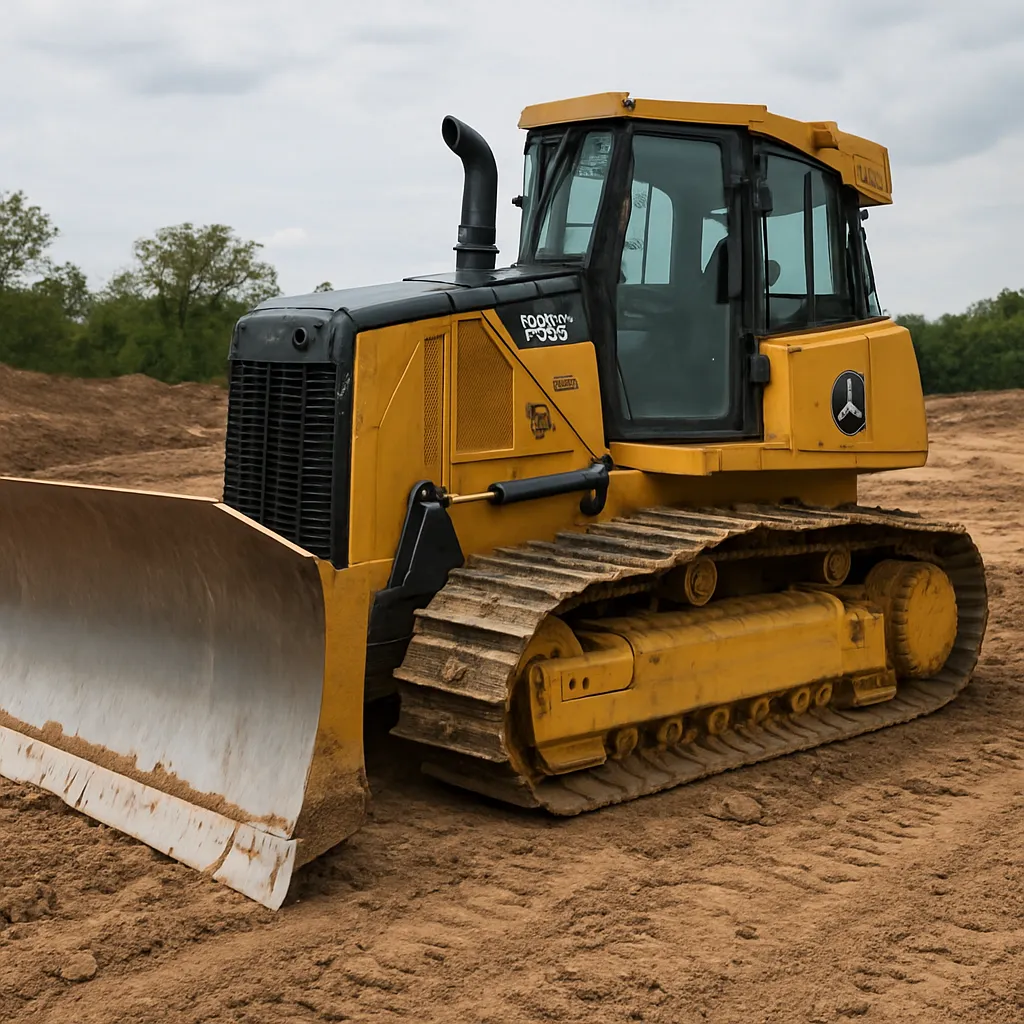
The John Deere 750K is a versatile and robust crawler dozer designed to deliver reliable performance across a wide range of earthmoving and land management tasks. Built for contractors, construction companies, mining support, and agricultural or forestry operations, the 750K combines durable mechanical systems with features that improve operator comfort and machine efficiency. This article explores the 750K’s design, typical applications, technical characteristics, operational considerations, and practical tips for maximizing uptime and productivity.
Design and key features
The John Deere 750K is engineered to be a workhorse in medium-to-heavy dozing applications. Its architecture focuses on strength, ease of service, and adaptability. Several elements define the 750K’s capabilities and make it a popular choice in its class:
- Tracked undercarriage designed for traction and stability on soft or uneven ground.
- Powertrain optimized for controllable power delivery and efficient torque multiplication during heavy push work.
- Blade options including straight (S-blade), universal (U-blade), and semi-U configurations to suit different material handling needs.
- Operator station with ergonomic controls, good visibility, and climate control for improved comfort on long shifts.
- Serviceability features such as grouped service points and easy-access panels to reduce downtime for maintenance.
In addition to these mechanical strengths, many 750K machines are equipped with advanced technology options—such as machine monitoring systems, GPS-ready hardware, and automated blade control—to help operators achieve precise grading and improved cycle times. These technologies can significantly enhance accuracy in site preparation and grading work, while also contributing to safer operations by reducing the need for manual stake-outs.
Where the 750K is applied
The John Deere 750K serves a broad spectrum of industries. Its combination of power, maneuverability, and durability makes it suitable for:
- Construction: site preparation, rough grading, trench backfilling, and road building.
- Quarrying and mining support: pushing stockpiles, assisting in haul road maintenance, and clearing materials around crushers and hoppers.
- Agriculture and land reclamation: clearing land, building terraces, and preparing large planting beds.
- Forestry: road building, firebreak creation, and clearing logging debris when fitted with appropriate undercarriage protection and attachments.
- Municipal and utility work: utility corridor preparation, snow clearing (with specialized blades), and site cleanup.
Across these uses, the 750K’s value often comes not just from raw power but from the machine’s adaptability: blade choice and attachment compatibility allow a single unit to perform a variety of tasks. For contractors who need a dozer that transitions between heavy pushing and finer grading, the 750K often hits a desirable balance.
Typical specifications and performance
Specification details can vary by model year, regional configuration, and optional equipment. Below are representative figures and ranges that reflect the 750K class and common factory configurations. For exact numbers, consult the machine’s plate or manufacturer documentation.
- Operating weight: typically in the range of 18,000 to 26,000 kg (approximately 40,000 to 57,000 lb), depending on undercarriage, blade, and counterweight options.
- Engine power: net power commonly falls around 150 to 240 kW (200 to 320 hp), depending on emissions package and tuning.
- Blade capacity: varies with blade type—S-blades for precision grading have smaller capacity, while U-blades move larger volumes; capacities typically measured in cubic meters or cubic yards of material per pass.
- Fuel capacity: generally between 300 and 600 liters (80–160 gallons), allowing for extended operating windows before refueling.
- Track gauge and shoe width: multiple undercarriage options support standard, wide (LGP—Low Ground Pressure), and heavy-duty tracks to suit soft soils or rockier terrain.
- Travel speed: designed for controlled pushing rather than high speed; travel speeds vary by gear selection and load but are tailored to maximize tractive effort.
Operationally, the 750K’s performance is measured not only in horsepower and weight but in implement efficiency. Real-world productivity statistics depend heavily on material type, blade selection, operator skill, and site conditions. For example, when moving soft fill with a U-blade, cycle volumes per hour can be significantly higher than when grading hard, compacted clay with an S-blade. Contractors often track liters of fuel consumed per hour and cubic meters moved per hour to benchmark performance and plan projects.
Engine, powertrain and undercarriage specifics
The 750K’s mechanical heart is its diesel engine, which is tuned to supply steady torque at low engine speeds—ideal for pushing heavy loads. The exact engine family can vary, but John Deere typically employs robust, turbocharged diesel units that meet current emissions standards while delivering dependable performance.
Power delivery and transmission
The dozer’s transmission and final drives are built to convert engine power into maximum tractive effort. The powertrain design emphasizes:
- High torque at low rpm for better dozing and startability on slopes.
- Durable planetary final drives to withstand shock loading and abrasive environments.
- Simple operator controls for forward and reverse flow, enabling precise machine positioning.
Undercarriage and track options
Undercarriage choices can profoundly affect machine performance:
- Standard tracks offer a balance between wear life and flotation.
- LGP (Low Ground Pressure) configurations use wider shoes to reduce ground bearing pressure for softer surfaces.
- Heavy-duty rock undercarriages add thicker shoes, reinforced track frames, and rock guards to protect components in extremely abrasive environments.
Regular inspection of track tension, rollers, sprockets, and shoes is critical. Undercarriage wear is one of the major maintenance cost drivers for tracked machines; preventive practices can extend component life and reduce total ownership costs.
Operator comfort and safety
John Deere pays attention to the operator environment because comfort and ergonomics translate to higher productivity and fewer errors. The 750K commonly features:
- Spacious cab with all-around visibility to the blade, tracks, and surrounding work area.
- Climate control for heating and air conditioning to keep operators effective in different climates.
- Adjustable seating, low-effort controls, and ergonomically placed joysticks or levers.
- Optional rear- and side-view cameras and visibility packages for enhanced situational awareness.
On safety, the 750K typically includes rollover protective structure (ROPS) as standard, along with safety decals, lockout provisions for maintenance, and systems to monitor engine and hydraulic health. Proper training—both on machine controls and on safe dozing techniques—remains a primary factor in preventing incidents and avoiding excessive machine wear.
Maintenance, diagnostics and uptime
One of the 750K’s important advantages is attention to serviceability. Design features intended to reduce downtime include:
- Grouped service points for quick access to daily checks (engine oil, coolant, hydraulic fluid).
- Removable panels and walkways for safer access to major components.
- Onboard diagnostic systems and telematics options that transmit fault codes and operating data to fleet managers.
Telematics can be particularly valuable: when a machine transmits hour meters, fault codes, fuel consumption, and location data, fleet managers can plan preventive maintenance, reduce fuel-wasting idle time, and respond quickly to developing issues. Scheduled maintenance intervals are typically driven by hours of operation—daily checks, 250-hour service items, 500-hour intervals, and heavier inspections at 1,000 hours and beyond.
Attachments and customization
Flexibility is a hallmark of the 750K: the machine can be outfitted with a variety of attachments and options to extend its utility.
- Blades: S-blade, U-blade, semi-U blade, and angle blades for different material handling and grading tasks.
- Rippers: single-shank or multi-shank rippers for breaking compacted soils or rock strata.
- Winches: for forestry or heavy pull applications where assisting other machines or recovering stuck equipment is required.
- Specialized undercarriage guards and sealing packages for harsh, abrasive environments.
- Precision grade control systems and GPS retrofit kits for automated grading workflows.
Choosing the right combination of attachments and options is essential to match machine capability to the intended application. For instance, adding a ripper can increase productivity in hard soil but will add weight and possibly change fuel consumption patterns.
Operational tips to maximize productivity
Experienced operators and fleet managers follow a few principles to get the most from a 750K:
- Match blade type to job—don’t force a precision S-blade to move high-volume material when a U-blade is more efficient.
- Monitor fuel burn and moved material to establish realistic benchmarks for planning and bidding.
- Keep an eye on undercarriage health—timely adjustments of track tension and replacement of worn parts can prevent cascading failures.
- Use telematics and onboard diagnostics to detect emerging issues early and optimize maintenance scheduling.
- Provide regular operator training on efficient dozing techniques and safe habits.
Case uses and real-world performance
Across real jobsites, the 750K often performs as a primary dozer on medium-sized projects. Typical scenarios include:
- Road base spreading: the 750K can maintain consistent grades and widths when paired with a skilled operator and, optionally, GPS guidance.
- Stockpile push/push-and-dump operations at quarries and recycling facilities: U-blade-equipped 750Ks move large volumes quickly.
- Site leveling for building pads: fine-feathering with an S-blade or a semi-U blade is common for finish work.
- Emergency response and land clearing: fitted with heavy undercarriage and protective screens, these dozers are used for bulldozing debris and establishing access routes.
Production numbers can vary, but many contractors report that a well-maintained 750K with the right blade and operator can achieve several hundred cubic meters (or several hundred cubic yards) moved per hour in favorable conditions. These figures will drop in harder ground or when working around obstacles.
Costs of ownership and resale considerations
Initial acquisition cost is only one component of ownership. Other considerations include fuel consumption, undercarriage replacement frequency, scheduled maintenance, and resale value. John Deere machines frequently retain decent resale value because of brand recognition, parts availability, and dealer support. To preserve value:
- Follow manufacturer service schedules and retain service records.
- Use genuine parts where possible for major repairs.
- Undercarriage preservation through proper tensioning and operation on suitable surfaces when feasible.
Fleet managers often calculate total cost of ownership (TCO) over expected hours of operation; factors such as fuel price, average hourly production, and downtime costs feed into this analysis. Adding telematics and condition-monitoring systems can reduce unexpected failures and lower TCO over the machine’s life.
Environmental and regulatory aspects
Like all modern diesel-powered equipment, the 750K must meet emissions regulations applicable in the region where it is operated. This often involves exhaust aftertreatment systems such as selective catalytic reduction (SCR) and diesel particulate filters (DPF). Compliance affects maintenance practices—for example, ensuring the DPF regeneration process can complete and using the correct low-ash engine oils to protect the emission control systems.
Operators and owners should also plan for fuel and fluid handling to prevent spills, and consider noise mitigation practices if working near sensitive communities. Proper site planning and adhering to local environmental regulations are essential when operating heavy machinery.
Conclusion
The John Deere 750K is a capable, flexible dozer aimed at customers who need a balance of power, maneuverability, and serviceability in medium-to-heavy dozing tasks. Its strengths lie in rugged mechanical design, a wide array of blade and undercarriage options, and the availability of modern technologies that improve efficiency and ease of operation. While exact performance and costs depend on configuration, operator skill, and job conditions, the 750K often delivers strong productivity in construction, quarry, forestry, and agricultural roles. Proper selection of attachments, disciplined maintenance, and effective operator training are the keys to unlocking the machine’s full potential and ensuring a favorable total cost of ownership.
John Deere’s 750K remains a trusted choice for contractors who require a durable, adaptable dozer with a proven track record of performance. Whether focusing on raw pushing power, precise grading, or specialized site work, the right configuration of the 750K can be an essential asset on demanding sites.


)
)