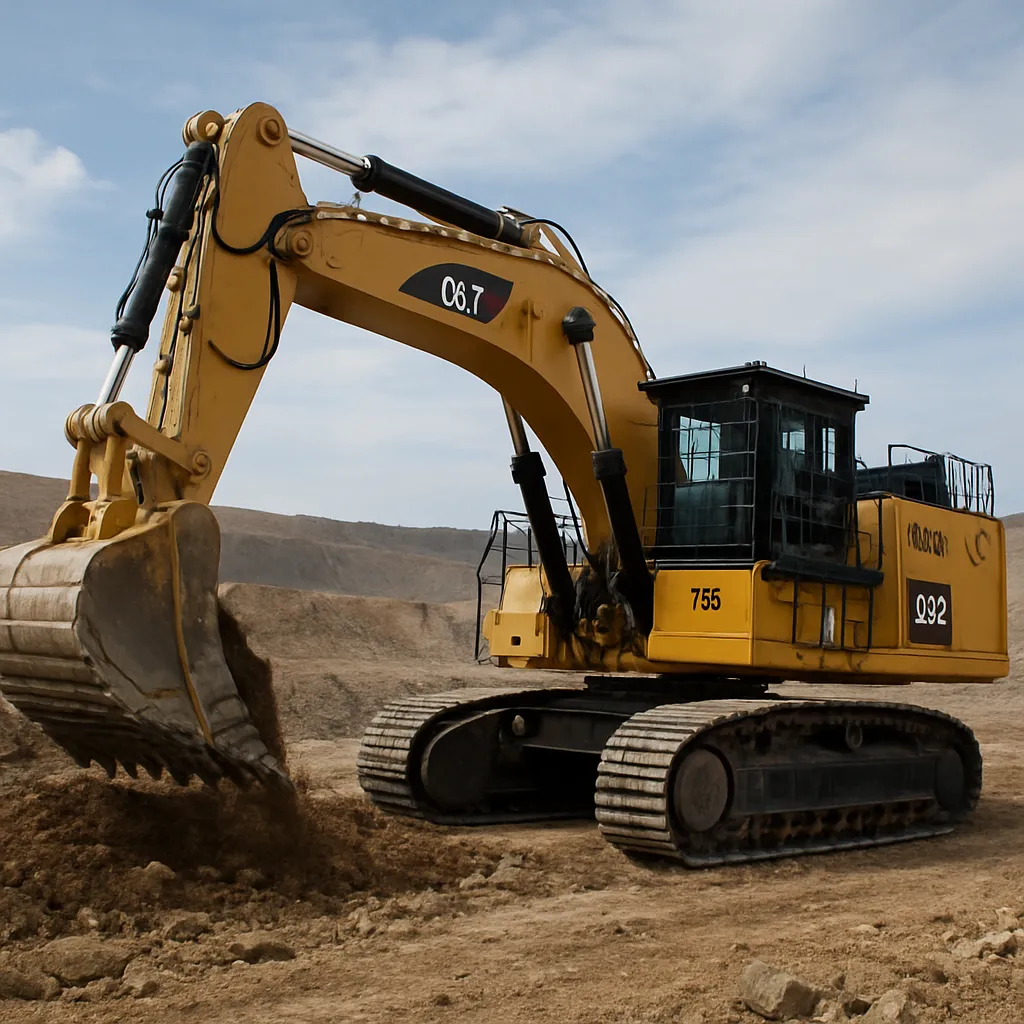
The Caterpillar 6060 is a heavyweight in the world of surface mining equipment — a hydraulic mining excavator designed to move huge volumes of material efficiently and reliably. Built for high production in open-pit mines, the 6060 combines robust structural design, powerful hydraulics and large-capacity buckets to handle overburden removal, ore loading and other heavy-duty earthmoving tasks. This article examines the machine’s role in modern mining operations, highlights technical and operational features, discusses economic and environmental considerations, and offers practical information for operators and fleet managers.
Overview and design philosophy
The Caterpillar 6060 belongs to the class of large hydraulic mining shovels and is engineered to serve high-tonnage surface mining applications. Its design focuses on maximizing productivity per operating hour while minimizing downtime and lifecycle cost. Key aspects of the design include a rugged undercarriage and swing frame, reinforced structures around boom and stick connections, and a hydraulic system sized to deliver sustained power during heavy digging cycles.
Unlike smaller construction excavators, the 6060 is purpose-built for continuous, high-output cycles typical of coal, copper, iron ore and other large open-pit operations. The machine is commonly used in combination with haul trucks and conveyor systems in pit-to-plant material flows.
Typical technical characteristics (approximate values)
Manufacturers publish detailed specifications that vary by configuration (stick/boom options, rope shovel vs hydraulic face shovel variants, bucket types, and powertrain choices). The following figures are representative ranges for machines in the same production class as the Caterpillar 6060; they should be treated as approximate and verified with manufacturer documentation for procurement or engineering work.
- Operating weight: approximately 550–750 metric tonnes (600–825 short tons)
- Bucket capacity: typical buckets range from 25 to 45 m3 (33–59 yd3) depending on material density and material retention design
- Engine/hydraulic power: combined installed power in the range of 1,800–3,000 kW (2,400–4,000 hp) depending on electrical/hydraulic configuration
- Bucket payload per pass: commonly 30–60 tonnes of material per cycle, depending on bucket size and payload density
- Digging reach and depth: designed for high-reach face and benching operations; boom and stick combinations can be optimized for various bench heights
- Travel speed: relatively low — designed for stationary digging with limited relocation speed on crawler tracks
- Hydraulic systems: high-flow axial piston pumps and large-capacity hydraulic reservoirs designed for sustained heavy-duty cycles
These values place the 6060 among the very large class of hydraulic mining excavators intended for heavy overburden removal and ore loading. Actual machine mass, power and capacities differ by region and configuration, and Caterpillar offers factory and dealer customization for specific mine requirements.
Primary applications and jobsite roles
The Caterpillar 6060 is tailored for a handful of demanding duties within large-scale surface mining and quarrying:
- Overburden stripping: Removing waste rock and soil to expose ore bodies in open-pit mines. The 6060’s large bucket and high cycle efficiency reduce the number of machine-hours required for waste removal.
- Ore loading: Direct loading of large haul trucks (including 150+ tonne class trucks) or feed into primary mobile crushing and conveyor systems.
- Bench and face excavation: Working high walls where reach and penetration are critical; specialized linkages and buckets allow effective benching operations.
- Primary handling of soft-to-medium rock: When matched with the right bucket, the 6060 can handle a wide range of material densities, from friable overburden to medium-strength ore.
Performance, productivity and fleet integration
Performance of a machine like the 6060 should be assessed at the system level — how it interacts with haul trucks, benches, and cycle plans. Key productivity determinants include bucket fill factor, cycle time, truck spotting efficiency and operator skill. In typical deployments, performance objectives include maximizing tonnes moved per hour and minimizing shovel idle time.
Considerations for optimizing productivity:
- Matching bucket size to truck payload — optimal payload matching reduces truck underutilization and prevents shovel overloading.
- Cycle time optimization — tighter swing angles, efficient crowd/hoist sequencing and planned truck queue management reduce wasted motion.
- Operator training and automation — modern systems offer advanced controls, collision avoidance, and semi-autonomous functions that increase consistency and safety while reducing excessive fuel consumption.
When properly matched to a fleet of haul trucks, a 6060 can serve as a central high-throughput loading asset, often paired with trucks in the 150–400 tonne class depending on bucket and shovel configuration.
Fuel consumption and efficiency
Fuel consumption for a machine of this size is substantial and varies with digging intensity, cycle times and auxiliary loads (electrical pumps, winches, air conditioning). Typical full-shift fuel burn rates for large hydraulic shovels can range from several hundred to over a thousand liters per shift in heavy operations. Increasingly, operators focus on:
- Fuel efficiency through optimized hydraulic controls and engine management strategies
- Idle reduction and automatic shutdown/restart systems
- Electrification options where feasible (e.g., electric drive systems or hybrid arrangements) to reduce diesel consumption and emissions
Maintenance, serviceability and lifecycle management
Reliability and maintainability are core to the 6060’s value proposition. Mining shovels are high-capital assets where availability directly affects mine throughput. Key maintenance practices include:
- Planned preventative maintenance based on hours and condition monitoring
- Use of condition-based monitoring systems for hydraulics, structures and driveline components
- Regular inspection and replacement of high-wear items such as bucket teeth, linkage pins, and track shoes
- Scheduled major component exchanges (e.g., hydraulic pumps, engines) performed during planned shutdown windows
Smart maintenance programs elevate mean time between failures and lower overall cost per tonne. Dealers and OEM support often supply diagnostic tools, parts stocking strategies and field service agreements tailored to a mine’s operating tempo.
Safety, operator comfort and controls
Large shovels incorporate numerous safety features and ergonomically designed operator environments:
- Reinforced cabins with rollover protection and sound attenuation for operator comfort during long shifts
- Advanced visibility systems, including cameras and proximity detection to reduce truck-shovel incidents
- Interlocks and hydraulic lockouts to prevent unsafe simultaneous movements
- Emergency egress routes and firefighting provisions tailored for large equipment
Modern machines increasingly include operator assistance features — auto-dig depth controls, performance feedback, fault diagnostics and integration with mine-wide fleet management systems. These technologies boost safe operation and consistent productivity across shifts.
Environmental considerations
Large hydraulic mining excavators present both challenges and opportunities for environmental management on mine sites. Major areas of focus include:
- Emissions: Diesel engines produce CO2 and other pollutants; newer engines meet stringent emission standards and, where possible, are paired with aftertreatment systems.
- Noise: Structural damping and operator cab insulation reduce noise impacts on personnel and nearby communities.
- Fuel and oil containment: Design of service areas, spill capture and rapid-response protocols mitigate contamination risk.
- Energy efficiency: Electrification of ancillary systems and fleet electrification strategies can lower greenhouse gas intensity per tonne moved.
Costs, economics and return on investment
Purchasing and operating a Caterpillar 6060 is a major capital decision. Cost elements include initial acquisition, transport and assembly, spare parts provisioning, fuel, operator and maintenance labor, and eventual rebuilds or component exchanges. Key financial considerations:
- Cost per tonne: A primary metric — companies model machine utilization, availability and cycle times to calculate the delivered cost per tonne for overburden and ore.
- Depreciation and life extension: Major rebuilds and component replacements can extend service life by many years, improving asset return.
- Fleet optimization: Decisions to deploy one large shovel versus multiple smaller units depend on pit geometry, haul distances and capital constraints.
In many high-production mines, a single large hydraulic shovel like the 6060 can significantly reduce the number of machines and total operating hours required, improving unit economics when matched to the operational plan.
Common attachments, configurations and customization
Mining shovels are often customized to the material and operational goals of a mine. Some common variations and attachments:
- Bucket types: Coal, rock, and general purpose buckets optimized for fillability, retention and wear life.
- Hydraulic hammer/attachment interfaces: For clearing large boulders or secondary fragmentation tasks.
- High-reach and stick options: Tailoring reach and digging depth for varying bench heights.
- Ground-engaging tools (GET): Specialized teeth and adapters to maximize wear life in harsh rock conditions.
Global deployment and industry use cases
Machines in this size class are used worldwide across the coal, copper, iron ore, gold and potash sectors. Typical use cases include:
- Large open-pit copper and iron ore mines where high daily material movement is essential to sustain concentrator feed rates.
- Coal mines where rapid overburden removal is required to maintain seam access.
- Quarries and aggregate operations that require a single high-capacity excavator for primary loading duties.
Success stories often emphasize improvements in fleet simplification, reductions in takt time to the crushers, and lower total cost per tonne through improved shovel-truck balance and higher machine availability.
Technological trends and future directions
The mining equipment sector is evolving rapidly with technologies that affect machines like the Caterpillar 6060:
- Automation: Increased autonomy and remote operation reduce exposure to hazardous environments and improve consistency. Semi-autonomous digging and truck coordination are becoming common in top-tier operations.
- Electrification and hybrid systems: As mines pursue emission reductions and lower operating costs, electric-drive options, trolley-assist for haul trucks and localized electrification of shovels are areas of active development.
- Digitalization: Telemetry, predictive maintenance algorithms and digital twins enable higher availability and optimized maintenance scheduling.
- Materials and wear technologies: Advances in metallurgy, coating technologies and novel GET systems extend component life and reduce unscheduled downtime.
Procurement, training and lifecycle support
Buying and operating a 6060-class shovel requires careful planning beyond the initial purchase:
- Site preparation and assembly logistics — transporting components and assembling the machine safely on site demand specialist contractors and staging plans.
- Operator and maintenance training — vendor and dealer-supplied programs are essential to extract maximum value and maintain safety standards.
- Long-term supplier relationships — availability of parts, rebuild programs and on-site technical support are decisive factors in total cost of ownership.
Case study (illustrative, generalized)
A large open-pit copper operation deployed a single 6060-class shovel to replace two smaller shovels. Results included:
- Reduced total machine-hours for overburden removal by approximately 20–30% due to larger bucket payloads and fewer cycles needed to reach target daily tonnage.
- Improved truck utilization through more predictable and higher-volume loading sequences.
- Higher planned maintenance efficiency with centralized parts stocking and scheduled component exchanges, resulting in higher machine availability (several percentage points improvement).
Note: the specific benefits depend on mine layout, haul distances and truck fleet composition; careful simulation and planning are required before a fleet reconfiguration.
Summary and practical recommendations
The Caterpillar 6060 is a strategic asset for large-scale surface mining operations that require high hourly throughput and robust machine availability. When considering such equipment, operators should:
- Carry out a thorough mine-to-plant material flow analysis to ensure bucket size and shovel capabilities align with haul truck payloads and crusher capacities.
- Invest in operator training and digital monitoring tools to maximize productivity and minimize unscheduled downtime.
- Develop a detailed lifecycle cost model that includes acquisition, transport/assembly, spare parts, fuel, labor, and rebuild programs to compare alternatives objectively.
- Prioritize safety and environmental best practices, including emissions reduction strategies and spill containment systems.
With the right planning and support, the 6060-class excavator delivers significant production capability and becomes a cornerstone of high-output mining operations, balancing raw power with modern controls and maintainability to support decades of heavy use.


)
)