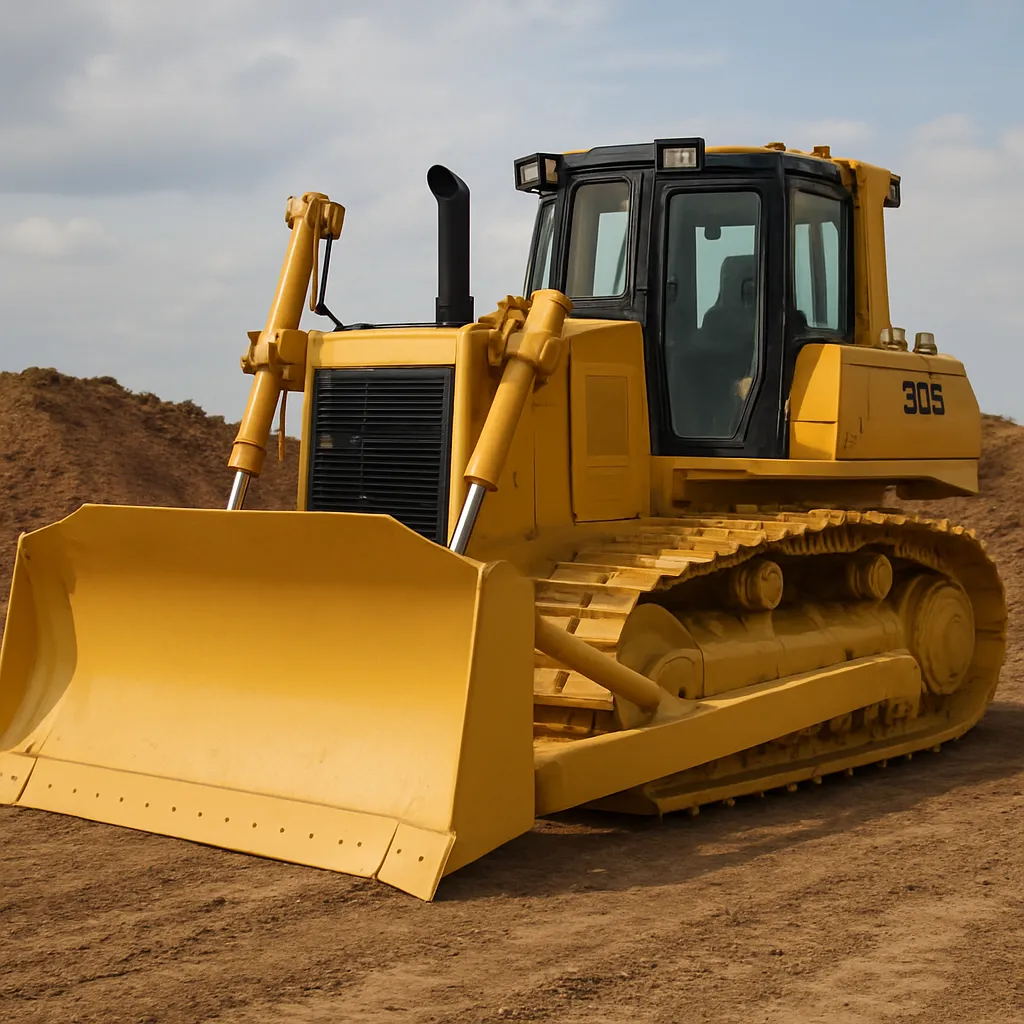
The HBXG SD8 is a compact-to-mid-size tracked bulldozer produced under the HBXG family of construction machines. Designed to offer a balance of power, reliability and cost-efficiency, the SD8 series targets contractors, municipal services and industrial operators who need versatile earthmoving capability without the purchase and operating cost of larger machines. This article explores the SD8’s origins, technical features, fields of application, operational statistics where available, maintenance and safety aspects, and practical guidance for prospective buyers and operators.
Overview and background
The HBXG brand (a recognized Chinese construction machinery maker) markets the SD8 as a durable, straightforward dozer built for general earthmoving tasks. The design philosophy emphasizes serviceability, component commonality and adaptability to a variety of attachments. That makes the SD8 a common sight on small-to-medium civil works sites, rural road projects and site-preparation jobs.
The SD8 lineage reflects incremental improvements rather than radical redesigns: chassis and undercarriage robustness, modular hydraulic and electrical systems, and a choice of blade types give the machine flexibility. While HBXG’s global market share is strongest in emerging markets and regions focused on cost-effective fleet renewal, the SD8 competes especially well where operators need dependable performance and low life-cycle cost rather than premium-brand features.
Technical characteristics and design highlights
The SD8 is designed around a welded-box mainframe, a heavy-duty final drive and a multi-shank ripper or blade mounting depending on configuration. Key design goals are durability, ease of maintenance and straightforward operator controls.
Powertrain and engine
- The SD8 is normally equipped with a turbocharged diesel engine from reliable international or Chinese suppliers; engines are selected for robust low-end torque rather than high top-end speed, optimizing the machine for heavy push and steady traction.
- Because model specifications can vary with market and year, reported engine power typically falls in a medium range appropriate for the machine class — sufficient for sustained grading and ripping operations while keeping fuel consumption manageable.
Transmission and drive
- Transmission options include geared or hydrostatic travel systems; final drives and sprockets are designed for heavy-duty service with sealed housings to protect components from contamination.
- The undercarriage uses sealed track rollers, resilient sprockets and track shoes appropriate for general construction and light mine duty, focusing on traction and wear resistance.
Blade, attachments and hydraulics
- The SD8 can be fitted with multiple blade types — straight blade (S-blade), combination blade (S U-blade), or semi-U depending on desired material carry and finishing ability.
- A ripper (single or multi-shank) is a common option for breaking compacted soils or light rock. Other attachments such as winches, specialized blades and rear counterweights can be installed to tailor the machine to specific jobs.
- Hydraulic circuits are engineered to deliver steady response for blade control and optional attachments, with easy access points for routine checks and service.
Operator station and ergonomics
Cab or open ROPS versions are offered in many markets. The cab prioritizes simple intuitive controls, good all-around visibility and a comfortable seating position. Basic climate control, vibration dampening and instrument clusters help reduce operator fatigue on long shifts, contributing to higher productivity and fewer errors.
Applications and typical uses
The HBXG SD8 is a versatile machine suitable for multiple operational contexts. Its combination of manageable size and adequate power makes it a preferred option for projects where space, transport and budget constraints exist.
- Construction and site preparation — grading, leveling, stockpile pushing and site clearing for housing, commercial or light industrial developments.
- Road building and maintenance — formation of roadbeds, shoulder work, small road repairs and rural track upgrading.
- Agriculture and land reclamation — clearing vegetation, terracing, drainage works and converting marginal land to productive use.
- Forestry and plantation — skid trails, firebreaks and land clearing where a combination of mobility and traction are needed.
- Mining and quarrying (light duty) — overburden clearing, bench maintenance and assisting in material moving at small operations.
- Municipal services — snow removal with appropriate blade, landfill site maintenance, storm-damage restoration and general public works operations.
Performance and statistics (typical values)
Exact specifications for the SD8 vary by model year and market configuration. Below are representative performance and specification ranges commonly attributed to dozers in the SD8 class. These figures should be treated as indicative — always consult the manufacturer or an authorized dealer for precise data on a specific machine.
- Operating weight: typically in the range of approximately 8,000–12,000 kg (17,600–26,400 lb). This weight class makes the SD8 substantial enough for medium-duty work while still transportable on standard low-bed trailers.
- Engine power: commonly around 80–120 kW (110–160 hp), delivering steady torque for dozing and ripping tasks.
- Blade capacity: varies by blade type but often falls between 2.0–3.5 m3 for general-purpose blades, balancing material carry and maneuverability.
- Travel speed: low gear slow pushing speeds up to roughly 10–12 km/h (6–7.5 mph) and higher transport speeds if equipped for road movement.
- Ground pressure: moderate, often in the range of 0.05–0.09 MPa depending on track shoe width and machine weight; this gives acceptable flotation on many soils while maintaining traction for pushing.
- Fuel consumption: highly variable by duty cycle, but average consumption for work cycles may range from roughly 10–25 L/h (2.6–6.6 gal/hr). Idle and light tasks consume significantly less; heavy ripping increases consumption.
- Ripper penetration and capacity: single or multi-shank rippers support breaking up compacted material; actual penetration depends on soil hardness and machine configuration.
Performance in real-world job sites depends on operator skill, ground conditions, blade selection and support equipment. The SD8 performs best where tasks require continuous pushing and light-to-medium ripping rather than specialized fine grading at very high precision.
Maintenance, parts and life-cycle costs
A major selling point for the HBXG SD8 is its emphasis on easy maintenance and accessible spare parts. This affects total cost of ownership significantly and is often decisive for fleet managers.
Routine serviceability
- Routine access points for engine oil, hydraulic oil and filters are designed to be simple to reach; daily checks for track tension, undercarriage wear and hydraulic lines are straightforward.
- Filter locations, centralized grease points and modular replacement components shorten downtime and reduce labor costs during service intervals.
Parts availability and dealer network
In markets with an established HBXG dealer network, genuine parts and technical support are relatively easy to obtain. In remote regions, many operators rely on robust aftermarket supply chains and the machine’s use of widely available components to limit downtime.
Operating costs and resale
- Lower initial acquisition cost compared with premium international brands is offset by acceptable fuel and maintenance efficiency, making the SD8 attractive for budget-conscious buyers.
- Resale value depends on local demand, hours of operation, and maintenance history. Machines maintained with full service records generally retain value better on the second-hand market.
Safety and operator considerations
Safety features and operator comfort are increasingly important even in cost-sensitive segments. The SD8 typically offers essential safety and ergonomics while prioritizing clarity of controls and robust protection in the working environment.
- ROPS/FOPS protection for cab versions helps protect operators during rollovers or falling-object situations.
- Visibility is enhanced via elevated cab placement and thoughtful blade geometry — important when working close to obstructions or personnel.
- Operator training is critical: correct dozing techniques, safe transport and basic troubleshooting reduce accidents and extend machine life.
Environmental considerations
Newer SD8 variants adhere to progressively stricter emission standards depending on the market (for example, tiered diesel emission regulations). Emission control packages, when fitted, reduce particulate and NOx output and may include improved fuel systems and after-treatment.
From an environmental efficiency perspective, optimizing match of blade type to task, reducing idle time and ensuring correct engine tuning contribute to lower fuel use and emissions per cubic meter of material moved — improving the machine’s environmental profile on long projects.
Market position and competitive context
In comparisons with other manufacturers, the SD8 competes largely on cost-effectiveness and simplicity. While premium brands may offer more advanced electronics, automated grading packages and plush operator cabins, the HBXG SD8 is often chosen where:
- Initial budget constraints are a priority.
- Operations are in remote or harsh environments where simple, robust equipment is advantageous.
- Fleet commonality and parts interchangeability reduce total operating overhead.
Within developing markets, HBXG’s reputation for delivering an acceptable balance of performance and affordability has led to broad adoption for municipal and private contractors performing routine earthworks.
Tips for operators and prospective buyers
Whether purchasing new or used, clinical evaluation of the SD8 for a particular job will ensure long-term satisfaction. Consider the following:
- Match blade type and machine weight to the principal material being moved — cohesive clay, loose sand and rock each behave differently and require different approaches.
- Request full maintenance and service records on used machines; inspect the undercarriage carefully since track and roller wear are expensive to replace.
- Evaluate local dealer support and parts availability before purchase — even simple machines require timely parts for maximum uptime.
- Invest in operator training focused on correct dozing techniques, fuel-efficient practices and basic daily inspections to reduce costs and extend service life.
- Consider optional packages — heating/AC for cab comfort in extreme climates, heavy-duty undercarriage for abrasive environments, or ripper packages for rocky ground — based on typical job conditions.
Conclusion
The HBXG SD8 stands out as a pragmatic choice where balanced capability and affordable ownership dominate procurement decisions. Its emphasis on serviceability, dependable undercarriage components and practical hydraulics makes it effective for a broad range of tasks from construction and agriculture to municipal maintenance. Operators and fleet managers who prioritize dependable daily performance, straightforward maintenance and reasonable acquisition cost will find the SD8 to be a valuable asset. Always confirm exact configuration and technical specifications with the manufacturer or local dealer to ensure the chosen machine meets the job’s technical and regulatory requirements.


)
)