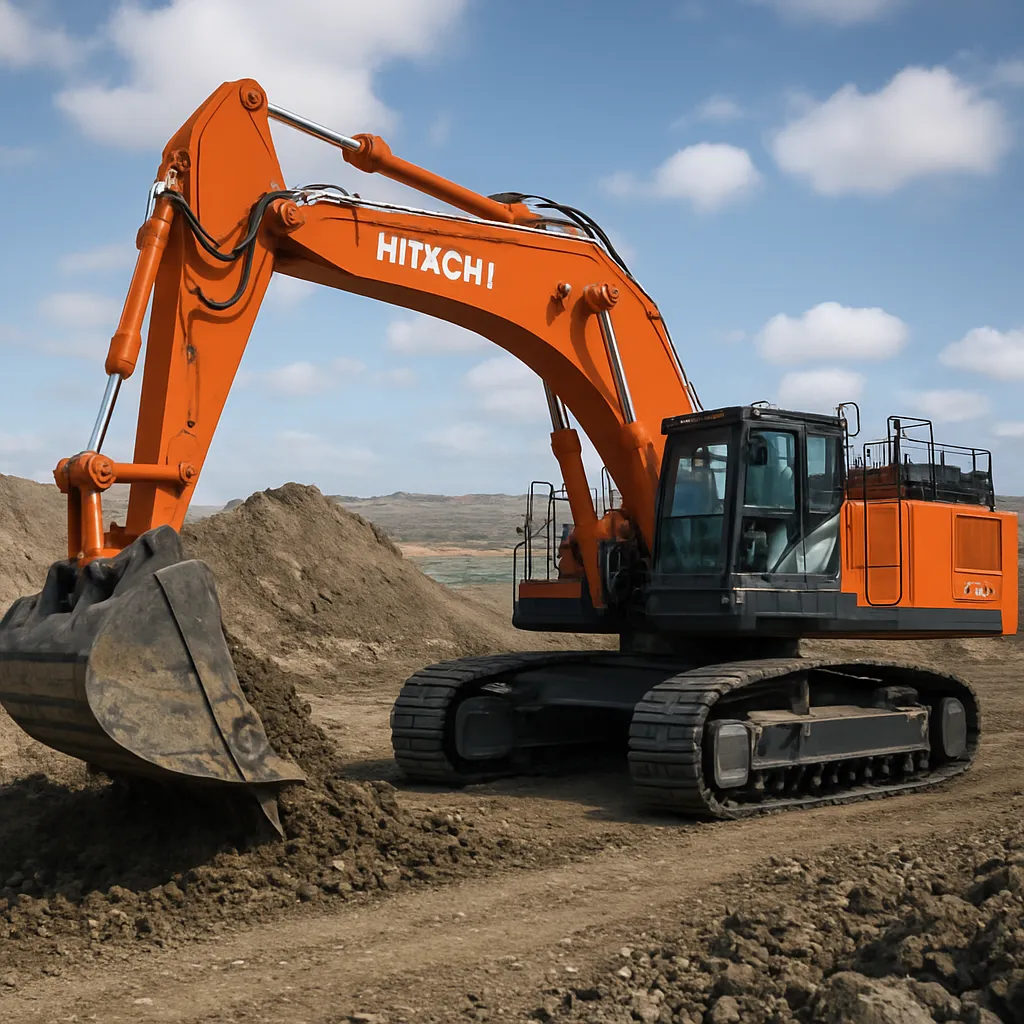
The Hitachi EX1200-7 is a heavy-duty mining excavator designed for large-scale earthmoving, quarrying, and open-pit mining operations. Built to balance raw digging power with serviceability and operator comfort, this machine is often specified where continuous high-volume material handling and long service life are priorities. Below you will find an in-depth look at its design, typical applications, performance characteristics, maintenance needs, and practical considerations for operators and fleet managers.
Overview and design philosophy
The EX1200-7 belongs to Hitachi’s lineup of large hydraulic excavators engineered for the most demanding surface mining tasks. Its architecture reflects a focus on structural strength, hydraulic efficiency, and modular serviceability. The machine integrates a robust undercarriage, a reinforced boom and arm assembly, and a purpose-built house and counterweight to provide stability when handling heavy loads.
Key design priorities for this class of excavator include maximizing cycle efficiency, minimizing downtime through easier access to service points, and improving operator productivity through ergonomic cab design. Manufacturers of mining equipment like Hitachi typically emphasize three pillars in models such as the EX1200-7: reliability, reparability, and return on investment.
Major components and technical features
Powertrain and hydraulics
The EX1200-7 is driven by a high-torque diesel engine paired with a robust hydraulic system that delivers the force and speed required for heavy digging and loading. The integration of variable-displacement pumps and optimized hydraulic circuits allows for responsive boom and bucket control while aiming for improved fuel efficiency. The hydraulic components are sized to sustain continuous heavy-duty operation in mining environments.
Structure, boom and arm
The undercarriage and upper-structure are built from thick welded steel plates and reinforced joints designed to withstand repetitive high-stress cycles. Boom and arm assemblies often use optimized steel grades and heat treatment to resist bending and fatigue. Bucket linkage geometry is tuned to provide strong breakout forces and efficient dumping angles, enabling fast, consistent cycles during loading operations.
Undercarriage and track system
A heavy-duty track system with wide shoes provides the stability required on steep benches and uneven ground commonly found in quarries and mines. Track frames and rollers are designed for easy replacement; many large excavators include bolt-on components to reduce repair time. Adequate ground clearance and robust track rollers help extend the life of the undercarriage under abrasive conditions.
Operator cabin and controls
The operator environment emphasizes visibility, comfort, and control. Seating, joystick placement, and HVAC systems are configured for long shifts. Modern mining variants of large excavators often include camera systems, alarm packages, and ergonomic controls to reduce operator fatigue and increase productivity. Cab options may include ROPS and FOPS certification for enhanced safety.
Typical applications and operating environments
The EX1200-7 is tailored for heavy surface work. Typical roles include:
- Open-pit mining — removing overburden, loading haul trucks, and exposing ore bodies.
- Quarrying — extracting dimension stone, aggregate, and heavy material handling.
- Bulk material handling — stockpiling, reclaiming, and assisting in primary crushing circuits.
- Large civil engineering projects — earthworks on dams, ports, and major infrastructure where high capacity is required.
Operating conditions vary widely: hot, dusty climates; cold environments where hydraulic fluid and battery performance must be managed; or high-altitude sites where engine tuning is important. Configurations and attachments (for example, higher-capacity buckets or specialized hydraulic breakers) can extend the EX1200-7’s usefulness across different applications.
Performance indicators and statistical estimates
Exact performance depends on configuration, bucket selection, material characteristics, and operator skill. Below are representative figures and ways to estimate real-world output.
Representative specification ranges (approximate)
- Operating weight: 110–130 tonnes (varies by configuration and attachments)
- Bucket capacity: 6–12 m³ typical for mining buckets on this class
- Engine power: roughly 400–700 kW range depending on final tuning and emissions package
- Hydraulic system pressure and flow: scaled to support high breakout forces and fast cycle times
These values are indicative and will vary by market and specification. Manufacturers and dealers can provide model-specific weight and power figures for the exact configuration you plan to deploy.
Calculating production (example)
A practical method to estimate hourly production: bucket capacity (m³) × material density (t/m³) × cycles per hour = tonnes per hour. For example:
- Bucket: 8 m³
- Material density: 1.8 t/m³ (loose rock/ore)
- Cycles per hour: 35 (this depends on swing time, dump time, and operator)
Estimated hourly production = 8 × 1.8 × 35 ≈ 504 t/h.
Actual production will be influenced by truck matching (payload and cycle), bench height, and the operator’s ability to maintain consistent cycles. In many real-world settings, these excavators deliver between several hundred to over a thousand tonnes per hour, depending on the variables above.
Maintenance, serviceability, and lifecycle management
Long-term cost-effectiveness of machines like the EX1200-7 depends heavily on planned maintenance and timely parts replacement. Hitachi and other OEMs design such machines to allow relatively fast access to filters, pumps, and major service points to reduce downtime.
Routine maintenance items
- Daily visual checks: undercarriage, hydraulic hoses, grease points, and fluid levels.
- Filter replacements: hydraulic and engine air and oil filters at manufacturer-recommended intervals.
- Track and roller inspections: check wear and tension; replace shoes and rollers as needed.
- Hydraulic oil monitoring: regular sampling to detect contamination or wear-related particles.
- Major services (every 500–2,000 hours depending on component): injectors, valve adjustments, and detailed hydraulic system checks.
Typical service intervals are structured in hour-based blocks (e.g., 250, 500, 1,000 hours). Proper lubrication and proactive replacement of wear items are essential to extend the life of heavy mining equipment. Fleet managers often track each machine with dedicated logs or telematics to schedule interventions before failures occur.
Telematics and condition monitoring
Modern large excavators are often equipped with onboard monitoring systems that report hours, fuel consumption, fault codes, and operating cycles. These systems enable predictive maintenance, remote diagnostics, and optimized scheduling of repairs. By analyzing trends from telematics, teams can improve component life and reduce total cost of ownership.
Safety features and operator considerations
Mining environments necessitate rigorous safety measures. The EX1200-7 platform typically incorporates several features to support safe operation:
- ROPS/FOPS-certified cabin structures and seating restraints to protect the operator.
- Visibility enhancements: extended windows, mirrors, and optional camera systems for blind-spot coverage.
- Emergency stop systems and lockout procedures for hydraulic circuits during maintenance.
- Integrated alarm and lighting packages for movement, swing, and reversing warnings.
Operator training is a critical component of safety and productivity. Well-trained operators achieve faster cycle times while minimizing wear on the machine and fuel use. Ergonomics, clear instrumentation, and good cab climate control contribute directly to operator effectiveness over long shifts.
Environmental and regulatory aspects
Large excavators must comply with regional emissions regulations. Engine packages for machines like the EX1200-7 are often tailored to meet local standards (Tier, Stage, or equivalent). Emissions control systems and engine tuning may affect fuel consumption and power characteristics.
Efforts to improve environmental performance include more efficient hydraulic systems, intelligent engine controls, and the use of low-sulfur fuels or alternative lubricants. Additionally, some operators optimize fleet deployment and idle management to reduce overall site fuel consumption and greenhouse gas emissions.
Operational economics and lifecycle cost
When evaluating a machine such as the EX1200-7, owners and fleet managers typically model total lifecycle cost rather than initial purchase price alone. Important economic factors include fuel consumption, expected uptime, parts and consumables, operator efficiency, and resale value at retirement.
Measures to reduce lifecycle cost:
- Match bucket size to truck capacity to avoid under- or overloading cycles.
- Implement predictive maintenance based on telematics to prevent catastrophic failures.
- Train operators in fuel-efficient techniques and proper machine handling.
- Use OEM-approved parts and fluids to maintain warranty coverage and predictable wear rates.
Case examples and real-world deployment
In large open-pit mines, excavators of the EX1200-7 class are frequently paired with haul trucks in the 60–120 tonne payload range. A well-matched combination maximizes throughput and minimizes truck idle time. In quarry operations, these machines excel at maintaining high production rates while handling abrasive materials, provided undercarriage maintenance is executed regularly.
Operators in mines report that productivity gains are achieved not only through machine specifications but also via optimized dig plans, truck dispatch systems, and continuous operator training. When integrated into a site-wide material handling plan, the EX1200-7 can be a cornerstone machine for primary loading stations.
Upgrades, attachments and customization
Variations of the EX1200-7 can include different bucket styles (rock, coal, or general purpose), quick couplers, hydraulic hammers for secondary works, and specialized attachments for sorting or reclamation tasks. Customization options might include heavy-duty undercarriage packages, cold-weather kits, and enhanced filtration for dusty environments.
OEMs and aftermarket suppliers also offer wear packages—liners, hardfacing, and reinforced components—to extend the life of high-wear areas under abrasive conditions.
Conclusion and practical recommendations
The Hitachi EX1200-7 class excavator represents a robust choice for demanding mining and quarrying tasks, combining structural strength, hydraulic capability, and operator-focused design. For those considering this machine, practical considerations include:
- Carefully match bucket size and configuration to haul truck fleet to maximize site throughput.
- Invest in telematics and condition monitoring—these systems lower long-term operating costs by enabling predictive maintenance.
- Implement a disciplined maintenance schedule, focusing on undercarriage longevity and hydraulic system health.
- Prioritize operator training and ergonomic cabin features to sustain high productivity across long shifts.
- Assess local emissions requirements and configure the engine package accordingly to avoid retrofit costs later.
By balancing upfront acquisition choices with disciplined operational practices, operators can maximize the economic return from a machine in this class. The EX1200-7’s combination of power, stability, and serviceability makes it well-suited to the concentrated material-handling demands of modern open-pit mining and large-scale aggregate production.
Selected emphasized terms for quick reference:
- Hitachi EX1200-7
- hydraulic
- engine
- bucket
- productivity
- durability
- maintenance
- operator
- fuel efficiency
- safety


)
)