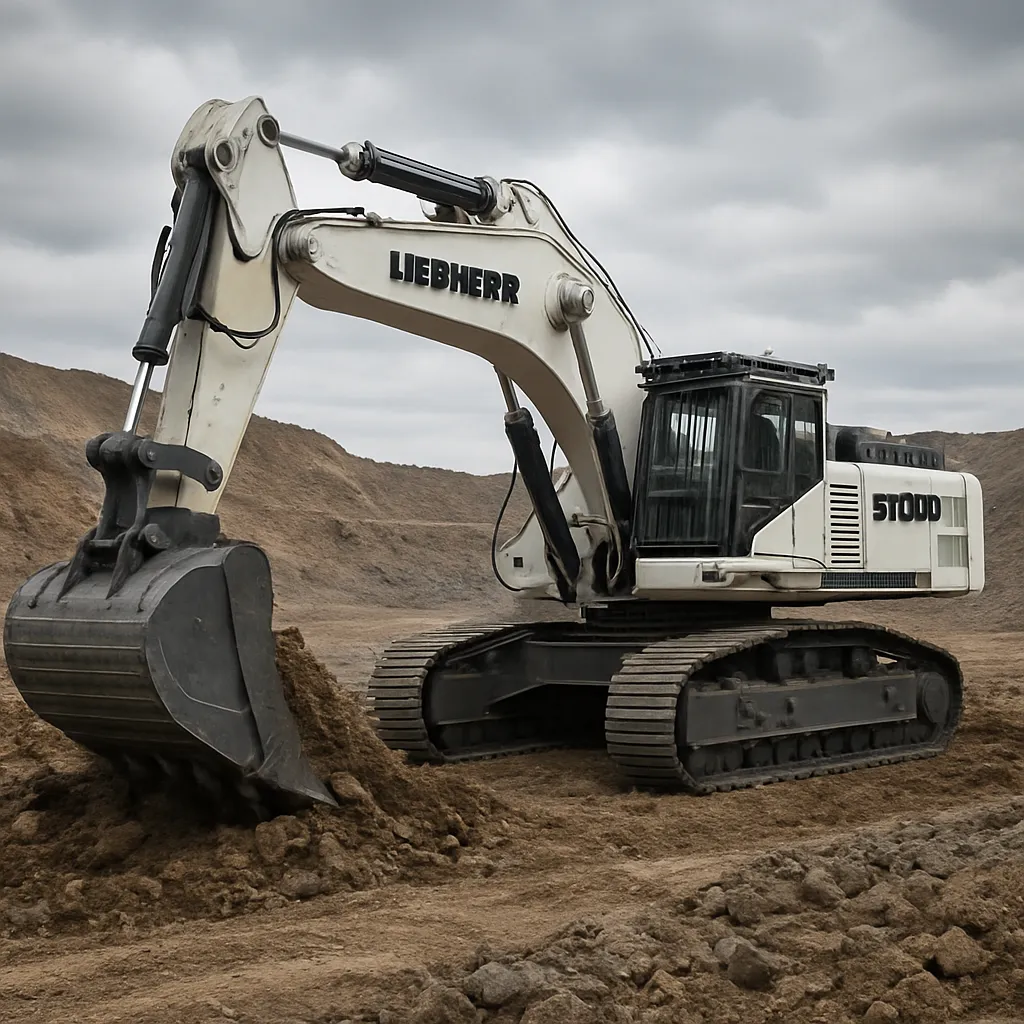
The Liebherr R 9100 is a heavy-duty mining excavator designed for the demanding conditions of open-pit operations. Combining robust mechanical design with modern electronics and operator comforts, this machine is aimed at maximizing productivity in tasks such as overburden removal, ore loading, and large-scale material handling. The following article explores the machine’s design philosophy, common applications, technical characteristics, operational economics, and the broader context of using a large mining excavator like the R 9100 in modern mines.
Overview and design philosophy
Liebherr, a global manufacturer of construction and mining equipment, places emphasis on durability, modularity and systems integration across its product lines. The R 9100 exemplifies this approach by combining heavy structural components with an integrated control architecture and fleet management options. The machine is engineered to work continuously under harsh conditions — abrasive rock, dust, extreme temperatures and high cycle counts — while providing relatively easy access for maintenance and diagnostics.
Key aspects of the R 9100’s design include a reinforced undercarriage and house, heavy-duty boom and stick geometry optimized for large-dip bucket work, and a focus on component reliability. Liebherr also integrates its electronic systems for diagnostics and performance management. These systems contribute to reduced downtime and more predictable maintenance scheduling, which are essential for high-capacity mining operations where machine availability directly affects production.
In practical terms, the R 9100 is built to pair with large haul trucks and bulk handling systems. It can be configured with different bucket types and attachments to match material characteristics and loading strategies. The machine’s structural and hydraulic layout seeks to balance cycle speed with lift capacity, ensuring each pass removes the maximum material safely and consistently.
Applications in mining and heavy earthworks
The R 9100 finds use across a range of mining and large-scale civil projects. Typical applications include:
- Coal strip mining — efficient removal of overburden and loading of large-capacity haul trucks;
- Metalliferous mining — handling iron ore, copper, bauxite and similar high-tonnage materials;
- Bulk material handling — ports, stockyards and primary crusher feed operations where large volumes of free-digging or fragmented rock are moved;
- Large-scale earthworks — dam construction, quarrying and other projects that require continuous heavy excavation.
Material type, fragmentation and moisture content influence bucket selection and cycle strategy. In cohesive or sticky soils, different bucket designs and wear protection systems are used to maintain productivity and reduce downtime. For highly abrasive rock, wear-resistant materials and bolt-on wear parts are standard to extend service life.
Technical characteristics and performance considerations
While exact specifications depend on the configuration and model year, the R 9100 class of mining excavators is characterized by the following technical and performance-related features:
- Bucket capacity: Typically engineered for large buckets to match high-capacity haul trucks. Bucket sizes for machines in this product family are commonly available in a range to suit material density and truck payloads.
- Operating weight: These excavators are heavy machines, with operating weights tailored to provide the stability and digging forces required for large-bucket cycles.
- Engine and powertrain: Liebherr integrates engines and power systems designed for continuous heavy-duty operation. Power ratings are selected to maintain consistent cycle times under load and to drive hydraulic systems or electric drives, depending on the configuration.
- Hydraulic and control systems: Modern Liebherr excavators use advanced electro-hydraulic controls and business-class control electronics for optimized response and fuel efficiency. Systems allow for operator-assist functions and diagnostics to reduce human error and optimize machine use.
- Operator environment: Ergonomically designed cabs with climate control, high-visibility glazing and integrated monitoring displays are standard to increase operator comfort and reduce fatigue during long shifts.
Performance metrics such as cycle time, fuel consumption and bucket fill factor are heavily dependent on site conditions, operator skill and the match between excavator and haul fleet. For example, matching bucket size and truck payload is critical: an undersized bucket increases truck waiting time; an oversized bucket reduces fill factor and increases cycle time.
Representative statistics and practical numbers
Exact manufacturer specifications for a given year and configuration are the authoritative source, but several practical production-related figures are often used by mine planners when considering machines in this class:
- Bucket capacities for large mining hydraulic excavators often range from a few cubic meters up to tens of cubic meters, depending on the intended use. Machines intended to load large haul trucks typically use buckets sized to efficiently match truck payloads.
- Operating weights for machines in the large mining excavator class can span from several tens to a few hundred tonnes — chosen to balance digging force, lift capacity and mobility.
- Fuel consumption is highly variable; however, in heavy mining cycles, large excavators may consume hundreds of liters of diesel per shift under continuous operation. Modern control systems and optimized engine maps aim to reduce specific fuel consumption per tonne moved.
- Availability and uptime targets for mining fleets typically exceed 85–90% for key assets, and operators expect similar availability from large excavators through preventive maintenance and remote diagnostics.
Note: The numbers above are indicative ranges typical for large mining excavators. For precise values such as bucket geometry, rated power (kW or HP), maximum reach, digging depth, swing torque and exact operating weight, consult the Liebherr product documentation for the R 9100 configuration of interest.
Controls, diagnostics and fleet integration
A major advantage of modern Liebherr mining equipment is the integration of machine controls and telematics. Liebherr’s electronic platforms provide:
- Advanced diagnostics that log fault codes, machine hours and component trends, enabling proactive maintenance planning;
- Operator assistance features that help maintain consistent cycle times, prevent overloading or misuse and optimize hydraulic flow for different working modes;
- Fleet management and telematics packages (such as LiDAT) that allow remote monitoring of productivity, fuel consumption and location, which supports operational planning and maintenance scheduling.
These systems are particularly valuable on large mining sites where multiple excavators and haul trucks must be coordinated to minimize idle time and maximize material movement per unit of fuel and time.
Maintenance, reliability and lifecycle costs
Lifecycle cost is a decisive factor when selecting a mining excavator. The R 9100 series is engineered to provide long component life through heavy-gauge structures, robust hydraulics and standardized wear parts. Some important operational considerations:
- Preventive maintenance schedules are key to maintaining availability — regular oil and filter changes, inspections of wear parts, and monitoring of hydraulic systems reduce the risk of unplanned outages.
- Wear parts management — buckets, teeth, cutting edges and liners represent predictable consumables. Using OEM or high-quality third-party wear parts and keeping an inventory on-site improves turnaround time for repairs.
- Component modularity — modular subassemblies (such as swing gearboxes, pumps and pumps) can shorten repair times; Liebherr’s design philosophy tends to favor ease of access and serviceability.
- Training and operator programs are essential to maximize productive life and minimize costly misuse. Operators trained on the machine’s systems, bucket-filling techniques and proper operating modes significantly improve fuel efficiency and reduce wear.
Safety features and operator ergonomics
Safety plays a central role in the design and operation of large mining excavators. Typical safety and ergonomic features include:
- High-visibility cabs with wide glazing and camera systems to reduce blind spots;
- Integrated alarms and interlocks to prevent unsafe machine states;
- Fall protection, secure access ladders and walkways for maintenance personnel;
- Ergonomic seating, adjustable controls and HVAC to reduce operator fatigue and improve focus;
- Emergency shutdown systems and remote-disable features as part of site safety protocols.
Beyond physical features, safety is reinforced through site rules, maintenance procedures and training. Regular safety audits and adherence to standard operating procedures are essential when working with very large machines in dynamic open-pit environments.
Environmental considerations and efficiency
Mining operations face increasing pressure to reduce environmental impact and improve energy efficiency. The R 9100 and similar large excavators respond to this through several approaches:
- Fuel-saving engine strategies and hydraulic load-sensing systems that reduce unnecessary fuel burn during transit or idle;
- Emission control packages that comply with relevant emissions standards and can be adapted for local regulatory requirements;
- Telematics-driven optimization that reduces idling and minimizes excessive cycles by improving coordination between excavators and haul trucks;
- Design for recycling at end-of-life—use of recyclable materials and modular components can simplify refurbishment or recycling.
Some mines also explore electrification of drive systems or the use of alternative fuels. While full electrification depends on site power infrastructure, modern machine designs are increasingly prepared to integrate with broader electrification strategies.
Economics and productivity: matching machine to mine
Selecting an excavator like the R 9100 requires balancing initial capital cost, operating cost, and productivity. Key economic drivers include:
- Cycle productivity — tonnes moved per hour, which depends on bucket fill factor, cycle time and haul-truck match;
- Operating cost — fuel, maintenance, parts and labor expressed as cost per tonne moved;
- Availability — percentage of scheduled time the machine is productive; higher availability reduces the required fleet size to meet production targets;
- Residual value and service support — OEM support, global parts availability and second-hand market demand affect total cost of ownership.
Mine planners use fleet simulations and cost models to determine optimum combinations of excavators and trucks. These models consider shift length, material density, haul distances and truck queuing effects. A well-matched excavator-truck pair maximizes throughput while minimizing fuel and maintenance costs per tonne.
Upgrades, customization and lifecycle extension
Mining operations often customize machines to suit specific site conditions. Liebherr typically offers options and upgrade paths, including:
- Specialized buckets and wear packages for abrasive or sticky conditions;
- Enhanced cooling systems for high-ambient-temperature operations;
- Telematics and remote-monitoring upgrades for improved fleet integration;
- Refurbishment and repowering options to extend productive life and improve efficiency.
Refurbishment programs can extend machine lifecycles by replacing critical wear items, refreshing the powertrain and updating electronics. Such programs often deliver improved performance at lower cost than purchasing new equipment.
Industry context and future outlook
Large hydraulic and rope excavators remain central to bulk-material mining. Trends shaping the future of machines like the R 9100 include:
- Digitalization — greater use of telematics, predictive maintenance and machine learning to optimize operations;
- Electrification — increased interest in electric drives and integration with mine power grids to reduce greenhouse gas emissions;
- Autonomy — progress toward semi-autonomous or autonomous loading cycles that reduce variability and increase night-shift productivity;
- Sustainability — pressure to lower emissions and improve resource efficiency across the mine lifecycle.
Manufacturers are responding by combining mechanical robustness with advanced software and connectivity, enabling operators to get more consistent performance with lower life-cycle costs.
Summary and practical recommendations for operators
The Liebherr R 9100 is a purpose-built machine for high-tonnage excavation and loading tasks. When evaluating such an excavator for a specific operation, consider the following:
- Define the target tonnes per hour and ensure bucket sizing and cycle times match the haul-truck fleet;
- Assess material characteristics — fragmentation, density and abrasiveness — to choose appropriate bucket and wear packages;
- Prioritize availability by planning preventive maintenance, stocking critical wear parts and using telematics for early fault detection;
- Use operator training programs to maximize fuel efficiency and maintain consistent bucket-fill factors;
- Evaluate lifecycle costs, including resale value, OEM support and refurbishment options, rather than focusing only on purchase price.
In practice, the most productive deployments combine a well-specified machine, trained operators, disciplined maintenance and integrated fleet management. These elements together transform machine capability into consistent, cost-effective mining output.
Key terms highlighted
This article emphasized several important concepts relevant to the R 9100 and similar mining excavators: Liebherr, R 9100, bucket capacity, operating weight, fuel efficiency, hydraulic, operator cabin, maintenance, safety, and availability. These elements collectively influence the operational success and total cost of ownership of a large mining excavator.


)
)