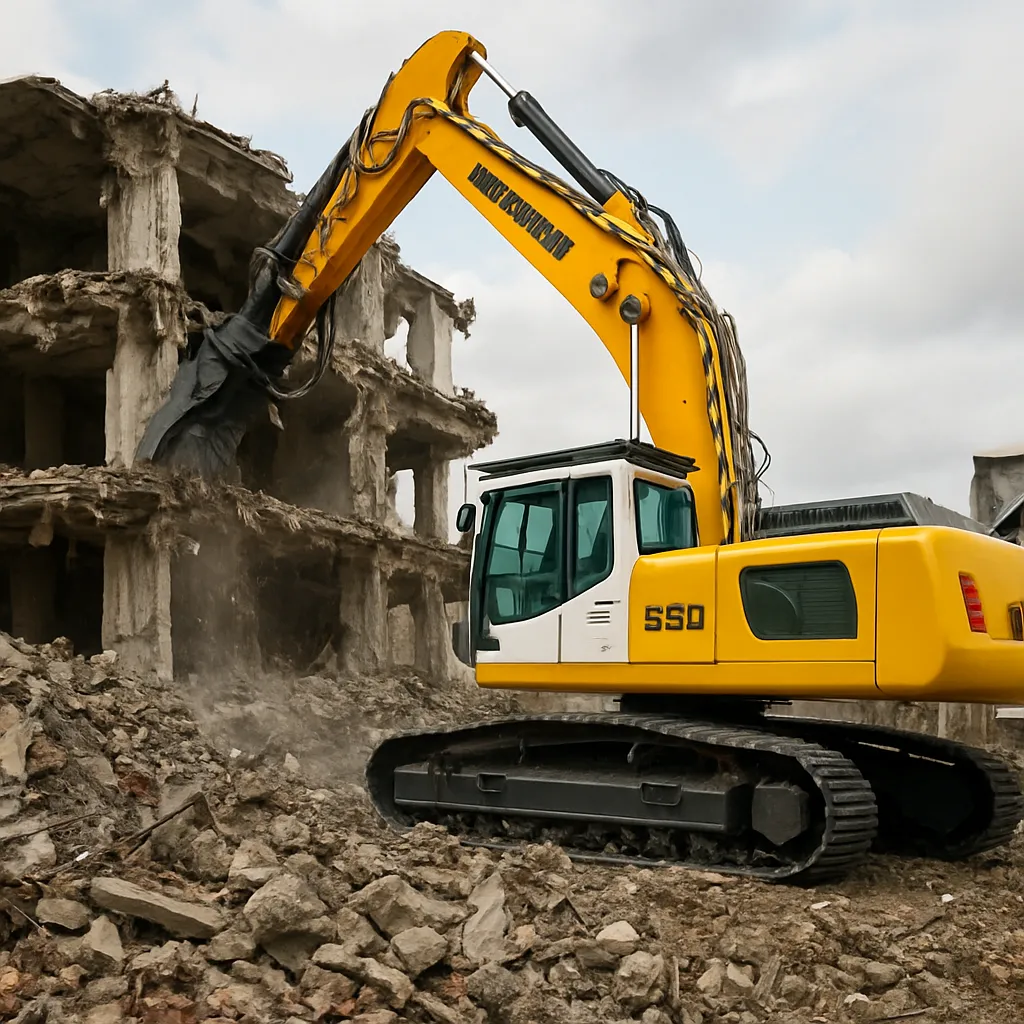
The Liebherr R 950 Demolition is a purpose-built heavy-duty machine engineered for demanding dismantling tasks in urban, industrial and infrastructure environments. Combining reinforced structure, specialised booms and a wide range of hydraulic attachments, this model is designed to maximise on-site productivity while prioritising operator safety and machine efficiency. Below you will find a detailed overview of its design, typical applications, technical highlights, operational advice and relevant performance figures that help explain why the R 950 Demolition is a popular choice in professional demolition fleets.
Overview and design philosophy
The R 950 Demolition is part of Liebherr’s line of demolition excavators tailored to heavy dismantling, selective deconstruction and recycling work. Unlike standard excavators, demolition versions are engineered with an emphasis on structural reinforcement, protection systems and serviceability under harsh working conditions. The machine is typically built on a robust undercarriage with widened tracks and heavy counterweights to maintain stability when operating long booms or handling heavy processing tools.
Key design elements of the R 950 Demolition include a reinforced upperstructure, specialised demolition booms (including multi-piece and long-reach options), heavy-duty swing drives and high-capacity hydraulic circuits. The cab is usually fitted with advanced protective systems such as FOPS/ROPS guards, protective glazing and additional screens or cages, providing a secure environment for the operator during hazardous tasks. Many units also come equipped with Liebherr’s on-board telematics and monitoring systems that improve fleet management and maintenance planning.
Where the R 950 Demolition is used
The machine is versatile across a wide spectrum of demolition-related tasks. Typical use cases include:
- Building dismantling: controlled takedown of multi-storey concrete and steel-framed buildings, selective demolition where materials need sorting and recycling.
- Industrial plant decommissioning: dismantling of factories, chimneys, silos and processing structures where reach and power are crucial.
- Concrete and reinforced concrete processing: breaking, cutting and handling of heavy reinforced concrete elements using crushers, hammers and shears.
- Scrap and recycling yards: processing and sorting of demolition waste, preparation of materials for transport and recycling.
- Urban redevelopment: demolition in tight or congested inner-city sites where precision, reduced vibration and careful material handling are required.
- Infrastructure removal: bridge and road structure dismantling, culvert and retaining wall removal.
Because demolition tasks vary dramatically in scale and complexity, the R 950 is offered in multiple configurations to suit different site demands — from compact short-reach set-ups for congested urban jobs to extended long-reach versions that safely work at height. The machine’s adaptability to a wide range of attachments makes it a practical choice for contractors who need one platform to perform multiple tasks.
Key features and technologies
The R 950 Demolition incorporates several technologies and features aimed at improving operational performance and downtime reduction. Some of the most notable include:
Reinforced structural components
- Strengthened undercarriage and upper frame to absorb high loads and torsion experienced during demolition operations.
- Reinforced boom and stick designs, often with wear-resistant steel and reinforcement plates on critical stress points.
Hydraulic and powertrain systems
- High-capacity hydraulic pumps and valves to power heavy-duty tools such as shears, pulverisers and crushers with consistent flow and pressure.
- Engines tuned for demolition performance, balancing torque, emissions compliance (Stage V / Tier 4 Final where applicable) and fuel economy.
- Smart hydraulic control for precise tool movement and improved safety when working near structures or personnel.
Operator protection and ergonomics
- FOPS/ROPS cab protection systems, often fitted with protective screens and optional cages for extreme scenarios.
- Advanced cab ergonomics with improved visibility, climate control and vibration dampening to reduce operator fatigue.
- Remote control or camera packages for operations where operator presence in the cab is impractical or unsafe.
Telematics and diagnostics
- Liebherr’s telematics (LiDAT) enable real-time machine monitoring, remote diagnostics, geofencing, and optimisation of maintenance intervals.
- On-board diagnostic tools and easy-access service points reduce downtime and simplify routine checks.
Stability and counterweight systems
Stability is critical in demolition work. The R 950 Demolition uses tailored counterweights and track configurations to maintain a low center of gravity even when fitted with long-reach booms. This helps ensure safe operations when handling heavy attachments at distance and when performing high-reach work on tall structures.
Attachments and configurations — adapting the machine to the task
One of the R 950 Demolition’s greatest strengths is its compatibility with a broad array of purpose-built attachments. The right tool can transform a single excavator into a multifunctional demolition platform. Typical attachments include:
- Hydraulic shears (fixed and rotating) for cutting steel and concrete reinforcement.
- Concrete crushers and pulverisers for breaking down large concrete elements and reducing material size for handling or processing.
- Hydraulic breakers/hammers for secondary breaking and precise removal of concrete.
- Sorting grabs and demolition grapples for selective dismantling and material handling.
- Rotating crushers and screening attachments for on-site material processing and recycling.
- Magnet attachments for steel separation in recycling operations.
- Long-reach and high-reach boom kits for working at heights safely and efficiently.
Interchangeable quick couplers, reinforced hydraulic lines and electronic control options make switching tools faster and safer, enabling crews to react quickly to changing on-site needs.
Operational considerations and best practices
Operating a demolition excavator like the R 950 demands careful planning and rigorous safety standards. Below are recommended best practices to maximise safety and productivity:
- Pre-job planning: perform structural analysis of the target, plan fall zones, and define material segregation strategies for recycling and waste management.
- Operator training: ensure operators are trained in demolition techniques, attachment handling and site-specific hazards. Familiarity with long-reach dynamics is crucial.
- Ground and machine stability checks: use appropriate counterweights and ensure adequate support for the machine, especially when working from slopes or soft ground.
- Regular maintenance: adhere to manufacturer service intervals, monitor hydraulic oil condition, and inspect wear parts (pins, bushings, hoses) frequently.
- Vibration and noise management: implement measures to protect nearby structures and personnel, especially in urban settings.
- Use of telematics: monitor fuel consumption, operating hours and fault codes to prevent unscheduled downtime and to better plan preventive maintenance.
Performance data and typical statistics
Specific performance numbers for the R 950 Demolition vary by configuration, market and attachment fit. The figures below are indicative ranges intended to give a general sense of machine capability; exact specifications depend on the final build and options chosen.
- Operating weight: typically in the range of 40 to 60 tonnes depending on counterweight and long-reach equipment. (Exact weight varies with configuration.)
- Engine power: commonly in the region of approximately 200 to 300 kW (270–400 hp), compliant with modern emissions standards (Stage V / Tier 4 Final in many markets).
- Maximum reach: standard demolition booms can extend to around 12–20 metres; dedicated long-reach/high-reach kits can reach further (up to around 20–26 metres) depending on configuration.
- Hydraulic system capacity: high-flow hydraulic circuits to support heavy attachments; precise flow rates depend on pump configuration and manufacturer options.
- Fuel consumption: highly variable with work intensity and attachment; average consumption for heavy demolition can range roughly between 15 and 60 litres per hour depending on load and operation profile. Optimised operations and economy modes reduce consumption.
- Typical lifespan: with proper maintenance, demolition excavators often serve productive lifecycles of 10–20 years or more, with many machines rebuilt or repowered during their service life.
Productivity metrics such as tonnes of concrete processed per hour vary dramatically with the tool and site conditions. For example, a hydraulic crusher paired with a skilled operator on straightforward concrete segments may process several tonnes per hour, whereas complex selective dismantling of reinforced concrete can be much slower but yield higher material recovery rates.
Safety, regulation and environmental aspects
Demolition work is among the most safety-critical construction activities. The R 950 Demolition integrates numerous systems to meet regulatory and site-specific safety demands:
- Cab protection options (FOPS/ROPS) and reinforced glazing reduce the risk of injury from falling debris.
- Camera systems and sensors for blind-spot reduction and safer machine movement, particularly important on congested urban sites.
- Emissions-compliant engines (Stage V / Tier 4 Final) minimise airborne pollutants and help meet local environmental regulations.
- Noise-reducing measures in the cab and hydraulic systems mitigate impacts in urban areas.
- On-site recycling capability, when combined with crushers and sorting attachments, reduces waste sent to landfill and improves sustainability credentials of demolition projects.
Maintenance, lifecycle costs and resale considerations
Managing lifecycle costs is crucial when operating heavy demolition equipment. Key points to consider:
- Preventive maintenance: scheduled oil, filter and hydraulic checks extend component life and are more cost-effective than reactive repairs.
- Wear parts management: pins, bushings, bucket teeth or shear blades wear faster in demolition tasks; maintaining inventories or service contracts reduces downtime.
- Telematics-driven servicing: fleet telematics (LiDAT) help optimise maintenance intervals and can reduce total cost of ownership through early detection of issues.
- Resale value: well-maintained demolition machines retain value due to the ongoing demand for specialist equipment. Keeping detailed service records improves resale prospects.
Comparisons and market position
Within Liebherr’s range and compared to competitors, the R 950 Demolition occupies a middle-to-upper class in the market of dedicated demolition excavators. It competes on the basis of a balanced combination of structural robustness, attachment versatility, operator safety features and modern telematics. Contractors often select the R 950 when they need a reliable platform that can be reconfigured between standard demolition, long-reach and material processing roles without requiring multiple base machines.
Practical examples and case uses
Real-world projects for the R 950 Demolition span:
- Urban high-rise deconstruction where precise layer-by-layer removal is needed to protect adjacent properties.
- Industrial shutdowns where large steel structures and concrete foundations require staged dismantling under strict safety controls.
- Recycling yards where on-site reduction of concrete and separation of rebar improves logistics and reduces transport costs.
- Bridge rehabilitation projects where selective removal of damaged elements is followed by material reuse or recycling.
In each instance, the ability to mount specialised tools and to adapt boom geometry to the task are decisive advantages that the R 950 brings to contractors focused on efficiency and safety.
Summary
The Liebherr R 950 Demolition is a specialist excavation platform designed for the practical and safety-focused demands of modern demolition and material processing. Its strengths lie in robust construction, flexible attachment options, operator protection and integration with telematics systems that support efficient fleet management. While precise technical figures depend on configuration, the R 950 offers a combination of reach, power and hydraulic capacity that makes it well-suited for a wide range of demolition tasks — from selective dismantling in tight urban environments to heavy concrete and steel processing in industrial settings. For contractors seeking a versatile, durable and well-supported demolition excavator, the R 950 is a compelling choice.


)
)