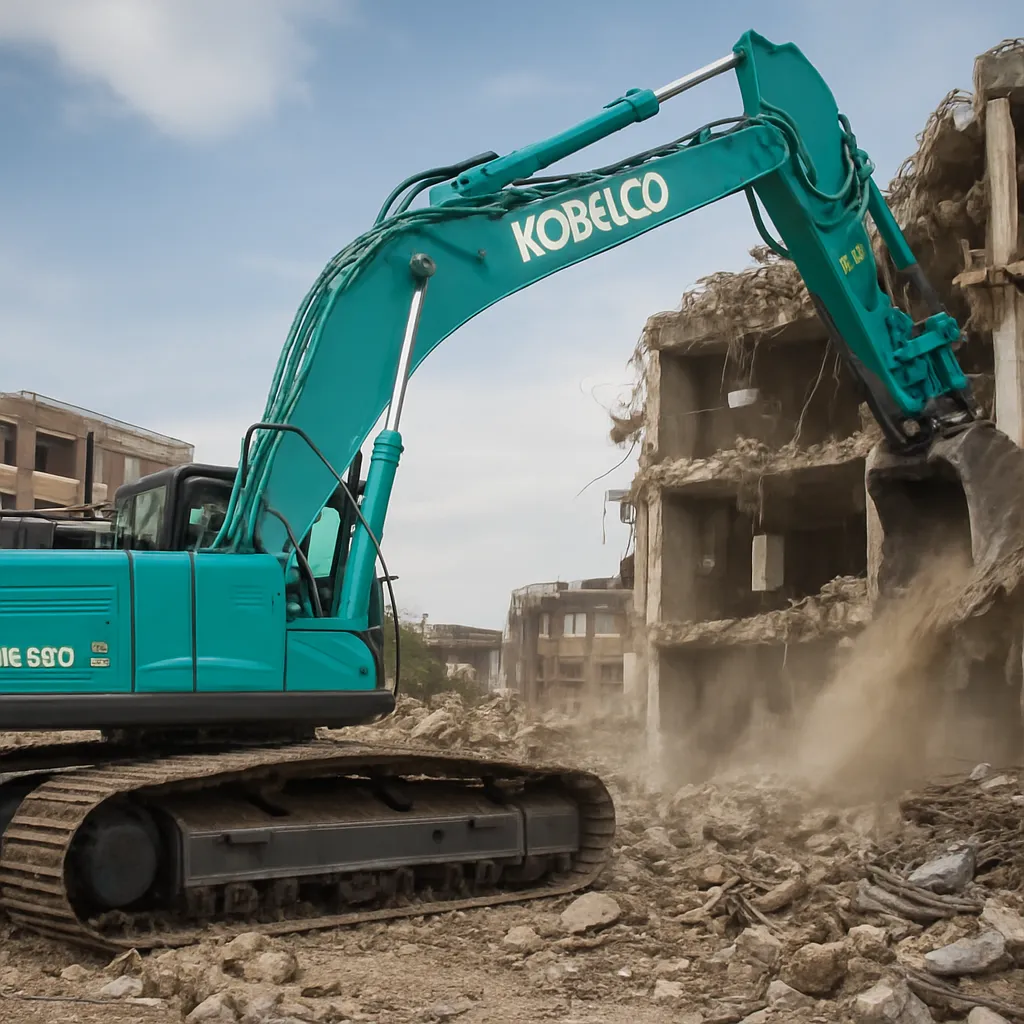
The Kobelco SK350DLC configured for demolition work is a purpose-adapted version of a mid-to-large class hydraulic excavator engineered to tackle demanding tear-down, concrete processing and selective dismantling tasks. This article explores the machine’s design features, typical applications, technical characteristics, operational best practices and the broader market and environmental context in which machines like the SK350DLC operate. Practical guidance for owners, operators and fleet managers is also included to help maximize productivity, safety and life-cycle value.
Overview and design features
The Kobelco SK350DLC in demolition specification is built from a baseline SK350 platform but fitted with specialized components and protections required by the demolition industry. Unlike standard construction excavators, demolition variants emphasize extended reach geometry, reinforced structures, enhanced boom and arm guarding, protected hydraulic lines, heavy-duty counters and easily serviceable undercarriages. The result is an excavator that trades some transport convenience for improved on-site resilience, operator protection and the ability to accept a variety of demolition-focused attachments.
Key design priorities for the SK350DLC (demolition) include:
- Stability and optimized counterweight for operating with long front attachments or heavy shears.
- Reinforced boom/arm connections and wear plates to handle extreme impact and tensile loads.
- Protected hydraulic circuits (armoring, sleeves, quick-disconnects) to minimize damage and downtime.
- Upgraded operator cab protection (ROPS/FOPS glazing options, mesh guards) and improved visibility aids.
- Modular attachment mounting systems for rapid changes between breakers, grapples, shears and crushers.
Manufacturers such as Kobelco also often offer factory or dealer-fitted demolition kits that include bespoke hydraulic valving, extended boom lengths, remote monitoring systems and undercarriage options to suit urban or heavy industrial demolition scenarios. These kits are designed to be integrated with the machine’s core electronics to maintain safe operation envelopes and fuel management functions.
Typical applications and use cases
Demolition-configured SK350DLC excavators are versatile on many fronts. Their most common applications include:
Building and structure demolition
- Selective strip-out and material segregation in multi-storey buildings where precision is needed to preserve nearby structures.
- Top-down or bottom-up dismantling when fitted with high-reach booms.
- Removal of reinforced concrete with hydraulic breakers, pulverizers and shears.
Industrial plant and metal structure removal
- Dismantling steel frames, pipe racks and conveyors using rotating shears and magnets.
- Processing scrap for recycling and loading into hauling equipment.
Bridge and civil infrastructure works
- Concrete deck removal and abutment dismantling in constrained or high-traffic locations.
- Using pulverizers and crushers to prepare material for re-use as aggregate.
Site clearance and recycling
- Sorting and segregating demolition waste — wood, metals, concrete and mixed materials — prior to transport or processing.
- Feeding crushers or conveyors in mobile recycling plants.
Because of its hydraulic power and adaptability, the SK350DLC is equally suitable for large urban renewals, selective interior deconstruction in residential/office complexes and heavy industrial removal where high reach and precise control are required.
Technical characteristics and performance
Exact technical specifications of the SK350DLC depend on the production year and the specific demolition package supplied by Kobelco or an authorized dealer. Below are representative figures and technical notes based on the SK350-class platform commonly used for demolition variants:
- Operating weight: Typically around 30–38 tonnes (approx. 30,000–38,000 kg) for demolition-spec SK350 variants. The additional counterweights and reinforced structures required for demolition can increase the machine’s in-service mass versus a standard excavator of the same series.
- Engine power: Commonly in the range of 160–220 kW (215–295 HP) depending on emission stage (Tier/Stage compliance) and regional configuration.
- Hydraulic flow: High-flow pumps and auxiliary circuits for demolition attachments are usually sized to deliver several hundred liters per minute (typical combined flow ranges from approx. 300–380 L/min on machines this size when fitted with high-flow options).
- Maximum digging/breaking force and reach depend on boom/arm selection: demolition booms extend reach to 10 m or more for mid-range high-reach setups; ultra high-reach configurations for specialized work can extend beyond this but typically with transport and stability trade-offs.
- Fuel capacity: Approximately 500–700 liters in many mid-to-large class excavators; actual consumption will vary widely by duty cycle but heavy demolition often results in fuel burn in the range of 10–25 L/hour depending on load.
- Cabin safety: ROPS/FOPS certified cabs (level dependent on spec), optional protective screens, polycarbonate glazing and operator restraint systems are standard in demolition packages.
Performance is measured not only in the brute metrics above but in how the platform integrates with attachments. On a demolition SK350DLC, the hydraulic system is calibrated to deliver smooth, predictable valve response under heavy cyclic loads — essential when controlling shears or crushers near existing structures. The structural reinforcement reduces long-term wear and allows the machine to retain residual value for longer despite heavy use.
Attachments and tools commonly used
One of the strongest arguments for using a purpose-built demolition excavator is the wide range of specialized attachments available. Common tools fitted to the SK350DLC include:
- Hydraulic breakers (pneumatic and hydraulic chisel hammers) for breaking slabs and concrete.
- Concrete pulverizers for crushing reinforced concrete and separating rebar.
- Rotating shears and fixed shears for cutting steel beams and columns.
- Grapples (demolition grapples, sorting grapples) for sorting and loading material.
- Hydraulic thumbs for precise picking and positioning.
- Multi-processor attachments offering combined cutting, crushing and pinching functions.
- Mandrel-mounted or boom-mounted magnets for scrap handling (where required).
- Pile-driving adapters and vibro-hammer setups for foundation work where machines are repurposed.
Attachment choice affects the machine’s hydraulic plumbing and auxiliary controls; many modern SK350DLC units support proportional electro-hydraulic controls and quick-couplers to minimize downtime when changing tools in the field.
Safety and site-management considerations
Demolition is among the most hazardous construction activities, and properly configured machines contribute directly to safer sites. Important safety measures linked to the SK350DLC include:
- Enhanced operator cab protection (mesh guards, reinforced glazing, escape hatches) and improved sightlines or camera systems for blind-spot mitigation.
- Hydraulic hose routing with armored sleeves and burst-protection valves to prevent sudden failures.
- Automatic idle and anti-stall logic to reduce the risk of unexpected movements when switching attachments.
- Remote-control operation options for extremely hazardous tasks where human presence in the cab is undesirable.
- Proximity sensing and load moment indicators (LMIs) to help operators maintain safe working envelopes.
From a site-management perspective, planning around machine placement, establishing fall zones, deploying exclusionary barriers and coordinating with structural engineers are all essential steps when the SK350DLC is used near occupied buildings or infrastructure.
Maintenance, uptime and life-cycle costs
Maintaining a demolition excavator like the SK350DLC requires a focus on the items that experience the greatest stress: booms and arms, pivot pins and bushings, hydraulic hoses and cylinders, undercarriage components and attachment coupling systems. Best practices include:
- Daily greasing of pins and routinely checking wear on bushings and linkages.
- Frequent inspection of hoses and protective sleeves, especially around the arm and boom where abrasion often occurs.
- Monitoring hydraulic oil condition and particle counts via regular sampling; severe contamination shortens pump and valve life.
- Using telematics (if equipped) to track operating hours, idling time, fuel usage and error codes — this data improves preventative service scheduling and component replacement timing.
- Maintaining a stock of common wear parts (sprockets, pads, pins) to minimize downtime in busy demolition schedules.
Life-cycle cost analysis typically shows that purpose-adapted demolition machines, while more expensive up-front, reduce total ownership cost for demolition contractors by lowering downtime, improving attachment life and improving operator safety and productivity. Fuel management and scheduled preventive maintenance are usually the two largest levers for reducing overall operating cost.
Operational tips for maximum efficiency
To get the best performance from a Kobelco SK350DLC in demolition roles, consider these practical tips:
- Use the correct boom and arm configuration for the job: longer reach for top-down work, shorter but more robust arms for heavy impact tasks.
- Match attachment hydraulic flow requirements to the machine’s auxiliary flow; using under-powered systems reduces throughput and increases cycle times.
- Plan demolition sequences to minimize repositioning; each travel cycle wastes time and increases track wear.
- Train operators in attachment-specific techniques such as controlled demolition with a pulverizer versus shearing; the right technique improves output and reduces machine strain.
- Utilize remote telemetry to monitor machine health and operator behavior; minor corrections can yield significant fuel and maintenance savings over a fleet.
Transport, logistics and regulatory considerations
Because demolition packages add weight and length, transporting an SK350DLC between sites often requires low-bed trailers and adherence to regional weight and dimension regulations. Important logistics considerations include:
- Confirming road permits for heavy or oversized loads well in advance — extra counterweights or long front booms can push the machine into higher permit categories.
- Ensuring safe lift points and securement when loading for transport; detachable demolition counters and booms can simplify compliance and reduce transport cost.
- Check local emissions regulations: many regions require Stage V/Tier 4 Final engines or the use of diesel particulate filters and selective catalytic reduction (SCR) systems; machines without compliant engines may need retrofit or be limited to certain job sites.
Environmental impact and emissions
Modern Kobelco engines and after-treatment systems are designed to meet strict emission standards. Demolition machines are typically fitted with engines that comply with Stage V (EU) or Tier 4 Final (US/EU-equivalent) regulations depending on the sale region. Key environmental measures include:
- Lower NOx and particulate emissions via advanced fuel injection, turbocharging and SCR/DPF technologies.
- Fuel-saving hydraulic logic and auto-idle features that reduce unnecessary fuel burn during waits.
- Options for biodegradable hydraulic oils and enhanced leak containment systems to reduce site contamination risks.
Contractors increasingly favor machines with demonstrable emissions control and fuel efficiency because of both regulatory constraints and corporate sustainability targets.
Market context and statistical perspective
While specific sales figures for the SK350DLC demolition variant depend on regional demand, the broader market for demolition and recycling equipment has shown steady demand driven by urban renewal, infrastructure replacement and sustainability-driven recycling targets. Notable industry trends include:
- Growth in demolition equipment demand in mature markets as cities prioritize brownfield redevelopment.
- An increasing share of fleet acquisitions focused on multi-purpose machines that can be quickly reconfigured between demolition, sorting and recycling tasks.
- Rising interest in telematics and data-driven maintenance programs, which reduce downtime and extend machine life.
From an operational statistic standpoint for machines in the SK350 class: average fuel consumption in heavy demolition cycles is commonly reported in the range of 10–25 L/hour; annual utilization hours for active demolition contractors vary widely but often fall between 1,200–2,200 hours per year. These figures drive purchasing decisions: given average operating costs, contractors expect a payback period measured in several years depending on utilization, attachment mix and resale values.
Case studies and real-world examples
Examples from demolition contractors worldwide demonstrate how a demolition-configured SK350DLC adds value:
- Urban multi-storey demolition where a high-reach boom attached to an SK350DLC allowed controlled deconstruction floor by floor, reducing noise and dust compared with explosives and enabling material segregation on site for recycling.
- Industrial plant dismantling where rotating shears removed steel frameworks and a sorting grapple segregated scrap for direct loading into 40-foot containers, improving logistics efficiency.
- Bridge repair projects where the SK350DLC’s stability and pulverizer tool allowed selective removal of damaged sections while preserving supporting beams until replacements were installed.
Operators in these case studies highlight the machine’s predictable hydraulic response, robust build and the importance of pairing the correct attachment to the job to achieve both speed and safety.
Buying considerations and tips
When evaluating an SK350DLC for demolition work, consider the following checklist:
- Is the machine offered with a factory-backed demolition kit, or will dealer/fleet retrofits be necessary?
- What are the available boom and arm geometries and their certified reach/working ranges?
- What protections are included for hydraulics, cab and undercarriage—and are they sufficient for the intended environment?
- Does the machine include modern telematics and diagnostics to support predictive maintenance?
- What is the availability and cost of refurbishment or replacement parts for demolition-specific components?
Factor in the whole life cost (acquisition + attachments + maintenance + fuel + disposal/resale) rather than purchase price alone. For many demolition contractors, a slightly higher initial capital expense for a purpose-adapted machine yields lower operating costs and improved uptime year over year.
Conclusions and final thoughts
The Kobelco SK350DLC tailored to demolition work is a capable, adaptable platform that balances strength, reach and hydraulic precision. Its value is most pronounced in environments where safety, material handling versatility and protected components reduce downtime and project risk. By pairing the SK350DLC with the correct tools, maintenance plan and telematics-driven oversight, demolition contractors can achieve high rates of throughput, reduced environmental impact and improved operator safety.
Whether used for urban building deconstruction, industrial dismantling or bridge remediation, the SK350DLC demolition configuration is a robust choice for fleets that require a dependable mid-large excavator capable of sustained heavy-duty service. The machine’s real-world performance depends on correct specification, operator training and ongoing maintenance practices—factors that ultimately determine the machine’s productivity and total cost of ownership.


)
)