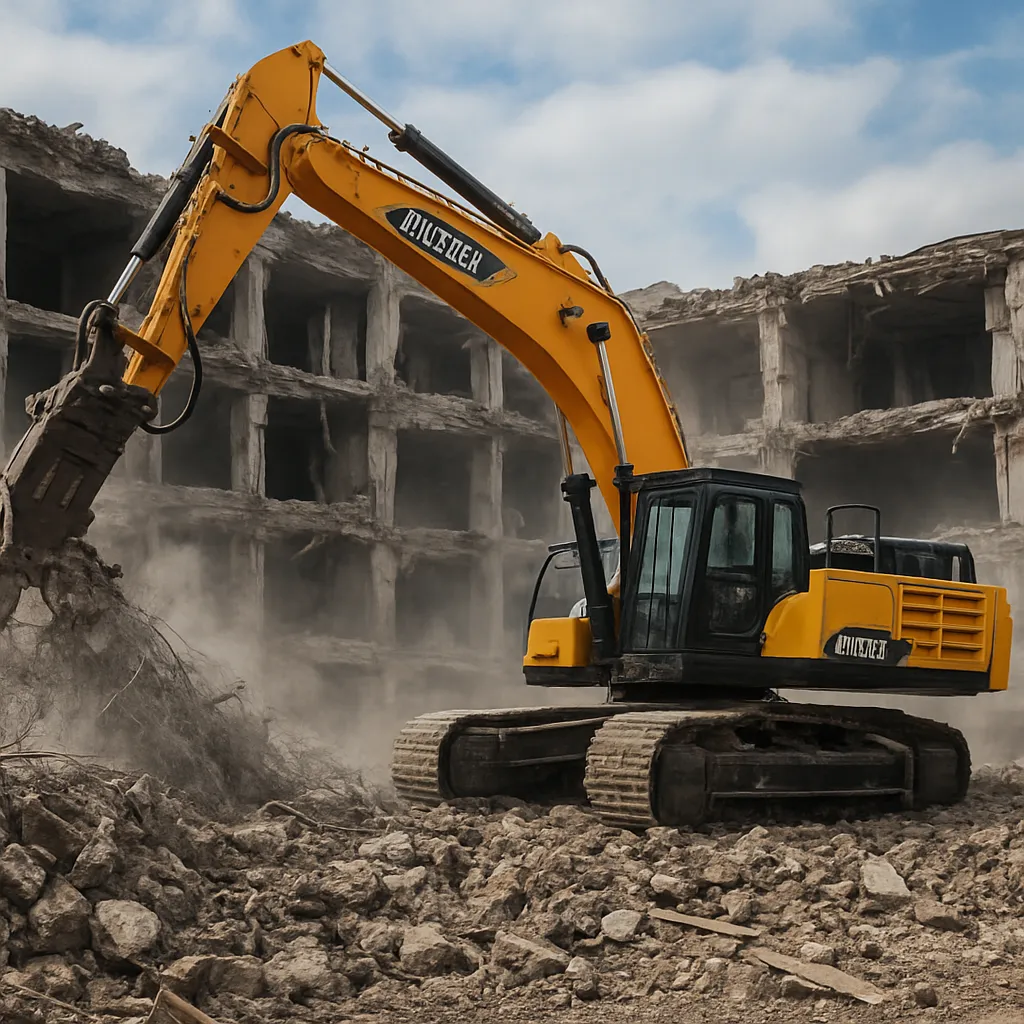
The SANY SY650H Demolition is a purpose-built heavy-duty excavator designed to meet the demanding needs of modern demolition and deconstruction projects. Combining robust structural design, advanced hydraulic systems and an array of specialized attachments, this machine targets contractors who require high reach, high impact performance and reliable uptime on complex demolition sites. The following article explores the machine’s core design principles, typical applications, operational advantages, safety and maintenance considerations, and market context — providing a comprehensive overview valuable for fleet managers, project planners and equipment enthusiasts.
Design and core characteristics
The SANY SY650H is engineered around a reinforced undercarriage and superstructure to withstand the dynamic loads that demolition work imposes. At its heart the machine relies on a powerful, efficient engine coupled with a sophisticated hydraulic system. The combination delivers smooth control of heavy attachments, precise force application and the ability to sustain prolonged, high-load cycles typical for concrete tearing, steel cutting and material handling.
Structural and drivetrain features
- Reinforced boom and stick geometry optimized for long-reach stability and reduced deflection during high-impact tasks.
- Heavy-duty counterweight arrangements and optimized center-of-gravity design to maintain stability when fitted with tall demolition booms or heavy grapples.
- Robust undercarriage components designed for frequent repositioning on uneven jobsite terrain — including wider tracks and durable rollers.
- Powertrain tuned for consistent torque delivery under load, minimizing thermal stress and enabling sustained productivity in arduous conditions.
Cab, controls and operator ergonomics
Modern demolition machines must provide both protection and situational awareness. The SY650H often comes with a reinforced cab and optional protective structures such as FOPS (Falling Object Protective Structure) and specialized glazing. Operator comfort and effective controls reduce fatigue and improve precision, which is critical given the complex sequences required in controlled deconstruction.
- Enhanced visibility layouts with large glazed areas and optional cameras for blind-spot mitigation.
- Ergonomic joysticks and adjustable seats to improve operator control and reduce long-shift fatigue.
- Intuitive monitoring systems displaying hydraulic pressures, temperatures and scheduled maintenance alerts.
Attachments and modular capability
One of the key strengths of the SY650H is its ability to accept a wide spectrum of demolition-specific attachments, turning a heavy excavator into a multifunctional tool for urban and industrial deconstruction.
- Hydraulic breakers for primary concrete and reinforced concrete fracturing.
- Shears for cutting structural steel and dismantling metal frameworks.
- Multi-processor pulverizers for crushing and processing concrete on site, enabling faster waste handling and recycling.
- High-reach booms and articulated arms to safely access upper sections of tall structures.
- Grapples and magnets for material sorting, scrap handling and site cleanup.
The choice of attachment significantly affects the machine’s effective reach, cycle time and fuel consumption. For example, a purpose-built high-reach boom increases the working height but may reduce lifting capacity at full extension; conversely, a short heavy-duty boom maximizes impact force for low-level demolition.
Applications and typical use cases
The SY650H is widely used across sectors where controlled, efficient demolition is required. Its design and attachments make it suitable for an array of tasks ranging from urban building dismantling to heavy industrial decommissioning.
Urban and high-rise demolition
In dense urban environments, the ability to perform selective deconstruction without collateral damage is critical. The SY650H equipped with a high-reach boom and precision attachments allows contractors to dismantle structures floor by floor. Advantages include reduced need for explosive methods, greater control over debris fall zones and improved worker safety.
Industrial and plant decommissioning
Large industrial facilities such as chemical plants, refineries and steel mills demand machines that can manage heavy steel sections, concrete containment structures and complex pipework. The SY650H’s shear and grapple options provide the cutting and handling capabilities necessary for safe dismantling and material segregation for recycling.
Bridge and infrastructure removal
Bridges, elevated roadways and structural foundations frequently require controlled removal to minimize disruption. The machine’s reach, lifting power and hydraulic responsiveness make it well suited for sequential removal of spans and reinforced concrete elements, often in tandem with barges or temporary supports.
Scrap handling and recycling operations
Outside of demolition, the SY650H is deployed in scrap yards and recycling facilities where heavy-duty grapples, magnets and shears process end-of-life materials efficiently. On-site processing reduces haulage costs and accelerates material resale or recycling.
Performance, productivity and operating economics
Understanding the SY650H’s operational productivity requires evaluating cycle times, fuel efficiency, uptime and attachment effectiveness. While absolute performance varies by configuration and job conditions, the machine is designed with metrics in mind to maximize project throughput.
- Hydraulic systems with optimized flow control provide rapid attachment response and smoother operations, improving cycle efficiency.
- Modular attachment coupling reduces changeover time, keeping the machine productive across varied tasks.
- Fuel-saving modes and engine management systems reduce consumption during idle or low-load periods.
- Onboard diagnostics and telematics (where fitted) allow remote monitoring of usage patterns and proactive maintenance scheduling, increasing availability.
From an economic perspective, the SY650H aims to lower total cost of ownership by improving fuel economy, simplifying maintenance access and maximizing attachment versatility. The ability to process materials on site also contributes to project cost savings through reduced transport and landfill fees.
Safety, maintenance and environmental considerations
Demolition work inherently involves elevated risk: falling debris, structural instability and hazardous materials. The SY650H incorporates features and best-practice procedures that address these risks while also minimizing environmental impact.
Safety systems and best practices
- Protected cab structures, reinforced glazing and optional wire mesh to protect the operator from falling objects.
- Integrated cameras, proximity alarms and audible warnings to reduce collision risk with personnel and other machines.
- Emergency egress procedures and rapid shutoff systems for hydraulic circuits.
- Adherence to site-specific safety plans, including exclusion zones, dust suppression and asbestos management where applicable.
Maintenance strategies
Routine maintenance is central to the longevity of heavy demolition equipment. The SY650H is designed for relatively straightforward servicing access to filters, hydraulic components and the powertrain. Recommended practices include:
- Scheduled oil and filter changes based on hours of operation and working conditions.
- Daily visual inspections for hydraulic hose integrity, wear on attachments and track condition.
- Regular lubrication of pivot points and checks on boom and stick pins to prevent accelerated wear.
- Use of genuine replacement parts and adherence to manufacturer torque and clearance specifications.
Environmental footprint
Modern demolition contractors are under increasing pressure to reduce emissions, control dust and maximize material recycling. The SY650H supports these objectives via fuel-efficient engine management, the ability to operate with on-site material processing attachments and compatibility with emission-compliant power units. When combined with dust suppression measures and careful waste sorting, the machine contributes to a lower environmental footprint for demolition projects.
Market positioning and statistical context
SANY is among the large global manufacturers of construction equipment and has strategically expanded its product lines to compete in specialized segments such as demolition. While exact market share figures vary by region and over time, several trends are relevant when evaluating the SY650H’s position:
- Global demand for heavy demolition machinery grows with urban redevelopment, aging infrastructure replacement and industrial decommissioning cycles.
- Contractors increasingly favor versatile machines that can be quickly reconfigured for different phases of a job — a factor in the SY650H’s design emphasis on attachment compatibility.
- Telematics and remote diagnostics are becoming standard expectations in fleet management, improving lifecycle performance and resale value.
Specific performance statistics for the SY650H (such as exact engine horsepower, operating weight and maximum reach) can vary depending on the chosen demolition boom, counterweight configuration and optional equipment. As a 60–80 tonne class machine in practical terms, operators typically see:
- High breakout forces with hydraulic breakers and pulverizers that rival or exceed comparable models from other OEMs when properly configured.
- Working reaches (with high-reach booms) in the range suitable for mid-rise structures, while specialized long-reach variants can extend working height substantially — subject to stability and lifting limits.
- Cycle times that remain competitive due to modern hydraulic control strategies and efficient powertrain calibration.
Case studies and real-world examples
Projects that demonstrate the SY650H’s strengths include selective floor-by-floor dismantling in urban redevelopment, where the machine’s precision and reach enabled removal of load-bearing elements while preserving adjacent structures. In industrial decommissioning, installations of shears and grapple combinations facilitated rapid separation of steel and concrete, improving recycling rates and reducing site clearance time.
One recurring theme across these implementations is the emphasis on planning: choosing the right combination of boom length, counterweight and attachments for the specific task resulted in measurable gains in both safety and productivity. Contractors report notable reductions in manual labor exposure, faster cycle completion and reduced cleanup times when the machine is used as part of an integrated demolition strategy.
Procurement, fleet integration and resale considerations
When integrating a machine such as the SY650H into a fleet, buyers should evaluate total cost of ownership, available attachments, service network and operator training programs. Key considerations include:
- Compatibility of attachments with existing fleet tools or whether additional investment is required for coupling systems.
- Availability of certified technicians and genuine parts within the operator’s region to minimize downtime.
- Telematics packages and data access that support preventive maintenance and utilization tracking.
- Residual value trends for heavy demolition machines — machines with documented maintenance histories and telematics often command higher resale prices.
Conclusion
The SANY SY650H Demolition machine is positioned as a versatile, heavy-duty solution for contractors facing complex deconstruction tasks. Its combination of reinforced structure, advanced hydraulics, and broad attachment compatibility makes it suitable across urban demolition, industrial decommissioning and infrastructure removal. While exact performance figures depend on specific configurations and attachments, the SY650H’s design emphasizes stability, operator protection and operational efficiency.
For contractors considering this model, the decision should balance required reach and impact force, attachment availability, local after-sales support and long-term maintenance planning. When deployed with appropriate safety procedures and matched attachments, the SY650H can significantly improve on-site productivity, reduce manual risk exposure and support higher rates of material recycling, aligning operational outcomes with modern regulatory and sustainability expectations.


)
)