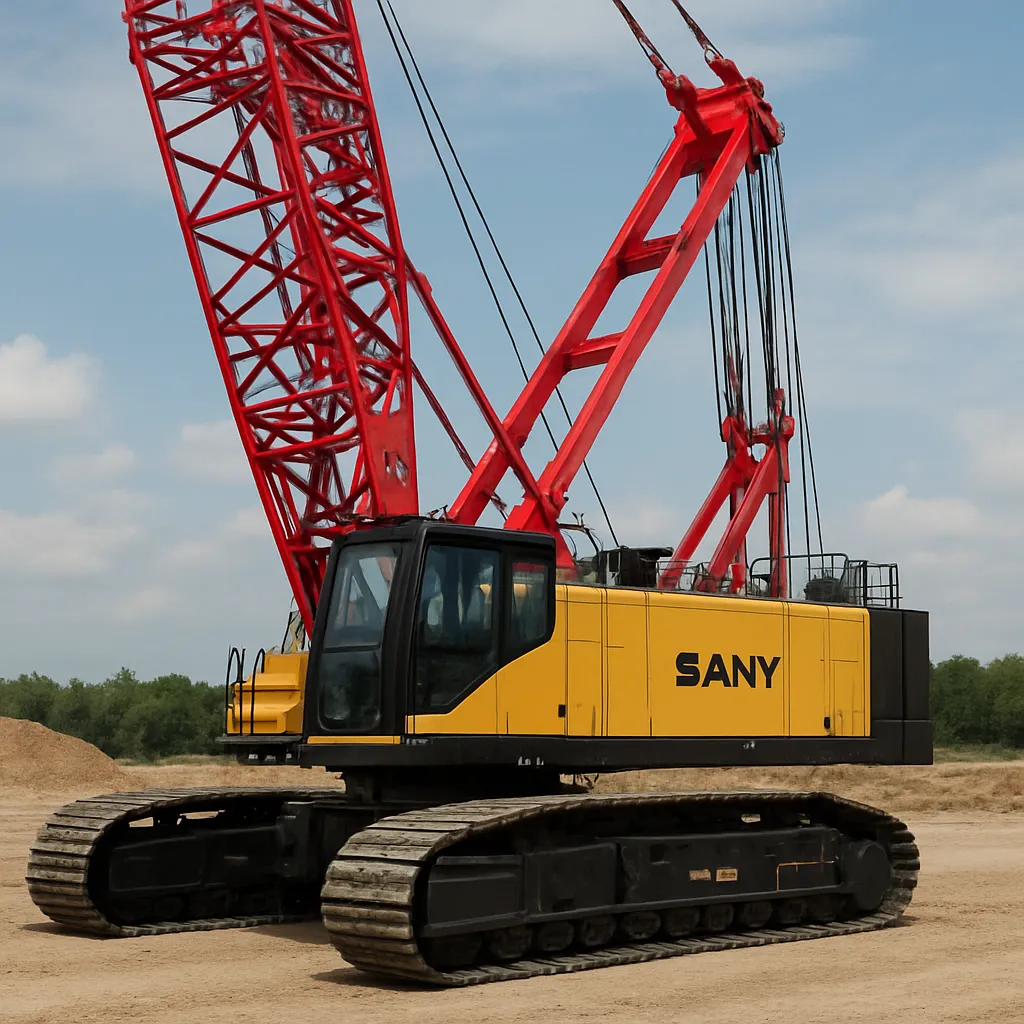
The SANY SCC6000A is a notable example of modern heavy lifting equipment in the class of large crawler cranes. Designed for demanding industrial and civil engineering projects, this machine blends robust mechanical design, modular assembly and advanced control systems to perform heavy lifts with high precision. In the following sections, you will find an in-depth look at the SCC6000A’s design philosophy, typical technical characteristics, practical applications, operational considerations, safety and maintenance aspects, and how it stands in the global market of large crawler cranes.
Overview and design philosophy
The SANY SCC6000A is engineered to meet the needs of projects that demand high-capacity lifting, mobility on rough terrain and reliable performance under continuous heavy use. As a crawler crane, it combines a tracked undercarriage for site mobility with a lattice boom and modular counterweight system to offer flexible configuration options. The design emphasizes modularity, which simplifies transport and assembly on constrained job sites and reduces downtime between lifts.
The machine’s structural concept typically features a welded lattice main boom made from high-strength steel sections, a heavy-duty superstructure containing winches and powertrain components, and a robust undercarriage with crawler tracks. This combination provides the rigidity and stability needed for large moment loads while allowing for relatively fast erection and teardown when compared with older monolithic crane designs.
Key technical characteristics and typical specifications
Exact factory specifications for the SCC6000A may vary by market and configuration. The following items describe commonly reported figures and configuration options for a crane in this class, presented as typical ranges rather than absolute guarantees.
Rated lifting capacity and boom configuration
- Rated lifting capacity: commonly up to approximately 600 tonnes in base configuration.
- Main boom: modular lattice sections allowing main boom lengths frequently in the tens to over 100 metres range, depending on how many sections are fitted.
- Jib and luffing jib options: combination jibs or luffing jibs can extend the working radius and operating height significantly; tip heights with jib extensions can often exceed typical main boom heights.
- Load charts: multiple load charts are provided for various counterweight and boom/jib combinations, enabling the crane to be optimized for lift capacity or reach depending on the job.
Powertrain, winches and hydraulics
- Power source: heavy-duty diesel engines or multi-engine configurations are common, providing the high torque and continuous power necessary for heavy lifting and travel under load.
- Winches: multiple hoist drums with different line speeds and capacities—usually a variety to support main hoist, auxiliary hoist and jib hoist—often equipped with planetary gearboxes and fail-safe braking systems.
- Hydraulics and control: electro-hydraulic systems and electronic controls manage hoisting, slewing and luffing. Modern models typically incorporate load moment protection and electronic diagnostics.
Under-carriage and mobility
- Crawler tracks provide high tractive force and stability on soft or uneven ground.
- Track gauge and length are designed for optimal ground pressure distribution; some models offer extendable or modular track segments to suit transport and site access requirements.
- On-site travel: the crane can reposition under its own power for relatively short distances, but long-distance movements are achieved via low-loaders or specialized transport configurations.
Counterweights and assembly
- Modular counterweight blocks allow tuning of the crane’s moment capacity to the chosen configuration. These blocks are stacked or rigged during assembly and are designed for efficient loading/unloading using auxiliary lifting equipment.
- Transportability: modular components (boom sections, counterweights, crawler segments) are sized for road transport constraints in most markets and to simplify logistics.
Applications and industries
The SCC6000A is suited to projects where heavy lifts, high reaches or precise positioning are required. Typical application areas include:
- Construction of high-rise buildings and complex structures where prefabricated modules or heavy structural elements must be installed.
- Bridge construction and erection of large bridge segments and girders.
- Power plant and energy sector projects, including installation of turbines, boilers and heavy equipment in thermal, hydroelectric and nuclear plants.
- Oil & gas and petrochemical industries, for installing pressure vessels, reactors and large piping modules.
- Wind energy: erection of towers and placement of nacelles and complete rotor hubs for large onshore wind turbines (site-specific suitability depends on soil and access conditions).
- Marine and port projects: heavy-lift operations at quayside, shipyards and offshore platform assembly yards (shore-based lifts).
- Mining and large-scale industrial plant maintenance where heavy components must be moved or replaced.
Operational performance and efficiency
Performance of the SCC6000A on-site is driven by several factors: configuration selection, operator skill, ground conditions and logistic planning. Some operational highlights:
- Flexibility: modular boom and counterweight systems permit optimization for either maximum capacity or extended reach, making the crane useful across a wide range of lift profiles.
- Precision: modern electronic control and feedback systems allow for smooth, controlled lifts with accurate positioning—critical when placing heavy components into tight tolerances.
- Fuel efficiency: while heavy crawler cranes consume significant fuel under heavy loads, advances in engine management and hydraulic control systems have improved overall fuel economy compared to older designs. Typical consumption varies widely with load cycle and operating conditions.
- Cycle times: dual or multi-drum winch arrangements and advanced drive trains reduce cycle times for multiple-line lifts, improving productivity on repetitive heavy lifts.
Safety systems and operator ergonomics
Safety is central to the design and operation of any large crawler crane. The SCC6000A incorporates a number of features aimed at protecting personnel, equipment and loads:
- Load moment indicator (LMI) and rated capacity indicators provide real-time feedback and block lifts that exceed safe working limits.
- Anti-two-block systems reduce the risk of hook block striking the boom tip, preventing catastrophic failures.
- Redundant braking systems and emergency stop functions are standard for hoist and swing motions.
- Operator cabins are typically designed for comfort and visibility, with ergonomic controls, climate control and noise reduction. Advanced display units provide diagnostics, load charts and live system health data.
- Remote monitoring and telematics (where fitted) enable fleet managers and service teams to track usage, maintenance needs and fault codes—contributing to safer operation through proactive servicing.
Transport, assembly and site logistics
One of the practical advantages of modern modular crawler cranes is relative ease of transport and staged assembly. Key considerations for deploying a machine like the SCC6000A include:
- Transport planning: boom sections, counterweights and crawler modules are typically sized for highway transport. Specialized trailers and permits may still be required depending on local regulations.
- Assembly time: with a pre-planned rigging sequence and availability of auxiliary cranes for counterweight handling, assembly and commissioning can be completed in an efficient time frame—though large lifts and tall boom configurations naturally require more complex setup.
- Ground preparation: crane mats, spreader beams and ground reinforcement are often necessary to reduce ground pressure and ensure stability, especially in soft or recently disturbed soils.
- Lift planning: detailed lift plans, engineered rigging analyses and coordination with other site activities are essential to minimize downtime, meet safety requirements and optimize the crane’s usage.
Maintenance, support and lifecycle costs
Keeping a heavy crawler crane like the SCC6000A in top condition requires a disciplined maintenance regime and access to spare parts and technical support. Considerations include:
- Scheduled maintenance: routine inspections of hoist ropes, sheaves, brakes, hydraulic systems and structural components are critical. Lubrication, filter changes and engine servicing follow manufacturer recommendations based on hours and duty cycles.
- Wear parts: components subject to wear—wire ropes, sheaves, seals and hydraulic hoses—should be monitored and replaced proactively to avoid unscheduled downtime.
- Service network: access to authorized service centers and trained technicians shortens repair times. SANY’s global dealer network provides varying levels of support depending on the region.
- Total cost of ownership: in addition to fuel and maintenance, owners should account for transportation, assembly/disassembly labor, insurance, permits and operator training when evaluating procurement or rental decisions.
Environmental and regulatory considerations
Large cranes operate in a range of regulatory environments. Modern models take into account emissions, noise and site disturbance:
- Engine emissions: diesel engines must comply with local emissions regulations; in many markets Tier/Stage emission standards or equivalent apply. Retrofit or alternative fuel strategies may be used where strict limits exist.
- Noise control: sound-dampening measures in the superstructure and operator cabin, as well as operational best practices, help reduce noise impact on nearby communities.
- Permitting and site access: oversize load permits, road escorts and temporary road closures are commonly required for transporting large crane components. Environmental surveys may also be necessary for sensitive sites.
Market position and comparison with peers
SANY is a major global manufacturer of construction machinery and heavy equipment, offering a range of crawler cranes that compete with established international brands. When assessing the SCC6000A relative to competitors, consider:
- Price-to-performance: cranes from manufacturers based in Asia often offer competitive pricing for a given specification, which can be attractive to contractors balancing CAPEX and project timelines.
- Local support: established brands with deep dealer networks may offer faster parts delivery and localized service; it is important to evaluate dealer presence in the region of operation.
- Technology and features: many modern cranes share common safety and control technologies, but the level of electronic diagnostics, telematics and optional features varies by manufacturer and model.
- Resale and rental market: market acceptance and brand reputation affect resale values and rental availability, both of which impact lifecycle economics.
Case studies and typical project use-cases
While specific project names vary, common scenarios where a machine like the SCC6000A shines include:
- Installation of heavy reactor vessels in a petrochemical plant: the crane’s capacity and precision make it suitable for lifting multi-ton pressure vessels and placing them on prepared foundations.
- Bridge segment erection: when prefabricated box girders or concrete segments are transported to site, a large crawler crane can lift and position them with the necessary reach and control.
- Power plant turbine installation: the weight and sensitivity of turbine components require careful handling; the SCC6000A’s load control and boom options enable safe installation sequences.
- Modular building placement: increasing use of prefabricated modular units in construction creates demand for cranes that can lift and accurately place large, heavy modules.
Practical tips for buyers and fleet managers
When considering acquisition or rental of an SCC6000A or a similar crane, keep the following practical points in mind:
- Define your lift envelope: map out maximum reach and capacity requirements to determine whether a 600-ton class crane is the right fit or if a smaller/larger unit would be more economical.
- Evaluate site constraints: consider access roads, ground capacity, nearby structures and permit requirements that influence transport and assembly plans.
- Plan for support equipment: auxiliary cranes, transporters and rigging gear are often required for assembly and counterweight handling—ensure these resources are available and scheduled.
- Operator training: invest in certified operator training specific to the crane model to maximize safety and productivity.
- Service agreements: negotiate spare parts availability and service-level agreements with suppliers or dealers to minimize downtime risk.
Common limitations and how to mitigate them
Large crawler cranes offer great capability but come with constraints:
- Site footprint: due to counterweights and the need for stable ground, large cranes require significant setup space. Mitigation: use ground mats, soil stabilization techniques and select modular counterweight configurations to reduce footprint.
- Transport complexity: moving large components can be logistically intensive. Mitigation: detailed transport planning early in the project lifecycle and sourcing local transport specialists helps minimize delays.
- Weather sensitivity: high winds and severe weather limit boom operations. Mitigation: plan lifts during favorable weather windows and use dynamic assessments for gust conditions.
Summary and outlook
The SANY SCC6000A represents a robust option in the heavy lifting segment, offering a combination of modularity, lift capacity and modern control systems. It is applicable across a wide spectrum of industrial and civil engineering projects where heavy components must be moved safely and precisely. Success with such a crane depends not only on the machine’s capabilities but also on meticulous planning, experienced operators, and strong logistical and maintenance support.
For projects that require heavy lifts with varying reach and height demands, the SCC6000A’s flexibility in boom configuration and counterweight arrangement can make it a cost-effective and reliable choice. When evaluating this crane, pay close attention to site-specific requirements, local support infrastructure and total lifecycle costs to ensure the best match between machine performance and project needs.


)
)