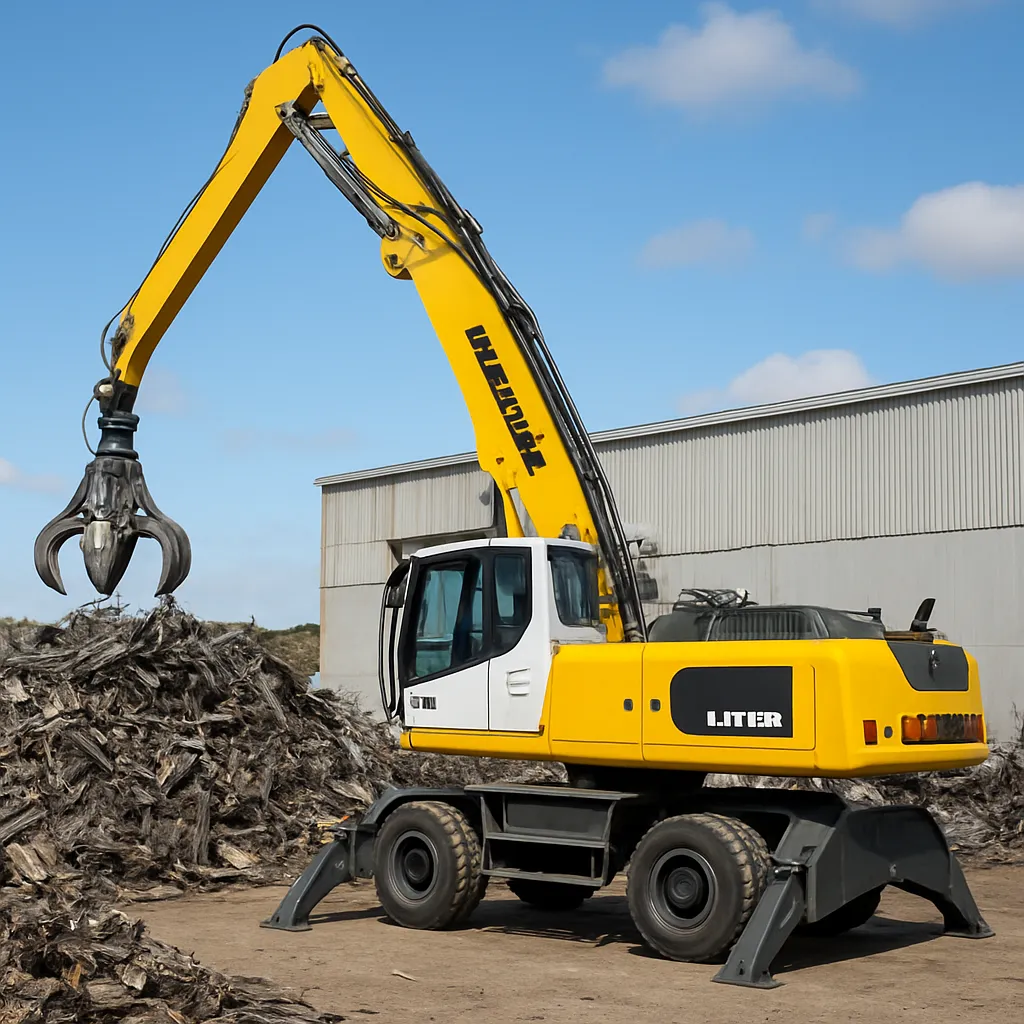
The Liebherr LH 60 is a versatile medium-class material handler designed for demanding tasks in scrap yards, recycling centers, ports and timber handling operations. Combining robust construction, flexible attachment options and operator-focused features, the LH 60 aims to deliver high productivity, low lifecycle costs and strong uptime. This article describes the machine’s design, common applications, operational characteristics, maintenance and safety aspects, plus market considerations and practical tips for owners and operators.
Design and main technical characteristics
The LH 60 belongs to Liebherr’s family of dedicated material handlers. These machines differ from traditional excavators by having a raised, often rotating cab and an undercarriage designed to facilitate 360° visibility and manoeuvrability around handling sites. The LH 60 is engineered to balance reach and lifting capacity with mobility, making it suitable for medium-scale material handling tasks.
Chassis and mobility
The LH 60 is typically offered on both tracked and wheeled undercarriages, depending on the intended environment. The tracked variant provides superior stability and flotation on uneven surfaces, while the wheeled version offers faster travel speeds and easier repositioning on paved surfaces commonly found at ports and recycling yards. The undercarriage is reinforced for heavy cyclical loads and is designed for straightforward service access.
Powertrain and hydraulics
The machine is powered by a robust diesel engine compliant with relevant emissions standards for the market and model year. Its hydraulic system is optimized for parallel movements and smooth control of heavy-duty attachments. Multiple hydraulic circuits allow simultaneous operation of functions such as swing, boom, stick and attachment actuation. This design supports rapid cycle times and precise handling.
- Engine: market- and year-dependent diesel engines with power output tailored to handling demands.
- Hydraulic pumps: high-flow axial piston pumps providing consistent oil flow under load.
- Controls: proportional electro-hydraulic or pilot controls for sensitive attachment management.
Operator environment
The cab of the LH 60 is elevated and often equipped with a panoramic glazed front and optional protective guards. Ergonomic seating, intuitive joysticks and a multi-function display enhance operator comfort and precision. Climate control, sound insulation and adjustable control layouts reduce fatigue during long shifts. Visibility is further aided by camera systems and optional work lighting packages for night or low-light operations.
Applications and typical use cases
The LH 60 is frequently selected where a combination of reach, dexterity and reliable cycle performance is required. Common applications include:
- Scrap handling: Loading and sorting ferrous and non-ferrous metals for shredders, balers and transport vehicles.
- Recycling facilities: Sorting mixed waste streams, moving bulky recyclable materials and feeding processing lines.
- Ports and terminals: Transshipment of breakbulk and general cargo, handling loose timber, scrap and other bulk goods.
- Timber yards: Stacking and loading logs, turning timber for processing and loading onto trucks.
- Bulk material yards: Handling aggregates, compost, biomass and other materials where reach and throughput matter.
Its adaptability to different attachments makes the LH 60 particularly valuable in operations where multiple tasks are performed with a single carrier. Switching between a grapple, magnet and clamshell can transform the machine’s role within a single shift.
Attachments and configurations
One of the greatest strengths of the LH 60 is its attachment versatility. Liebherr and third-party suppliers offer a wide range of tools engineered to fit the machine’s hydraulic and mechanical interfaces.
- Orange peel grapples: Ideal for irregular bulky scrap and recycling material. They provide secure handling and quick rotation to support loading and sorting.
- Demolition and sorting grapples: Designed for precise picking and placing of large or awkward items.
- Electro-hydraulic magnets: Used in scrap yards for rapid separation and movement of ferrous metals. Magnet power and lift characteristics are matched to the carrier hydraulics.
- Clamshell buckets and grabs: Suited for bulk loading and unloading operations in ports and bulk material yards.
- Wheel and boom variants: Custom boom lengths and stick configurations extend reach or increase breakout force depending on job demands.
Quick-coupler systems reduce downtime during attachment changes, while integrated hydraulic circuits and control presets simplify operator handling of different tools. Many operators opt for attachment lockers and on-board storage to minimize tool-change times in large facilities.
Performance data and operational statistics
Exact specifications for the LH 60 vary by market, production year and chosen configuration. However, general performance ranges can be summarized to provide guidance for procurement and operation planning.
- Operating weight: typically in the medium machine class, often ranging between 18 and 30 tonnes depending on undercarriage and counterweight options.
- Maximum reach: depending on boom and stick, commonly between 8 and 12 metres from the swing axis to the attachment tip; extended configurations can reach further for specific tasks.
- Lift capacity at short radius: commonly several tonnes at close-in lifts, with capacity decreasing at full outreach (exact charts are configuration-specific).
- Engine power: typically in the mid-range for material handlers, tailored to hydraulic demands and emissions regulations for the region.
- Fuel consumption: highly dependent on duty cycle and attachment; a practical working range often cited for similar machines is roughly 10–30 litres per hour under load, with idling and light work significantly lower.
- Cycle times: optimized hydraulics and operator controls yield fast pick-and-place cycles compared with generic excavators retrofitted for handling tasks.
Prospective buyers should consult the manufacturer’s load charts and configuration-specific datasheets to determine exact lifting capacities and safe working limits for their chosen setup. Suppliers often provide simulation or on-site trials to validate performance for particular tasks.
Maintenance, uptime and lifecycle costs
Material handlers like the LH 60 are built for continuous, cyclical operation. Effective maintenance strategies directly influence uptime and total cost of ownership.
Regular service items
- Engine oil and filter changes at manufacturer-recommended intervals.
- Hydraulic oil condition monitoring and filter replacement.
- Inspection and greasing of boom, stick and slew bearings.
- Undercarriage wear checks for tracked models and tyre inspections for wheeled variants.
- Attachment inspection, including pins, bushings and hydraulic hoses.
Planned preventive maintenance, combined with condition monitoring via telematics, reduces the risk of unexpected failures. In addition, use of high-quality consumables and rapid access to spare parts shorten downtime in high-throughput operations.
Telematics and remote diagnostics
Liebherr machines are commonly equipped or compatible with telematics platforms (such as LiDAT) that provide remote monitoring of machine hours, maintenance alerts, fuel consumption trends and fault codes. Remote diagnostics enable faster troubleshooting and allow fleet managers to schedule service proactively. Telematics data can also be used to track utilization, optimize deployment across sites and analyze operational efficiency.
Safety features and operator support
Safety is paramount in handling applications where heavy loads, close personnel proximity and dynamic site conditions intersect. The LH 60 incorporates multiple safety features to protect operators and nearby workers.
- ROPS/FOPS-rated cabs and optional protective guards for glass and external surfaces.
- Advanced visibility packages, including rear and side cameras and 360° lighting for night operations.
- Load management systems and operator alerts to prevent unsafe lifting beyond configured limits.
- Fail-safe hydraulics and emergency lowering circuits to secure loads in case of system fault.
- Operator training programs and simulator-based familiarization to reduce human error and improve cycle efficiency.
Many operators also adopt site-specific procedures such as defined exclusion zones while lifting and walkways for ground personnel to minimize exposure to swing arcs and falling materials.
Economic and environmental considerations
When assessing the LH 60 for purchase or lease, owners should weigh both the direct operating costs and broader environmental factors.
- Fuel efficiency: Improved hydraulic integration and engine management reduce fuel per tonne moved when compared with older or less specialized carriers.
- Emissions compliance: Modern engines and aftertreatment systems enable adherence to regional emissions standards (e.g., Stage V / Tier 4 Final where applicable).
- Resale and lifecycle value: Liebherr’s brand recognition and robust build quality support second-hand values, though ultimate resale depends on maintenance history and working hours.
- Operational flexibility: The ability to operate multiple attachments reduces the need for additional machines, lowering capital expenditure and site footprint.
Environmental gains can be amplified by operator training for fuel-efficient techniques, using eco-modes, and scheduling to minimize idle time. For operations seeking further decarbonization, retrofits or emerging electric/hybrid carrier technologies are a market trend to watch, though suitability depends on duty cycles and infrastructure.
Choosing the LH 60: procurement and lifecycle tips
Deciding to invest in an LH 60 requires analysis of the specific tasks, site conditions and total cost of ownership. Consider these practical guidelines:
- Match boom and stick geometry to the site’s required reach and lift profiles. Over- or under-specifying can cost efficiency.
- Evaluate undercarriage type against ground conditions: tracks for soft or uneven terrain, wheels for paved or port environments.
- Plan attachments based on the primary workflow; a single high-value attachment that solves multiple tasks reduces changeover downtime.
- Factor in telematics subscriptions and support services for large fleets; the data helps optimize utilization and maintenance.
- Secure operator training and a relationship with a reputable dealer for parts and service to preserve uptime and resale value.
Market context and comparison
The LH 60 competes in a segment populated by specialized material handlers from several major OEMs. Buyers often compare machines on metrics such as net productivity (tonnes/hour), fuel consumption per throughput, attachment compatibility, operator comfort and dealer support. The LH 60’s advantages typically cited by users include strong ergonomics, proven hydraulic performance and flexible configuration options.
For companies operating mixed fleets, the LH 60 can complement larger and smaller handlers by filling a mid-size role that offers both reach and manageable operating costs. Its relative maneuverability and lower axle loads (for wheeled versions) make it attractive in multi-purpose facilities.
Practical examples and field reports
Field reports from recycling and scrap facilities often highlight the LH 60’s ability to maintain continuous cycles when equipped with a matched grapple or magnet. Typical operational improvements noted include:
- Faster loading times due to improved operator visibility and precise electro-hydraulic controls.
- Reduced labor reliance because a single operator can accomplish multiple handling steps.
- Lower maintenance downtime when proactive telematics-based servicing is implemented.
Users also emphasize that attachment choice and matching hydraulic flow are critical to realize potential productivity gains. Trials or rental periods before purchase are recommended for new applications.
Summary and final considerations
The Liebherr LH 60 is a purpose-built material handler aimed at operators who require a balance of reach, lifting capability and operating economy. With a range of undercarriage choices, diverse attachments and modern operator aids, it fits applications from scrap handling to port and timber operations. Key advantages include responsive hydraulic performance, optional telematics integration for improved fleet management and a cab designed for safety and comfort.
Prospective buyers should consult configuration-specific technical sheets for precise lifting charts, engine outputs and weights, and involve experienced dealers for site-matching advice. When properly specified and maintained, the LH 60 can deliver strong productivity, predictable lifecycle costs and flexible service across a wide range of material handling environments.


)
)