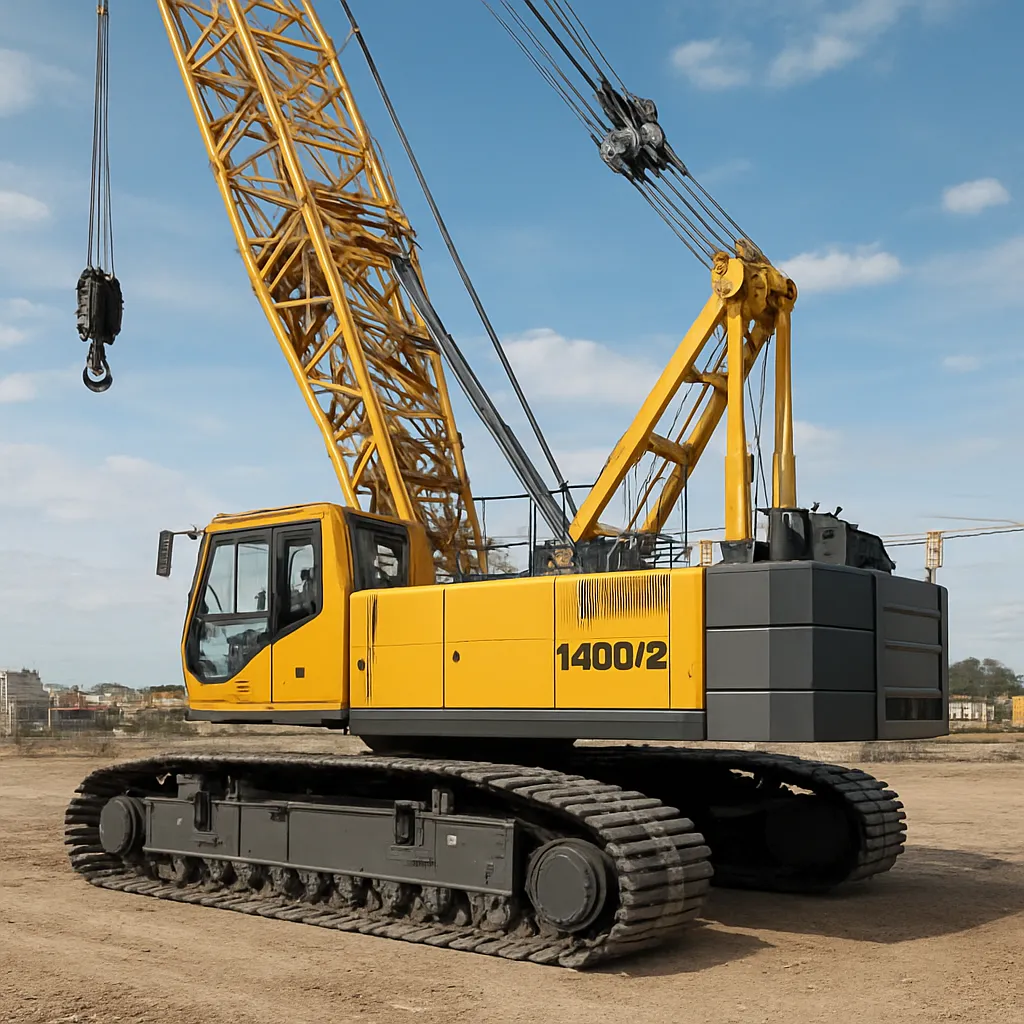
The Liebherr LR 1400/2 is a heavy-duty crawler crane designed for large-scale lifting tasks in demanding environments. Combining robust structural engineering with modular transportability and advanced control systems, this machine serves multiple industries where high capacity and stability are critical. Below you will find an in-depth look at the machine’s design, typical applications, technical characteristics (with approximate figures where commonly reported), transport and assembly considerations, safety and maintenance aspects, and real-world usage examples. The goal is to provide a comprehensive resource for engineers, site managers, equipment planners, and enthusiasts interested in the capabilities and practicalities of the LR 1400/2.
Overview and Design Philosophy
The LR 1400/2 embodies Liebherr’s long-standing focus on combining power with adaptability. As a purpose-built crawler crane, it uses a tracked undercarriage that provides high ground-bearing capacity and exceptional stability on uneven terrain. The crane is intended for heavy lifts where mobility on soft or rough ground is required, and where traditional wheeled mobile cranes might be impractical.
Key design priorities include a high load-bearing capacity, modular transport and erection components, reliable power systems, and operator-friendly control and safety features. The crane’s architecture balances a heavy-duty lattice boom and lattice jib system with an efficient counterweight and slewing mechanism to deliver predictable performance across a variety of lifting scenarios.
Technical Characteristics and Typical Specifications
Below are commonly cited technical characteristics for the LR 1400/2. Exact values can vary by configuration (boom/jib options, counterweight setup, and optional equipment) and model updates, so the figures given are approximate and intended as representative benchmarks.
- Rated lifting capacity: approximately 400 tonnes (metric) maximum, depending on radius and configuration. This figure refers to the machine’s maximum static lift in an optimal configuration.
- Main boom length: typical lattice main boom options range from roughly 24 m up to around 60–80 m in modular sections, permitting flexible combinations for different jobs.
- Jib options: various lattice or telescopic jib sections can be fitted to extend reach and hook height; common auxiliary jib lengths add 20–60 m depending on job needs.
- Counterweight system: modular counterweights allow on-site adjustment; total counterweight mass can reach one to a few hundred tonnes in heavy configurations to balance high-load lifts at larger radii.
- Drive and power: diesel engine(s) powering hydraulic pumps and slewing gears; engine power is typically in the high-horsepower class sufficient for heavy-duty continuous operation (often several hundred kW in combined gross power).
- Travel & ground pressure: as a crawler machine, travel speed is low but adequate for site repositioning; low ground pressure is achieved through wide crawler shoes and is favorable for soft ground.
- Slewing system: heavy-duty slewing ring with hydraulic drive and precise control for accurate load placement.
- Operator systems: ergonomic cab with modern instrumentation, load moment indicators (LMI), electronic safeties, and optional remote monitoring/diagnostics.
Notes on figures: the LR 1400/2 is one of Liebherr’s mid-to-high capacity LR-series crawler cranes and its exact maximum lift, boom length, and counterweight configuration depend on how it is built up on-site. Many rental companies and owners configure it differently to match project requirements.
Applications and Typical Use Cases
The LR 1400/2 finds use in a broad range of heavy construction and industrial projects. Its combination of high lift capacity and tracked mobility make it especially suitable when heavy components must be placed in sites with limited access or soft ground.
- Power generation: erection, maintenance, and component replacement for wind turbines, gas turbines, and steam turbines. The crane’s reach and capacity are useful during nacelle installation and tower assembly phases.
- Petrochemical and process plants: installing heavy vessels, heat exchangers, reactors, and large piping modules where confined site laydown areas and complex lifts are common.
- Mining and material handling: positioning crushers, conveyors, and large mining equipment parts in remote or uneven terrain.
- Infrastructure and civil engineering: bridge segment placement, precast concrete erection, and heavy foundation works where large lifting capacity and stability are required.
- Marine and port works: quay gantry support, heavy mooring equipment installation, and offshore substructure assembly when performed from shore or barges (with specific marine preparation).
Because the machine is a crawler crane, it is often selected for projects where the combination of travel across rough ground and lifting power reduces the need for additional heavy transport and support equipment.
Transport, Assembly and Site Preparation
One of the LR 1400/2’s strengths is its modularity. Major lattice boom sections, crawler frames, and counterweight blocks are designed to be transported by heavy-duty trucks and trailers. Assembly and disassembly are often performed on-site using mobile cranes or by using the crane’s own assembly aids when possible.
- Transport: components are broken down into manageable modules. Planning transport routes, permits, and lifting plans is essential due to the size and weight of modules.
- Assembly time: depends on complexity; a standard build-up for a typical lift can take several days to weeks including crawler assembly, installing the boom and jib, and assembling counterweights.
- Site preparation: ground-bearing calculations are essential. The tracked undercarriage reduces required surface preparation compared to wheeled cranes, but adequate levelling and crane mats or foundation pads are often used for heavy lifts to distribute loads and ensure safety.
Good logistical planning reduces downtime and transportation costs. For international projects, modular design enables containerized or heavy-lift shipping of sections, though local road restrictions and crane routing must be accounted for.
Operation, Control and Safety Features
Modern Liebherr crawler cranes like the LR 1400/2 incorporate multiple systems to improve operational safety and lift accuracy.
- Load moment indicator (LMI): an electronic system that continuously monitors boom angle, extension, and load, providing real-time warnings and automatic intervention if limits are approached.
- Stability management: counterweight monitoring, boom geometry controls, and operational interlocks reduce the risk of overload or overturning.
- Ergonomics and controls: operator cabins are typically climate-controlled with clear displays, joystick controls, and integrated diagnostics to reduce operator fatigue and improve precision.
- Remote monitoring: many newer units support telematics for fuel use, engine status, maintenance intervals, and remote diagnostics—improving uptime and predictive maintenance.
Operators must be certified for heavy crane operation in their jurisdictions, and lifts often require lift plans, qualified riggers, and signalers. Regular crane inspections, both visual and functional, are mandated by regulatory bodies and recommended by manufacturers.
Maintenance, Lifecycle and Total Cost of Ownership
Maintenance of a large crawler crane like the LR 1400/2 is a significant part of its lifecycle cost. Key considerations include preventative maintenance schedules, parts availability, and skilled technicians.
- Routine maintenance: daily checks, lubrication of slew rings, periodic hydraulic system inspections, filter and fluid changes, and track and undercarriage service.
- Major servicing: engine overhauls, replacement of wear parts in crawlers, and inspection or replacement of boom pins and lattice members as required.
- Spare parts: proximity to supplier networks (Liebherr dealers) reduces downtime. Owners often keep critical spares such as pins, hydraulic hoses, and sensor modules on hand.
- Resale and lifecycle: crawler cranes built by major manufacturers maintain value reasonably well if maintained properly; refurbishment is common for extending service life.
Good maintenance discipline, combined with modern telematics, can significantly reduce unscheduled outages and improve overall availability on long projects.
Advantages and Limitations
The LR 1400/2 presents a compelling set of advantages—and also some practical limitations—to consider when selecting equipment for a project.
- Advantages:
- High lifting capacity in a relatively compact footprint for a crawler machine.
- Excellent off-road mobility and low ground pressure for soft-surface worksites.
- Modular configuration allows tailoring capacity and reach to specific lifts.
- Proven safety systems and operator aids reduce operational risk.
- Limitations:
- Transport and assembly require heavy logistics and potentially additional lifting equipment.
- Slower repositioning on site compared with wheeled mobile cranes when long-distance travel is required.
- High capital and operating costs relative to smaller cranes; best justified for heavy, infrequent lifts or long-term large projects.
Case Studies and Practical Examples
Examples where machines like the LR 1400/2 have been employed include:
- Wind farm installation: using the crane to lift nacelles and long blades into position on onshore turbine towers where road access is limited and ground conditions are soft.
- Petrochemical plant turnaround: lifting large exchangers and vessels during maintenance windows where precision placement and heavy capacity are necessary.
- Bridge construction: setting large precast segments where crawler mobility over temporary works is required and heavy counterweight setups provide safe operations at extended reaches.
In each scenario the combination of tracked mobility, high capacity and modular boom options enabled lifts that would otherwise require multiple smaller cranes or complex lift sequencing, often saving overall project time.
Environmental and Regulatory Considerations
Operating large crawler cranes requires compliance with environmental and safety regulations. Typical considerations include:
- Noise and emissions: diesel engines should meet local emissions standards; some projects require low-noise or low-emission equipment, which may necessitate additional exhaust treatment or newer engine packages.
- Ground protection: measures to protect sensitive surfaces or minimize soil compaction, including crane mats and spreader beams beneath tracks.
- Permitting: transport permits for oversized loads, lift permits for certain public works, and environmental clearances depending on the site.
Purchasing vs Renting — Economic Considerations
Deciding whether to purchase an LR 1400/2 or to rent one depends on project profile and fleet strategy:
- Renting: attractive for single projects, infrequent heavy lifts, or when transport and storage costs are high. Rentals typically include support from the rental company for transport and assembly.
- Purchasing: makes sense for contractors doing recurring heavy lifts over many years, as ownership can lower long-term cost per lift but requires capital, maintenance staff, and storage.
- Operational planning: lifecycle costs—fuel, parts, maintenance, insurance, transport, and operator training—should be included in any total cost analysis.
Summary and Final Remarks
The Liebherr LR 1400/2 is a powerful, versatile crawler crane well-suited for heavy lifting tasks in challenging terrains and industrial environments. With an approximate maximum lifting capacity in the vicinity of 400 tonnes, modular boom and counterweight systems, and proven safety and control technologies, the LR 1400/2 is a preferred choice for demanding projects such as power generation, petrochemical installations, bridge construction, and large-scale infrastructure works.
Site planners and project managers should carefully evaluate the logistical requirements of transport and assembly, maintenance commitments, and the economic trade-offs between rental and ownership. When properly specified and maintained, the LR 1400/2 provides a reliable platform for heavy lifts where stability, reach, and lifting power are the primary requirements.
Key highlighted terms:
- Liebherr
- LR 1400/2
- crawler crane
- capacity
- 400 tonnes
- boom
- counterweight
- transport
- hydraulic
- modular


)
)