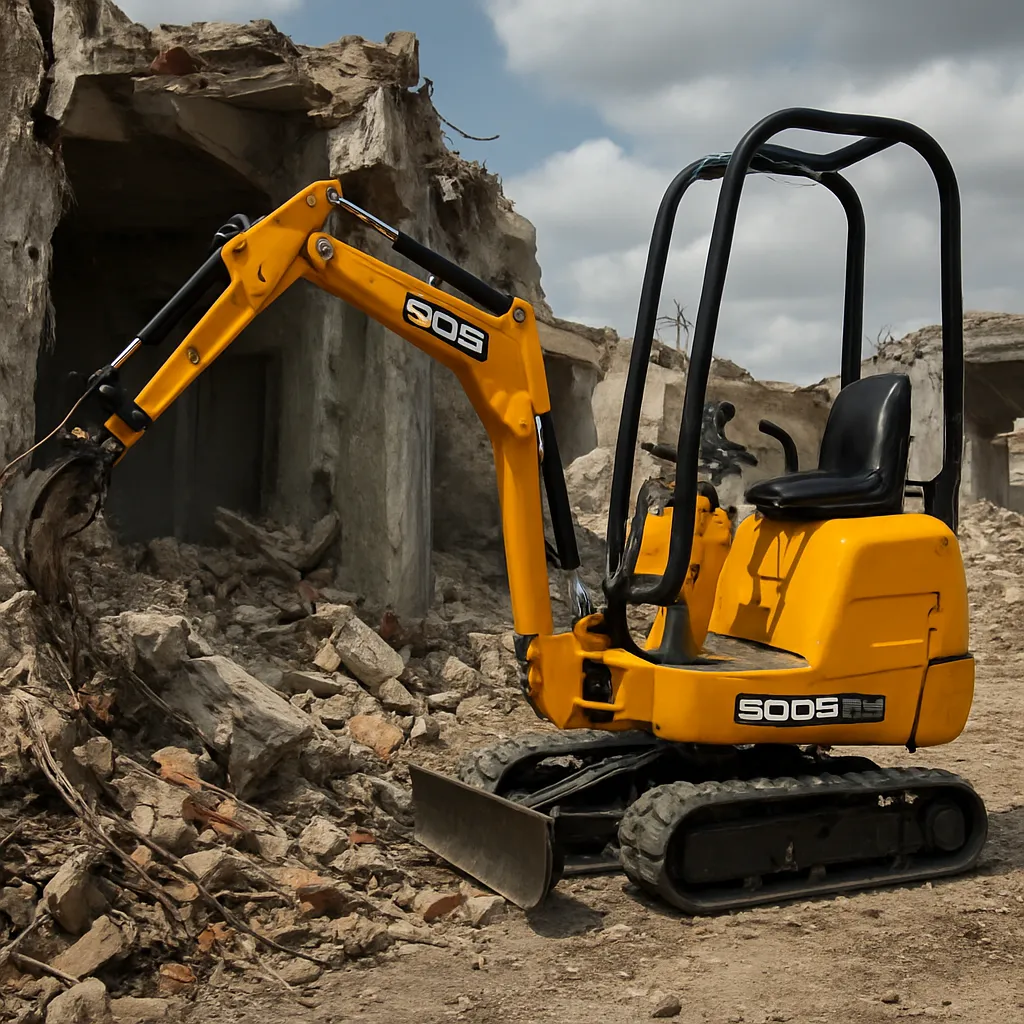
The JCB 8008 CTS is a specialist machine in the world of ultra-compact demolition and excavation equipment. Designed to operate in confined spaces where larger machines cannot reach, this model blends small footprint mobility with the robustness expected of a demolition-capable crawler. In the following sections we will examine the machine’s design, typical applications, technical characteristics, operational advantages, and practical tips for owners and operators. The focus will be on how the 8008 CTS performs in demolition roles, where it fits in the market, and what makes it attractive to contractors working in tight urban, renovation, and specialist demolition projects.
Overview and purpose of the machine
The JCB 8008 CTS is built to serve projects that require a combination of compact dimensions and meaningful digging or demolition capability. It is particularly well-suited to tasks where access is severely limited — for example narrow alleyways, interior strip-outs, basements, and tunnelling support shafts. The machine is often specified by renovation contractors, rental companies servicing urban construction, and demolition specialists who need a portable, low-weight solution.
Key conceptual attributes
- Compact dimensions that allow operation in confined spaces
- Low ground pressure from its crawler undercarriage
- Simple, serviceable hydraulic and powertrain systems
- Ability to accept a variety of attachments for breaking, crushing, or lifting
Design features and technical characteristics
While the 8008 CTS is small, JCB engineers focused on delivering a rugged, reliable package that can withstand demolition environments. The machine combines a narrow chassis with a stable track base and an articulate boom, enabling precision movements even when working close to structures.
Undercarriage and mobility
- The track crawler design gives high traction and stability on uneven surfaces and debris-strewn sites.
- Its track width and folding/adjustable undercarriage allow passage through tight openings and can reduce transport width for trailer loading.
- Low ground pressure makes it suitable for delicate floors or finished surfaces when used with appropriate track pads.
Powertrain and hydraulics
The machine typically uses a small but efficient diesel engine calibrated for low emissions and steady torque delivery. The hydraulic system is tuned to provide smooth, responsive control for both precise excavation and demolition tasks.
- Hydraulic system designed for variable flow and pressure to match attachment demands
- Proportional controls to improve operator precision during delicate demolitions
- Auxiliary hydraulic circuits to operate breakers, crushers, grapples, and other tools
Operator controls and ergonomics
Although compact, the 8008 CTS places emphasis on operator comfort and visibility. Controls are laid out to reduce fatigue during extended tasks and to give fine control over boom and attachment movements.
- Clear sight lines to the working tool and the immediate site
- Simple, intuitive joystick controls (on many configurations)
- Optional features like protective canopies or small cabs for operator safety in demolition settings
Typical applications and use cases
The JCB 8008 CTS excels where space, transportability, and maneuverability are paramount. Some common uses include:
- Interior demolition — strip-out of apartments, retail units, and industrial interiors where access through doorways and corridors is required.
- Basement and confined excavation — working below grade where larger machines cannot fit.
- Utility and service trenching — installing or repairing pipes and cables in narrow trenches or urban streets.
- Renovation and restoration — careful removal of masonry, concrete, or finishes where damage to surrounding structures must be minimised.
- Landscaping and horticultural projects — digging and grading in sensitive garden or historic park locations.
Demolition-specific roles
In demolition, the 8008 CTS is often used with a range of attachments that transform it from a micro-excavator into a demolition tool carrier. Typical attachments include hydraulic breakers for concrete, compactors for surface preparation, rotating grapples for debris handling, and small crushers for on-site material reduction. Its modest size also allows the machine to be lowered into buildings by crane or loaded into lifts for multi-storey interior work.
Performance, productivity and measurable data
Exact technical specifications for the JCB 8008 CTS can vary by year and regional configuration, but typical expected performance parameters are as follows (approximate figures):
- Operating weight: around 0.8–1.0 tonnes (compact class)
- Engine power: approximately 8–10 kW (around 10–14 hp)
- Maximum digging depth: roughly 1.5–1.9 metres, dependent on boom configuration
- Transport width: can be configured under 1 metre in narrow-track setup
- Hydraulic flow: sufficient to power micro breakers and compact attachments (auxiliary flow variable by spec)
These numbers make the 8008 CTS highly suitable for jobs where weight limits and access constraints are critical. In terms of productivity, small machines like this typically allow a single operator to perform tasks that would otherwise require manual labour or larger equipment unable to access the job — speeding up project timelines and reducing labour costs. For many rental yards and small contractors, the machine’s versatility means high utilisation rates.
Operational efficiency
- Low fuel consumption relative to larger excavators, improving site running costs
- Quick attachment changes reduce downtime between tasks
- Fast mobilisation due to low weight and narrow width simplifies transport and access
Safety, regulations and environmental considerations
Working in demolition environments carries inherent risks and regulatory requirements. The 8008 CTS includes design elements that contribute to safe operation, but site practices and attachments must be chosen carefully.
- Rollover protection and operator guarding options to protect against falling debris
- Low-noise and low-emission engine options to meet urban site regulations and reduce disruption
- Controlled hydraulic movements and stable undercarriage reduce the risk of accidental collisions in tight spaces
Best practice for safety includes ensuring operators are trained in confined-space equipment operation, using appropriate PPE, and selecting attachments rated for the machine’s hydraulic capacity. Regular pre-shift inspections and adherence to demolition permits and local regulations are essential.
Maintenance, serviceability and lifecycle costs
One of the strengths of micro machines is that maintenance tends to be simpler and less costly than for large equipment, but demolition environments are harsh and care is required to sustain uptime.
Routine maintenance tasks
- Daily checks of hydraulic hoses and connections for leaks
- Regular track and undercarriage inspections to detect wear from abrasive debris
- Engine oil, filter changes and fuel system inspections at manufacturer-recommended intervals
- Greasing pivot points and checking attachment couplings for secure fit
Well-executed maintenance extends working life and resale value. For rental fleets, keeping a documented service history and replacing high-wear items proactively reduces downtime and helps maintain client confidence.
Attachments and versatility
A major selling point for the JCB 8008 CTS in demolition is the ability to fit a variety of attachments. This expands its effective utility far beyond simple digging.
- Hydraulic breakers and hammers for breaking concrete and masonry
- Mini crushers and pulverisers for on-site material reduction
- Rotating grapples and thumbs for handling debris and sorting materials
- Augers and compactors for landscaping and foundation work
Choosing the right attachment depends on the hydraulic flow and pressure rating of the specific machine configuration, so operators must match tools to the 8008 CTS hydraulic capability to avoid underperformance or damage.
Market position, ownership models and use by rental companies
Micro excavators such as the JCB 8008 CTS form an essential segment of the rental market. Their portability, ease of operation, and multipurpose capability make them attractive to both occasional users and professionals.
- Rental companies appreciate the high utilisation across multiple trades: demolition, landscaping, plumbing, and utilities.
- Small contractors may purchase units to expand their capacity without investing in heavy equipment transport.
- Urban projects and refurbishment contractors often prefer micro excavators to avoid the cost and disruption associated with full-sized machines.
Resale values for well-maintained micro-excavators remain relatively robust due to steady demand in urban environments. Lifecycle cost analyses often show favourable return on investment for busy rental yards or contractors with frequent confined-space projects.
Comparisons and complementary machines
The 8008 CTS competes with other micro-excavators from major manufacturers. When selecting a machine, buyers typically consider:
- Weight and transportability — ability to be trailered or craned into position
- Attachment compatibility and hydraulic capacity
- Service network and availability of spare parts
- Operator comfort and ease of maintenance
As a complement to micro-excavators, many firms also use walk-behind breakers, small skid-steer loaders, and telehandlers for material handling where the excavator is less efficient. The 8008 CTS often occupies the niche between manual labour and larger tracked excavators.
Real-world examples and case studies
Examples where micro demolition excavators like the 8008 CTS deliver clear benefits:
- Refurbishment of heritage buildings: careful removal of interior features without damaging load-bearing elements.
- Urban utility repairs: lowering and lifting pipe sections in narrow alleys where cranes cannot position larger excavators.
- Disaster recovery in confined sites: clearing debris in collapsed extensions or small courtyards where larger machines are blocked.
In each example, the machine’s ability to be manoeuvred precisely and to use specialised attachments makes it a productive choice. Contractors consistently report improved cycle times and reduced manual handling injuries when using micro excavators for these tasks.
Practical tips for purchase and operation
- Specify the exact hydraulic flow and pressure when ordering attachments to ensure compatibility.
- Consider track width options and how they affect transport and access through narrow openings.
- Invest in proper transport and lifting equipment so the machine can be positioned safely in multi-storey or interior sites.
- Arrange operator training that focuses on confined-space demolition techniques and attachment use.
- Maintain a spare parts kit for high-wear items such as hydraulic hoses, track pads and couplings.
Summary and concluding remarks
The JCB 8008 CTS represents a focused solution for demolition and excavation in constrained environments. Its blend of mobility, attachment versatility, and manageable operating costs make it a go-to choice for renovation contractors, rental companies, and specialists working in tight urban or interior spaces. While it lacks the brute force of large excavators, its value lies in being able to access places that larger machines cannot, perform a wide range of tasks with the right attachments, and do so with efficiency and relative economy.
For anyone evaluating options for confined-space demolition or looking to expand a rental fleet with a multi-purpose micro-machine, the 8008 CTS warrants consideration for its compact footprint, reliable hydraulics, and adaptability to a broad range of jobsite tasks. Proper matching of attachments, attention to maintenance, and operator training will maximise the useful life and productivity of the machine.


)
)