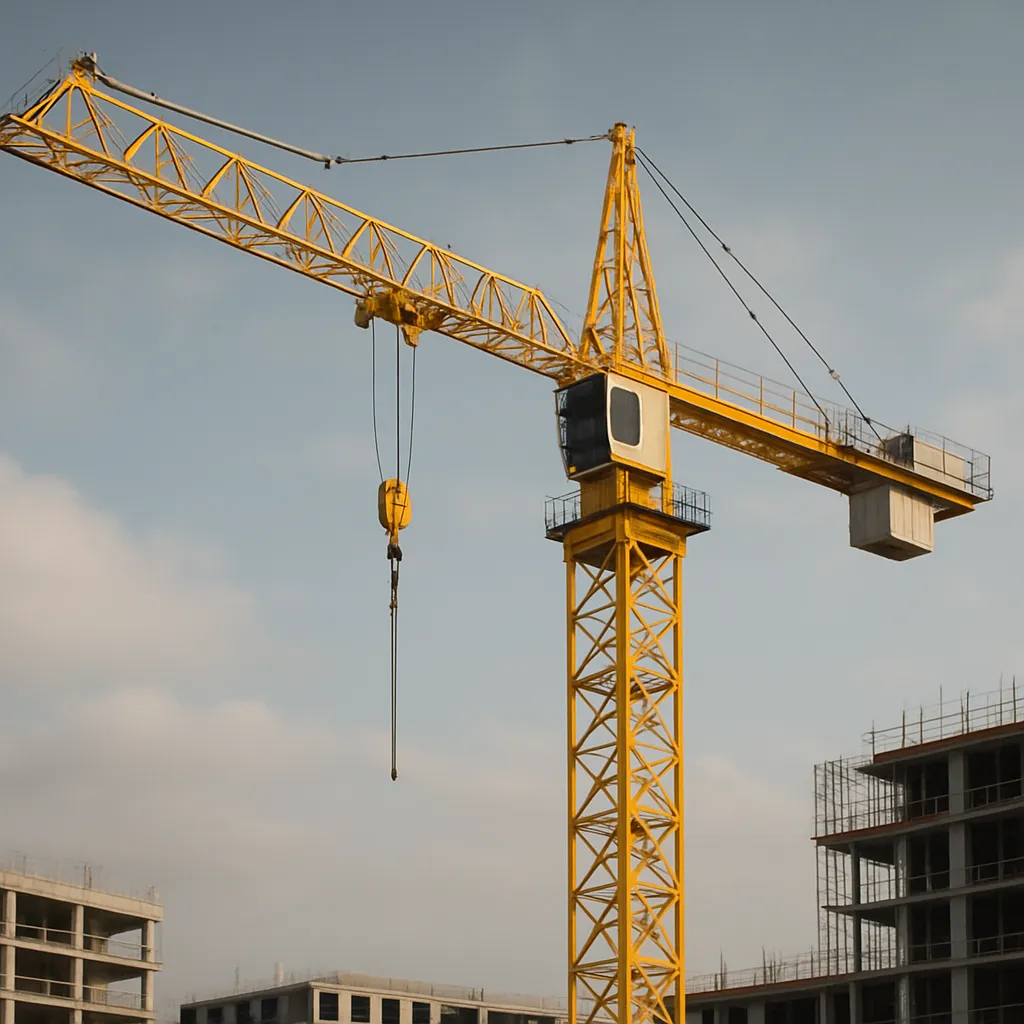
The Jaso J900 is a member of a family of modern tower cranes designed to serve a wide range of construction and industrial lifting applications. Combining modular construction, flexible configuration options and contemporary safety and control systems, the J900 is positioned as a mid-to-large-capacity solution for projects that require reliable, efficient vertical transportation of materials and equipment. This article explores the machine’s design features, typical uses, operational considerations, maintenance and safety aspects, and available performance data — including typical technical ranges where official specifications depend on configuration.
Design and key technical characteristics
The Jaso J900 adopts the core principles common to contemporary tower cranes: a tall, modular mast; a horizontal jib and balancing counter-jib; a slewing unit that allows rotation; and hoisting components that control load handling. Jaso designs focus on adaptability and ease of transport and erection, enabling the crane to be used on urban construction sites, industrial facilities and modular construction yards.
Modularity and structural layout
- The crane is typically built from a set of modular sections for the mast and jib, allowing owners to customize the final height and outreach according to project needs. This helps reduce logistics complexity and cost.
- Mast sections are engineered to be bolted or pinned together; some variants support internal climbing systems for incremental height increases without disassembly.
- The slewing unit is mounted on top of the mast and couples the jib and counter-jib assembly to the vertical structure, enabling 360° rotation.
Hoisting and motion systems
- Winches and hoists provide vertical lifting capability. Modern suppled configurations include variable-frequency drives for smooth acceleration and precise load placement.
- Functions such as slewing, trolley travel and hoist are individually driven and controlled, often with integrated electronic management systems for performance optimization and load monitoring.
- Standard power options include 400 V three-phase electric motors; optional diesel or hybrid drive systems may be available for sites with limited grid access.
Cabin, controls and electronics
- Operator cabins are ergonomically designed with good visibility along the jib and work area. Remote-control operation is also commonly available, increasing site flexibility.
- On-board electronic systems provide real-time data for load, radius, wind speed and safe working limits. These systems may include overload protection, automatic cutoffs, and logging functions.
- Integration with site management software and telematics is increasingly standard, enabling predictive maintenance and operational analytics.
Applications and industries
The Jaso J900 is engineered to meet demands across a variety of sectors. Its adaptability makes it a versatile tool on projects that require robust lifting while maintaining constraints like limited footprint or complex site logistics.
Construction and building
- Residential high-rise construction benefits from the J900 when vertical reach and modular erection facilitate staged floor-by-floor construction.
- Commercial and office tower projects use cranes like the J900 to hoist precast elements, concrete buckets, and heavy mechanical equipment to higher floors.
- Urban infill and renovation projects appreciate the crane’s ability to operate in tight footprints with long outreach options.
Infrastructure and civil projects
- Bridge construction and viaduct assembly frequently need the controlled heavy lifts and reach provided by tower cranes in conjunction with mobile lifting equipment.
- Power plants, water treatment facilities and transport hubs employ tower cranes for installation of large mechanical modules and prefabricated sections.
Industrial assembly and modular construction
- Prefabrication yards that assemble modular building blocks use tower cranes for repetitive, precise placement of modules and for moving heavy jigs and molds.
- Industrial plants—refineries, chemical plants and manufacturing facilities—require steady and precise lifting during both construction and maintenance outages.
Performance statistics and typical specifications
Exact specifications for the Jaso J900 depend on the chosen configuration, optional equipment and local regulatory requirements. The following data represents typical ranges and observed values for similar mid-to-large tower cranes. For project-critical decisions, consult the manufacturer or an authorized dealer for certified performance curves and load charts tailored to the intended setup.
Typical capacity and reach
- Maximum rated load: commonly between 6 and 12 tonnes at the smallest radius (depending on configuration and counterweight).
- Tip capacity (load at maximum jib length): often in the range of 1 to 3 tonnes, depending on jib length and ballast.
- Jib length options: typical modular jibs span from approximately 30 m up to around 70-75 m in extended configurations.
- Maximum hook height: can vary widely depending on mast assembly and climbing option — from tens of metres up to, in some installations, over 150 m when tied to building structures.
Operation speeds and power
- Hoist speed: adjustable, usually with multiple speed steps or variable-frequency control to match load handling needs.
- Slewing speed and trolley travel: tuned for accurate placement rather than high speed, ensuring safe and precise positioning.
- Power requirements: primarily electric drives; typical installed motor power for hoist and slewing can range from tens to a few hundred kilowatts total depending on configuration.
Stability, ballast and foundations
- Counterweight systems are designed dynamically for each jib length and load chart. Proper ballast is essential to reach rated capacities safely.
- Foundation design (pad, piled or block foundations) is site-specific and is engineered to distribute loads into the ground. Mast base fixings and tie-in points are designed per local codes.
Typical performance indicators
- Duty cycles: many deployments report steady duty cycles on medium complexity sites, where the crane operates multiple lifts per hour over multi-month durations.
- Availability: with proper maintenance, uptime commonly exceeds 90% in professional fleet environments, supported by telematics and preventive servicing.
Safety systems, operation and maintenance
Safety is a central theme in the design and operation of the Jaso J900. Modern tower cranes incorporate redundant systems and provide operators with tools that minimize the risk of overloads and accidents.
Built-in safety features
- Load moment indicators and overload protection systems prevent lifts that exceed safe operating envelopes.
- Wind sensors and automatic alarms help operators react to gusty conditions that may require load removal or crane parking.
- Anti-collision systems can be fitted when multiple cranes operate on the same site, improving coordinated operation and safety.
Operator training and certification
- Professional operation requires certified crane operators who are trained on the specific model and the site’s operational procedures.
- Simulators, hands-on familiarization lifts and manufacturer-specific training programs reduce human error and improve efficiency.
Maintenance practices
- Regular inspection of structural connections, slewing bearings, hoist ropes and mechanical components is required by both manufacturer guidelines and local regulations.
- Preventive maintenance schedules based on operating hours and lift cycles preserve component life and reduce unplanned downtime.
- Use of remote diagnostics and telematics allows fleet managers to monitor performance metrics such as motor currents, cycle counts and abnormal events, enabling predictive interventions.
Logistics: transport, erection and site planning
Efficient transport and erection are important considerations for projects that deploy a Jaso J900. The crane’s modularity reduces the complexity of moving large components, but careful planning remains essential.
Transport considerations
- Mast and jib elements are sized to fit standard heavy transport units; specialized trailers and lifting equipment are used for larger components.
- Disassembly/reassembly times depend on crew experience and site access; pre-planned sequences and use of auxiliary lifting gear accelerate the process.
Erection and commissioning
- Initial erection often requires a mobile crane to position the slewing unit and jib onto the mast. Some configurations allow partial self-assembly using auxiliary winches.
- Tie-in points to buildings or anchors must follow engineering plans. Commissioning includes alignment, load test and verification of safety systems.
Site layout and logistic efficiency
- Crane positioning is driven by reach needs, ground bearing capacity and interactions with other site equipment. A well-placed crane reduces material handling time and site traffic.
- When multiple lifts are planned, sequencing and supply-chain coordination limit waiting times for materials and improve overall productivity.
Economic and environmental aspects
The overall cost-efficiency of employing a Jaso J900 depends on utilization, maintenance strategy and project duration. Environmental factors, such as energy efficiency and noise, increasingly influence procurement and site planning decisions.
Cost factors
- Capital costs vary with configuration, options and market conditions; long-term projects often justify ownership while short-term deployments commonly favor rental.
- Operational cost elements include energy consumption, crew labor, routine maintenance and periodic inspections.
- Fleet operators often calculate total cost of ownership (TCO) across these factors to determine when investment in a specific crane model is most beneficial.
Environmental considerations
- Electric drives reduce on-site emissions compared with diesel-powered alternatives. When grid-sourced electricity is low-carbon, the environmental footprint of operations is reduced.
- Noise-reduction features, efficient hoist cycles and optimized logistics decrease local disturbance and support compliance with urban site regulations.
Case examples, best-use scenarios and limitations
Understanding where the Jaso J900 excels — and where alternatives may be preferable — helps project planners match crane selection to objectives.
Best-use scenarios
- High-density urban construction where a combination of height, outreach and compact footprint is needed to place large modules and façade elements.
- Modular construction yards that require repeatable, accurate placement of prefabricated units with quick setup and teardown cycles.
- Industrial plant assembly where controlled, precise lifts of heavy equipment must be coordinated with other construction trades.
Limitations and when to consider alternatives
- For extremely heavy lifts (well above the J900’s rated capacity at small radii), specialized lattice cranes or crawler cranes may be more suitable.
- Sites with extremely restricted access where even modular transport is impractical may require smaller self-erecting cranes or alternative material handling strategies.
- Projects that demand extensive mobility across a large area may benefit from mobile cranes rather than a fixed tower crane.
Procurement, rental market trends and resale value
Choosing between buying and renting a Jaso J900 depends on project duration, expected utilization and capital availability. The rental market for tower cranes is mature in many regions, with specialist companies offering flexible arrangements, certified operators and logistics support.
Rental vs. ownership
- Rental lowers upfront investment and shifts transport and erection logistics to the provider. It is preferred for short or intermittent projects.
- Ownership can be economical for high-utilization contractors who deploy cranes on long-term programs and can amortize purchase and refurbishment costs.
Resale and lifecycle considerations
- Well-maintained cranes retain value in the secondary market. Documentation of maintenance, telematics logs and up-to-date certifications improve resale prospects.
- Upgrades and retrofits (e.g., new safety electronics or remote telemetry) can extend useful life and enhance marketability.
Summary and practical recommendations
The Jaso J900 represents a flexible, modern approach to tower crane design, offering a balance of lifting capability, reach and operational features suitable for a wide range of construction and industrial projects. Its modularity, integrated safety systems and compatibility with telematics make it a practical choice where project efficiency and risk management are priorities.
- Before procurement: specify expected maximum lifting radii, typical loads and site constraints, then request certified load charts from Jaso or an authorized distributor.
- During planning: coordinate foundation and tie-in engineering early, and plan logistics for transport and erection with experienced crews.
- During operation: adopt a preventive maintenance program, use trained operators, and leverage telematics for uptime and safety management.
For project-critical data such as definitive load charts, wind limits, foundation reactions and certified capacities at specific radii and jib configurations, consult Jaso’s official technical documentation or an authorized dealer. Manufacturer documentation will provide the precise numbers required for engineering sign-off and safe operation on your specific site.


)
)