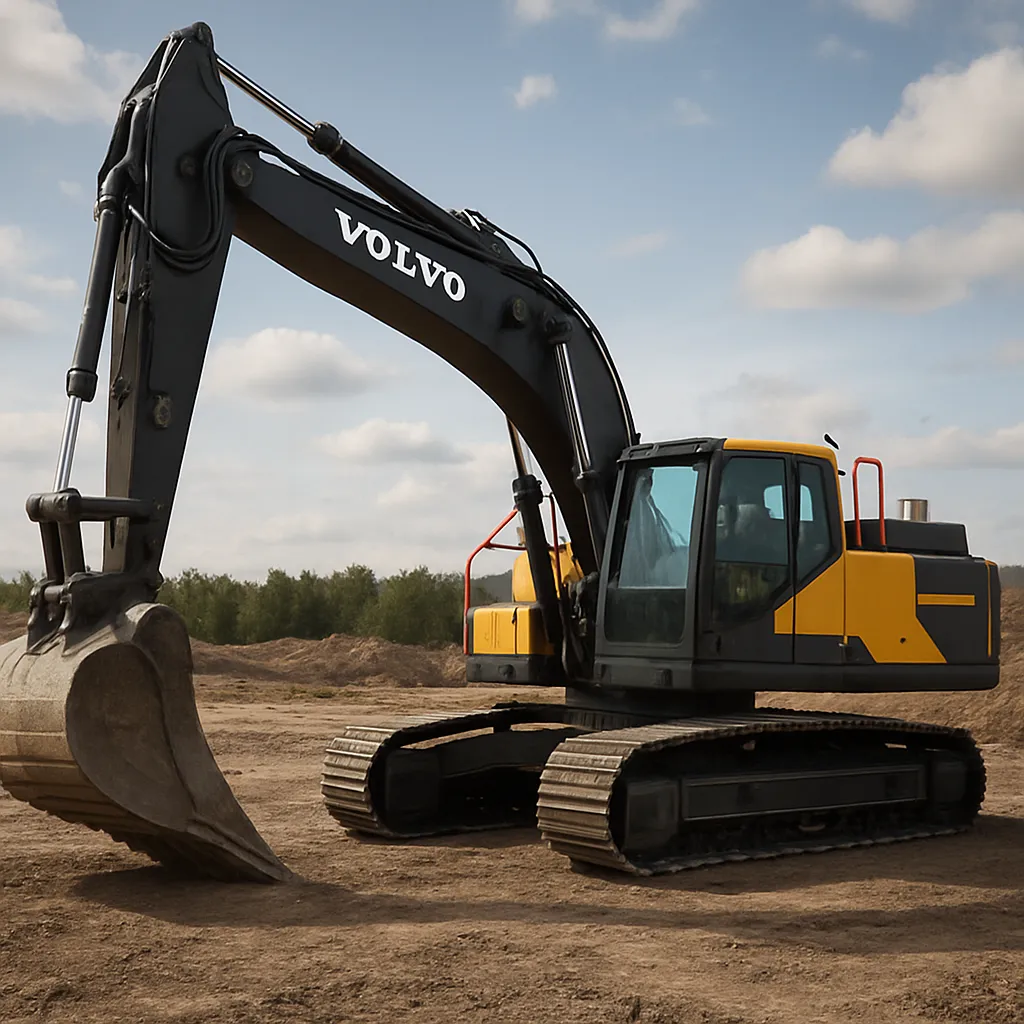
The Volvo EC350E is a heavy-duty hydraulic excavator widely used in construction, quarrying, and infrastructure projects. Designed to combine power, reliability and versatility, this model aims to deliver consistent performance across a range of demanding tasks. Below you will find an in-depth look at the machine’s design, typical applications, technical characteristics, operator features, maintenance considerations and market factors, including indicative performance statistics and guidance for operators and fleet managers.
Overview and design philosophy
The Volvo EC350E belongs to Volvo Construction Equipment’s lineup of medium-to-large excavators focused on balance between digging force and mobility. Built with a heavy-duty undercarriage, reinforced boom and a choice of work tools, the EC350E is engineered for long duty cycles in environments that require both precise material handling and powerful earthmoving.
Key design aims for the machine include durability, ease of service and adaptability. The chassis and structural components are reinforced to resist fatigue from repetitive loading. The hydraulic system is tuned to provide smooth, controllable movements for fine grading while still offering the flow and pressure needed for high breakout forces during trenching or rock work.
Technical specifications and performance (indicative)
Specifications vary by configuration and market (different emissions packages and regions may use slightly different engines and control settings). The numbers below are indicative for typical EC350E configurations and should be verified with a local dealer for exact model-year data.
- Operating weight: approximately 33,000–36,000 kg (around 73,000–79,000 lb), depending on counterweight, boom/arm configuration and attachments.
- Engine power: typically in the range of 180–210 kW (240–280 hp), compliant with Tier 4 Final / Stage IV or Stage V emission standards depending on year and market.
- Bucket capacity: commonly between 1.2 and 2.2 m3 for general-purpose buckets; specialized buckets or rock buckets will differ.
- Maximum digging depth: approximately 7.0–8.0 m, varying with boom/arm combinations.
- Maximum reach at ground level: roughly 11–12.5 m.
- Maximum breakout force: often in the 200–260 kN range for bucket and arm forces, subject to configuration.
- Travel speed: up to about 5.0–5.6 km/h in high gear; lower-speed options available for precise maneuvering.
- Hydraulic flow: the main pump system typically provides high flow rates with proportional control; auxiliary circuits support hammer, crusher and shear capabilities.
Fuel consumption is highly task dependent. For mixed operations a typical EC350E may average in the region of 12–20 liters per hour under normal to heavy workloads. With modern engine management and hydraulic optimization the machine aims for improved fuel efficiency relative to older models in the same weight class.
Applications and industries
The EC350E is a versatile platform suited to many sectors. Typical applications include:
- General excavation and earthmoving on construction sites — foundations, basements, utility trenches and site preparation.
- Road and highway construction — embankments, grading, drainage and bridge support works.
- Quarrying and aggregate production — loading, bench cut operations and material handling.
- Demolition — with appropriate attachments such as hydraulic breakers, shears and pulverizers.
- Pipeline and energy sector projects — trenching and handling large pipes or prefabricated sections.
- Land reclamation and environmental works — sediment removal and bank shaping with careful control and auxiliary equipment.
The machine’s compatibility with a wide range of attachments makes it attractive to contractors who need a single base machine to perform multiple roles. From heavy-duty rock buckets and hammers through to grapples and tilting quick couplers, the EC350E can be configured for specialized tasks that increase on-site productivity and reduce the need for multiple machines.
Operator comfort, safety and onboard technology
Operator experience is a crucial factor in overall site productivity. Volvo cabins on machines like the EC350E are designed with ergonomics and visibility in mind, providing a comfortable seat, easy-to-reach controls and low noise levels to reduce fatigue. The cab layout supports in-cab climate control, adjustable seating and intuitive joystick or multifunction controls.
Modern EC350E units often include Volvo’s digital assistance features such as the Co-Pilot and telematics integrations. These systems can provide:
- Real-time machine health and service alerts to improve uptime.
- GPS-based jobsite positioning and grade guidance (2D/3D) to accelerate grading tasks and reduce rework.
- Fuel usage monitoring and productivity analytics to support fleet managers.
Safety features include excellent all-around visibility, camera systems (rear and optional side-view cameras), automatic engine shutdown options for critical faults and robust access ladders and handrails. Volvo also equips excavators with reinforced guarding for hydraulic lines and key structural components for operations in abrasive or hazardous environments.
Hydraulics, attachments and productivity strategies
The hydraulic architecture of the EC350E is a cornerstone of its performance. Load-sensing hydraulics with proportional control allow the machine to modulate power between digging and swing operations, maximizing cycle times and reducing fuel burn. Hydraulic flow and pressure are programmable for tool-specific needs, which is particularly important for attachments such as breakers, thumbs, pulverizers and rotating grapples.
To make the most of an EC350E in the field, consider these productivity strategies:
- Choose the right boom and arm geometry for the application: short arms for high breakout force, longer arms for reach and grading.
- Use optimized bucket sizes — oversizing buckets reduces cycles but can lower digging efficiency and increase fuel burn.
- Implement machine telematics to monitor idle time, fuel consumption and operator performance — small adjustments yield measurable savings over a year.
- Train operators on the machine’s advanced assist systems (grade control, Co-Pilot) to reduce dependence on manual staking and grade checks.
Maintenance practices and lifecycle management
One of the areas that directly impacts the total cost of ownership is maintenance. The EC350E is designed to simplify service: grouped service points, long-life hydraulic oil options, extended-change engine oils and filter arrangements help reduce downtime. Typical suggested practices include:
- Scheduled checks of hydraulic hoses and fittings; replace components showing abrasion or rubbing to prevent unexpected failures.
- Regular undercarriage inspection and adjustment — track tension affects fuel consumption and component life.
- Monitoring hydraulic oil condition and particle counts via oil analysis programs to detect early contamination or wear.
- Adhering to engine service intervals and using OEM or approved parts to preserve emissions compliance and longevity.
With proper maintenance, an EC350E can serve reliably for many thousands of hours. In heavy-service industries a well-maintained machine commonly reaches service lives of 15,000–25,000 hours over multiple rebuilds, although real-world results vary with operating conditions and maintenance rigor. Volvo’s dealer networks and service programs often include preventive maintenance packages and parts support aimed at minimizing downtime.
Environmental performance and emissions
Volvo has progressively updated its engines and aftertreatment systems to meet tighter emissions regulations. Depending on production year and market, an EC350E will be configured for Tier 4 Final (U.S.) or Stage IV/Stage V (EU) emissions with selective catalytic reduction (SCR) and diesel particulate filter (DPF) systems as required. These systems reduce NOx and particulate emissions while maintaining engine performance.
From an environmental perspective, modern engine control systems and hydraulic management contribute to reduced fuel consumption and emissions per tonne-handled, compared to older models. In addition, the availability of low-emission fuels and bio-blends can further reduce a fleet’s carbon footprint, subject to local regulations and engine compatibility.
Market position, resale and fleet considerations
The EC350E occupies a competitive position in the market where customers expect reliability and a strong dealer support network. Volvo’s reputation for structural robustness and operator comfort helps maintain resale values. When buying or leasing, fleet managers typically consider:
- Application fit — matching machine size and hydraulic characteristics to job demands to avoid over- or under-specification.
- Availability of local dealer support for parts and warranty work to minimize downtime.
- Telematics and service packages that provide transparent data for maintenance planning and operational decisions.
- Lifecycle costs including fuel, parts, maintenance and resale value — not just purchase price.
Used EC350E units are commonly traded in markets worldwide, with prices influenced by hours, condition, attachment inventory and documented service history. Machines with complete service records and factory-installed telematics tend to command a price premium because they are easier to reintroduce into productive service.
Practical tips for buyers and operators
Whether procuring a single machine or managing a large fleet, the following practical tips help maximize the value delivered by an EC350E:
- Match attachments to the task and standardize where possible — common couplers across a fleet speed jobsite changeovers.
- Use telematics actively — monitoring idle time, fuel usage and operator patterns often identifies quick wins.
- Invest in operator training on advanced controls and assist tools — productivity gains from trained operators can exceed hardware cost savings.
- Plan preventive maintenance using manufacturer guidelines and oil analysis — early intervention extends component life and uptime.
- Consider machine monitoring and warranty extensions from the dealer for high-hour or remote-site operations.
Summary
The Volvo EC350E is a versatile excavator offering a balanced mix of power, control and serviceability for a wide range of heavy civil and industrial tasks. With a focus on productivity, operator comfort and robust hydraulics, it suits contractors who require a machine capable of sustained, efficient performance. Combined with modern telematics and support services, the EC350E can be a cost-effective core machine for fleets working in earthmoving, quarrying, demolition and utility construction.
Note on specifications
All figures given are indicative and will vary with the specific configuration, regional emission package and year of manufacture. For precise data, fuel consumption curves and lifting/digging charts, consult your local Volvo dealer or the official Volvo CE documentation for the exact model and serial range.


)
)