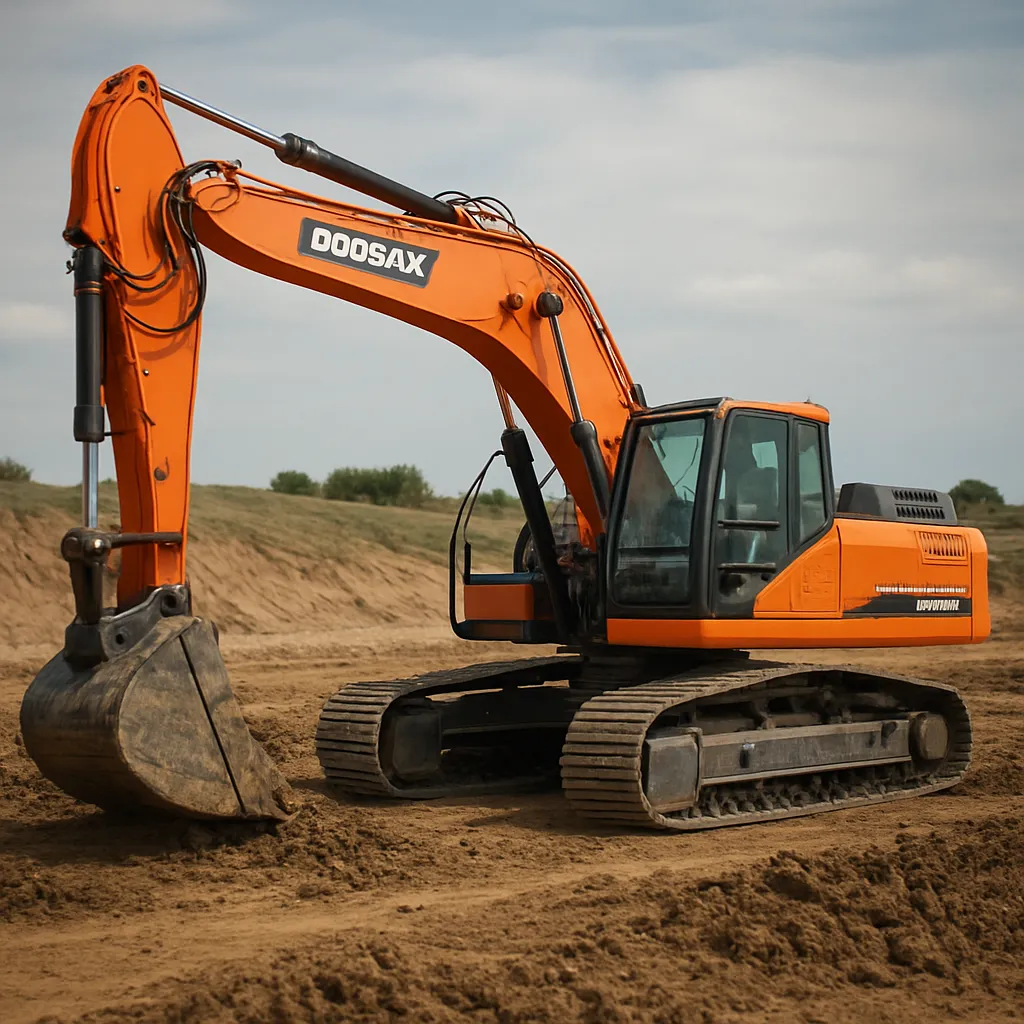
The Doosan DX350LC is a heavy-duty medium-to-large class hydraulic excavator built to handle demanding earthmoving tasks across construction, quarrying, mining support, and infrastructure projects. Combining robust undercarriage design, a powerful diesel engine and a responsive hydraulic system, the DX350LC offers a balance of digging force, reach and fuel economy for contractors who need dependable, versatile equipment. This article examines the machine’s design, typical specifications, practical applications, operator features, maintenance and purchasing considerations, with practical guidance for maximizing productivity and life-cycle value.
Design and technical overview
The Doosan DX350LC is engineered around a strong, durable platform that prioritizes stability, serviceability and modularity. Key components include a rigid undercarriage, a heavy counterweight and a combination of boom and arm configurations that allow the machine to be tailored to excavation, lifting or material handling tasks. The chassis and upperstructure are built to withstand heavy cyclic loading encountered in trenching, loading trucks and working with hydraulic attachments.
Powertrain and hydraulic system
At the heart of the DX350LC is a turbocharged diesel engine coupled to an efficient hydraulic pump system. The powertrain is sized to deliver high torque at low rpm for sustained digging force, while modern governor control and electronic management help regulate fuel delivery and emissions. The hydraulic circuit typically features variable displacement pumps, high-flow options for attachments and multi-function priority to ensure smooth simultaneous operations (boom swing, arm, and bucket).
Typical technical highlights (approximate and dependent on model year and regional configuration):
- Operating weight: approximately 34,000–37,000 kg (75,000–81,500 lb).
- Engine power: roughly 200–260 kW (270–350 hp), depending on emissions stage and tuning.
- Bucket capacity: commonly between 1.3–2.5 m³, depending on boom/arm and bucket type.
- Maximum digging depth: roughly 7.0–7.7 m (23–25 ft) with standard arm.
- Maximum reach at ground level: typically 11.0–12.0 m (36–39 ft).
- Hydraulic system pressure: high-pressure circuits in the 34–36 MPa range for heavy-duty work.
Note: These figures are representative and will vary between specific DX350LC model years, regional variants and optional packages. Always consult the machine’s specification sheet for exact numbers on a given unit.
Undercarriage, boom and attachments
The undercarriage is designed for long wear life with options for track widths that balance ground pressure and transport width. The boom and arm are constructed from high-strength, welded steel and are available in different lengths and reinforcement levels for either heavy digging or extended reach. The DX350LC supports a wide variety of attachments — including hydraulic breakers, grapples, thumbs, quick couplers, rotating tilters, and augers — which makes the machine highly adaptable on multi-faceted jobsites.
Applications and industries
The versatility of the DX350LC makes it suitable for a wide range of tasks. Contractors and operators choose this size class when they require a combination of reach, lifting capacity and bucket fill to move significant volumes while still maintaining reasonable transportability.
- General construction: Foundation excavation, trenching for utilities, site clearance and road subgrade preparation.
- Quarry and aggregate operations: Loading haul trucks, breaking benches with hydraulic hammers and handling heavy material with specialized buckets.
- Demolition and recycling: When fitted with grapple or pulverizer attachments, the DX350LC can handle structural demolition, concrete processing and selective sorting.
- Pipeline and utility works: Trench excavation for pipe laying, backfilling and working in confined corridor conditions with compact track options or narrow undercarriage settings.
- Forestry and land clearing: With appropriate protection and grapple attachments, it can clear trees, stumps and debris.
- Mining and heavy earthmoving: Support roles in surface mines (small face loading, pit maintenance) and quarry prep work.
Because of the machine’s size, it is particularly well-suited to jobs where a larger 40+ tonne excavator would be overkill but a 20–25 tonne unit would be underpowered. It fills an important niche for medium-to-large contractors, municipal fleets and rental companies.
Performance, efficiency and operating economics
Performance of the DX350LC is measured in cycle times, bucket fill factor, fuel consumption and uptime. Modern iterations of the model emphasize improved fuel economy through electronic engine management, optimized hydraulic flow control and eco modes that reduce idling and unnecessary high-rpm operation.
Fuel consumption and productivity
Fuel burn varies greatly with application but typical in-field observations for a machine of this class are in the range of approximately 14–25 liters per hour under productive loading cycles. Lower figures apply for light work or long-reach digging, while heavy bench-loading or breaking tasks push consumption to the higher end. Productivity metrics (cubic meters moved per hour) depend on bucket size, operator skill and cycle distances; using a well-matched bucket and experienced operator, the DX350LC can achieve high truck-loading rates for 20–30 tonne haul trucks.
Cost of ownership considerations
Key factors affecting the DX350LC’s total cost of ownership include fuel efficiency, scheduled maintenance intervals, undercarriage wear, and downtime due to repairs. Doosan has made service access a priority on many models, placing filters, drains and inspection points within easy reach to reduce routine service time. For rental fleets and contractors, ensuring proper cooling, regular hydraulic oil analysis and proactive undercarriage maintenance are among the best ways to control operating costs.
Operator comfort, safety and controls
Long workdays demand a comfortable, safe operating environment. The DX350LC cabins are designed with ergonomics and visibility in mind: wide glass areas for better sightlines, heated and adjustable seats, climate control, and logically arranged joystick and pedal controls.
- Safety: ROPS/FOPS-certified cab structures, optional rear-view cameras, and good sightlines to the tracks and bucket help reduce risks on site.
- Controls: Proportional auxiliary hydraulics, electronic control modules and optional multifunction displays allow precise operation of attachments and easier diagnostics.
- Comfort: Low-vibration mounts, sound insulation and easy-to-reach storage increase operator comfort and reduce fatigue.
Maintenance, durability and common service tasks
Maintaining a DX350LC to achieve long life involves regular attention to the engine, hydraulic system, undercarriage and structural components. The following tasks and schedules are commonly recommended by professionals working with excavators in this category:
- Daily inspections of fluid levels, hoses, filters and track tension.
- Routine greasing of pins and bushings — often daily or per shift depending on workload.
- Hydraulic oil and filter changes at manufacturer-recommended intervals, with fluid analysis for early fault detection on busy units.
- Engine oil and coolant checks and changes as specified in the service manual; use of recommended oil grades and coolant types extends component life.
- Undercarriage monitoring (shoe wear, rollers, idlers). Replacing track components before excessive wear prevents secondary damage to sprockets and final drives.
Planned preventative maintenance reduces unscheduled downtime and preserves resale value. Keeping a detailed service log is recommended for rental businesses and owners preparing to resell used machines.
Transport, dimensions and site logistics
Moving a DX350LC between job sites requires planning because of its weight and transport width. Typical transport considerations include:
- Transport weight (including counterweight and optional attachments) commonly places the machine in the 34–38 tonne class for road permits.
- Track width and boom position influence required trailer bed width; many owners fold booms and arms to minimize transport envelope.
- Loading and offloading should be done on level ground with chocks and rated ramps. Use certified equipment for tie-downs and securement.
Because of its size, the DX350LC is often carried on multi-axle low-bed trailers and may require permits for highway movement in many jurisdictions.
Choosing, buying and resale considerations
When evaluating new or used Doosan DX350LC units, consider the following:
- Application fit: Match bucket type, arm length and hydraulic flow options to the primary task to avoid under- or over-spec’ing the machine.
- Service history: A consistent maintenance record is one of the best predictors of future reliability for a used unit.
- Attachments and quick couplers: Machines with well-maintained attachments and standardized couplers will be more versatile and command higher resale value.
- Wear components: Inspect undercarriage, pins, bushings and main pin bores for wear; replacements can be significant expense.
- Warranty and dealer support: Local dealer network strength influences downtime, parts availability and long-term ownership costs.
Depreciation for a machine of this class follows typical heavy-equipment trends: the biggest drop occurs in the first few years, then declines more gradually. Well-maintained DX350LCs with documented service histories retain value better in the used market.
Common configurations and optional equipment
Manufacturers and dealers usually offer options to adapt the DX350LC to specialized roles. Common options include:
- High-flow hydraulic packages for powerful attachment operation.
- Different track widths and heavy-duty undercarriage kits for rocky ground.
- Long-reach booms and arms for dredging, deep trenching or demolition reach.
- Cab guard packages, heavy-duty screens and service protection for demolition or quarry environments.
- Integrated weigh systems, telematics and remote monitoring for fleet management and productivity tracking.
Adding the right options can increase the initial cost but often improves productivity and lowers operating expense in the specific role the machine will perform.
Environmental and regulatory considerations
Modern DX350LC units comply with regional emissions standards (Tier/Stage regulations) by using electronic engine control, aftertreatment and selective catalytic reduction on applicable models. Fuel economy measures such as auto-idle, auto-shutdown and eco modes help reduce greenhouse gas emissions and fuel costs. When operating in sensitive areas, operators should also consider noise suppression options and spill containment practices during refueling and servicing.
Conclusion
The Doosan DX350LC is a versatile, robust excavator that serves as a strong workhorse for contractors requiring a mid-to-large class machine. With a combination of powerful hydraulics, flexible attachment support and operator-focused design, it is suitable for a wide range of heavy earthmoving tasks. Buyers should evaluate specific model-year specifications and dealer support, match machine configuration to the intended application and enforce a rigorous maintenance regime to maximize uptime and value. Properly equipped and maintained, the DX350LC can deliver dependable performance across construction, quarrying, demolition and utility operations for many years.


)
)