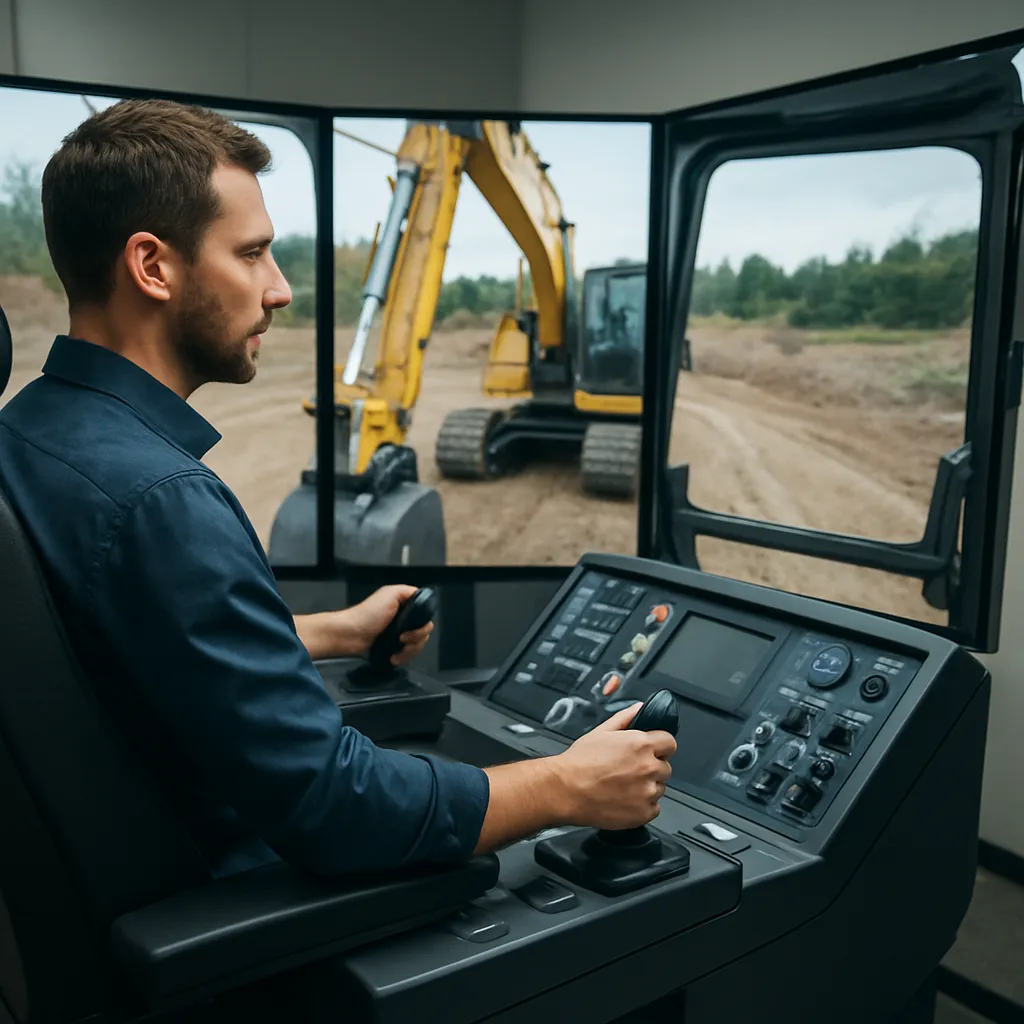
Industrial environments are evolving at a rapid pace, driven by cutting-edge technologies and ever-increasing demands for productivity. In this landscape, machine simulators play a pivotal role in preparing operators to handle complex equipment under a variety of scenarios. By replicating real-world conditions with high fidelity, these simulators ensure a safe and controlled environment for both novice and experienced technicians. This article explores the coolest machine simulators available today, delving into their precision, operational advantages, and the future outlook of training methodologies.
Innovations in Industrial Simulators
As manufacturing and energy sectors demand more skilled operators, simulator developers innovate to meet stringent requirements. Modern systems emphasize realism, interactive feedback, and data-driven assessment—all within a virtual framework that mirrors actual machines.
High-Fidelity Graphics and Physics Engines
- Real-time rendering of 3D models offers lifelike replication of factory floors, complete with machinery, control panels, and ambient lighting.
- Advanced physics engines simulate force, torque, and fluid dynamics, ensuring that operator actions produce accurate outcomes.
- Adaptive algorithms adjust environmental variables—temperature, humidity, vibration—to test operator responses under varied conditions.
Modular Hardware Integration
- Customizable cockpits and control consoles can be swapped to mimic different machine models, enhancing training versatility.
- Haptic devices provide tactile cues, replicating the feedback from joysticks, levers, and pedals.
- Plug-and-play sensors track operator movements, enabling detailed performance analysis and immediate corrective guidance.
The combination of graphical prowess and interactivity transforms simulator sessions into immersive experiences, shortening the learning curve and boosting operator confidence before they even step onto a real machine.
Key Technologies Powering Machine Simulators
Behind every top-tier simulator lies a suite of sophisticated technologies. From cloud-based data processing to machine-learning analytics, these innovations underpin the latest training platforms.
Cloud Computing and Remote Access
- Cloud connectivity allows real-time collaboration between trainees and instructors, regardless of physical location.
- Continuous software updates ensure simulators distribute the most current machine specifications and safety protocols.
- Data storage on secure servers provides a complete record of performance metrics for regulatory compliance and certification.
Artificial Intelligence and Predictive Analytics
- AI-driven personalization tailors scenarios based on each operator’s skill level, strengths, and weaknesses.
- Predictive models forecast potential errors or safety risks, triggering preemptive guidance to avert incidents.
- Machine-learning algorithms analyze historical training data to optimize scenario selection, maximizing training ROI.
Virtual Reality (VR) and Augmented Reality (AR)
- VR headsets immerse operators in fully simulated work sites, granting a 360-degree view of machinery and surroundings.
- AR overlays project step-by-step instructions or hazard alerts directly onto a trainee’s field of vision.
- Mixed-reality setups allow seamless transitions between virtual controls and physical interfaces, marrying digital and analog realms.
These key technologies converge to produce simulators that are not only accurate but also adaptive, scalable, and aligned with evolving industrial demands.
Training Strategies and Best Practices
To harness the full potential of machine simulators, organizations adopt structured training strategies. Effective programs blend theoretical knowledge, hands-on practice, and continual evaluation.
Comprehensive Scenario Libraries
- Standard operating procedures (SOPs) guide trainees through routine tasks, establishing a solid foundation of procedure adherence.
- Emergency scenarios—power failures, hydraulic leaks, mechanical breakdowns—test critical decision-making and reflexes.
- Performance benchmarks compare trainee responses with industry best practices, highlighting areas for improvement.
Blended Learning Approaches
- Pre-simulation e-learning modules cover machine theory, safety regulations, and control logic, ensuring trainees arrive prepared.
- In-simulator coaching provides real-time feedback, with instructors guiding corrective measures and praising effective maneuvers.
- Post-simulation debriefs analyze metrics such as cycle times, error rates, and resource utilization to refine future training.
Continuous Skill Validation
- Periodic recertification ensures operators maintain a high standard of competency, even as machines and protocols evolve.
- Refresher modules focus on specialized tasks or new features, supporting ongoing professional development.
- Cross-training on different machinery enhances workforce flexibility, allowing rapid redeployment according to operational demands.
By integrating these best practices, companies realize significant gains in operational efficiency and safety records, ultimately translating into cost savings and improved productivity.
Case Studies: Real-World Success Stories
Examining practical applications of machine simulators highlights their transformative impact.
Mining Industry: Enhanced Safety Protocols
A leading mining corporation implemented a heavy-equipment simulator to train excavator and haul-truck operators. Over 12 months, the company recorded a 45% reduction in on-site accidents. The simulator’s realism and emergency-response modules proved invaluable in teaching operators to manage unexpected hazards, such as rockslides and equipment malfunctions.
Renewable Energy: Wind Turbine Maintenance
Wind farm operators adopted VR-based training for turbine maintenance crews. Trainees practiced working at height, replacing blade components, and responding to electrical faults. The virtual environment minimized downtime during actual maintenance while ensuring that safety standards remained uncompromised.
Manufacturing: Assembly Line Optimization
An automotive plant introduced a digital twin of its assembly line, complete with robotics and conveyor systems. Operators used the simulator to test line configurations and fine-tune robot programming. The result was a 12% increase in throughput and a marked improvement in first-pass yield due to reduced human-programming errors.
Future Directions in Simulator Development
Machine simulators continue to evolve, driven by advances in networking, AI, and hardware technologies. The next wave of innovation promises even greater immersiveness, predictive intelligence, and interconnected training ecosystems.
Edge Computing and 5G Connectivity
- Edge devices will offload processing tasks closer to the simulator hardware, reducing latency and enabling higher-fidelity physics calculations.
- 5G networks will facilitate low-latency, high-bandwidth connections, supporting multi-user simulations in massive virtual environments.
Biometric Feedback and Neuroadaptive Systems
- Wearable sensors will monitor heart rate, galvanic skin response, and eye-tracking to assess trainee stress and cognitive load.
- Neuroadaptive interfaces will modify scenario difficulty in real time, aligning challenges with the operator’s mental state for optimal learning.
Interoperable Training Ecosystems
- Standardized data protocols will allow simulators from different vendors to exchange scenarios, metrics, and learner profiles.
- Training-as-a-Service (TaaS) platforms will offer subscription models, enabling smaller businesses to access world-class simulators without high upfront costs.
These emerging trends indicate a future where simulator-based training becomes an integral, continuously updated component of industrial operations, ensuring that every operator remains at the forefront of reliability and performance excellence.
Machine simulators have transcended simple training tools to become comprehensive platforms that drive operational optimization and workforce readiness. As technologies converge and industrial requirements intensify, investing in these simulators is essential for organizations aiming to stay competitive, safe, and efficient in the years to come.