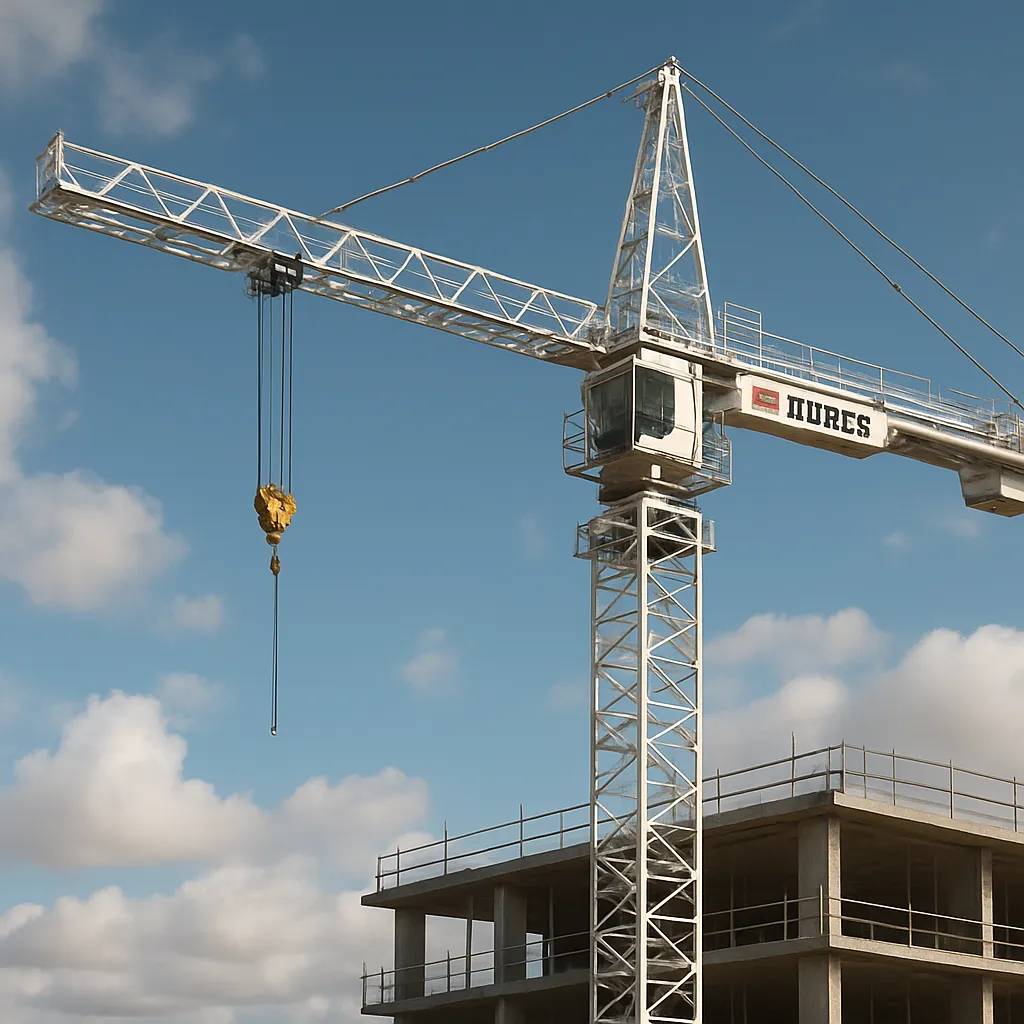
The following article explores the Terex CTL 430 as a representative example of modern tower crane technology, describing its design principles, typical applications, operational advantages, and practical considerations for construction and industrial use. It synthesizes industry knowledge about compact city cranes and luffing/jib tower types, offering technical context, safety and maintenance guidance, and market-oriented perspectives. Where precise model-specific figures are uncertain or variable by configuration, the article provides typical ranges and notes how choices of mast, jib, and equipment affect performance.
Overview and general description
The Terex CTL 430 is positioned in the category of self-erecting and/or luffing jib tower cranes designed for urban construction, infrastructure projects, and industrial sites where space is limited and lifting precision is paramount. Terex, as a manufacturer, has produced multiple lines of tower cranes; the CTL series emphasizes compact footprint, modular assembly, and adaptability to different site constraints.
Key high-level characteristics that typically define machines in this class include a slim mast structure for easier transport and erection, variable jib lengths to match site geometry, and modern control systems supporting load charts, anti-collision features, and precise hoisting control. The CTL 430 is often chosen by contractors who need a balance between lifting capacity, reach, and speed of installation.
Design philosophy and main components
The success of a tower crane design lies in efficiently combining structural strength, rigging flexibility, and operator ergonomics. The CTL 430 and similar machines adopt a modular approach to mast and counter-jib components, enabling configurations that range from compact hoist-only city cranes to taller, more conventional tower arrangements.
Structural elements
- Mast sections: Bolted lattice sections that stack to achieve the desired free-standing height or to be tied into the building as work progresses.
- Jib: Fixed or luffing jibs available in several lengths. The jib geometry affects the load chart profoundly—longer jibs increase reach but reduce tip load capacity.
- Counter-jib and counterweights: Crucial for stability. Counterweight systems are designed to be modular to match the chosen jib and mast setup.
- Hoist and trolley: Electric hoists with variable-speed drives and precision trolley movement for horizontal positioning of loads.
- Operator cabin and controls: Ergonomic cabs with modern telematics, load moment indicators (LMI), and optional remote control to increase flexibility and safety.
Powertrain and control
Modern units typically use electric drive systems for hoisting, slewing, and trolley travel. Frequency-controlled drives facilitate smooth starts and stops, position holding under load, and energy efficiency. The CTL 430 often features integrated control systems that provide:
- Real-time load monitoring and overload protection
- Wind and sway alarms
- Operational data logging for maintenance and compliance
- Optional telematics for fleet management
Applications and typical use cases
Tower cranes like the CTL 430 are versatile machines used across the construction industry. The most common applications include:
- Urban residential and commercial construction — tight footprints, need for fast assembly/disassembly, and frequent repositioning favor compact tower cranes with moderate capacities and long jibs.
- Refurbishment and high-density infill projects — cranes with short tails or luffing jibs reduce space required for counterweights and mitigate conflicts with site boundaries or existing structures.
- Industrial plants and factories — lifting of prefabricated modules, heavy machinery installation, and maintenance tasks in constrained indoor or semi-indoor environments.
- Infrastructure and civil works — bridge segment positioning, precast concrete placement, and utility installations where precision is necessary.
- Rental fleets — the CTL 430 style is attractive to rental companies because of rapid rig-up time and broad utility across job types.
In many scenarios the crane’s economics—purchase, transport, erection time, and operating costs—are as decisive as lift charts when clients select a model.
Performance characteristics and typical specifications
Exact specifications for a given CTL 430 can vary by configuration, but the following outlines typical ranges and performance characteristics for cranes in this category. Use these as reference points; for project-critical design and lift planning, always consult the manufacturer’s certified load charts for the specific machine and setup.
- Rated capacity: Typically from approximately 4 to 12 tonnes at short radii for compact CTL-class cranes. Maximum hook capacity decreases with radius per the load chart.
- Maximum tip load: At full jib length, tip capacity may be in the range of a few hundred kilograms up to 1–2 tonnes depending on jib length and counterweight.
- Jib length: Modular jibs allow selections commonly from 20 m to 60 m or more; longer jibs extend reach while reducing tip capacity.
- Height: Free-standing heights depend on number of mast sections; many setups offer 20–80 m free-standing, and much higher when tied to a structure.
- Hoist speed: Variable depending on load, typically from several meters per minute under heavy loads to higher speeds with lighter loads.
- Slew speed: Designed for smooth operation, typical slew rates enable efficient cycle times while maintaining safety and control.
- Power: Most modern models are electrically powered (three-phase), sometimes with diesel generator compatibility for remote sites.
These ranges reflect the flexibility inherent in modular tower cranes; additional options—such as stronger hoists, reinforced jibs, or heavy-duty counterweights—shift a model’s place on the capacity/reach spectrum.
Safety systems and regulatory considerations
Safety is a dominant concern when operating tower cranes. The CTL 430 class typically incorporates multiple layers of protection, both mechanical and electronic. Important systems include:
- Load moment indicator (LMI): Continuously monitors load and radius, preventing lifts that exceed rated capacity.
- Anti-collision systems: Essential on busy urban sites or when multiple cranes operate nearby; can be linked across fleet to provide zone-based prohibition.
- Wind and sway monitoring: Wind speed sensors and automatic alarms reduce the risk of operating under unsafe meteorological conditions.
- Emergency descent and manual override: Safety features to ensure controlled lowering of loads during power or control failures.
- Operator training and certification: Regulatory frameworks in many countries mandate certified crane operators, periodic inspections, and documented maintenance.
Compliance with local standards—such as ANSI/ASME in the U.S., EN standards in Europe, or ISO guidelines—affects equipment selection, documentation, and on-site procedures. A well-specified CTL 430 installation always includes a certified lift plan, routine inspection logs, and a documented maintenance schedule.
Maintenance, lifecycle, and operating costs
Like all capital equipment, tower cranes require planned maintenance to maximize uptime and safe operation. Typical maintenance concerns for the CTL 430 class include:
- Routine lubrication of slewing bearings, hoist ropes, and trolley mechanisms
- Electrical system diagnostics and inverter/drive checks
- Structural inspections for fatigue, bolt torque checks, and weld integrity
- Replacement intervals for high-wear parts such as ropes, sheaves, and brakes
- Software updates for control units and telematics
Economic life can vary widely—well-maintained cranes in rental fleets often serve reliably for 15–25 years or more. Operating costs include energy consumption, operator wages, periodic inspections, and the expense of assembly/disassembly. Rental models favor cranes with fast rig-up times to reduce non-productive hours.
Market position and statistical context
While specific sales figures for the CTL 430 model may not be publicly detailed, the broader market for compact tower cranes and small-to-medium capacity cranes remains strong, driven by urbanization, modular construction trends, and demand for rapid site mobilization. Observations and market data from recent years indicate:
- Growing demand for compact cranes in inner-city projects where road and yard space are limited.
- Increasing adoption of connected telematics solutions to monitor utilization rates, enabling rental companies and contractors to manage fleets more efficiently.
- Emphasis on lower-emissions operations, with electrification and energy recovery systems becoming more common in newer units.
Market analysts routinely report that cranes with flexible configurations—modular masts, variable jibs, and quick-attach counterweights—see higher utilization rates across job sites, which supports total cost of ownership advantages for purchasers and renters alike.
Case studies and real-world examples
Examples of where a CTL-430-class crane excels:
Urban residential infill project
In a multi-story residential build where street access is limited and neighboring buildings are close, a compact CTL-style crane with a moderate jib length can be erected on a limited footprint, lift precast floor elements and façade panels, and be disassembled quickly to free up the street for other construction traffic. The operator takes advantage of the crane’s precise trolley control for exact placement, minimizing rework.
Industrial equipment replacement
In an industrial facility replacing heavy equipment inside a partially enclosed area, a tower crane with modular mast and customized counterweight can be installed on a temporary foundation. The crane’s hoist and control systems allow accurate vertical and horizontal positioning of large machinery without requiring long shutdown windows.
Rental fleet deployment
Rental companies often select cranes comparable to the CTL 430 because of rapid dispatch and configuration options. A single unit might serve multiple projects over short durations, making the model’s quick rigging and modest transport dimensions commercially advantageous.
Advantages and limitations
Understanding strengths and constraints helps buyers and planners match crane capabilities to project needs.
- Advantages: Compact footprint, modularity, relatively fast erection and dismantle, flexibility in jib and mast configuration, modern control and safety systems, and good suitability for urban projects.
- Limitations: Maximum capacity is constrained compared to heavy-lift tower cranes; long-reach jibs reduce tip loads; site anchoring and tie-in requirements can add complexity for very tall free-standing heights.
Selection guidelines and planning tips
When considering a CTL 430 or similar crane for a project, follow these practical steps:
- Define the heaviest lift and the maximum radius required; consult certified load charts for the exact configuration.
- Assess site access for transport and crane erection; identify space for counterweights and any necessary crane tail swing clearance.
- Review local regulatory and permit requirements, including those for noise, night operations, and road closure during assembly.
- Plan for rigging and lifting accessories: slings, spreader beams, and special lifting frames may be necessary for some loads.
- Engage a qualified crane planner or lift engineer for complex lifts or congested urban jobs.
Future trends and innovations affecting this crane class
Technological and market trends continue to shape the evolution of tower cranes similar to the CTL 430. Notable directions include:
- Electrification and hybrid power — reducing onsite emissions and enabling quieter operation.
- Telematics and predictive maintenance — improving uptime by diagnosing issues before failure and enabling better fleet utilization analysis.
- Advanced safety systems — including machine vision, enhanced anti-collision, and automated zone enforcement.
- Modular, lighter materials — innovations in high-strength, low-weight steels and composite components reduce transport and erection costs while maintaining strength.
Conclusion
The Terex CTL 430 represents the strengths and trade-offs common to modern, compact tower cranes: a balance of capacity, reach, and ease of installation that suits many urban and industrial lifting tasks. When selected and configured correctly, these cranes deliver efficiency, safety, and operational flexibility that support aggressive construction schedules and constrained job sites. For definitive planning, always refer to the manufacturer’s certified load charts, configuration documentation, and the advice of qualified lift planners and certified operators to ensure compliance with local regulations and the safe execution of lifts.


)
)