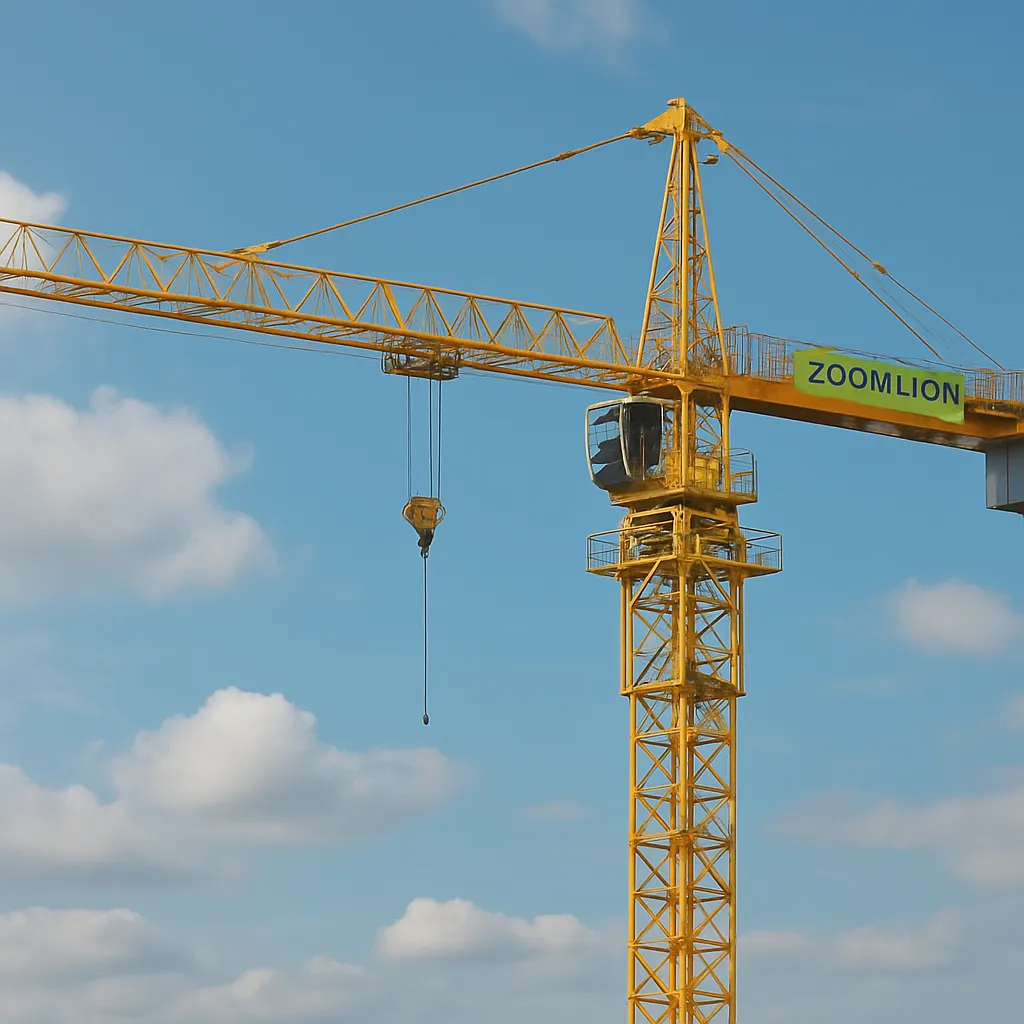
The Zoomlion T7020-12 is a prominent example of modern tower crane design, widely used in urban construction and infrastructure projects where height, reach, and reliable lifting performance are essential. Combining modular assembly with advanced control systems and flexible configurations, the T7020-12 is engineered to meet the demands of mid- to large-scale building sites. This article explores the machine’s design features, typical applications, operational considerations, safety and maintenance aspects, and its role in current construction trends.
Design and technical characteristics
The T7020-12 reflects Zoomlion’s focus on modularity and ease of installation. Built as a topless or classic tower crane depending on site needs, this model emphasizes a balance between the crane’s capacity and its reach. Key design priorities include compact transport dimensions, straightforward on-site assembly, and a stable structural system that allows for long-term operation in varied weather conditions.
Structural layout
- The mast sections are typically manufactured from high-strength steel with bolt-together connections for efficient stacking and disassembly.
- The slewing unit and tower head are designed to accommodate different jib lengths, counterjib counterweights, and optional devices such as trolley hoists or electric winches.
- Modular counterweight systems allow fine-tuning of the crane’s center of gravity to match specific lifting chart requirements and site constraints.
Powertrain and control systems
The crane can be equipped with an energy-efficient electric drive system that supports variable-frequency motor control for smoother starts and stops, improved positioning accuracy, and optimized energy consumption. Digital control units often include load-moment indicators (LMI), anti-collision systems, and remote diagnostics options to aid in preventive maintenance and performance monitoring.
Performance characteristics
- Rated lifting capacity varies with configuration and radius; the model designation T7020-12 suggests a focus on mid-range lifting capability, but actual numbers depend on jib length and counterweight setup.
- Typical features include multiple hoist speeds, trolley travel mechanisms, and slewing rates tailored for efficient material handling.
- Wind resistance and overall stability are addressed through conservative load charts and safety interlocks that prevent operation outside safe envelopes.
Applications and site suitability
The versatility of the T7020-12 makes it appropriate for a wide range of projects. Construction teams value tower cranes like this for their ability to handle repetitive lifts, transport heavy components vertically and horizontally across complex sites, and support high-rise construction sequences.
Common use cases
- Residential and commercial high-rises: Installing precast floors, lifting concrete buckets, and positioning steel frames at height.
- Infrastructure projects: Bridges, transit stations, and other civil structures that require consistent lifting over extended reaches.
- Industrial construction: Erection of plant modules, heavy equipment placement, and assembly of large mechanical systems.
- Renovation and retrofit: Urban infill projects where restricted space and high elevation tasks call for compact-site cranes with long jibs.
Because of its modularity, the T7020-12 can be adapted to constrained urban footprints where transport logistics and quick erection/dismantling cycles are advantages. On projects where multiple cranes are used, compatibility with anti-collision systems and coordinated lift plans improves overall site productivity.
Operational advantages and performance benefits
Operators and site managers choose models like the T7020-12 for a combination of performance, reliability, and lifecycle economics. The design aims to reduce time spent on assembly and maintenance while maximizing uptime during critical construction phases.
Efficiency and productivity
- Fast assembly options reduce crane mobilization time, which is particularly valuable on short-term contracts or when schedule adherence is critical.
- Advanced hoist and trolley controls increase cycle speeds for repetitive lifting tasks, improving effective throughput on the site.
- Remote monitoring and telematics, when fitted, enable predictive maintenance that lowers unplanned downtime and extends service intervals.
Safety and ergonomics
Safety features are central to modern tower crane design. The T7020-12 is typically equipped with:
- Load moment indicators that prevent overloading beyond safe working limits.
- Limit switches for hoist height, trolley travel, and slewing to avoid accidental impacts.
- Operator cabins with climate control and ergonomic controls for improved operator focus and reduced fatigue.
- Optional anti-collision systems and geofencing to coordinate operation with neighboring cranes and on-site hazards.
These systems not only protect personnel and assets but also help contractors meet regulatory requirements and insurance expectations on demanding sites.
Maintenance, lifecycle costs, and sustainability
Maintenance planning plays a major role in ensuring the long-term value of a tower crane. The T7020-12’s modular parts and the availability of standardized components typically reduce inventory pressures and simplify repairs.
Scheduled maintenance
- Routine inspections focus on structural bolts, wire ropes, brake systems, slewing bearings, and electrical components.
- Periodic lubrication and replacement cycles for hoist drums and gearboxes are essential for preserving performance.
- Battery, inverter, and motor systems are inspected to maintain energy efficiency and prevent unexpected failures.
Lifecycle costs
Factors that influence total cost of ownership include purchase price, transport and erection expenses, maintenance and spare parts, operator training, and resale value. Cranes that support remote diagnostics and modular repairs can lower lifecycle costs by reducing service time and improving parts traceability.
Sustainability considerations
Electrical drive systems and regenerative braking can reduce fuel use and emissions compared to older, less efficient designs. Additionally, durable construction and the ability to reconfigure the crane for different tasks promote resource efficiency over multiple projects. Contractors increasingly evaluate equipment based not only on capital cost but also on carbon intensity and operational environmental impact.
Safety regulations, operator training, and best practices
Safe operation of the T7020-12 requires adherence to local regulations and industry best practices. Licensing, certification, and ongoing training are critical for both operators and rigging crews.
Training and qualifications
- Operators should complete manufacturer-specific training to understand the machine’s control logic, limits, and emergency procedures.
- Riggers and signalers must be trained in load chart interpretation, proper rigging techniques, and communication protocols.
- Supervisors should ensure competence in lift planning, weather-related restrictions, and contingency procedures.
Site safety procedures
Essential practices include clear exclusion zones during lifts, regular inspection checklists, documented lift plans for complex operations, and coordination with other cranes and heavy equipment. Monitoring wind speeds and implementing safe-wind policies prevents hazardous operations during gusty conditions.
Market presence, typical configurations, and statistics
Zoomlion is one of the major global manufacturers of construction equipment, and its tower cranes are widely used in Asia, Africa, the Middle East, and increasingly in other regions. The T7020-12 is part of a family of tower cranes designed to offer scalable lifting solutions.
- Zoomlion, established in the early 1990s, has grown into a multinational company producing a wide array of construction machinery.
- Models like the T7020-12 are often sold through regional distributors and service networks that handle spare parts and technical support.
- Adoption trends show strong demand for tower cranes in urbanization-heavy markets, particularly in countries with high-rise construction activity.
If specific numeric specifications are required (such as exact rated capacities at various radii, standard jib lengths, maximum freestanding heights, or specific counterweight masses), these are best sourced from official Zoomlion technical documentation and the local dealer since configurations and permitted operating envelopes can vary by region, certification standards, and optional equipment.
Comparisons and complementary machines
On many construction sites, the T7020-12 will be one of several crane types. Considerations when choosing this model versus alternatives include:
- Site height requirements and whether a luffing jib or topless configuration would better suit the project.
- Transport and assembly constraints—modular, bolt-together masts often reduce the need for specialized erection cranes.
- Availability of spare parts and service support in the project region.
Complementary machines often include mobile cranes for initial erection tasks, smaller luffing or flat-top cranes for tight sites, and hoists for moving personnel and small tools on the tower.
Case studies and practical considerations
Real-world use of the T7020-12 demonstrates its adaptability. Examples include:
- Urban tower projects where rapid erection and dismantle cycles were necessary to match strict permitting windows.
- Mixed-use developments requiring precise placement of heavy precast elements across multiple stories.
- Industrial plant installations where long-term reliability and predictable maintenance schedules reduced overall project delays.
Practical considerations for procurement and deployment:
- Performing a detailed lift plan that matches the crane’s load chart to the heaviest lifts at the required radii.
- Confirming foundation and anchoring requirements early in the project timeline to avoid scheduling conflicts.
- Engaging with a certified dealer for commissioning, training, and warranty management to protect the investment.
Future trends and technological developments
Tower crane design continues to evolve with digitization and electrification. For the T7020-12 and similar models, future-focused features may include:
- Expanded telematics and cloud-based fleet management to optimize deployment across multiple sites.
- Greater use of energy-recovery systems and hybrid power options to reduce operational emissions.
- Improved sensor suites for real-time structural health monitoring, enabling data-driven maintenance strategies.
Integration with Building Information Modeling (BIM) and site-wide logistics software is also becoming more common, enabling cranes to be sequenced into the larger construction schedule and reducing clashes or downtime.
Summary and final considerations
The Zoomlion T7020-12 is a versatile solution for many construction scenarios, offering a mix of modularity, safety systems, and operational flexibility. Whether used for high-rise construction, infrastructure projects, or industrial installations, its design focuses on reliable performance, manageable lifecycle costs, and adaptability to site-specific constraints. When selecting a tower crane, decision-makers should evaluate site geometry, lift demands, maintenance support, and operator training to ensure the chosen model meets both short-term project timelines and long-term asset management goals.
Key selection criteria include matching the crane’s capacity to the project’s heaviest lifts, confirming the availability of trained operators and technical support, and ensuring compliance with local safety and certification standards. With proper planning, the T7020-12 can be a productive, safe, and cost-effective component of contemporary construction fleets.


)
)