Across bustling construction sites and sprawling manufacturing plants, a symphony of machines orchestrates the movement of materials, the shaping of components, and the lifting of enormous structures. This article delves into the world of machines at work, exploring their design, operation, on-site assembly, and the innovations defining their future.
Introduction to Machines in Modern Industries
Whether hoisting steel girders hundreds of feet above ground or welding precision components on an assembly line, machines have revolutionized how tasks are performed. They bring efficiency to labor-intensive processes, enhance precision in fabrication, and bolster safety for human operators. From the towering lattice booms of cranes to the sleek robotic arms in automotive plants, each piece of equipment relies on a network of subsystems working in harmony. Understanding these subsystems offers a glimpse into the seamless integration of mechanics, electronics, and software that drives today’s industrial landscape.
Key Components and Technologies
Power Systems
At the heart of every heavy machine lies its powertrain. Diesel engines remain a staple in large equipment due to their high torque output and durability. In parallel, electric and hybrid drives are gaining ground, offering reduced emissions and lower operational costs. Advanced battery technologies and energy recovery systems now enable some machines to operate entirely off-grid for extended periods, promoting sustainability in construction and mining operations.
Control Units and Automation
Modern machines incorporate programmable logic controllers (PLCs) and embedded microprocessors that execute complex sequences. Through sensor feedback and real-time data analysis, these control units adjust hydraulic pressures, motor speeds, and actuator positions. Such automation reduces human error, optimizes performance, and allows remote operation in hazardous environments.
Safety Mechanisms and Redundancies
Safety remains paramount when handling multi-ton loads or operating at height. Redundant hydraulic circuits, emergency brake systems, and load-moment indicators all contribute to risk mitigation. In many cranes, anti-collision sensors and geofencing software ensure adjacent machines maintain safe distances. These layered safeguards reflect engineering practices designed to protect both personnel and equipment.
On-Site Assembly and Maintenance
Deploying large machinery often requires meticulous planning, especially for mobile cranes reaching capacities of 1,000 tons or more. Assembly typically proceeds in stages:
- Site Preparation: A stable foundation or supporting mat must be installed to distribute immense loads.
- Component Delivery: Boom sections, counterweights, and base modules arrive via heavy haulers or flatbeds.
- Sequential Erection: Using smaller auxiliary cranes or modular hydraulic jacks, technicians piece together the base, tower sections, and boom.
- System Integration: Hydraulic lines, cables, and electrical harnesses are connected and tested before commissioning.
Routine maintenance schedules include oil analysis, filter replacements, and calibration of sensors. Predictive maintenance leverages vibration analysis and thermal imaging to identify wear before failures occur, enhancing machine reliability and reducing downtime.
Case Study: Erecting Giant Cranes
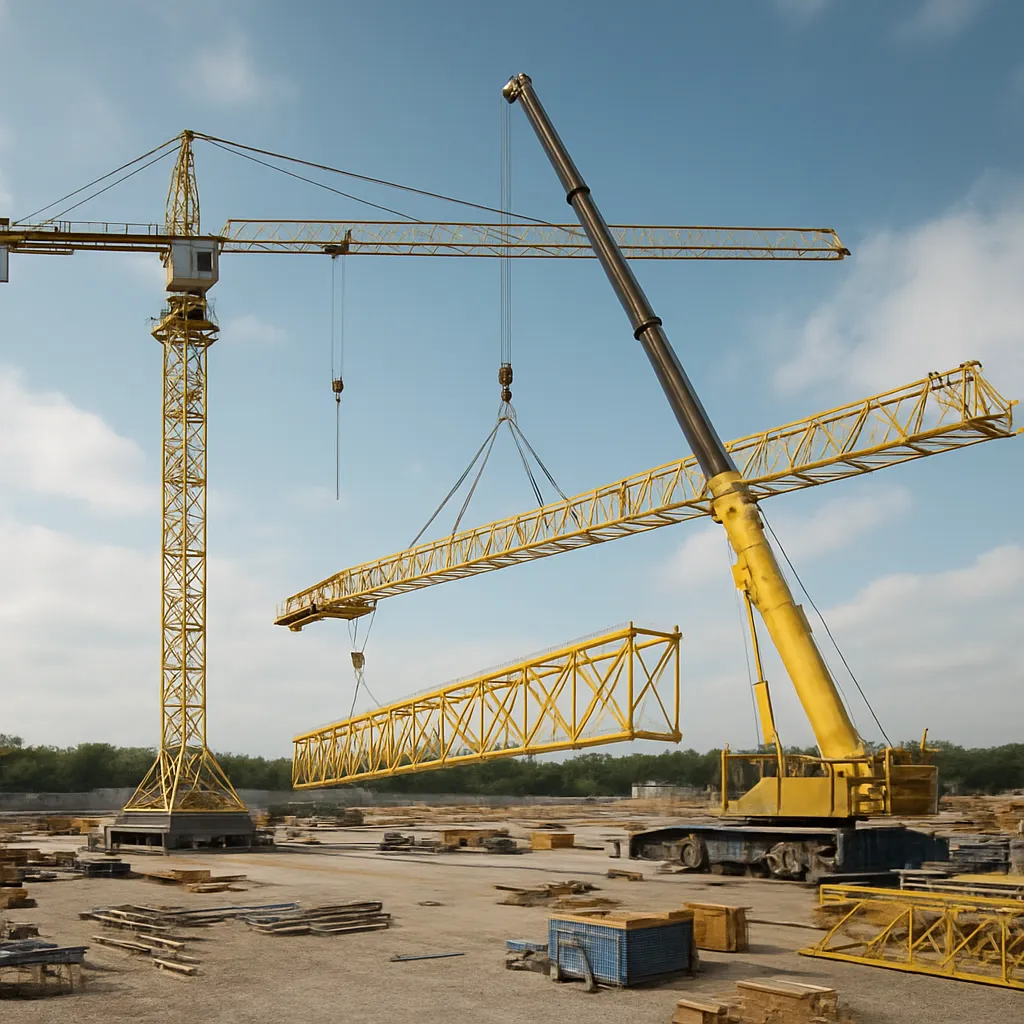
When constructing a high-rise skyscraper, the on-site assembly of a giant crane becomes a focal point. A typical sequence involves:
- Transporting base modules and counterweight blocks to a designated staging area.
- Setting up a derrick crane to lift the first tower sections into place.
- Climbing frame installation, allowing the crane to ‘grow’ with the building.
- Mounting the jib and tie-in points at each floor for lateral stability.
Such operations demand precise coordination among riggers, engineers, and operators. Wind speed monitors and tilt sensors feed real-time data to the crane’s control cabin, ensuring safe operation under variable weather conditions. The result is a towering machine capable of lifting heavy-duty loads with pinpoint accuracy.
Future Trends and Innovations
The next generation of industrial machines will be defined by connectivity and intelligence. The integration of the Industrial Internet of Things (IIoT) enables continuous monitoring of performance metrics and remote diagnostics. Coupled with machine learning algorithms, equipment can self-optimize for fuel consumption, load balancing, and wear distribution.
Robotics will further blur the lines between fixed production cells and mobile field operations. Autonomous vehicles will transport materials across sites, while collaborative robots (cobots) work alongside engineers in assembly tasks. Advancements in additive manufacturing will also allow on-demand production of spare parts, reducing lead times and logistical complexity.
- Enhanced Augmented Reality (AR) for maintenance guidance.
- Hydrogen fuel cells replacing diesel power units.
- Modular designs for rapid reconfiguration of machinery roles.
By embracing these technologies, the machinery of tomorrow will deliver unprecedented levels of productivity, environmental responsibility, and operational scalability. This evolution promises to redefine how industries approach complex tasks, from large-scale construction to precision manufacturing, ushering in a new era of industrial capability.