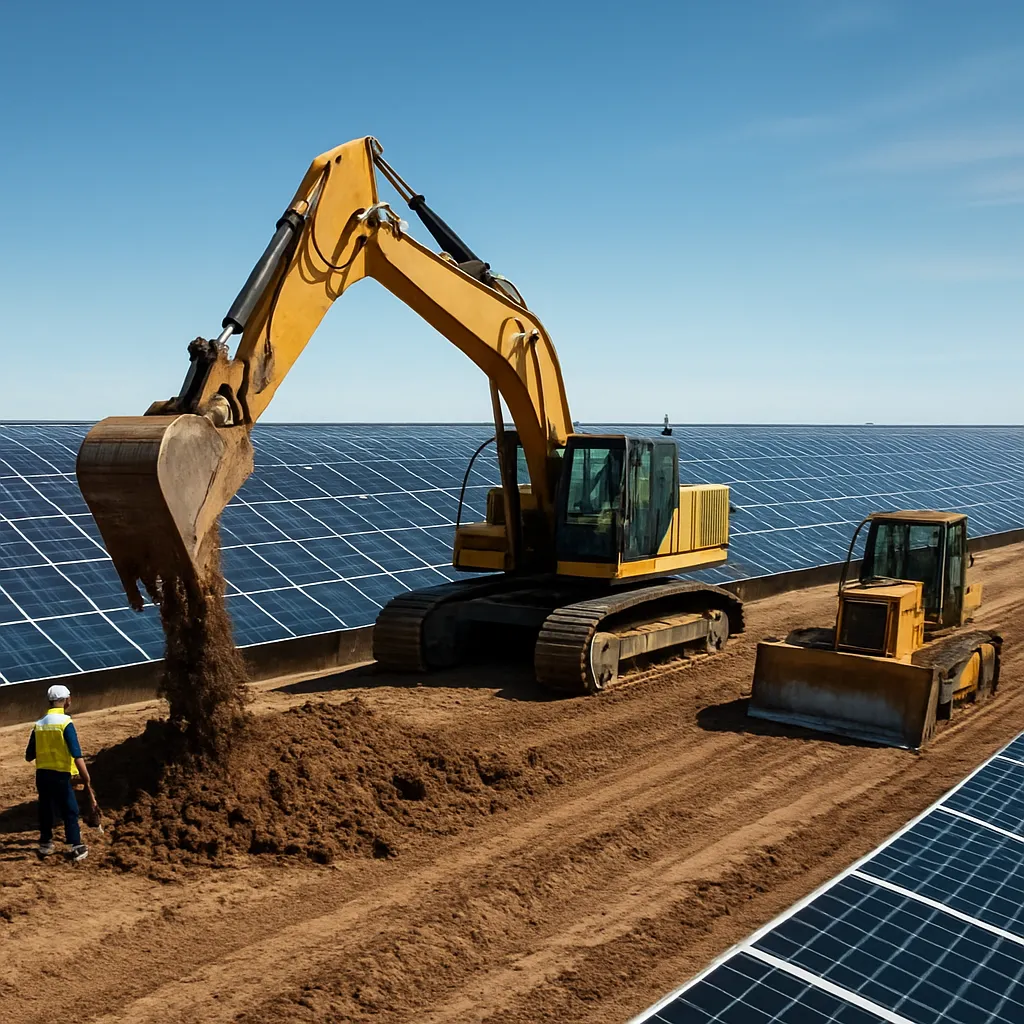
The construction of large-scale solar farms relies on an array of sophisticated machines that transform raw land into efficient energy-producing assets. Understanding the roles these machines play—from earthmoving equipment to robotic installers—reveals the integration of technology and engineering in pursuit of clean power. This article examines key phases of mega solar farm development, highlighting the most impactful machinery and the benefits it brings to sustainability and cost-effectiveness.
Site Preparation and Earthmoving Machinery
Before solar panels can harness the sun’s power, vast tracts of land must be graded, leveled, and stabilized. Heavy-duty machines designed for excavation and soil compaction are essential to ensure a stable foundation and optimal panel orientation.
Excavators and Bulldozers
- Excavators equipped with GPS-guided systems boast precision in digging trenches for cable routes and mounting foundations.
- Bulldozers smooth out uneven ground, creating uniform slopes that maximize sun exposure and reduce shading between rows of panels.
Grading and Compaction Rollers
After major cut-and-fill operations, graders refine the surface profile. Compaction rollers then densify soil to prevent settlement over time. This process enhances ground bearing capacity and minimizes future maintenance.
Trenching Machines
Automated trenchers carve narrow channels for buried electrical cables. These specialized machines maintain consistent trench depth and width, safeguarding conductor integrity and electrical performance. Consistent cable burial depth also supports efficiency in long-term operations by mitigating exposure risks.
Innovative Panel Installation Equipment
The installation phase introduces machinery that assembles mounting structures, aligns rows of panels, and secures modules in place. These systems accelerate construction timelines and uphold quality standards critical to project success.
Piling and Drilling Rigs
- Piling rigs drive support posts deep into the ground, ensuring stability on various soil types and slopes. The use of auger attachments addresses rocky terrain with minimal disruption.
- Drilling rigs bore precise holes for foundation anchors, leveraging advanced sensors to monitor torque and depth in real time.
Automated Panel Lifters
Robotic lifters equipped with suction heads or clamping arms handle large glass panels safely and swiftly. These machines reduce manual labor, lower the risk of breakage, and maintain consistent alignment across hundreds of modules.
Trackers and Alignment Systems
Single-axis and dual-axis trackers tilt and rotate panels throughout the day to follow the sun. Specialized calibration vehicles use laser-guided instruments to adjust tracker angles with accuracy, increasing overall energy yield by up to 25% compared to fixed-mount installations.
Electrical Integration and Conduit Machines
Linking the solar array to inverters and substations requires careful handling of cables, conduits, and junction boxes. Dedicated machinery streamlines these tasks and safeguards electrical components.
Cable-Laying Tractors
- High-capacity cable tractors unwind long reels of armored conductors and guide them into trenches or cable trays.
- Automated tensioners ensure cables are laid without kinks or overstress, preserving terrain adaptability and reducing the need for rework.
Conduit Benders and Rollers
To protect wiring against environmental and mechanical stresses, conduits must be bent and shaped around structures. Hydraulic conduit benders deliver uniform bends while portable rollers stretch and straighten long sections, improving installation modularity and speed.
Crimping and Cable-Sheathing Units
On-site crimping machines affix connectors to cable ends, validating mechanical and electrical integrity. Sheathing units extrude protective jackets around splices, ensuring longevity in harsh outdoor conditions.
Advanced Monitoring and Maintenance Systems
Once panels are operational, an ecosystem of machines and devices supports long-term performance and autonomy in maintenance. Data collection, diagnostics, and cleaning processes all rely on specialized equipment.
Drone Inspections
- Drone fleets equipped with thermal and high-resolution cameras detect faulty panels, hot spots, and shading issues without human intervention.
- Automated flight paths map entire solar fields in hours, feeding data into central control platforms for analytics and early fault detection.
Robotic Cleaning Systems
Dust, pollen, and bird droppings can reduce panel output by up to 30%. Robotic cleaners mounted on rails or wheels traverse arrays, using brushes or water-free wiping mechanisms to restore surface reflectivity. These machines operate at night or during low-output periods, ensuring minimal downtime.
Mobile Service Platforms
For in-depth maintenance, mobile platforms elevate technicians to panel height safely. Equipped with tool storage, power outlets, and fall protection systems, these vehicles expedite tasks such as inverter swaps and wiring repairs.
Emerging Technologies and Future Trends
The solar construction sector continues to innovate, integrating next-generation machinery that boosts productivity and reduces environmental impact.
3D Printing of Structural Components
On-site 3D printers fabricate custom brackets and support parts from recycled plastics or concrete. This approach eliminates supply chain delays and lowers carbon footprints associated with traditional manufacturing.
AI-Driven Construction Management
Artificial intelligence platforms coordinate machine fleets, optimize work schedules, and predict equipment maintenance needs. By analyzing sensor outputs and environmental data, these systems allocate resources more efficiently, maximizing on-site robotics utilization and minimizing idle time.
Electric and Hybrid Machinery
With an emphasis on sustainability, electric excavators and solar-powered mobile cranes are entering the market. Reduced noise, zero emissions on-site, and lower fuel costs make them attractive alternatives for eco-conscious developers.
Key Benefits of Machine-Driven Construction
- Efficiency: Automated processes accelerate construction timelines, enabling projects to reach operational status sooner.
- Cost Savings: Precision machinery reduces material waste and labor expenses, improving overall ROI.
- Quality Assurance: Sensors and software ensure each installation meets strict engineering specifications.
- Scalability: Modular equipment can be redeployed across multiple sites, supporting rapid expansion.
- Safety: Remote-controlled and robotic systems minimize human exposure to hazards.