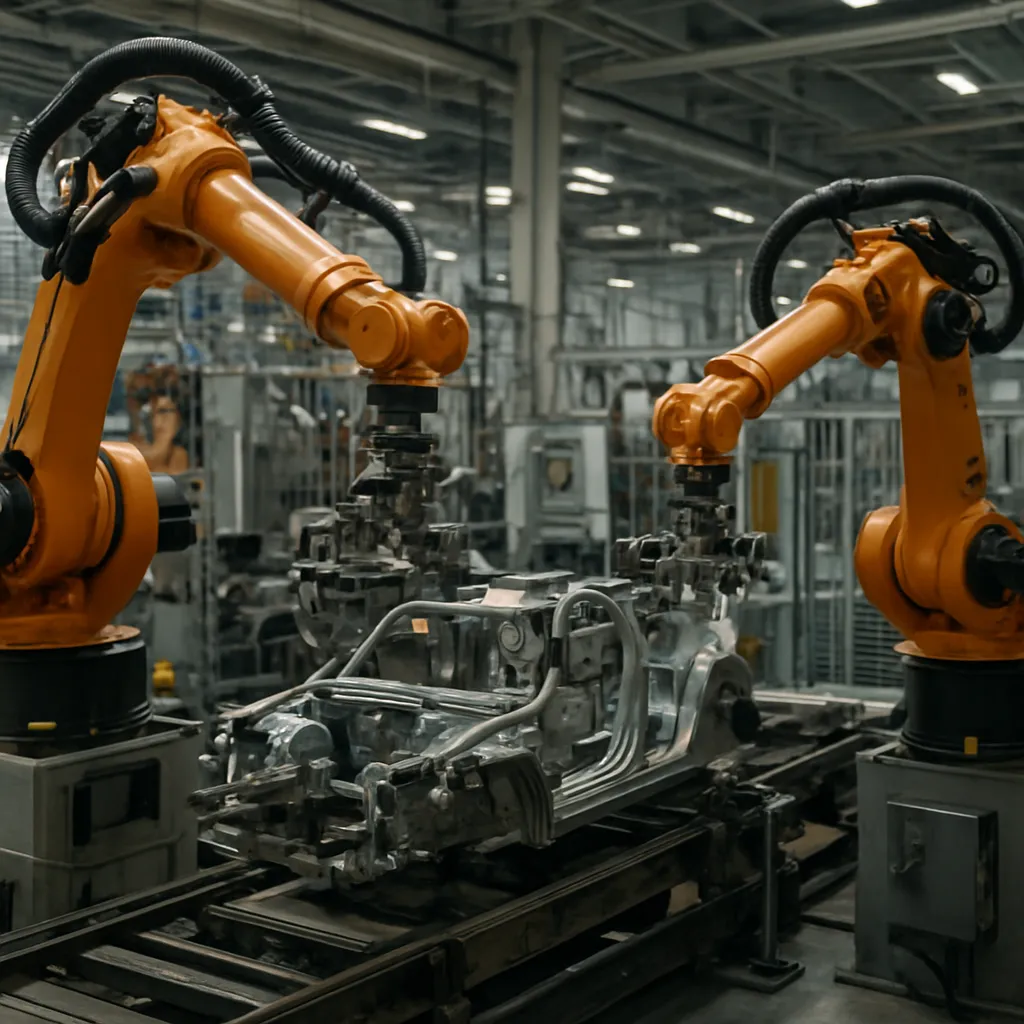
The evolution of automated systems has redefined the boundaries of manufacturing, enabling factories to function with unprecedented precision and minimal human intervention. By integrating cutting-edge technologies, modern production environments achieve levels of efficiency, reliability, and flexibility once thought impossible. This exploration delves into the smartest factory machines that operate without humans, revealing how they collaborate seamlessly to drive innovation and reshape industrial landscapes.
Intelligent Robotics in Modern Factories
Autonomous Assembly Lines
Assembly lines have undergone a dramatic transformation through the deployment of autonomous robots. These machines perform precise tasks such as welding, fastening, and painting without direct human oversight. Equipped with multi-axis arms and high-resolution cameras, they adapt to variations in component shape and orientation. Real-time vision processing algorithms guide robotic end-effectors to execute complex tasks with micron-level accuracy. As a result, production throughput soars while defect rates plummet, demonstrating the power of automation in achieving consistent quality standards.
Collaborative Robots (Cobots)
Unlike traditional industrial robots caged off for safety, collaborative robots—known as cobots—are designed to work safely alongside human operators. Force-limited joints and advanced sensors detect unexpected contact, prompting the robot to halt or retract. Cobots handle tasks such as machine tending, component inspection, and packaging. By augmenting human skills rather than replacing them entirely, cobots facilitate rapid changeovers and support small-batch production runs. Their intuitive programming interfaces enable workers to reconfigure them on the fly, enhancing overall resilience in dynamic factory settings.
Advanced Material Handling Systems
Automated Guided Vehicles (AGVs)
Material transport within sprawling manufacturing facilities demands precision and optimization. Automated Guided Vehicles (AGVs) navigate warehouse floors and assembly areas using laser scanners, magnetic tapes, or inertial measurement units. These driverless vehicles collect raw materials, deliver parts to production cells, and shuttle finished goods to storage. State-of-the-art AGVs employ simultaneous localization and mapping (SLAM) techniques to update their maps in real time, avoiding obstacles and recalculating routes autonomously. Their integration with warehouse management systems (WMS) ensures seamless coordination, minimizing waiting times and energy consumption.
Robotic Palletizing and Depalletizing Cells
Palletizing robots stack products into pallets with remarkable speed and stability. High-speed delta robots, with their spider-like kinematics, handle lightweight items such as snack packages or pharmaceutical vials at rates exceeding 300 picks per minute. Conversely, heavy-payload six-axis robots manage cumbersome crates and drums. Vision-guided gripping systems detect part orientation and adjust grasping strategies accordingly. Depalletizing cells reverse the process, unloading mixed pallets and sorting components for subsequent processing. By eliminating manual handling, these solutions reduce worker strain and elevate throughput, embodying the essence of innovation in logistics.
Machine Learning and Predictive Maintenance
Sensor Networks and Data Analytics
Factories bristle with networks of sensors that monitor temperature, vibration, current draw, and acoustic signatures. This torrent of data feeds into edge computing devices that preprocess information and transmit critical summaries to cloud-based platforms. Machine learning models analyze historical trends and identify subtle anomalies that precede equipment failures. Techniques such as anomaly detection, clustering, and time-series forecasting empower maintenance teams to anticipate breakdowns before they occur. Through this predictive maintenance paradigm, unplanned downtime shrinks drastically, safeguarding both productivity and profitability.
Real-Time Fault Detection
Beyond long-term predictions, instantaneous fault detection systems intervene at the very moment irregularities arise. Acoustic emission sensors on gearboxes, for example, detect high-frequency signatures of developing cracks. Thermal cameras spot overheating bearings or electrical connections. When a threshold is breached, automated control systems can slow or halt machinery, preventing catastrophic damage. Operators receive immediate alerts via dashboards or mobile notifications, enabling swift corrective action. Such closed-loop feedback frameworks exemplify how innovation and data-driven insights converge to enhance reliability across the production line.
Next-Generation Additive Manufacturing
Metal 3D Printing Cells
Additive manufacturing, especially metal 3D printing, has graduated from prototyping to serial production in industries ranging from aerospace to medical devices. Automated powder handling units feed lasers or electron beams that selectively fuse metal powder layer by layer. Intelligent platforms manage powder recycling, part removal, and print bed cleaning without human intervention. Real-time melt pool monitoring adjusts energy exposure to maintain structural integrity. By eliminating tooling constraints and supporting complex geometries, smart 3D printing cells unlock new design freedoms and reduce lead times dramatically.
Hybrid Manufacturing Systems
The fusion of subtractive and additive processes in hybrid machines offers unparalleled versatility. A robotic arm may alternately deposit material via directed energy deposition and mill the same part with a high-speed spindle. Integrated sensors monitor deposition quality and tool wear, while adaptive control loops tune process parameters on the fly. These hybrid cells produce components with intricate internal features, applying finishing passes in situ to achieve tight tolerances. As a result, manufacturers can consolidate multiple stages into a single automated workcell, streamlining production flows and curtailing material waste.
Artificial Intelligence for Quality Assurance
Vision Systems with Deep Learning
Traditional machine vision inspects products according to preprogrammed rules, but deep learning–based vision systems learn from vast image datasets. Convolutional neural networks detect hairline cracks on automotive parts, subtle color variations on consumer goods, and missing stitches in textile products. These intelligent cameras autonomously update their defect definitions, adapting to new product lines and surface finishes. By minimizing false positives and negatives, AI-driven inspection stations accelerate quality checks and maintain high yield rates.
Automated Testing and Calibration
Beyond visual checks, modern factories implement automated testing rigs that verify mechanical, electrical, and functional parameters. Test sequences run on programmable logic controllers (PLCs) and are orchestrated by supervisory control software. Once a part passes all examinations, it transitions seamlessly to packaging or further assembly. If it fails, robotic arms sort it into rejection bins for rework or recycling. This end-to-end automation of testing and calibration embodies the principles of Industry 4.0, ensuring every product meets rigorous specifications without manual gatekeepers.
Energy Management and Sustainability
Smart Power Distribution
Efficient energy use is a critical objective in contemporary manufacturing. Intelligent power management systems allocate electricity dynamically based on machine demand, peak tariff periods, and renewable energy availability. Load-shedding strategies temporarily pause noncritical equipment during spikes, while energy storage units discharge stored power when prices soar. By optimizing energy flows and reducing waste, factories cut operational costs and lower carbon footprints, aligning production goals with environmental stewardship.
Water and Waste Recycling
Closed-loop systems reclaim water used in cooling and rinsing processes, filtering and repurposing it for subsequent cycles. Waste materials such as metal shavings, plastic scrap, or chemical sludges are separated, treated, and reintegrated into production streams. Advanced separation technologies, including centrifuges and membrane filters, ensure high recovery rates. Automated monitoring measures key metrics—pH levels, turbidity, contaminant concentrations—triggering alerts if parameters drift out of spec. This comprehensive approach to resource management underscores the potential for intelligent machines to foster sustainable manufacturing ecosystems.