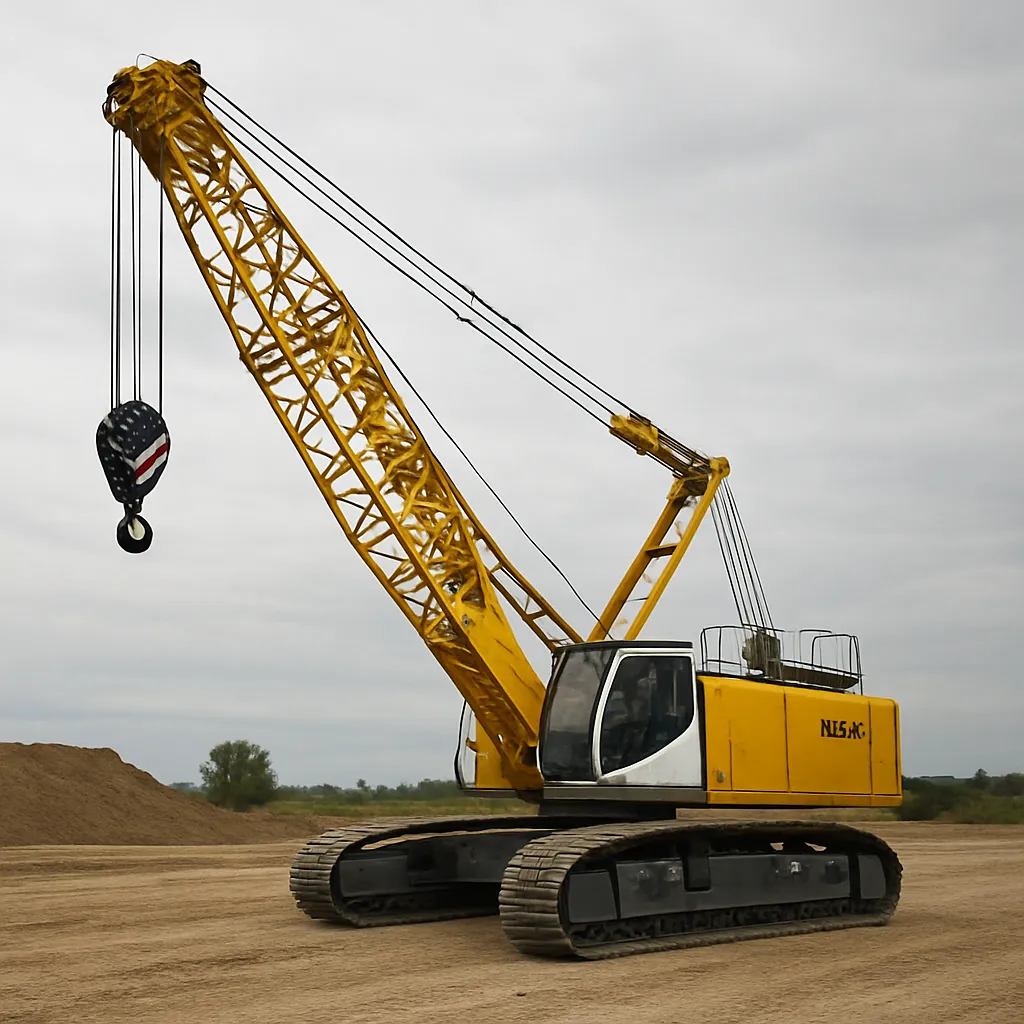
The Liebherr LR 1280 is a heavy-duty lattice-crawler crane designed for demanding lifting tasks in construction, energy, infrastructure and industrial projects. Combining robust engineering with modular transportability and flexible configuration options, the LR 1280 is commonly used where high capacity, stability and off-road mobility are required. In the following sections we explore the machine’s technical attributes, typical applications, operational considerations, and interesting facts that illustrate why this model is a popular choice among contractors and specialized lifting companies.
Overview and design philosophy
The LR 1280 embodies Liebherr’s approach to large cranes: a lattice-boom crawler platform that prioritizes a high strength-to-weight ratio, modular assembly, and a wide range of configuration possibilities. As a representative of the LR series, this crane is intended to bridge the gap between medium and very large lattice crawlers by offering a strong nominal capacity while remaining transportable and adaptable on complex job sites.
The design centers on three main elements: the crawler undercarriage, the superstructure with engine and winch systems, and the lattice boom/luffing jib combinations. Each of these elements is engineered to be modular so that the machine can be transported in road-legal segments, assembled on site, and reconfigured to meet the project’s lifting envelope and ground conditions. The result is a machine that provides both raw lifting capability and practical flexibility.
Key technical characteristics
The LR 1280’s exact specification may vary by market and by configuration, but several technical features and typical data points are commonly associated with the model:
- Capacity: Typical nominal maximum lifting capacity in many configurations is around 280 tonnes (approximate, depending on boom/jib and counterweight arrangement).
- Boom: The crane uses a lattice main boom which can be combined with lattice jibs or luffing jibs to extend reach. Typical main boom lengths may extend into the tens of meters with jibs adding significant height and outreach.
- Crawler tracks: Wide, heavy-duty crawlers provide site mobility and distribute loads for soft or uneven grounds. Track width and length are chosen to optimize ground pressure for the application.
- Counterweight and ballast: Modular counterweight blocks and ballast systems permit fine-tuning of the ballast to match lifting requirements while minimizing transport weight for non-heavy-lift moves.
- Power unit: A diesel engine(s) in the superstructure powers hydraulic systems and winches; available ratings depend on the market specification but are chosen to balance power, fuel economy and emissions compliance.
- Winches and hoist systems: Multiple hoists permit both multiline and independent hoisting operations, supporting complex lifts and tandem crane lifts when employed in multi-crane projects.
- Operator cabin and controls: Ergonomically arranged cabs with modern control systems, load moment indicators (LMI), and optional remote monitoring/diagnostics.
Performance and operational figures (typical)
Because the LR 1280 is highly configurable, performance data are often given as ranges. Typical figures often quoted by operators and rental companies include:
- Maximum nominal capacity: ~280 t (configuration dependent).
- Maximum main boom length (typical ranges): from a few tens of meters up to approximately 60–80 m when combined with jib sections (subject to manufacturer options).
- Counterweight system mass (typical modular blocks): dozens to several hundred tonnes depending on configuration.
- Travel speed: slow, crawler-speed designed for site positioning (often around 1–2 km/h, depending on undercarriage option).
- Transport: main components sized to comply with road-transport limits in many regions; number of truckloads required depends on chosen configuration and country regulations.
Note: exact numerical specifications depend on the specific LR 1280 variant, the chosen boom/jib configuration, ballast, and local regulatory restrictions. Always consult the official Liebherr technical documentation or an authorized dealer for project-critical figures.
Applications and industries where the LR 1280 excels
The LR 1280 is used across a broad spectrum of heavy-lifting applications. Its combination of capacity, reach and mobility makes it especially valuable in sectors where modularity and adaptability are as important as raw lifting power.
Construction and civil engineering
- High-rise and complex building works where heavy prefabricated elements must be placed with precision.
- Bridge construction and repair — placing girders, segments and precast components where reach and lifting capacity are vital.
- Infrastructure projects such as tunnels and viaducts where access is limited and a crawler’s off-road mobility is required.
Energy sector
- Onshore wind turbine erection and maintenance — lifting nacelles, hubs and tower sections.
- Hydropower and thermal plant construction — positioning turbines, generators, and large structural components.
Oil, gas and heavy industry
- Installation of heavy modules, vessels and reactors in refineries and process plants.
- Plant turnarounds and maintenance that require lifting large components in constrained spaces.
Maritime and port operations
- Quay and shipyard lifts, including handling of prefabricated ship elements and heavy marine equipment.
- Offshore platform module assembly onshore prior to transport.
Because the LR 1280 can be configured with various jibs and counterweight systems, it is an attractive option when a single crane must cover multiple roles on a project — for example, performing both heavy lifts near the base and high, long-reach lifts after jib extension.
Transport, assembly and site logistics
A major advantage of lattice crawler cranes such as the LR 1280 is modular transportability. The crane is designed so that major components can be trucked to site, assembled with a smaller erection crane or by sectional assembly, and later disassembled for relocation.
- Modular components: Tracks, superstructure, engine, winches, boom sections, jibs and counterweights are separable for transport.
- Transport planning: planners assess road permits, escort requirements, axle loads and bridge limits. Configurations that minimize the number of heavy transports are favored to reduce logistics cost.
- Assembly: Depending on the site, assembly can be performed by smaller mobile cranes or self-erecting techniques where possible. On complex jobs, an organizer will sequence counterweight placement and boom erection to maintain stability.
- Site preparation: ground bearing capacity must be assessed. Matting, crane pads and ground improvement may be required to safely distribute loads.
Operation, safety and control systems
The LR 1280 integrates safety and control technologies that help operators manage lifts and meet increasingly stringent site safety standards. Modern units typically include:
- Load moment indicator (LMI) and onboard safety interlocks that prevent operations beyond safe limits.
- Graphical displays and diagnostic systems for engine, hydraulics and winch monitoring.
- Optional remote monitoring and telematics for fleet management, fuel-use reporting and preventive maintenance scheduling.
- Redundant safety features in hoists and motion circuits to mitigate risks associated with heavy lifts.
Operator training is a critical component of safe LR 1280 operation. High-capacity lifts require precise rigging, careful assessment of lifting angles, and strict adherence to load charts. Many rental companies and end-users invest in certified operator and rigging training programs specific to lattice crawler cranes.
Maintenance, lifecycle and total cost of ownership
Heavy lattice crawlers are capital-intensive assets whose value depends heavily on maintenance, uptime and adaptability to different jobs. Typical maintenance considerations for the LR 1280 include:
- Scheduled engine and hydraulic system servicing per manufacturer intervals.
- Regular inspection of lattice boom sections and pins for wear and fatigue.
- Track and undercarriage maintenance to prevent uneven wear and to ensure reliable site mobility.
- Winch rope inspection and replacement planning; rope failure is a critical risk on heavy lifts.
Fleet operators monitor crane utilization and maintenance costs to calculate total cost of ownership. Because the LR 1280 is modular and adaptable, it can realize higher utilization rates by serving different sectors and project types, which helps amortize capital cost over time.
Case studies and typical project examples
Examples of projects where an LR 1280 would be chosen include:
- Wind farm component installation — lifting nacelles and tower sections at medium-sized turbines where a 280 t-class crane provides a good balance between capacity and transportability.
- Bridge span erection — placing precast concrete segments where outriggers and jib reach are needed to position large elements accurately.
- Industrial module lifts — installing mechanical modules and heavy vessels during plant construction.
In many of these cases, the LR 1280 may be used in tandem with other cranes or as part of a fleet where its specific capacity and reach complement larger or smaller cranes to optimize lift plans and minimize downtime.
Environmental and regulatory considerations
Operators must anticipate environmental and regulatory factors when deploying an LR 1280. Diesel emissions, noise, ground impact and transport permits all influence planning:
- Emissions: Modern engines and exhaust systems are designed to meet regional emissions standards (e.g., Stage V or Tier 4 where applicable). Fuel consumption varies with workload and idle time.
- Noise: On sensitive sites, noise mitigation measures including silenced exhausts and limited working hours may be required.
- Ground protection: Matting and temporary roads reduce environmental impact and prevent soil compaction or damage to paved surfaces.
- Permitting: Oversize transport permits and route surveys are often necessary for boom sections and counterweights.
Comparisons and market position
The LR 1280 sits in a competitive segment of lattice crawler cranes where buyers compare capacity, transportability, modularity and lifecycle cost. In its class, the LR 1280’s strengths include:
- Flexibility — modular boom and counterweight options allow a wide variety of lift setups.
- Site mobility — crawler undercarriage permits work on soft or undulating grounds without the need for outriggers.
- Proven engineering — Liebherr’s experience in lattice cranes provides established reliability and resale value.
Competitors in the same market segment may offer slightly different capacity points, transport advantages or pricing. Project planners typically perform a lifecycle cost analysis and evaluate rental availability when selecting the most appropriate crane.
Interesting facts and practical tips
- Modularity reduces logistical complexity: by choosing a configuration with fewer heavy counterweights, operators can reduce the number of transport moves at the cost of some lifting capacity.
- For many projects, the LR 1280 offers an excellent compromise between smaller 100–200 t-class crawlers and much larger 600 t+ machines — it is often the “sweet spot” for medium-heavy lifts on constrained sites.
- Corrosion protection and proper storage of lattice sections extend service life significantly. Many owners invest in covered storage for boom sections to reduce repainting and inspection costs.
- Using the crane’s telematics (where fitted) can reveal idle time and inefficient transport sequences that, when corrected, improve fleet utilization.
Conclusion
The Liebherr LR 1280 is a versatile and capable lattice crawler crane that combines modularity, robust structural design and the off-road mobility needed for many heavy-lift applications. While specifications can vary by configuration, the model typically serves as a reliable solution for construction, energy, industrial and maritime projects that require a balance of capacity and mobility. Operators benefit from careful transport planning, rigorous maintenance and adherence to safety systems to maximize uptime and minimize operating risk. For project-specific lifting charts, capacities and transport data always consult Liebherr’s official technical documentation or an authorized dealer to ensure compliance with local regulations and to obtain precise figures for the intended configuration.


)
)