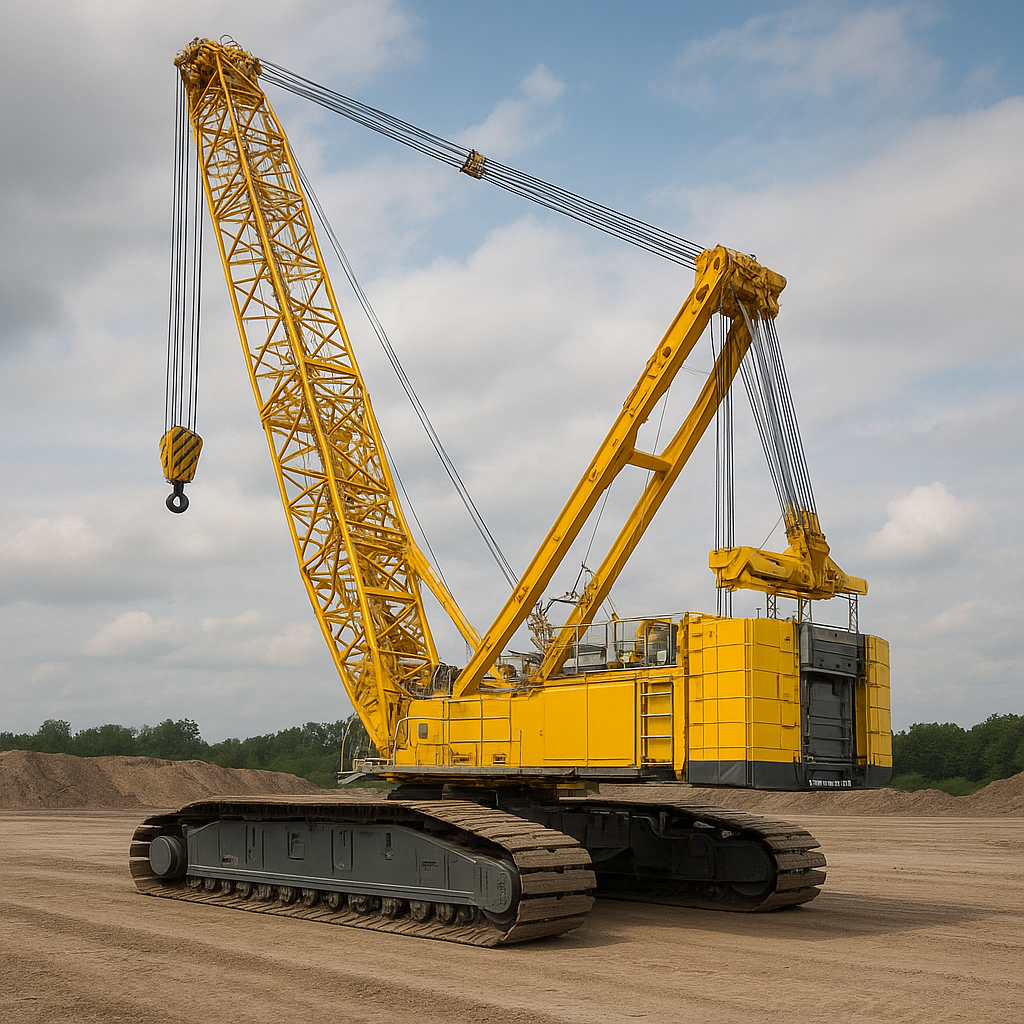
The Liebherr LR 11350 is a flagship heavy-lift machine in the world of large crawler cranes. Designed to tackle some of the most demanding lifting tasks across industries, this model combines modularity, robustness and advanced control systems to deliver high performance on complex sites. In the following article you will find a comprehensive overview of the machine: its design features, typical applications, technical and operational considerations, safety systems, logistics of transport and assembly, market context, and practical tips for operation and maintenance. The text highlights the most important aspects with targeted technical and operational insights to help owners, operators and project planners evaluate the LR 11350 for heavy lifting jobs.
Overview and Design Philosophy
The LR 11350 is a large lattice-boom crawler crane built for extremely heavy, high-reach lifts while operating on soft or uneven terrain thanks to its tracked undercarriage. The model designation LR 11350 signals its class: a crane engineered for very large loads, with a nominal maximum lifting capacity in the range of 1,350 tonnes (this capacity depends on configuration, boom length and radius). Its architecture follows the proven Liebherr philosophy of modularity — individual components such as crawler carriers, counterweights, booms and jibs can be transported and assembled to suit the lift profile and site restrictions.
The core structural elements include a lattice main boom and multiple jib options (fixed or luffing) that allow for a wide variety of reach and height combinations. The machine is powered by high-performance engines and driven by advanced hydraulic and electronic control systems, which together ensure precise load handling, smooth motion and integration with modern site management tools.
Key Technical Features
Although exact specifications depend on particular configurations and optional packages, the LR 11350 typically offers the following technical characteristics and design features:
- Main boom: Lattice-type main boom sections that can be combined to achieve very long hook heights and radii. Multiple boom-length options mean the crane can be optimized for lift radius and headroom.
- Jib: Interchangeable jib systems (including heavy-duty fixed jibs and luffing jibs) to increase reach and adapt to confined-site lifts.
- Counterweight: Modular counterweight blocks that are assembled on site to balance heavy loads and fine-tune the crane’s lifting chart for a specific task.
- Undercarriage: Large crawler modules providing stability and mobility on soft soils — the tracks distribute high loads and enable repositioning without full disassembly in many cases.
- Power and drive: High-output diesel power units drive pumps and winches; modern electronic controls provide smooth power management and fuel efficiency.
- Winches and hoisting equipment sized for heavy line pull, with multiple reeving configurations to match rope loads and lifting speeds.
- Integrated instrumentation and safety systems such as load-moment limiting, anti-two block protection, and electronic load charts for safe operation within rated limits.
Applications and Typical Use Cases
The LR 11350 excels where very large loads must be lifted to great heights or where work must be done with high precision under challenging site conditions. Typical applications include:
- Energy sector: installation of heavy components in nuclear and conventional power plants, erection of large modules in thermal plant construction.
- Wind industry: lifting and installing nacelles, tower sections and foundations for onshore and near-shore wind turbines, particularly in cases of very large offshore-class turbines.
- Petrochemical and refinery projects: moving heavy process modules, reactors, heat exchangers and piping skids during plant construction and turnaround operations.
- Bridge and civil engineering: placement of long-span bridge segments, heavy precast concrete elements and steel girders.
- Offshore and marine construction (shore-based lifts): loading and unloading heavy offshore modules, cranes, and subsea equipment.
- Industrial heavy lifts and relocation projects where prefab modules or heavy machinery have to be lifted and precisely positioned.
Performance, Capacity and Load Management
The practical performance of the LR 11350 depends heavily on the combination of boom length, jib configuration, counterweight, reeving of hoist lines and radius at which the load is lifted. Its nameplate maximum of approximately 1,350 tonnes is achieved in compact, low-radius configurations with full counterweight and optimal reeving. As the radius increases, allowable lift capacity decreases according to the machine’s load chart.
Operators and project planners must use the crane’s certified load chart to determine safe capacities for each configuration. Load charts account for:
- Boom and jib geometry (height and angle)
- Counterweight amount and placement
- Hoist reeving and line speed
- Ground bearing pressure and support conditions
Advanced electronic systems on modern Liebherr cranes continuously monitor these parameters, providing both visual and audible warnings when approaching operational limits. Proper planning ensures the crane is set up in the configuration that yields the necessary capacity while minimizing transport and assembly complexity.
Transport, Assembly and Site Logistics
Because of its size, the LR 11350 is typically transported to site in many modular loads. Key logistical considerations include:
- Component transport: crawler carriers, boom sections, counterweight blocks and the superstructure are transported separately on heavy haul trailers.
- On-site assembly: lift of the main boom and erection of counterweight and jibs often require auxiliary cranes or staged assembly procedures using the crane’s own derrick capabilities.
- Ground preparation: track-bearing surfaces must be assessed and leveled; reinforced crane mats or temporary foundations may be required to distribute loads and reduce settlement risks.
- Permitting and route surveys: road and bridge load limits, overhead clearances and transport permits for oversized loads must be arranged well in advance.
Good site logistics minimize downtime and assembly risk. Project schedules typically factor in several days to weeks for assembly and load-testing for the largest configurations.
Control Systems and Safety Features
Liebherr integrates modern electronic control and safety systems into its large crawler cranes to ensure accurate and safe operations. Typical systems include:
- Load moment limiter (LML) and rated capacity indicators—these compute the crane’s current operating envelope in real time.
- Anti-two block systems that prevent the hook block from being drawn into the boom tip.
- Redundant sensors for boom angle, rope tension, and radius measurement to ensure reliability and diagnostic capability.
- Telematics and remote diagnostics: Liebherr’s telematics solution (e.g., LiDAT in many product lines) can transmit usage data, location, operating hours and maintenance alerts back to fleet managers.
- Operator ergonomics: modern cabs with climate control, multi-function joysticks and clear displays improve precision and reduce operator fatigue.
Safety is further enhanced through standardized inspections, routine certification, and operator training programs. For lifts near critical infrastructure or public spaces, additional risk mitigation measures such as exclusion zones and lift supervision are standard practice.
Maintenance, Service and Lifecycle Considerations
Running costs and maintenance are significant factors for large crawler cranes. The LR 11350 benefits from proven Liebherr design choices that simplify maintenance and extend service life, but owners should expect the following:
- Preventive maintenance: scheduled inspections of ropes, sheaves, winch systems, hydraulic components and structural elements are required to maintain rated capacities and ensure safety.
- Engine servicing: diesel engines require regular oil changes, filter replacements and emissions control checks in line with manufacturer recommendations and local regulations.
- Wear components: track shoes, pins and bearings are wear items; monitoring and timely replacement prevents secondary damage.
- Spare parts and technical support: access to manufacturer-level spare parts and technical expertise is crucial for minimizing downtime on critical projects. Liebherr’s global service network supports this for major regions.
- Refurbishment potential: with proper maintenance, these cranes can have long operational lifespans; major overhauls and re-certifications are common in second-life markets.
Economic Considerations and Ownership Models
Given its size and capital cost, the LR 11350 is most commonly found in rental fleets or owned by large construction and heavy-lift contractors who undertake repeat heavy lifting work. Economic factors to consider:
- Capital expenditure vs rental: renting for single-project lifts is often preferred due to transport and maintenance overheads; however, ownership can be economical for frequent heavy-lift programs.
- Operating cost drivers: fuel consumption, transport logistics, assembly labor, insurance and preventive maintenance are major cost categories.
- Utilization planning: high utilization rates reduce per-lift cost; fleet managers often optimize usage by coordinating multiple projects or offering long-term rentals.
- Resale and residual value: well-maintained, low-hour cranes retain significant value; updated electronics and refurbishments can extend marketability.
Environmental and Regulatory Aspects
Large crawler cranes operate under environmental and regulatory constraints that affect project planning:
- Emissions: engines used in these heavy machines must comply with local emission standards; many manufacturers offer engines that meet EU and EPA tiers or options for selective catalytic reduction where required.
- Noise and particulate control: in urban or noise-sensitive areas, planning lifts during restricted windows and using mitigation measures is standard practice.
- Ground protection: to avoid soil contamination and property damage, containment systems and matting are commonly used, especially in ecologically sensitive zones.
Market Data, Usage Statistics and Typical Performance Metrics
Exact market statistics vary by region and year, but a few general points apply to the LR 11350 market niche:
- The 1,000+ tonne crawler crane market is specialized; fewer units are sold compared to smaller cranes, and machines are frequently rented from specialist heavy-lift fleets.
- Utilization rates for such cranes are project-driven and cyclical, tied closely to capital-intensive sectors like energy, petrochemicals and infrastructure. During peak construction cycles these cranes see higher demand and utilization.
- Typical on-site productivity metrics include lift cycle time, set-up/tear-down time, and moves per day. Heavy lifts that would take hours to complete are often preceded by extensive rigging and testing phases requiring days of preparation.
- Fleet operators monitor operating hours, fuel burn, hoist cycles and travel distance using telematics to optimize deployment and maintenance scheduling.
Notable Project Types and Case Examples
While specific project names vary, the LR 11350 has been well-suited to the following types of high-profile tasks:
- Installation of large process modules for petrochemical plants where modules weighing several hundred tonnes must be placed with millimeter precision.
- Placement of heavy bridge segments in staged bridge construction projects, replacing temporary support structures with prefabricated spans.
- Onshore lifts of offshore platform components or heavy subsea handling equipment where land-based lifting capacity and stability are essential.
- Erection of large power-plant components, such as boilers, turbines and condensers, where both heavy weight and high lift heights are common.
Operational Best Practices
To maximize safety and efficiency when deploying an LR 11350, follow these best practices:
- Early planning: conduct route surveys, soil investigations and lifting studies during project planning to define the optimal crane configuration.
- Use certified engineers: lift plans and engineering calculations should be prepared and reviewed by experienced crane engineers or third-party specialists.
- Adhere to load charts: never exceed rated values and always use the appropriate reeving and counterweight combinations specified by the manufacturer.
- Maintain clear communication: use trained riggers and a single lift director responsible for coordinating signals, taglines and sequencing.
- Leverage telematics and diagnostics: collect operational data to improve scheduling, maintenance and utilization across projects.
Conclusion
The Liebherr LR 11350 is a purpose-built heavy-lift crawler crane that brings together high nominal capacity, modular configuration and modern control systems to meet the needs of complex industrial and infrastructure projects. Whether used to install massive power-plant modules, erect heavy bridge components, or place turbine nacelles in the wind sector, the LR 11350 is selected where lifting weight and reach exceed the capabilities of smaller machines. Successful deployment requires careful logistical planning, certified lift engineering, strict adherence to load charts and a maintenance regimen supported by manufacturer service and telematics.
The combination of robust hardware — including the lattice main boom, modular jib options, substantial counterweight capability and a tracked undercarriage — together with sophisticated electronic control and monitoring systems such as LiDAT or equivalent telematics, make the LR 11350 a reliable choice for heavy-lift contractors. For project planners, the central considerations remain the same: select the correct configuration for the required lift, plan transport and assembly in detail, and rely on certified personnel and documented procedures to ensure safe, efficient operations.


)
)