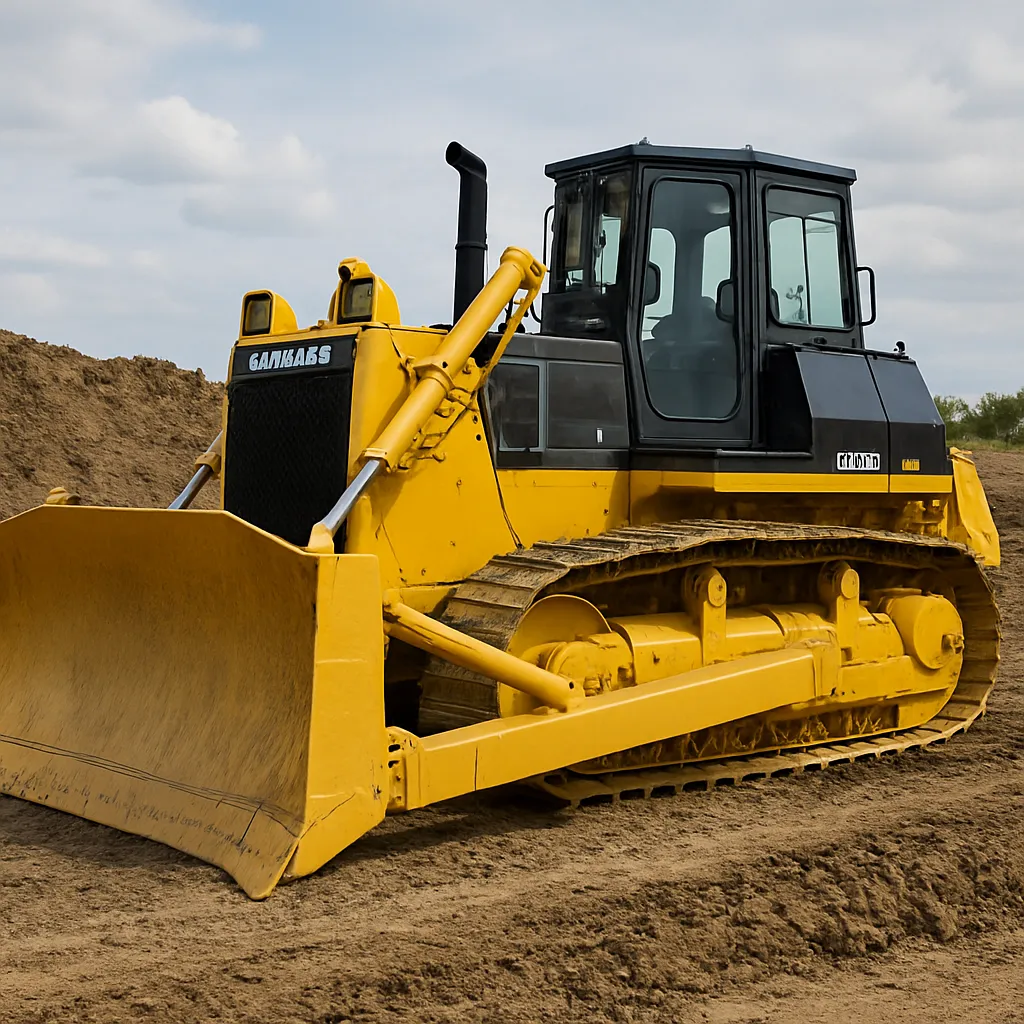
The Shantui SD22W is a robust wheeled dozer designed to meet the demands of modern earthmoving, roadwork and site-preparation projects. Combining the proven lineage of Shantui’s track-mounted dozers with the mobility advantages of a wheeled chassis, the SD22W offers a balance of speed, versatility and operating economy for contractors, municipalities and rental fleets. This article examines its design, typical applications, technical characteristics, operational advantages and maintenance considerations to help buyers, operators and fleet managers understand where the SD22W fits in the spectrum of construction equipment.
Overview and design philosophy
The SD22W stems from Shantui’s continuing effort to diversify its dozer lineup. While Shantui is best known globally for tracked dozers that compete in the medium and large segments, the SD22W adapts the dozer concept to a wheeled platform. The primary purpose of the wheeled variant is to provide higher travel speeds on paved or hard surfaces, easier repositioning between sites, and reduced ground disturbance in sensitive areas. Its design emphasizes operator visibility, simplified maintenance, and adaptability to multiple tasks through a range of attachments.
Key design elements
- Wheeled chassis with heavy-duty axles and differential locks for improved mobility on roads and firm terrain.
- Hydraulically controlled blade systems for precise grading and dozing operations.
- Optional rear-mounted ripper or scarifier modules designed for loosening compacted material.
- Robust cooling and filtration systems to withstand dusty and hot working conditions.
- Ergonomic cab with controls arranged for intuitive operation and reduced fatigue.
The SD22W is targeted at projects where mobility and versatility are as important as raw pushing power. Typical buyers include road contractors, utility companies, quarry operators and rental companies seeking a machine that can perform site grading, shoulder building, material spreading and light ripping while moving quickly between jobs.
Typical applications and jobsite roles
The wheeled dozer fills several niches that tracked machines do not handle as efficiently. Common uses of the SD22W include:
- Road construction and maintenance — building shoulders, leveling sub-bases, spreading crushed stone and performing daily maintenance on unpaved roads.
- Urban site development — grading in confined or paved areas where tracks would damage the surface or where frequent repositioning is required.
- Landscaping and site preparation — rough grading, stripping topsoil, and establishing final contours with greater control on hard surfaces.
- Quarry and aggregate operations — moving stockpiles, cleaning up loading areas and supporting wheel-loader fleets by spreading materials.
- Utility and pipeline work — backfilling, trench consolidation and maintaining temporary access roads at linear projects.
Because the SD22W travels faster on firm surfaces than an equivalent tracked dozer, it is particularly effective for projects spread across multiple sites or where the machine frequently transits public roads. Its lower ground pressure relative to heavy tracked dozers can also reduce damage to finished surfaces when used with appropriate tires.
Performance and technical characteristics
Specifications vary by market and configuration, but typical characteristics of a medium-class wheeled dozer like the SD22W include a blend of power, weight and hydraulic capacity suited to multi-role tasks.
Typical specifications (indicative ranges)
- Operating weight: approximately 18,000–24,000 kg depending on options and attachments.
- Engine power: commonly in the range of 150–220 kW (200–300 hp), tuned for torque at low rpm for dozing tasks.
- Blade capacity: roughly 3.0–4.5 m³ depending on blade type (straight, semi-U or angle blades).
- Travel speed: higher than tracked dozers — typically 20–40 km/h on road surfaces, depending on gearing and axle ratios.
- Hydraulic flow and pressure: engineered to handle heavy blade duties and optional attachments such as rippers or winches.
- Fuel capacity: sized for extended shifts (often in the 300–500 L range) to minimize downtime for refueling on remote sites.
These values should be treated as representative. Exact figures depend on regional specifications, emissions package, optional equipment (e.g., winches, rippers, air-conditioning) and whether the machine is configured for heavier civil works or lighter road-maintenance roles.
Features that affect productivity
Several features of the SD22W contribute directly to productivity and operational cost control:
Mobility and transit speed
A wheeled platform allows the SD22W to quickly reposition between work fronts without the need for transporters, saving time and transport costs. This mobility is a significant advantage on projects with multiple dispersed sites or where machines must travel long distances over hard surfaces.
Hydraulic precision
Modern hydraulic control systems provide responsive blade control and fine grading capability. The SD22W typically offers proportional controls and the option for automatic blade return features, which reduces operator workload and increases the consistency of grading operations.
Attachment versatility
Attachments expand the functional envelope of the SD22W. Common options include multi-shank rippers for loosening material, angle blades for road shoulders, winches for recovery or controlled pulling, and specialized tires for improved flotation or puncture resistance. This adaptability helps rental fleets and contractors maximize utilization.
Operator environment
A comfortable cab with clear visibility, climate control and vibration-minimized seating translates into higher daily production because operators can work longer with less fatigue. The SD22W places emphasis on sightlines to the blade and the job area to improve safety and precision.
Maintenance, reliability and lifecycle costs
For owners and fleet managers, lifecycle cost is nearly as important as purchase price. The SD22W, built by a manufacturer with a reputation for durable construction, focuses on ease of maintenance and parts availability.
Serviceability
- Accessible service points for routine checks (oil, filters, coolants) reduce downtime.
- Modular components (e.g., axles, hydraulic pumps) simplify repairs and replacements.
- Commonality of parts with other Shantui machines can lower spare parts inventory requirements.
Reliability factors
Critical reliability factors include cooling system capacity in hot climates, sealing and filtration for dusty environments, and robust axle and transmission design to withstand sudden loads. Operators should follow manufacturer maintenance schedules to preserve component life and minimize unplanned outages.
Fuel efficiency and emissions
Modern engine packages balance performance and fuel economy. Depending on engine choice and load patterns, fuel consumption for a dozer in this class varies considerably; however, features such as idle-shutdown, electronic engine management and optimized gear ratios can materially reduce fuel burn over a season. Additionally, regional emission standards may require Tier 3/Stage IIIA or Tier 4/Stage IV compliant engines, which influence aftertreatment needs and service intervals.
Safety and operator best practices
Safe operation of a wheeled dozer like the SD22W depends on machine design and disciplined operator behavior.
- Pre-shift inspections should include tires, brakes, steering, hydraulic lines and blade linkage.
- Use of seat belts and adherence to cab ingress/egress procedures prevents slips and falls.
- Tire pressures must be kept within recommended ranges to avoid blowouts and to maintain consistent steering characteristics.
- When working near edges, excavations or soft ground, operators should maintain safe distances and use spotters where visibility is limited.
- For road transit, exterior lighting, reflective markings and appropriate permits are essential for compliance and safety.
Comparisons: wheeled vs tracked dozers
Understanding the trade-offs between wheeled and tracked dozers is critical when selecting the SD22W for a fleet.
- Mobility: Wheeled dozers are faster on roads and require less logistical support for short transits. Tracked dozers have lower ground pressure and perform better on soft or uneven ground.
- Traction: Tracks provide superior traction for heavy pushing tasks and steep slopes; wheeled machines rely on weight transfer and differential locks to maintain grip.
- Surface impact: Wheels are gentler on paved surfaces and reduce the need for post-work surface repairs; tracks can damage finished pavements unless protective measures are used.
- Maintenance: Tracks require periodic undercarriage overhaul (rollers, sprockets, shoes), while wheeled machines focus maintenance on axles, tires and brakes. Costs vary with usage patterns.
- Versatility: Wheeled dozers often excel at operations requiring frequent repositioning and on-surface grading; tracked dozers are preferred for heavy earthmoving and extreme terrain.
Market positioning and economic considerations
Shantui positions the SD22W as a cost-effective alternative to imported wheeled dozers from western manufacturers. For many owners, the appeal lies in a lower acquisition cost, competitive parts pricing and a balance between capability and operating economy. Rental companies find wheeled dozers attract customers who need fast, flexible equipment for short-term urban and road projects.
When evaluating total cost of ownership, purchasers should consider:
- Acquisition cost and financing options.
- Expected fuel consumption based on typical duty cycles.
- Maintenance intervals and local parts/support availability.
- Resale value in regional secondary markets.
Operational tips for maximizing value
To get the most out of an SD22W, operators and fleet managers should adopt several best practices:
- Match the blade and tire configuration to the primary application (e.g., semi-U blade for stockpile work vs. angle blade for road shoulders).
- Use proper tire types: puncture-resistant tires for quarry work, turf-friendly tires for landscaping and high-traction tires for steep or wet surfaces.
- Implement preventive maintenance programs based on hours and operating conditions rather than calendar intervals alone.
- Train operators on fuel-efficient techniques, such as limiting excessive idling and using appropriate gear ranges for tasks.
- Record operational data (fuel use, hours, repairs) to refine procurement and utilization strategies over time.
Common issues and troubleshooting
While the SD22W is engineered for durability, certain common issues can arise in field service. Awareness and early intervention can reduce downtime:
- Tire damage from sharp rock or rebar — require prompt replacement and inspection of rims and bead seals.
- Hydraulic leaks from hose abrasion or loose fittings — regular inspections and protective sleeves mitigate risk.
- Cooling issues in dusty environments — frequent cleaning of radiators and proper filtration prevent overheating.
- Wheel-end and axle wear in high-load applications — periodic torque checks and grease interval adherence are essential.
Environmental and regulatory considerations
Engine emissions regulations affect engine selection and aftertreatment systems. Buyers in regions with strict emission standards should confirm the availability of compliant engine options (e.g., Stage IV/Tier 4 final). Additionally, projects in environmentally sensitive areas may restrict machine weight and surface impact. The wheeled SD22W can be an advantage in these contexts, but operators must manage tire runoff, fuel spill prevention and dust control measures to meet environmental requirements.
Real-world examples and use cases
Practical deployments illustrate how the SD22W contributes value:
- Municipal road maintenance: A city fleet uses SD22W units to rebuild rural road shoulders, grade bike paths and clear snow-packed shoulders, leveraging the dozer’s speed and blade flexibility.
- Pipeline corridor construction: Contractors employ SD22W dozers to grade right-of-way accesses and re-contour temporary haul roads, minimizing pavement damage during frequent transits.
- Quarry support operations: An aggregate plant integrates an SD22W to level loading pads and spread material at the crusher discharge, pairing it with wheel loaders for high-throughput operations.
Purchasing and specification considerations
When specifying an SD22W for purchase, consider these points to align configuration with intended tasks:
- Select engine and emissions package appropriate for your market and operating conditions.
- Decide on blade type and optional attachments (ripper, winch, angle blade) based on primary work tasks.
- Evaluate tire choices and axle ratios for the balance between travel speed and tractive effort.
- Include telematics and fleet-management options if remote monitoring and preventative maintenance optimization are required.
Concluding perspective
The Shantui SD22W offers a compelling blend of mobility, versatility and cost-effectiveness for contractors and fleets that operate across paved and firm-surface environments. Its wheeled configuration reduces transit time, lowers surface impact, and makes it a practical choice for road construction, urban site work and dispersed project sites. While it does not replace tracked dozers for the most demanding earthmoving tasks, the SD22W fills an important role in mixed fleets — delivering reliable performance, manageable maintenance demands and strong operational flexibility.
Note on technical data: the specification ranges provided are indicative and depend on configuration, regional options and model year. For exact numbers, emissions compliance and available attachments, consult the local Shantui dealer or official product documentation.


)
)