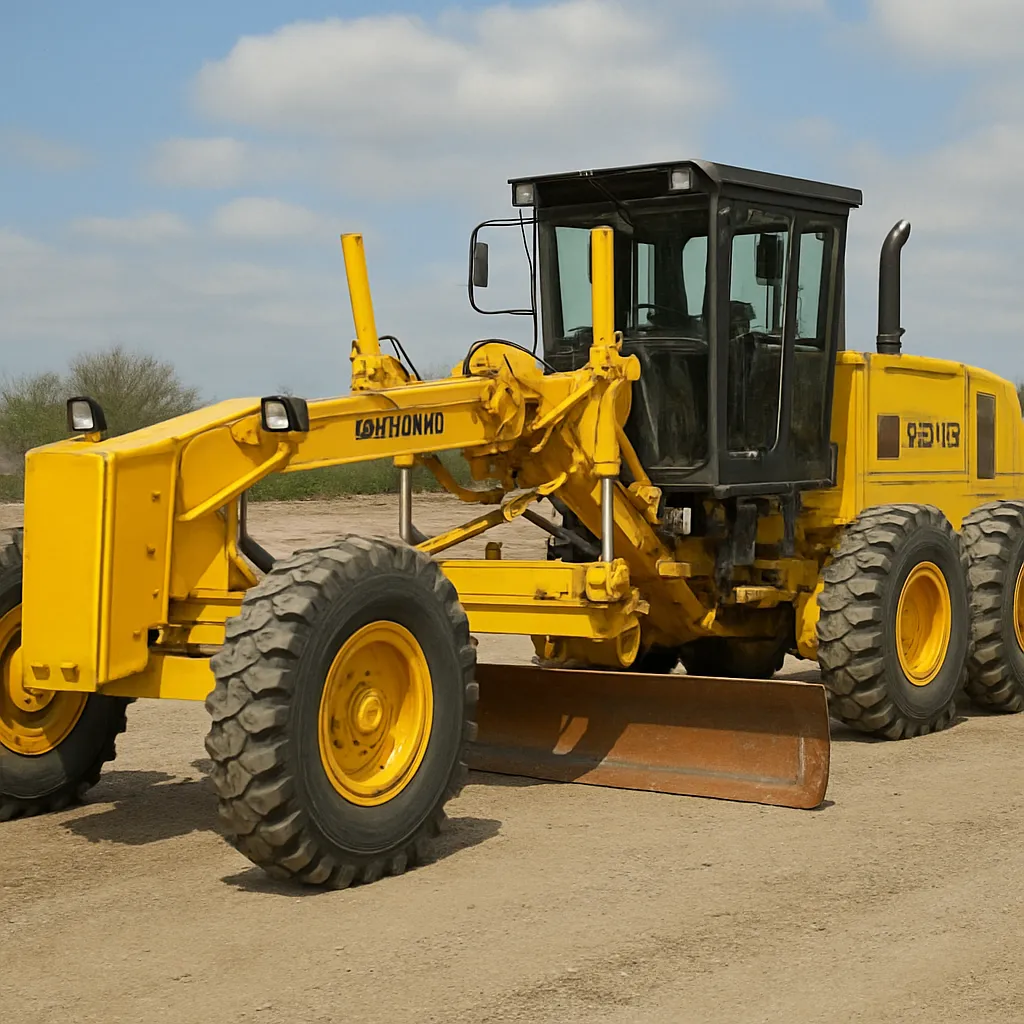
The Komatsu GD535 is a mid-size motor grader designed to deliver precision, durability and versatility across a wide range of earthmoving and surface-preparation tasks. Combining robust mechanical components with operator-focused ergonomics and modern control systems, the GD535 is frequently chosen for road construction, maintenance, site preparation, and specialized tasks where a balance of power and maneuverability is required. This article explores the machine’s typical characteristics, practical applications, maintenance and operational considerations, and other interesting details that make the GD535 a valued tool in contracting fleets worldwide.
Overview and core characteristics
The Komatsu GD535 belongs to Komatsu’s family of graders that target contractors and municipal fleets needing a reliable mid-range machine. At its heart, the GD535 emphasizes a strong, serviceable powertrain, a rigid frame and a versatile blade arrangement capable of precise grading operations. The model is designed to be a workhorse for both heavy leveling tasks and delicate finishing work.
Komatsu GD535 is often praised for delivering a good mix of mobility and stability; it typically sits between smaller compact graders and the larger, high-horsepower models intended for heavy mining or highway-scale operations. Key design priorities include operator visibility, ease of service, and long-term durability under variable jobsite conditions.
Technical highlights (typical figures and features)
Exact specifications for the GD535 can vary with model year, market and optional packages, but the following describes the common technical highlights and the features you will likely find on this grader:
- Engine: a reliable diesel unit designed for continuous grading loads, often equipped with turbocharging and modern fuel systems for better efficiency and torque delivery.
- Horsepower: mid-range graders normally produce power in a span that supports both travel and blade work without excessive lugging; the GD535 class is engineered for a balance of power and fuel economy.
- Blade (moldboard): a heavy-duty moldboard with hydraulic controls for lift, tilt, circle rotation and side shift, allowing fine control of cut depth and angle.
- Articulation and steering: articulated frame or advanced steering geometry that improves maneuverability in confined sites and helps produce consistent cross-slope control.
- Transmission: multi-range gearbox with options for power-shift automatics or synchronized manual gearboxes depending on configuration, designed to cope with both grading torque and road travel speed.
- Hydraulics: responsive hydraulic systems for quick implement response and precise blade positioning.
- Operator station: ergonomic cab, good sight lines to the cutting edge and circle, HVAC, and intuitive control layout for reduced operator fatigue and higher productivity.
- Optional technology: factory- or dealer-installed GPS/machine-control systems for automated grade control, on-board diagnostics and telematics for fleet management.
Note on specifications: Because Komatsu supplies machines globally and often offers market-specific variants, precise numerical specs (such as exact net horsepower, operating weight or moldboard length) can differ. For exact numbers, consult the relevant Komatsu sales sheet for your market or a local dealer.
Primary applications and real-world uses
The GD535 is used in many scenarios where surface quality and accurate tolerance matter. Its common applications include:
- Road construction and maintenance — building road base layers, finishing wearing courses, shoulder construction and periodic resurfacing.
- Urban projects — grading for utility trenches, preparing subgrades for sidewalks and bike paths, and maintaining unpaved urban roads.
- Airport and runway work — creating precise slopes and crossfalls critical for runway drainage and safety.
- Agricultural and forestry roads — building and maintaining farm tracks, forestry haul roads, and skid trails with a focus on drainage and longevity.
- Snow removal and winter maintenance — fitted with snow plow or V-plow attachments and wing blades, graders like the GD535 efficiently clear wide corridors.
- Quarry and mining support — maintaining haul roads within pit operations and providing final grading for stockpiles or access ramps.
- Site preparation — leveling building pads, grading for drainage, and shaping landscapes prior to paving or landscaping.
Flexibility is further increased via attachments such as rippers, scarifiers, winches and specialized blade shapes, making the GD535 suitable for both aggressive material engagement and fine finishing work.
Operator environment and controls
Komatsu places significant emphasis on the operator environment so that productivity is sustained over long shifts. The GD535’s cab typically offers a comfortable seat, clear sightlines to the blade ends and cutting edge, and logically grouped controls to simplify complex grading operations. Visibility is a central design consideration: operators need to see both sides of the moldboard and the immediate work area in front of the machine.
Modern variants often come with advanced displays for machine information and diagnostics, and they can be equipped with telematics packages that transmit operational data to fleet managers. These systems help monitor fuel use, idle time, maintenance alerts and overall machine health, which is especially useful for managing larger fleets.
Maintenance, reliability and lifecycle costs
One of the reasons contractors select the GD535 is for its predictable maintenance schedule and the wide availability of service parts through Komatsu’s global dealer network. Typical maintenance items include routine engine servicing, hydraulic system checks, blade and cutting-edge inspections, transmission fluid changes and tire or undercarriage checks when applicable.
Maintenance best practices for a grader of this class focus on:
- Keeping hydraulic and engine fluids clean and changed at recommended intervals.
- Inspecting the moldboard, cutting edges and end bits regularly for wear and replacing them to maintain grading quality.
- Monitoring articulation joint and circle ring for wear and pre-emptive lubrication.
- Using OEM filters and parts to prolong component life and retain resale value.
Overall lifecycle cost is driven by fuel consumption, component longevity and resale value. Models from established manufacturers like Komatsu often retain a stronger resale value due to brand presence, dealer backing and a proven track record of reliability.
Fuel efficiency and emissions
Komatsu designs engines and drivetrains with an eye on fuel economy without sacrificing torque and responsiveness. In many markets, machines comply with contemporary emissions standards (such as EPA Tier or EU Stage levels), which may involve turbocharging, exhaust gas recirculation (EGR), diesel oxidation catalysts (DOC) or selective catalytic reduction (SCR) systems depending on the year and region of sale.
Fuel efficiency can be improved by operators through smooth throttle control, appropriate gear selection, minimizing idle time and using the correct blade strategy to avoid unnecessary rework. For fleets, telematics and operator training are two of the most effective levers to lower fuel consumption across an operation.
Attachments, accessories and technological options
The versatility of the GD535 is amplified by a wide selection of attachments and technology packages:
- Rippers and scarifiers for breaking up compacted surfaces.
- Specialized snowplow wings and V-blades for winter maintenance.
- Winches for recovery or specialty pulling tasks.
- GPS-based machine control systems for precise grade control and automatic blade positioning.
- On-board weighing or mapping systems for volumetric control and site documentation.
- Enhanced lighting packages for night work and low-visibility operations.
Machine control technology, in particular, transforms productivity by reducing overcutting, minimizing passes and providing digital grade verification for quality control. For contractors bidding on precision-critical jobs, these technologies reduce rework risk and increase profitability.
Safety features and operator training
Safety is integral to grader design. Typical safety-oriented features for a machine like the GD535 include:
- ROPS/FOPS-certified cab structures to protect operators in rollover or falling-object scenarios.
- Hydraulic lockout systems for certain maintenance or transport activities.
- Visibility aids such as mirrors, optional cameras and enhanced lighting to reduce blind spots.
- Ergonomic controls and operator screens that minimize distraction and present clear alerts.
Despite built-in safety systems, the human element remains central. Effective operator training in machine handling, blade control techniques and daily inspection routines reduces accidents, improves productivity and extends equipment life. Many operators also benefit from formal training on machine-control systems and GPS-assisted grading workflows.
Market position, resale and fleet integration
In the mid-size grader segment, Komatsu competes with several established manufacturers. The GD535’s market advantages typically include strong dealer support, good parts availability and a design focused on maintainability. Fleet managers often evaluate graders based on total cost of ownership (TCO): acquisition price, fuel consumption, maintenance costs, operator productivity and resale value.
Resale values are influenced by machine condition, service history and market demand for used equipment. Units with documented maintenance records and factory-installed technology packages (like grade control) usually command higher resale prices.
Interesting facts and industry trends
Some broader trends and interesting points relevant to a grader like the GD535 include:
- Electrification and hybridization — While full electrification in large graders is still emerging, hybrid components and electrified auxiliary systems are being explored across the earthmoving sector to reduce fuel consumption and emissions.
- Data-driven maintenance — Telematics and predictive maintenance platforms are increasingly common, allowing fleets to schedule service proactively and minimize unplanned downtime.
- Precision grading — GPS machine control has changed how grading contracts are delivered; the ability to produce “right-first-time” surfaces reduces material consumption and labor hours.
- Operator aids — Automatic blade return-to-grade, automated cross-slope control and other semi-autonomous features are improving productivity even for less-experienced operators.
Practical tips for buyers and operators
When selecting or operating a Komatsu GD535, consider the following practical tips:
- Match machine size and horsepower to the majority of your expected tasks. Avoid chronic underpowering or overcapacity.
- Invest in essential attachments (a good cutting edge inventory, scarifier or ripper) to expand machine usefulness.
- Prioritize models or packages with telematics and machine-control compatibility if you aim for high-accuracy grading work.
- Maintain rigorous inspection and lubrication routines—articulation joints, circle teeth and cutting edges are wear items that directly affect grading accuracy.
- Train operators on blade management and fuel-efficient practices; operator technique can dramatically affect productivity and running costs.
Summary
The Komatsu GD535 is a strong contender in the mid-size motor grader category: a machine built to combine comfortable operation, dependable mechanical systems and the adaptability required on modern worksites. Whether used for roadwork, site preparation, winter maintenance or precision grading, the GD535 supports a wide set of tasks and can be equipped with technologies and attachments that enhance productivity and reduce lifecycle costs. For exact technical specifications, emissions compliance and available optional packages, consulting Komatsu’s official documentation or an authorized dealer will provide model-year-specific details and market-specific offerings.


)
)