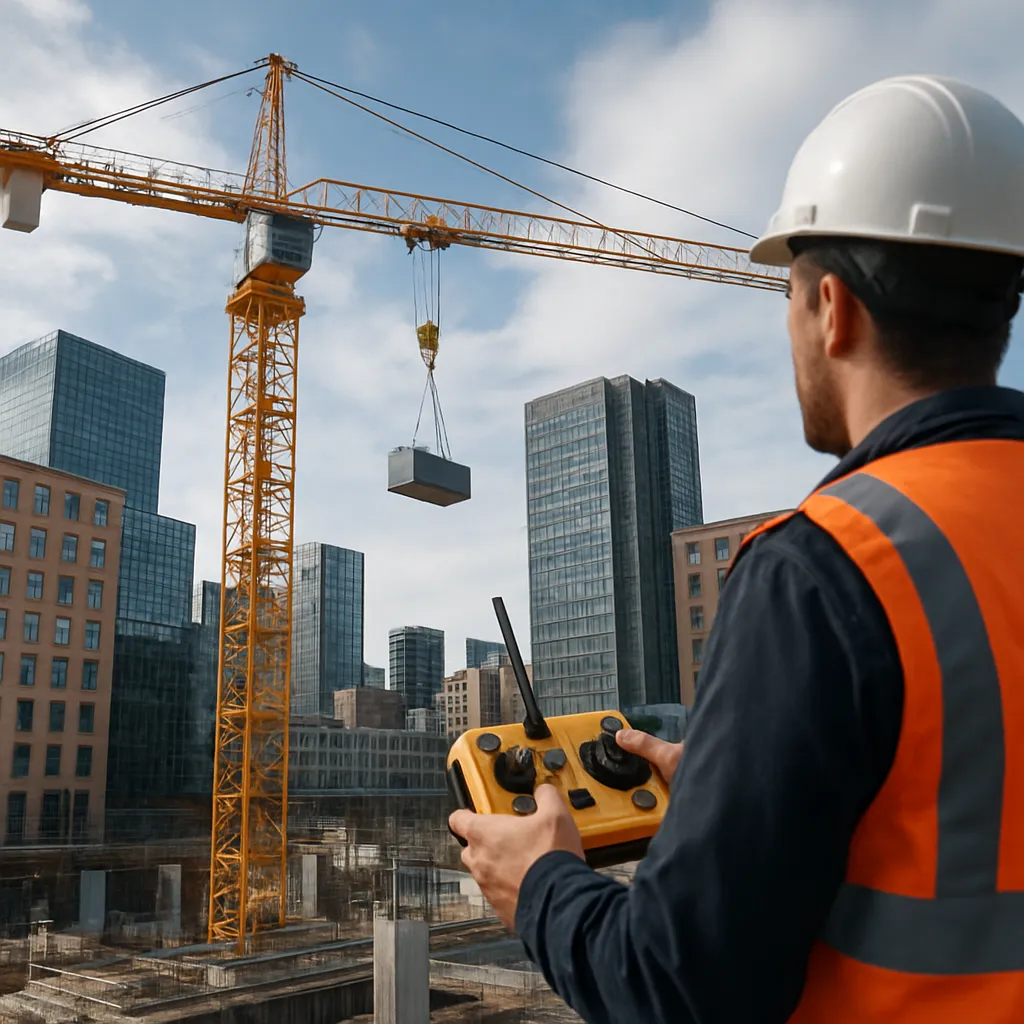
Remote-controlled cranes are reshaping the landscape of urban construction by combining advanced technology with tried-and-true mechanical principles. These sophisticated machines enable operators to manage heavy lifts from a safe distance, offering improvements in safety, precision, and efficiency. Their growing adoption highlights a broader trend toward automation and digital oversight in the construction industry, focusing on mitigating risks and optimizing workflows in densely populated areas.
Overview of Remote-Controlled Crane Systems
At the heart of any remote-controlled crane lies a complex synergy between hardware and software. The crane is typically equipped with multiple high-definition cameras, LiDAR sensors, and load-monitoring devices. These components feed real-time data to a centralized control unit, where the operator, often situated in a secure cab or an off-site control room, can view a panoramic representation of the job site.
The control unit communicates via a robust wireless network—often a dedicated 5G connection or private radio link—ensuring continuous feedback loops. The operator uses a joystick, touchscreen interface, and sometimes augmented reality overlays to guide the crane’s movements. Advanced motion controllers convert input commands into motor signals, driving the crane’s hoist, slewing, and trolley mechanisms with pinpoint accuracy.
Redundant safety layers are also integrated. In the event of signal loss, mechanical brakes engage automatically, and an emergency stop protocol freezes all motion. This failsafe design minimizes the potential for catastrophic accidents, reinforcing the system’s reputation for reliability and safety in urban environments.
Advantages in Urban Construction Sites
Deploying remote-controlled cranes in city centers brings a host of tangible benefits:
- Reduced footprint: Smaller staging areas are needed since the system’s compact base unit can be remotely managed without a large operator cabin on site.
- Enhanced safety: Operators remain away from potential hazards, including falling debris, harsh weather, or site congestion.
- Noise control: Electric motors and optimized drive algorithms significantly lower operational noise, a critical factor in residential neighborhoods.
- Precision placement: Cameras and sensors enable lifts to the millimeter, crucial when assembling modular units between existing structures.
- Continuous operation: Remote systems can run longer shifts with less operator fatigue, improving project timelines and efficiency.
These advantages contribute directly to reduced labor costs and accelerated project deadlines, making remote cranes a compelling choice for contractors aiming to meet tight urban development schedules.
Key Technologies Behind Remote Operation
Sensor Suites and Vision Systems
Modern cranes integrate an array of sensors that feed data into the control station. High-resolution cameras provide 360-degree views, while LiDAR units map distances and detect obstacles automatically. Load cells measure weight forces in real-time, triggering alerts if thresholds are exceeded.
Control Interfaces and Feedback Loops
The operator interface often combines traditional joysticks with touchscreen menus and configurable physical buttons. Augmented reality (AR) overlays can project crane position, load weight, and swing radius directly onto video feeds. Haptic feedback in the joystick handles conveys subtle resistance changes, simulating the sensation of a manual control experience and enhancing situational awareness.
Connectivity and Data Management
A reliable data link is critical. Most systems rely on encrypted 5G private networks or licensed radio frequencies to ensure low latency and minimal interference. All operational data is logged in cloud servers, enabling post-job analytics. Project managers can review lift histories, identify inefficiencies, and refine future lift plans based on comprehensive, timestamped records.
Challenges and Future Trends
Despite impressive advancements, remote-controlled cranes face several hurdles in urban settings:
- Signal reliability: Dense cityscapes can create multipath interference, challenging uninterrupted communication.
- Regulatory hurdles: Local authorities may require new permits for unmanned lifting operations, delaying deployment.
- Skill gap: Operators need specialized training to interpret digital feedback and manage complex interfaces effectively.
Looking ahead, integration of artificial intelligence and machine-learning algorithms promises even greater autonomy. Smart cranes could handle routine lifts independently, with human supervisors only intervening during complex maneuvers. Energy-efficient electric drive systems will further reduce carbon footprints, aligning with sustainability goals in urban development. Additionally, predictive maintenance powered by IoT sensors will enable real-time health monitoring, minimizing unplanned downtime and extending equipment lifespan.
As the construction industry continues its digital transformation, remote-controlled cranes will occupy a central role in shaping more efficient, safer, and environmentally friendly workflows. Their evolution underscores an ongoing commitment to innovation, seamlessly blending heavy machinery with cutting-edge technology to build the cities of tomorrow.