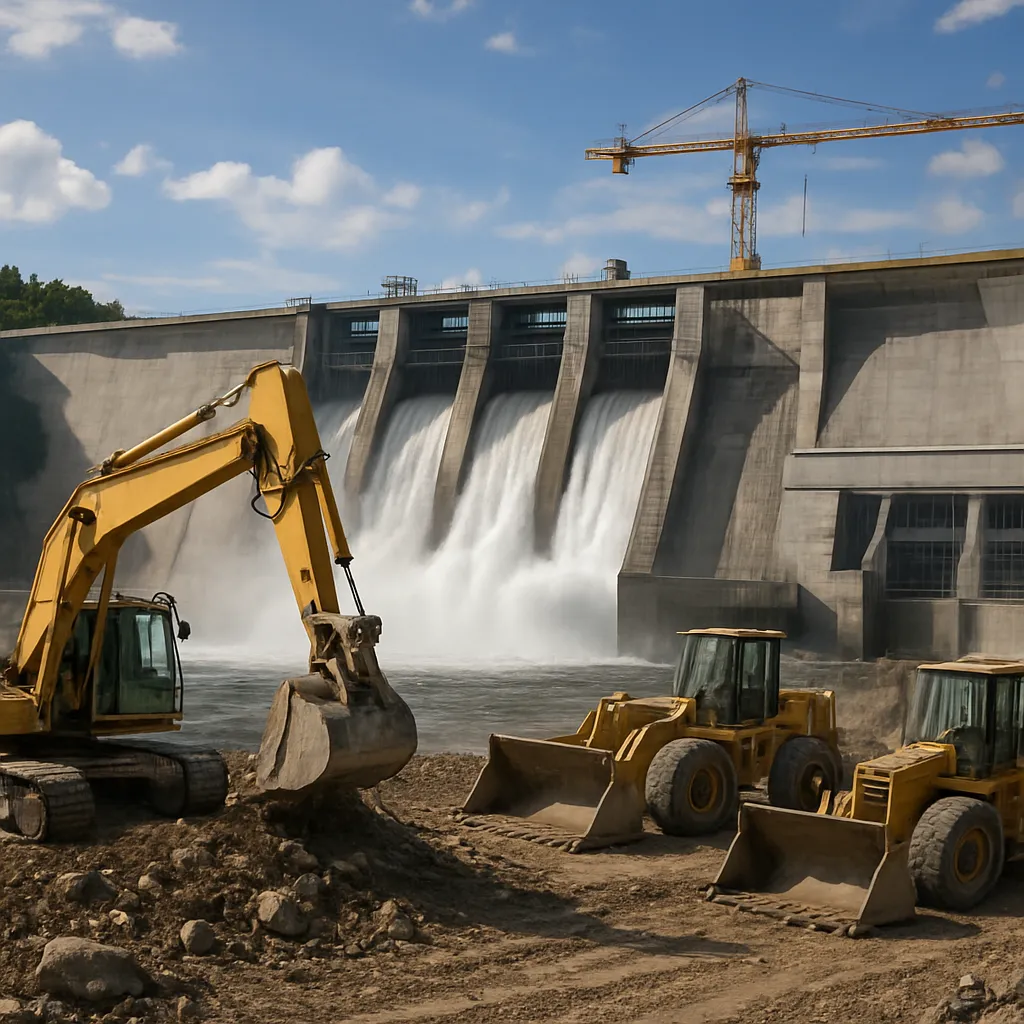
Hydroelectric projects rely on a **symphony** of machines working in concert to transform rugged terrain into functional storage reservoirs and power-generating facilities. From the initial rock excavation to the final installation of turbines, modern heavy equipment accelerates construction timelines, enhances worker **safety**, and boosts overall **efficiency**. By examining key phases and the specialized machinery involved, we gain insight into the engineering marvels that produce clean, renewable energy.
Earthworks and Excavation
The first major phase in dam construction is preparing the site through large-scale earthmoving. This involves clearing vegetation, removing overburden, and sculpting the canyon or valley to form a stable foundation.
Site Clearing
- Bulldozers push through trees and shrubs, creating access roads.
- Feller bunchers and mulchers process timber, while chippers convert debris into mulch.
- Dump trucks haul vegetation and topsoil to staging areas.
Rock Excavation
In many projects, the river gorge is underlain by solid bedrock. Excavation demands powerful equipment:
- Excavators outfitted with high-impact hydraulic breakers fragment rock faces.
- Wheel loaders transfer blasted rock into dump trucks for removal.
- Drill rigs perform precision drilling and controlled blasting to loosen large volumes of stone.
By leveraging advanced GPS guidance and machine-control systems, operators achieve precise cuts with reduced waste and rework.
Formwork, Concrete Placement, and Compaction
Once the excavation reaches design elevations, builders erect formwork and begin pouring the concrete that will form the dam’s body. This stage demands strict quality control to ensure structural integrity and longevity.
Formwork Systems
- Modular, pre-engineered steel forms allow for rapid assembly and disassembly.
- Slipform machines—self-climbing platforms—deliver continuous pours for **gravity dams**, reducing construction joints.
- Hydraulic jacks and tieback rods provide consistent pressure against the concrete until it sets.
Concrete Conveyance
Efficient concrete placement relies on an array of specialized machines:
- Concrete pumps with high-pressure lines transport mix directly from mixers to the pour face, minimizing handling.
- Conveyors and bucket elevators supplement pumps in projects with tight access or extreme heights.
- Temperature-control trucks maintain the mix within optimal thermal ranges to prevent cracking.
Vibratory and Static Compacting
Concrete compaction ensures void-free sections that achieve maximum **strength**:
- Internal vibrators are inserted into the wet concrete for localized consolidation.
- External vibratory plates or large-scale vibratory rollers smooth and consolidate slab surfaces.
- Automated feedback systems monitor densification in real time, adjusting vibration intensity as needed.
Turbine Installation and Mechanical Fit-Out
After the dam structure is complete, focus shifts to the powerhouse and installation of hydro **turbines**, generators, and associated control equipment. Precision and cleanliness are paramount as these machines convert flowing water into electrical energy.
Heavy Lifting and Alignment
- Crawler cranes with capacities exceeding 1,000 tons position turbine rotors into their stator housings.
- Multi-point lifting frames ensure even load distribution during hoisting.
- Laser alignment tools confirm shaft straightness within millimeter tolerances.
Auxiliary Systems
Supporting equipment includes:
- Transformer oil handling units for generator step-up transformers.
- Piping and valve assemblies to channel water through penstocks and draft tubes.
- Electrical switchgear and bus duct systems for grid interconnection.
Specialized Infrastructure and Quality Assurance
Beyond the main structure and power generation, a network of auxiliary facilities and rigorous testing regimes guarantee long-term performance.
Spillways and Gates
- Gantry cranes traverse spillway piers to install radial and **gated** weir systems.
- Actuators and hydraulic jacks undergo load testing to certify operational safety during flood events.
- Remote monitoring sensors feed real-time data to centralized control rooms.
Instrumentation and Monitoring
Continuous health checks rely on an array of sensors and data transmitters:
- Strain gauges embedded within the concrete detect structural deformation.
- Seepage flow meters track leakage rates at foundation and abutment interfaces.
- Automated drone inspections survey for surface cracks, erosion, and mechanical wear.
Automation, Robotics, and Future Trends
Innovation in robotics and **automation** is reshaping hydroelectric construction. From remote-controlled excavators in hazardous zones to AI-driven predictive maintenance, the industry is embracing digital transformation.
Remote Operation
- Tele-remote excavators clear debris and perform trenching without exposing operators to unstable slopes.
- Autonomous haul trucks navigate haul roads guided by GPS and obstacle-avoidance radar.
Digital Twins and Predictive Analytics
By creating virtual replicas of construction sites, engineers can:
- Simulate earthwork removal to optimize sequencing and minimize **waste**.
- Forecast equipment maintenance schedules, reducing downtime and extending service life.
- Assess environmental impact, ensuring compliance with sustainability goals.
As the demand for renewable power grows, continued advancements in machine design and digital integration promise to accelerate dam and hydroelectric plant construction while enhancing the safety and environmental stewardship of these vital infrastructure projects.