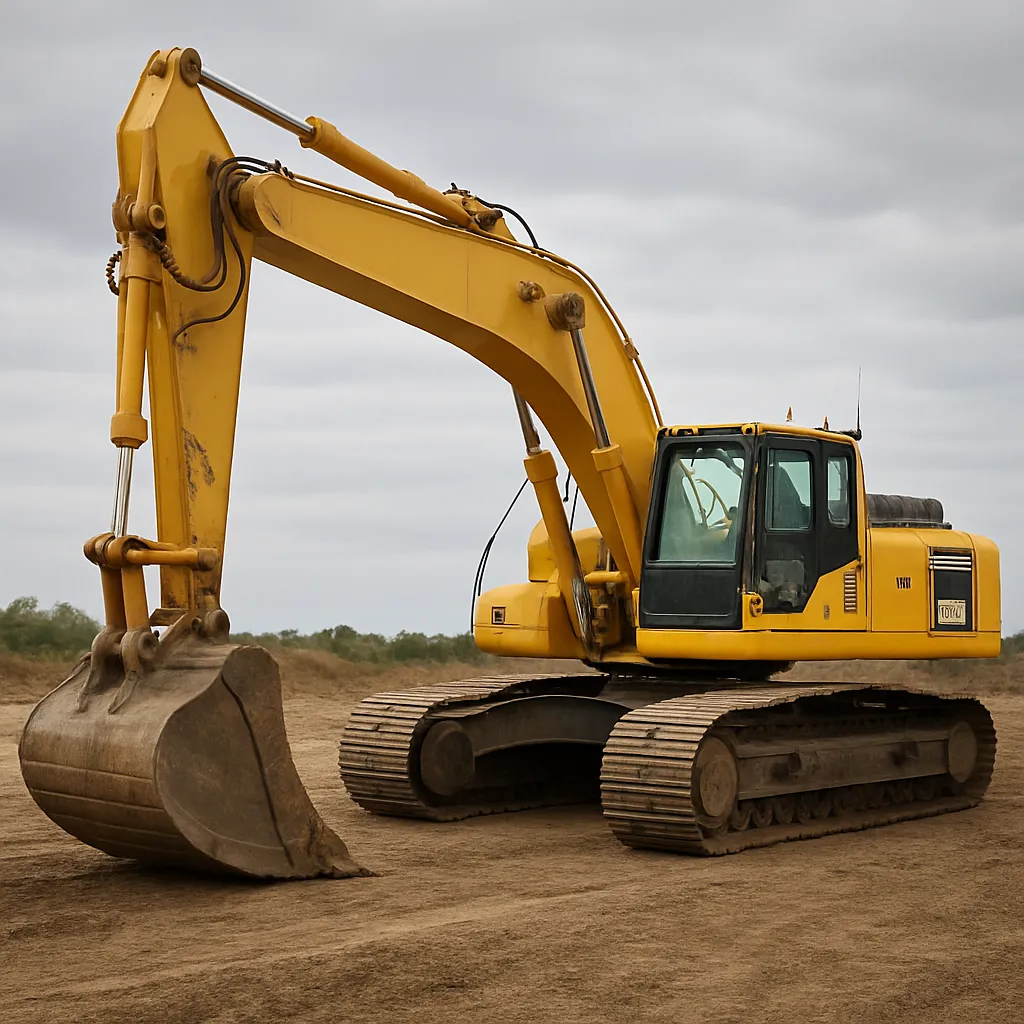
The Komatsu PC600LC is a heavyweight class construction machine designed for demanding earthmoving, quarrying and mining operations. Combining robust mechanical design with advanced hydraulic systems and operator comforts, this model has served contractors, quarry managers and mining operations worldwide. Below you will find a detailed technical overview, common applications, maintenance considerations, and other practical and interesting information useful to operators, fleet managers and equipment buyers.
Design and technical overview
The PC600LC sits in the large excavator category, engineered to move significant volumes of material with efficiency and reliability. As part of Komatsu’s long-standing PC series, the machine balances power, reach and stability. The core of the machine is a high-torque diesel engine coupled to a sophisticated hydraulic system that delivers steady digging performance under heavy loads.
Key specifications (typical ranges and notes)
- Operating weight: typically in the range of 55,000–65,000 kg depending on configuration, counterweight and attachments. Different sub-models and region-specific builds can alter this figure.
- Engine power: commonly between 300–370 kW (approximately 400–500 hp) for later variants. Specific power ratings vary by emission stage and model revision.
- Bucket capacity: commonly between 2.5 and 6.0 m³ depending on use (general-purpose, heavy-duty rock, coal/aggregate buckets).
- Maximum digging depth: around 8.0–10.0 m for standard configurations; long-reach arms extend this to 12–16 m.
- Maximum reach (ground level): generally 11–13 m for standard booms; long reach options significantly increase horizontal reach.
- Travel speed: typically 3–5 km/h (low), up to 6–7 km/h (high) depending on undercarriage setup.
- Fuel tank capacity: often between 800–1,200 liters, sized for long shifts and remote operations.
- Hydraulic system: high-flow axial piston pumps driving multiple circuits for boom/arm/boom swing and auxiliary circuits for attachments. Combined flows on large-class machines are substantial to support breakers, grapples and hydraulic thumbs.
- Undercarriage: wide track gauge and heavy-duty track links to distribute weight and enhance stability on soft ground.
- Transport dimensions: may require partial disassembly (removing bucket, boom or counterweight) for road transport depending on local regulations.
Note: exact figures depend on the exact PC600LC variant (for example PC600LC-6, -7, -8 or later). Manufacturers often update powerplants, hydraulics and electronics across revisions to meet emissions regulations and performance targets.
Typical applications and use cases
The PC600LC is engineered for heavy-duty roles where large digging forces and high production rates are required. The machine is most commonly employed in the following areas:
- Open-pit mining and large quarries — loading haul trucks, removing overburden, benching and high-production digging in hard or abrasive conditions.
- Major civil infrastructure projects — earthworks for dams, highway and airport construction where bulk excavation and precision placement are both needed.
- Bulk material handling — stockpile management in ports, terminals and bulk material yards, often fitted with specialized buckets or grapples.
- Pipeline and trenching works — heavy digging for large-diameter pipeline trenches and excavation for underground utilities when significant depth or width is required.
- Demolition of large structures — equipped with pulverizers, shears or crushers for primary demolition tasks.
- River, canal and port dredging — with long-reach arms or specialized dredging buckets to remove silt and sediment.
- Rock excavation and riprap placement — using rock buckets, thumb attachments and breakers for breaking and handling large rock material.
- Forestry and biomass handling — when fitted with mulchers, grapples and specialized booms to process timber and vegetation on large-scale projects.
In each of these applications the PC600LC is valued for its combination of digging power, reach and stability, allowing operators to move large volumes per hour while maintaining control and safety on site.
Operator environment, controls and safety
Modern variants of the PC600LC emphasize operator comfort and safety. The cab design focuses on visibility, ergonomics and noise reduction to reduce fatigue during long shifts. Typical features found on later models include climate control, adjustable seating, and well-arranged joysticks and switches for intuitive control.
- Safety features: ROPS/FOPS-certified cab structures, rear and side-view cameras (or camera-ready wiring), and excellent sightlines for safer maneuvering around personnel and obstacles.
- Control systems: proportional pilot controls, adjustable response settings (for precision or power), and electronic monitoring of critical systems.
- Telematics: many Komatsu machines are optionally equipped with remote monitoring systems (Komatsu’s Komtrax or similar) enabling fleet managers to track hours, fuel burn, maintenance intervals and fault codes remotely.
These systems not only help operators be more productive, but also assist fleet managers in optimizing utilization and scheduling preventive maintenance.
Maintenance, fuel efficiency and lifecycle considerations
Maintaining a PC600LC for reliable long-term operation requires a structured approach to preventive maintenance, correct servicing intervals and attention to wear parts. The machine’s life-cycle cost is driven heavily by undercarriage wear, hydraulic component longevity and fuel consumption.
Maintenance highlights
- Regular greasing of pins and bushings, especially on the boom, arm and bucket linkage, is essential to reduce wear.
- Undercarriage inspection and timely replacement of track shoes, rollers and idlers significantly impact operating costs; rotating undercarriage components and keeping track tension correct prolongs life.
- Hydraulic oil and filter changes at manufacturer-recommended intervals protect pumps and valves from contamination-related failure.
- Cooling system maintenance (cleaning radiators, checking coolant concentration) is critical for heavy-duty work in hot climates.
- Air filter monitoring and replacement reduce engine wear when operating in dusty environments like quarries.
Fuel consumption
Fuel consumption varies with load cycles, material type and operator technique. As a ballpark, heavy-class excavators like the PC600LC often consume in the range of 25–60 liters per hour under typical working conditions; peak consumption in continuous heavy digging or powering large hydraulic attachments can be higher. Use of eco modes, idle shutdowns, and operator training can materially reduce fuel usage.
Lifecycle and resale
With proper maintenance, these machines can deliver many thousands of operating hours. Major component rebuilds (engine overhaul, swing gearbox, pump replacements) are common life-extension activities. The resale market for large, well-maintained excavators remains strong due to steady demand in mining and heavy civil sectors; machines with documented service history and telematics records tend to achieve better resale values.
Attachments, configurations and adaptability
One of the PC600LC’s strengths is its adaptability via a wide range of attachments and configuration options to match the task:
- Buckets: general-purpose, heavy-duty rock, coal, clean-up and high-capacity buckets to optimize cycle times for different materials.
- Hydraulic breakers: for secondary or primary rock breaking in quarries and demolition.
- Grapples and demolition shears: for sorting, scrap handling and demolition tasks.
- Rippers: for breaking hard ground and frozen layers before digging.
- Thumbs and multi-tilt couplers: enhance material handling precision and speed.
- Long-reach booms and sticks: increase reach for dredging, deep trenching or high-bench work.
- Quick couplers: reduce downtime between attachment changes and improve versatility.
Choosing the right attachment for the material and cycle is a major lever for productivity. For example, a well-sized rock bucket reduces cycle time and wear compared to an undersized general-purpose bucket transiting the same material.
Site logistics, transport and deployment
Because of its size and weight, moving a PC600LC between sites requires careful planning. Transport considerations include:
- Road transport: may require a heavy equipment low-loader with appropriate axle ratings. Local transport laws often dictate maximum height and width limits; removing the bucket, securing the boom and sometimes removing counterweight are common preparations.
- Crane lifting: major components can be lifted for sea or rail shipment; always follow manufacturer-approved lifting points.
- Assembly on site: for long-reach and specialized configurations, partial assembly may be performed onsite by trained technicians.
- Ground bearing: ensure loading areas and travel paths support the machine’s footprint and ground pressure to avoid bogging or ground failure.
Planning mobilization costs and times is essential for tendering and scheduling on large projects where machine downtime is costly.
Market, procurement and used equipment considerations
When procuring a PC600LC new or used, evaluate total cost of ownership, availability of parts and local dealer support. Key considerations:
- Dealer network and parts availability: a large OEM dealer network shortens downtime and improves access to genuine parts.
- Warranty, service contracts and availability of authorized technicians influence lifecycle costs and machine uptime.
- Used machine inspection: check for structural cracks in the boom and stick, wear patterns on pins and bushings, condition of undercarriage, evidence of oil leaks, and a verified service history.
- Telematics history: machines with Komtrax or other telematics systems provide transparency into usage, idle time and fault history which is highly valuable to buyers.
Environmental considerations and emission standards
Over successive model updates Komatsu has adapted engines and after-treatment systems to comply with stricter emission standards (Tier/Stage). Features to consider:
- Selective catalytic reduction (SCR) and diesel particulate filters (DPF) on later engines reduce NOx and particulate emissions.
- Automatic regeneration cycles for particulate traps require occasional monitoring and maintenance planning to avoid unnecessary downtime.
- Efficient hydraulic systems and electronic engine management contribute to lower fuel consumption and reduced CO2 emissions per unit of work.
Environmental permitting on sensitive sites may require machines with specific emission ratings; check local requirements before procurement.
Interesting facts and historical notes
Komatsu, as one of the world’s leading construction and mining equipment manufacturers, has used the “PC” designation for crawler excavators for decades. The numeric portion historically gives an indication of machine class—PC600LC being part of the heavy-duty, high-capacity family. Over time, Komatsu has introduced electronic controls, integrated monitoring and more efficient hydraulic circuits that transformed productivity and reduced operating costs for large excavators.
The PC600LC’s popularity in large-scale projects stems from its balance of mass, hydraulic power and durability. It is a platform that can be customized to meet diverse tasks, which explains why the model continues to be a staple in the fleets of major contractors and mines.
Practical tips for operators and fleet managers
- Train operators on smooth cycle techniques: reduced engine revs and controlled hydraulics extend component life and lower fuel use.
- Monitor idle time: modern telematics can show excessive idle and allow management to address habits that increase fuel bills.
- Create a spare parts kit: commonly replaced items (filters, belts, grease, seals) on remote sites prevent long waits for repairs.
- Schedule major components rebuilds proactively: planned overhauls are usually cheaper and faster than reactive repairs after catastrophic failure.
In summary, the Komatsu PC600LC is a high-capacity hydraulic excavator designed for heavy production environments. Its combination of power, reach and adaptability makes it a preferred choice for large civil works, quarrying and mining. Proper maintenance, the right attachments and operator training unlock its potential for very high productivity while controlling operating costs and environmental impact.


)
)