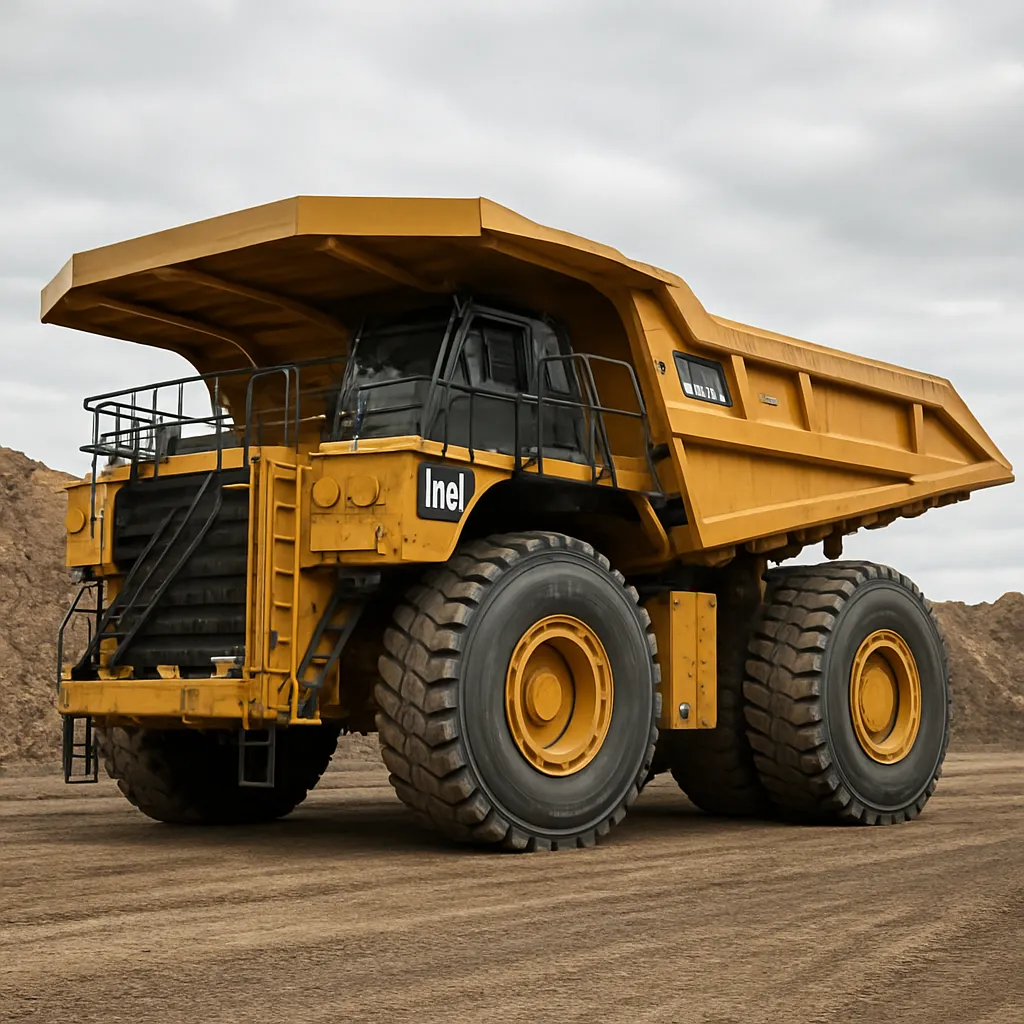
The Caterpillar 789D is a heavy-duty mining haul truck designed for high-production surface mining and large earthmoving operations. Combining robust structural engineering with proven drivetrain technology, this model has served mines and large construction projects where the movement of vast quantities of material must be performed reliably and efficiently. The following article explores the machine’s design, typical applications, operational characteristics, maintenance and safety considerations, and some representative performance figures and metrics.
Overview and role in modern mining
The Caterpillar 789D belongs to a family of rigid-frame, rear-dump haul trucks engineered to haul large loads over variable terrain. As a member of the 789 series, the 789D is purpose-built for continuous, heavy-duty cycles found in open-pit mining operations, large quarries and major infrastructure earthworks. Its principal mission is to maximize productivity by carrying large payloads per cycle while minimizing downtime through durable systems and simplified serviceability.
The truck fills a specific niche in the mining fleet hierarchy: larger than medium-size off-highway trucks used in civil construction but smaller than the ultra-class haul trucks that exceed 200 short tons of payload. This makes the 789D well-suited to mines where haul distances, pit geometry and shovel sizes align with a 70–110 tonne class truck — allowing operations to balance load size, fleet composition and cycle time efficiently.
Design and key components
The 789D’s design focuses on structural strength, reliability and maintainability. Several subsystems dictate the machine’s real-world performance and lifecycle cost: the powertrain, frame and dump body, braking system, steering and operator environment.
Powertrain and drivetrain
The truck typically uses a high-displacement diesel engine coupled with a robust drivetrain—either mechanical (automatic powershift) or torque-converter based depending on the configuration and region. The powertrain is selected to deliver a balance of torque for climbing loaded grades and horsepower for hauling at operating speeds, while also being optimized for durability and ease of maintenance.
Frame, suspension and bodywork
A welded, box-section main frame and heavy-duty axles are central to the 789D’s capacity to resist fatigue and impact loads. The dump body is formed of abrasion-resistant steel and designed for efficient load retention and dumping geometry. Suspension elements—often a combination of leaf springs and dampers or equalizers—ensure load distribution and stability across uneven haul roads.
Braking and safety systems
Effective braking is critical for large haul trucks. The 789D is commonly equipped with multi-disc oil-cooled service brakes and secondary/emergency braking systems, and frequently includes retarders or engine braking systems to preserve service brake life on long descents. Redundant systems, park brakes and interlocks contribute to operator safety and machine integrity.
Operator cab and ergonomics
Modern versions emphasize operator comfort and visibility to improve safety and reduce fatigue. Cab features include climate control, adjustable seating, clear sightlines to the dump body, and machine control or monitoring displays. Ergonomic layout and optimized controls help sustain high productivity over long shifts.
Typical applications and industry uses
The 789D is primarily found in:
- Open-pit metal mines (copper, iron ore, gold, etc.) where high daily production is required.
- Coal mining operations with large overburden removal requirements.
- Large-scale aggregate quarries and rock mining for construction materials.
- Major civil earthmoving works for dams, highways and mining infrastructure projects.
In these settings the 789D is paired with shovels and loaders sized to match its bucket loading cycle. Optimal integration between shovel dipper volume and truck payload is essential to maintain efficient loading without spillage or underloading.
Performance metrics and representative specifications
Exact specifications depend on configuration, market and model year. The values below are representative ranges commonly associated with trucks in the 70–110 tonne class, including the 789 series. All figures should be treated as approximate and verified against OEM documentation for purchase or engineering design purposes.
- Payload capacity: typically in the range of 70 to 100 metric tonnes (approximate class).
- Operating (gross) weight: varies with configuration, counterweights and payload; commonly falls into the tens to low hundreds of metric tonnes when loaded.
- Engine power: diesel engine options commonly provide several hundred to over a thousand kilowatts of gross power depending on tuning and emissions level; engines are chosen to supply both high torque and reliable service life under heavy load.
- Top speed: unloaded top speeds can exceed 50 km/h (30+ mph), while loaded speeds are lower and depend on grade and operating policy.
- Fuel consumption: highly variable; in heavy mining cycles, fuel burn may be several dozen to over a hundred liters per hour depending on load, road profile and operator practice.
- Typical cycle productivity example: with a 90-ton payload and a 10-minute cycle time (including load, haul, dump and return), theoretical hourly throughput is about 540 tonnes per hour.
Beyond raw numbers, other important performance indicators include availability (percentage of scheduled hours the truck can operate), mean time between failures (MTBF), and maintenance man-hours per operating hour. High-performing operations aim for availability above 90% with well-maintained fleets and proactive parts management.
Operational considerations
Successful deployment of the 789D hinges on fleet integration, road design, operator training and maintenance planning.
- Haul road design: road width, grade, turning radii and road surface quality directly influence cycle time, tire life and safety. Properly engineered roads reduce fuel consumption and extend component life.
- Fleet matching: pairing the truck with loaders or shovels that can consistently fill the box in a single pass maximizes productivity and prevents bottlenecks in loading operations.
- Operator training: driver behavior—smooth acceleration, anticipating braking zones, and matched shifting—impacts fuel efficiency, tire wear and brake life.
- Tire selection: tires are a major operating cost. Selecting appropriate compounds and sizes for the haul surface and material type is critical for uptime and cost control.
- Telematics and fleet management: modern fleets leverage onboard diagnostic systems and telematics to monitor fuel use, engine hours, location, and health diagnostics to optimize utilization and maintenance scheduling.
Maintenance, serviceability and lifecycle costs
Long-term value of the 789D is determined not just by purchase price or hourly productivity but by lifecycle costs including maintenance, parts availability and rebuild policies. Key aspects include:
- Preventive maintenance programs: scheduled oil changes, filter replacements, component inspections and lubrication help prevent catastrophic failures and extend component life.
- Accessibility: design features that make routine service points easy to access reduce downtime and labor cost. Tilt cabs, service platforms and centralized fluid drains are examples.
- Component modularity: using modular or swappable components (such as wheel hubs, final drives, and engine modules) speeds repairs and reduces inventory complexity.
- Rebuild and reman options: major components such as engines, transmissions and axles can often be remanufactured to extend machine service life at lower cost than replacing the vehicle.
Maintenance strategies that combine preventive, predictive and condition-based maintenance tend to yield the best balance of uptime and cost control. Predictive maintenance using vibration analysis, oil analysis and engine diagnostics can warn of impending failures before they result in long downtime.
Safety, operator health and environmental considerations
Large haul trucks pose specific safety challenges due to size, limited maneuverability and the operational environment. Manufacturers and operators implement multiple layered controls:
- Visibility aids: mirrors, cameras and proximity detection systems help prevent collisions with personnel and equipment.
- Rollover protection and cab design: reinforced cabs and seat restraints protect operators in case of incidents.
- Fatigue management: ergonomic seats, climate control and shift scheduling are used to reduce operator fatigue-related incidents.
- Emissions and environmental impact: newer engines meet progressively stricter emissions standards, and operators may use fuel and oil monitoring, spill containment and dust suppression to reduce local environmental impacts.
Environmental stewardship also includes planning for tyre disposal or retreading, managing hydraulic and lubrication fluids, and considering lower-emissions powertrain alternatives as they become viable for off-highway heavy equipment.
Economic and market considerations
From a procurement and operational economics perspective, decisions around a machine like the 789D factor in total cost of ownership (TCO), parts and service network, resale value and compatibility with existing fleet and site constraints. Key economic points:
- Downtime cost: each hour a haul truck is out of service can represent substantial lost throughput; hence, access to parts and rapid service response are often decisive buying factors.
- Fuel costs: fuel is a dominant operating cost in haulage; efficiency improvements or fuel-saving practices directly improve the machine’s operating margin.
- Technology premiums: telematics, automated or semi-autonomous control systems and emissions-reduction packages can add upfront costs but may deliver ROI through higher availability and lower operating expenses.
Representative use cases and productivity examples
Operations often model truck productivity using payload, cycle time, and availability. Example scenarios illustrate how the 789D contributes to output:
- Example 1 — Short haul, high cycle frequency: With a 90 tonne payload and an 8-minute cycle time, a single truck could theoretically move approximately 675 tonnes per hour under ideal conditions. Real-world availability and traffic interactions typically reduce this theoretical maximum.
- Example 2 — Long uphill haul: If the haul route includes steep grades and reduced speed, cycle time increases and hourly throughput drops proportionally; careful matching of engine power and gearing choices mitigates the impact.
- Example 3 — Fleet sizing: A mine requiring 10,000 tonnes per hour might size fleet and shovel capacity such that a combination of 20–25 trucks with a handful of shovels maintain continuous loading and dumping cycles, with spare machines for maintenance rotation.
Trends and future directions
Haul truck technology is evolving with several trends relevant to machines like the 789D:
- Automation and autonomy: remote operation and autonomous trucking increase safety and can improve utilization by reducing operator-related variability.
- Electrification: hybrid drivetrains, electric-drive systems and trolley-assist infrastructure are being trialed and implemented in many mines to reduce fuel consumption and emissions.
- Telematics and data analytics: predictive models for maintenance, fuel optimization and operator coaching are becoming central to fleet management strategies.
- Material and design innovations: lighter high-strength steels and design optimizations can reduce tare weight and increase payload efficiency while preserving structural life.
Concluding remarks
The 789D haul truck represents a class of equipment that balances large payload capacity with manageable size for a wide variety of mining and heavy earthmoving operations. Performance depends as much on the surrounding operational framework—road design, matching to loading equipment, maintenance systems and operator practices—as on the truck’s raw specifications. When configured and operated correctly, machines in this class are powerful contributors to high-throughput mining operations, delivering reliability, sustained productivity and a platform for incremental improvements such as automation and emissions reduction.
Key concepts highlighted: haul truck, payload, powertrain, maintenance, operator, productivity, fuel efficiency, safety, Caterpillar, 789D.


)
)