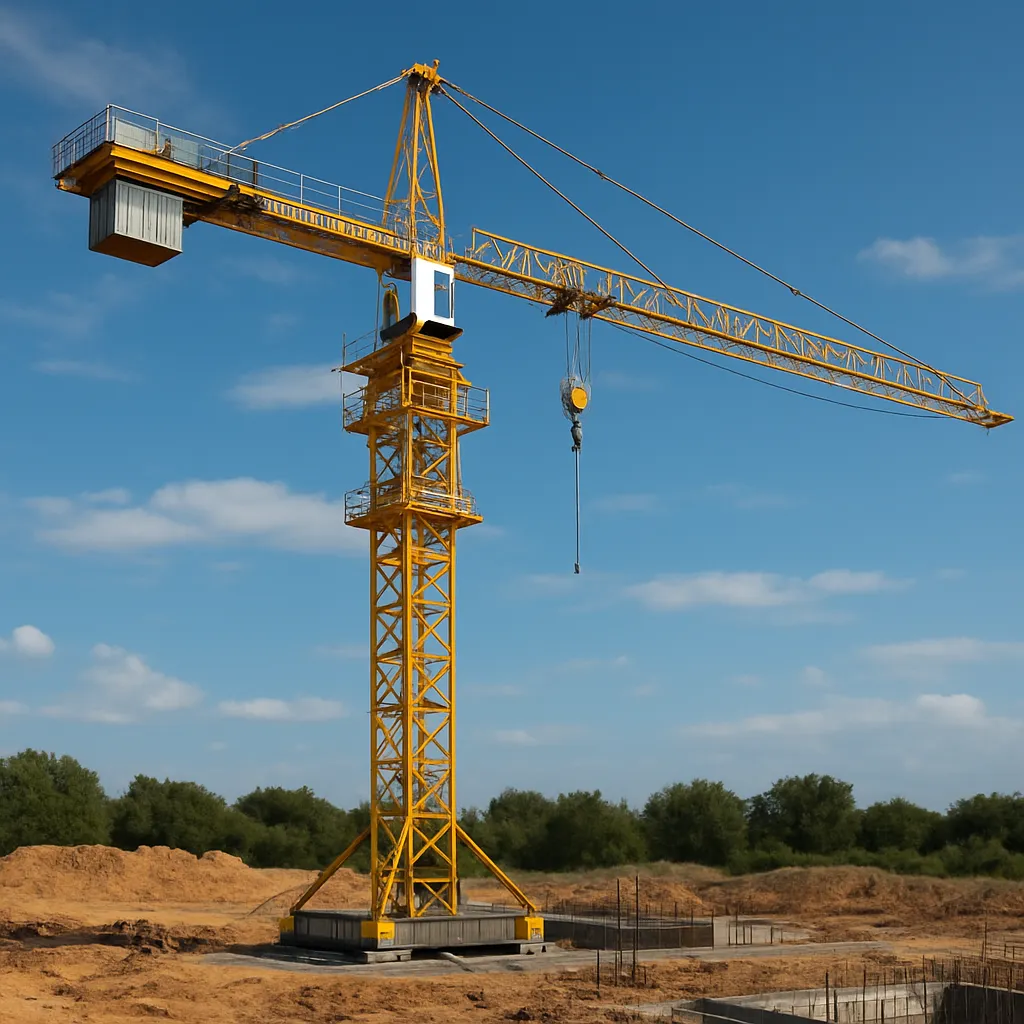
The FazTek FT650 represents a modern interpretation of the classic construction workhorse: the tower crane. Designed to support demanding urban and industrial projects, the FT650 aims to combine lifting power with flexibility on complex sites. This article explores the machine’s design philosophy, typical applications, technical characteristics, operational considerations, and the economic and safety aspects relevant to contractors and site managers.
Overview and design
The FazTek FT650 is promoted as a robust solution within the category of tower cranes commonly used on mid- to large-scale building projects. As with any contemporary crane, the design prioritizes a balance between lifting performance, structural stability, and site adaptability. The machine’s visual profile follows the familiar silhouette of a lattice mast and slewing jib, complemented by a counterweight system and operator cab or remote-control options.
Crucial to understanding the FT650 is recognizing its role as a specialist piece of equipment in the broader context of vertical construction. The presence of a tall, fixed tower allows for high lifting heights while a long horizontal arm provides reach across building footprints. This combination makes the unit particularly valuable where ground-based mobile cranes cannot achieve the same lift height or reach without obstructing the site.
Applications and typical use cases
The FT650 finds applicability across a wide spectrum of projects. Its deployment is especially common in scenarios that demand both height and radius for routine material handling.
- High-rise residential and commercial building projects — lifting prefabricated elements, reinforcement cages, concrete buckets, and mechanical equipment to elevated floors.
- Large-scale civil infrastructure — bridge component assembly, viaduct sections, and elevated roadway construction where long reach and steady lifts are necessary.
- Industrial plant construction and maintenance — setting heavy machinery, HVAC modules, and structural sections inside constrained plant footprints.
- Modular and prefabricated construction — handling volumetric modules and precast panels quickly and accurately, reducing on-site erection time.
- Renovation and retrofit projects in dense urban areas — where limited street access makes on-site vertical lifting the most practical method for moving building materials and components.
Because of its versatility, the FT650 (and cranes like it) is also used for specialty tasks such as assembling wind towers, installing facade systems on tall buildings, or assisting in the lift-and-insert installation of plant equipment. The machine’s adaptability to different site configurations is a major reason for its widespread adoption where sustained, repetitive lifts are required.
Technical characteristics and performance
Manufacturers of tower cranes present their models with a combination of rated lifting capacities, jib lengths, maximum hook heights, and other performance parameters. For the FT650, specific official values should be confirmed with the manufacturer or authorized dealer; however, typical characteristics for cranes in this class can be summarized to give a practical picture of expected capabilities.
Load capacity and reach
For machines comparable to the FT650, the nominal rated lifting capacity at the jib head often ranges from several tonnes up to several tens of tonnes depending on counterweight configuration and mast sections. The term capacity is a key specification: capacity varies with radius — maximum at the shortest radius and substantially reduced at the farthest. A standard load chart accompanies every crane and provides the exact safe working loads at different radii and heights.
Height and jib options
Available mast sections allow operators to configure the crane’s free-standing height and the ultimate climbing capability when tied into a structure. Jib lengths are typically modular and can range from short jibs optimized for compact sites to long jibs exceeding several dozen meters for extended reach. The term jib defines the horizontal arm whose length directly affects the working envelope and the load capacities at various radii.
Hoist and drive systems
Modern tower cranes employ electric hoists with variable frequency drive (VFD) control for precise lift, lower, and travel speeds. Typical hoist speeds vary from slow, high-traction lifts for heavy loads to faster speeds for lighter loads. Slewing is usually driven by electric motors through gearboxes and is engineered for smooth rotation under load. Many units include redundant braking systems and emergency lowering functions.
Structural and stability features
Stability relies on a combination of mast geometry, foundation or ballast, and proper anchoring. Counterweights are placed on the rear of the slewing platform to balance the jibed load. On urban sites where ground bearing capacity is limited, a concrete pad or specialized spreader base and anchoring are used. The term load chart is essential for understanding how much load can be safely carried at each radius and height; operators must consult it before each lift.
Operation, safety, and control technologies
Operational safety is paramount when working with tower cranes. Contemporary models like the FT650 typically incorporate a suite of features and systems to reduce risk and increase precision on site.
- Load moment indicators (LMI) — continuously monitor lifting forces and prevent overload situations by alerting the operator or automatically locking out unsafe commands.
- Anti-collision systems — coordinate multiple cranes on congested sites to prevent contact between jibs and reduce the likelihood of dangerous interference.
- Wind and weather sensors — measure wind speeds and other environmental conditions; operations are limited or suspended if conditions exceed safe thresholds.
- Remote monitoring and telematics — enable fleet managers to track utilization, maintenance status, and fault codes in real time, improving uptime and safety oversight.
- Operator assistance and automation — proportional controls, momentary memory for repetitive lifts, and sometimes automated positioning aids reduce human error and increase repeatability.
Routine safety procedures include daily inspections, regular non-destructive testing of structural components, scheduled lubrication and mechanical servicing, and certification of wire ropes, brakes, and limit switches. Staff training and certification for crane operators and signalers are also critical components of a safe lifting program.
Maintenance, lifecycle and reliability
Effective maintenance programs are a distinguishing factor between high uptime and costly downtime. Preventive maintenance typically includes checks of the hoist drum, rope condition, slewing bearings, electrical systems, hydraulic subsystems (if present), and structural inspection for stress or corrosion.
Key aspects of lifecycle management:
- Scheduled inspections (daily, weekly, monthly, annual) aligned with manufacturer guidelines and local regulations.
- Component replacement intervals based on hours of operation and load cycles rather than simple calendar time for critical parts like wire ropes and brakes.
- Software and control system updates to maintain compatibility with telematics and safety upgrades.
- Proper storage and handling of spare parts to reduce lead times in repair situations.
Well-managed machines often achieve a long service life — measured in decades — when inspections and structural reinforcements are performed as required. The economics of refurbishment versus replacement will depend on utilization rates, retrofit potential (for example adding telematics or modern LMI systems), and evolving site requirements.
Logistics, erection, and site considerations
Bringing a tower crane like the FT650 to site involves planning for transport, assembly, and eventual dismantling. Logistics include the routing of large transport vehicles, temporary road permits, and site clearance. Erection may require the use of a mobile crane to assemble mast sections and install the slewing unit, jib, and counterweights. On constrained urban sites, sectional assembly or the use of a climbing frame to incrementally raise the crane as the building grows are common practices.
Time for erection and dismantling varies by site complexity but can range from a few days for a basic free-standing setup to several weeks for cranes that must be climbed as the building rises. The modular nature of modern tower cranes is intended to reduce these times, with mast and jib sections standardized for rapid assembly.
Economic factors and lifecycle cost
Deciding whether to buy or rent a machine such as the FT650 involves assessing capital cost, utilization, maintenance budgets, transport and erection costs, and expected project duration. Renting is frequently chosen for single-project or short-term needs, while ownership makes sense for contractors with a steady pipeline of work that justifies the initial investment.
- Initial capital or rental cost — depends on configuration, optional features, and market conditions; rental pricing is influenced by availability and local demand.
- Operational costs — include power consumption (if electric), fuel (for associated erection equipment), operator wages, and site-specific safety measures.
- Maintenance and repair — predictable preventive maintenance reduces catastrophic failures and downstream costs.
- Insurance and regulatory compliance — vary by jurisdiction and can significantly affect the total cost of ownership or operation.
Overall, the total cost of ownership should be evaluated against metrics such as cost per lifted tonne, system availability percentage, and the impact on project schedule, since delays in material handling typically translate directly to increased labor and equipment costs on site.
Market positioning and statistical context
Exact public domain statistics tied to a single model like the FT650 may not be widely published. However, some broader industry trends are relevant when considering the adoption and value proposition of tower cranes of this class:
- The global demand for tower cranes correlates strongly with construction activity, particularly in urban centers and regions pursuing rapid infrastructure expansion.
- Advances in crane technology — digital controls, telematics, and improved safety systems — have driven a trend toward replacing very old units with modern, more efficient machines that offer better reliability and lower lifecycle costs.
- Modular construction and prefabrication increase the need for precise, high-capacity lifting solutions, which benefits the market for medium- to large-capacity tower cranes.
Industry reports often present market-size estimates for crane segments; values and growth rates vary by source and year, but the overall expectation in many markets has been modest growth reflecting urban redevelopment and infrastructure spending. For project managers, the important statistical considerations are unit utilization, mean time between failures (MTBF) for key components, and average set-up/dismantle times — metrics that directly influence project scheduling and budgeting.
Advantages and limitations
The FT650 brings several advantages typical of modern tower cranes, including high vertical reach, extended horizontal reach, and the ability to service dense or tall construction sites without occupying the full ground space required by large mobile cranes. The following points summarize practical strengths and common limitations.
- Advantages:
- Efficiency in repeated vertical material handling and in delivering heavy components directly to point-of-installation.
- Steady, precise control for placing prefabricated units and building components.
- Lower long-term operational cost compared with repeatedly repositioning large mobile cranes on a tight site.
- Limitations:
- Significant planning required for erection, anchoring, and dismantling — adds to project lead time.
- Dependence on proper foundation or adequate ballast and ground-bearing capacity.
- Operational limits in high winds and severe weather conditions.
How to evaluate whether the FT650 is right for a project
When considering a machine like the FT650, project teams should assess the following criteria:
- Required maximum hook height and reach across the site footprint.
- Typical load weights and frequency of heavy lifts to determine needed capacity and hoist capabilities.
- Site constraints for transport, assembly, and foundation preparation.
- Availability of certified operators and rigging crews familiar with tower crane operations.
- Integration with safety systems and anti-collision measures when multiple cranes are present.
- Overall project schedule sensitivity to lifting operations — whether delays in crane availability would materially impact timelines.
Careful consultation with the crane supplier, an experienced lifting engineer, and the site safety team will ensure that the chosen crane configuration matches project needs while staying within regulatory and safety bounds.
Final considerations and practical tips
Purchasing or renting a tower crane is a strategic decision for any construction enterprise. Beyond the machine’s nominal specifications, the following pragmatic tips can improve outcomes:
- Obtain the complete load chart and request examples of previous projects performed with the same model to verify real-world capability.
- Factor in time for supervised test lifts and operator familiarization on arrival at site.
- Plan for telematics and remote monitoring to maximize uptime and simplify maintenance scheduling.
- Consider lifecycle upgrades, such as adding modern LMI and anti-collision packages, which can extend usefulness and resale value.
- Coordinate early with local authorities for permits and with utilities to avoid conflicts during erection and operation.
When deployed correctly, a well-specified tower crane such as the FT650 can become a core productivity asset that shortens schedules, reduces on-site manual handling, and improves site safety. Proper attention to planning, maintenance, and operator training will maximize its contribution to a successful construction program.


)
)