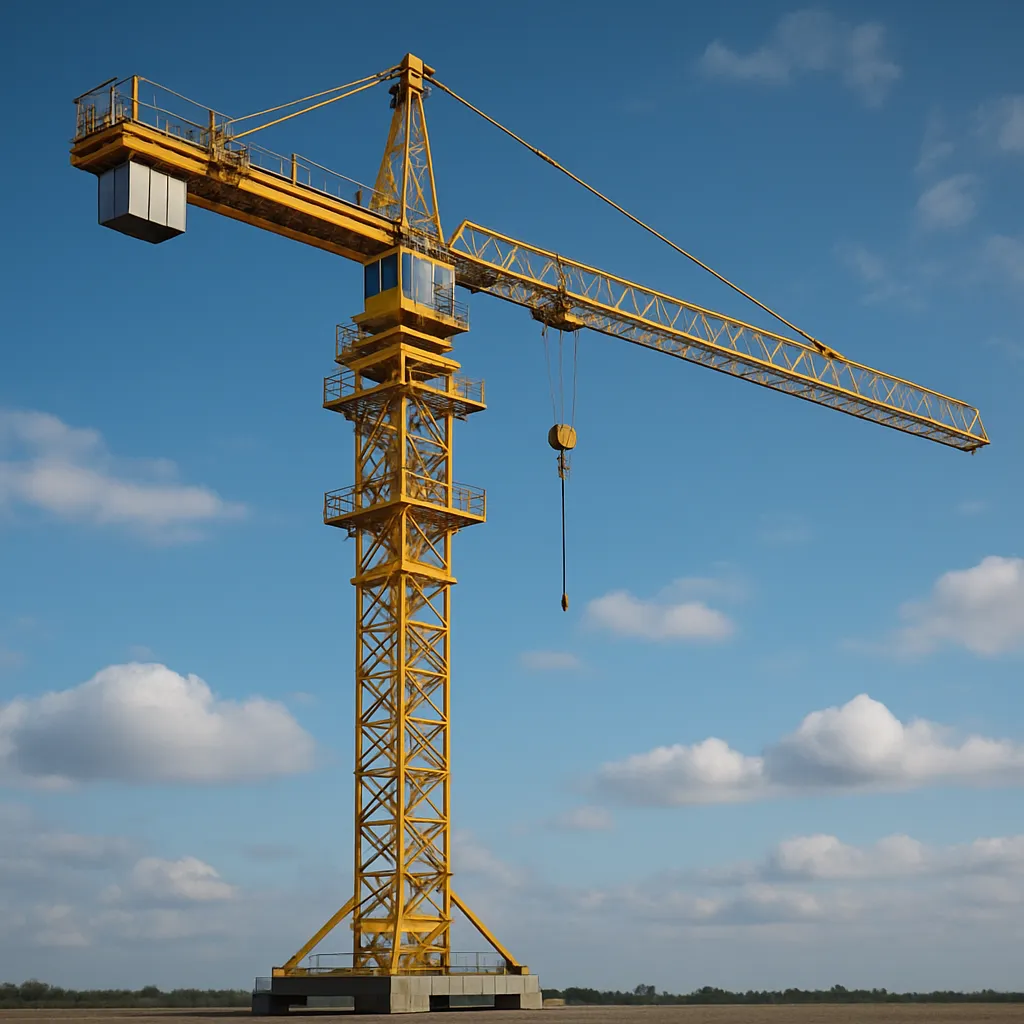
The XCMG XGT1500-100 is a heavy-duty tower crane designed to serve large-scale construction projects, industrial sites and infrastructure works. Combining robust structural design with modern control systems, this model targets contractors who require high lifting capacity, reliability and adaptability to different jobsite conditions. Below you will find a detailed overview of the machine, typical technical characteristics, primary applications, operational best practices and important purchasing and maintenance considerations.
Overview and positioning
XCMG (Xuzhou Construction Machinery Group) is one of the world’s leading manufacturers of lifting and construction equipment. The XGT series is intended to cover a wide range of tower crane needs, from mid-range urban construction to high-capacity, long-reach industrial duties. The XGT1500-100 is positioned as a machine that balances a high nominal load moment with a configuration that can support heavy lifts while maintaining a relatively compact footprint for installation logistics.
This model is often chosen where projects demand both vertical reach and significant lifting strength—for example, high-rise construction cores, heavy prefabricated segment erection, power plant installation, and bridge construction. The design of the XGT1500-100 emphasizes structural rigidity, operator ergonomics, and integration of safety systems that are increasingly required by international clients and site regulations.
Technical characteristics and capabilities (indicative)
Exact technical specifications can vary by production year, optional packages and client configuration. The model name XGT1500-100 suggests a nominal lifting moment of approximately 1500 kN·m and a design oriented toward a higher rated capacity class. Typical characteristics for a crane in this class include:
- Rated lifting moment: approximately 1500 kN·m (model designation indicative).
- Maximum rated capacity: in some configurations up to 100 t at the shortest radius (this depends on counterweight, jib length and tower configuration).
- Jib length: multiple jib lengths available, often ranging from medium to long reaches (for example, options between ~40 m and 80 m are common for large tower cranes).
- Maximum lifting height: depends on tower sections and mounting; can reach well over 100 m when climbing sections are added and anchored to the building.
- Rotation (slewing): electrically driven and variable-speed slewing mechanism with a reliable slewing reducer and brake system.
- Hoisting speed and systems: variable speed multiple-rope hoist with safety brakes and load limiting systems.
- Counterweight systems: modular concrete or steel counterweights for transport flexibility and rapid assembly.
- Control electronics: on-board PLC, remote diagnostics capability and operator cabin with advanced ergonomics; often equipped with a Load Moment Indicator (LMI) and overload protection.
Because different options and regional standards may affect the final data (e.g., metric vs. imperial measurements, voltage and power supply configurations), always confirm exact numbers with the supplier or the machine’s technical datasheet.
Primary applications and industry sectors
The XGT1500-100 is versatile and suitable for a broad set of applications. Typical sectors include:
- High-rise construction: erection of structural modules, concrete and steel elements, façade units and service equipment.
- Industrial construction: installation of heavy process equipment in petrochemical plants, refineries and manufacturing facilities.
- Infrastructure projects: bridge girder placement, viaduct segment assembly and large-scale civil engineering works.
- Power and energy: turbine and generator installation in conventional power plants and heavy components in renewable projects.
- Prefabrication and modular construction: lifting large precast concrete panels and modular building blocks in controlled sequences.
The crane’s strength makes it a preferred option where heavier lifts are frequent and schedule pressures demand fast, reliable hoisting cycles. Its modular counterweight and tower sections also help adapt to a variety of urban and remote sites.
Design highlights and features
The XGT1500-100 implements a set of design elements to optimize performance, safety and maintainability. Notable features typically found on machines of this class include:
- Robust mast and slewing ring: engineered for high fatigue life and minimal deflection under heavy loads.
- Modular jib design: sectional jib allowing variable reach and transport-friendly segments.
- Advanced operator cabin: climate-controlled, with clear visibility, digital displays and intuitive controls for hoist, trolley and slewing functions.
- Electronic safety systems: Load Moment Indicator (LMI), anti-collision systems (for multi-crane sites), wind sensors and automatic cutouts at defined limits.
- Energy-efficient drives: frequency-controlled motors for smooth starts/stops and optimized power consumption.
- Remote diagnostics and communications: ability to monitor machine health, error codes and operating hours remotely, improving uptime and enabling predictive maintenance.
Together, these features provide a machine that is both powerful and easier to integrate into complex, safety-conscious construction environments.
Safety systems and operational best practices
Safety is central to tower crane operation, especially for high-capacity models. The XGT1500-100 typically comes equipped or can be specified with the following protective systems:
- Load Moment Indicator (LMI): real-time monitoring of the crane’s load relative to allowed limits to prevent overloads.
- Anti-collision systems: radar or GPS-based systems that prevent interference when multiple cranes operate in proximity.
- Wind monitoring: anemometers that link to automatic lockouts or operator alarms at unsafe wind speeds.
- Limit switches and mechanical stops: to prevent over-travel of the trolley and hoist drum.
- Emergency lowering systems: allow safe handling of the load in case of power loss or drive failure.
Operational best practices for maximizing safety and productivity include:
- Implementing a site-specific lift plan for heavy or complex lifts, including tag lines, lift paths and exclusion zones.
- Regularly calibrated and tested load indicators and safety devices.
- Comprehensive operator and rigger training focused on the crane’s control systems, emergency procedures and signal protocols.
- Rigorous pre-shift inspections and scheduled preventive maintenance to detect wear on ropes, brakes, slewing components and electrical systems.
Maintenance, serviceability and lifecycle cost
Large tower cranes like the XGT1500-100 are significant capital investments; lifecycle cost management is essential. Key maintenance considerations include:
- Routine inspections: daily visual checks, monthly in-depth inspections and annual statutory examinations as required by local regulations.
- Lubrication and wear monitoring: slewing rings, hoist drums and wire ropes require scheduled lubrication and replacement based on usage hours and load cycles.
- Parts availability: choosing a manufacturer with broad parts distribution and local service centers reduces downtime.
- Remote monitoring: telematics systems reduce unexpected failures by enabling predictive maintenance based on vibration, temperature and usage patterns.
Well-planned maintenance and the availability of certified technicians can greatly extend usable life and improve return on investment. For contractors who operate multiple cranes, centralized fleet management and parts pooling are often used to reduce spare-part inventories and service response times.
Transport, assembly and site logistics
Despite its lifting capacity, the XGT1500-100 is designed for modular transport. Transport and assembly considerations include:
- Segmented jib and counterweight pieces sized to match heavy haul and standard truck dimensions where possible.
- Option for on-site climbing frames to increase free-standing height without disassembly.
- Wind and space constraints during erection, demanding careful planning and auxiliary lifting equipment (mobile cranes and hydraulic jacks) for initial assembly.
- Time and crew requirements for assembly and dismantling—often scheduled to minimize interference with construction sequencing.
Site planning should include detailed rigging plans, routes for transporting long jib sections and contingency plans for inclement weather during erection windows.
Economic and environmental considerations
When evaluating a crane like the XGT1500-100, owners should consider both economic impact and environmental performance:
- Productivity gains: higher-capacity lifts reduce the number of picks and crane repositioning, shortening project schedules and reducing labor costs.
- Fuel and energy efficiency: modern drive systems use electricity and inverter controls that are more efficient than older systems, lowering operating costs and emissions when the grid is relatively clean.
- Noise reduction: electric drives and optimized gearboxes reduce on-site noise compared with some older hydraulic systems.
- Lifecycle environmental footprint: longer service life and modular upgrades can reduce the carbon footprint per tonne-lift over the machine’s operational life.
Return on investment is calculated not only on purchase price but also on reduced man-hours, shorter project durations and lower maintenance-related downtime.
Case studies and typical project examples
Although specific project names and deployment logs depend on local operator confidentiality and manufacturer disclosures, cranes in this class are commonly found in:
- Urban skyscraper cores where heavy concrete climbing forms and mechanical plant must be lifted repeatedly to high elevations.
- Large industrial plants assembling heavy pressure vessels, heat exchangers and structural modules.
- Bridge construction where long-reach capability and precise placement of girders is required.
Operators report that using a single high-capacity crane for critical lifts often simplifies coordination on complex projects, reducing the need for multiple smaller cranes and auxiliary lifts.
Buying considerations and specification checklist
Before committing to a purchase or lease of an XGT1500-100, decision-makers should assess:
- Actual maximum lift requirements including radius and height profiles for the project.
- Transport restrictions and local road permit limits for longest/heaviest components.
- Site power availability and whether the crane requires a dedicated power supply or can operate with site generators.
- Availability of manufacturer warranty, local service network and spare parts stock.
- Options for remote diagnostics, safety packages and compatibility with anti-collision systems if multiple cranes operate together.
Leasing vs buying is a common consideration—leasing provides flexibility for one-off projects, while purchase may be economically preferable for a contractor with a long pipeline of compatible jobs.
Standards, certifications and regulatory compliance
When operating or purchasing cranes, compliance with regional and international standards is essential. Relevant items include:
- Local statutory inspection regimes and certifications for lifting appliances.
- International standards (for example, ISO and EN standards covering tower crane safety and design) that may be requested by international clients or insurers.
- Manufacturer documentation for safe working loads (SWL), certification of materials and conformity declarations.
Ensure that the supplied machine includes all required documentation for the country of operation and that modifications or optional equipment are certified by an accredited body where needed.
Concluding remarks
The XCMG XGT1500-100 is a capable solution for projects that require a mix of high yield, robust structural performance and contemporary safety and control technology. Its strengths are most apparent on projects with frequent heavy lifts, high reach requirements, or where a single reliable crane can reduce overall site complexity. When considering this model, verify the exact technical specification, optional safety and remote-monitoring packages, and confirm local service support to ensure the machine aligns with project requirements and regulatory obligations.
Key aspects to emphasize when evaluating the XGT1500-100 include XCMG’s reputation for industrial equipment, the model’s expected lifting capacity and nominal load moment, the crane’s modularity for transport and erection, and integrated safety and diagnostic systems such as the Load Moment Indicator. Proper attention to maintenance, operator training and site planning will maximize the machine’s efficiency, uptime and value over its operational life.


)
)