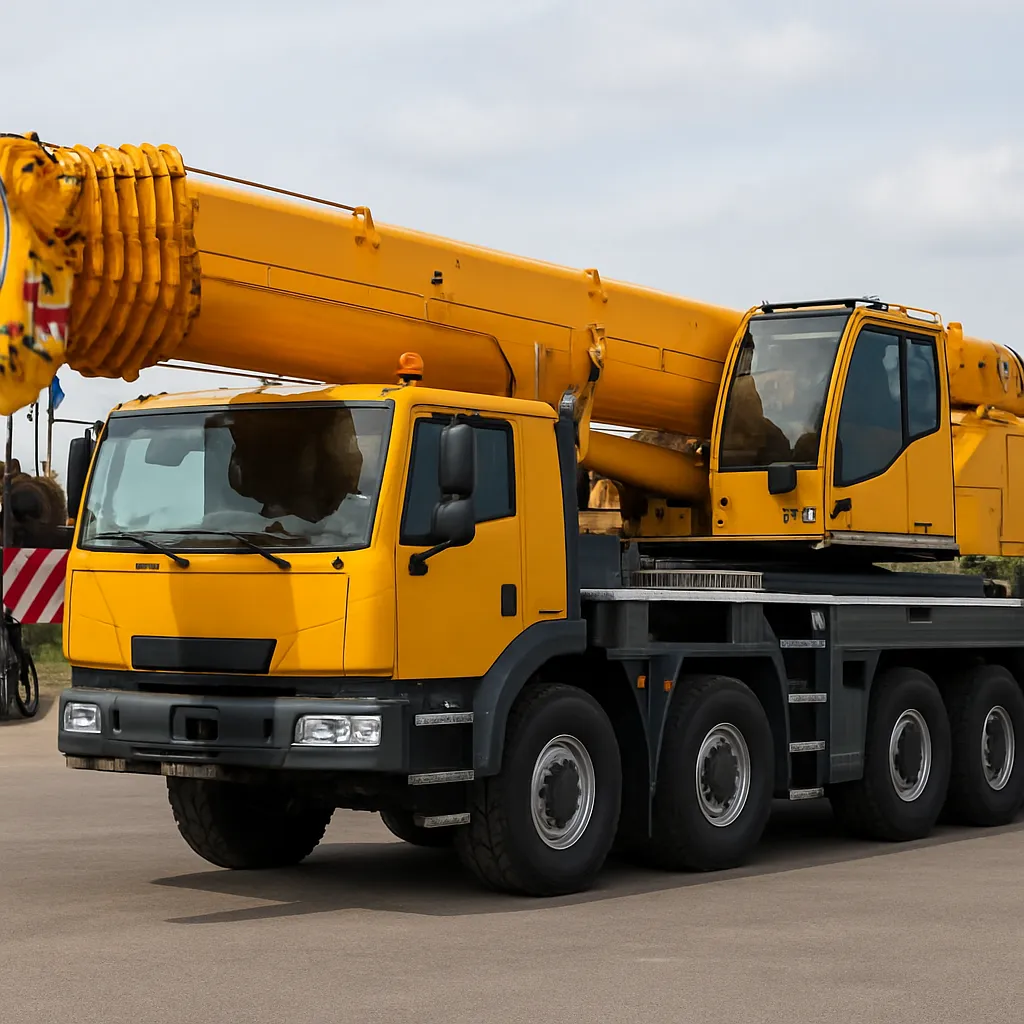
The Demag AC 300-6 is a versatile, powerful all-terrain crane that has become a trusted solution for demanding lifting tasks across construction, infrastructure, energy and industrial projects. Combining road-going mobility with impressive on-site performance, this crane balances transportability, lifting capacity and advanced control systems to deliver reliable results in complex environments. The following article explores the machine’s design, typical applications, technical highlights, operational considerations and market-relevant information.
Design and main technical characteristics
The Demag AC 300-6 is built as a premium all-terrain crane intended to bridge the gap between heavy-duty lattice-boom crawlers and more compact mobile cranes. Its most distinctive features include a robust, multi-axle chassis for long-distance travel, a powerful telescopic boom for fast, precise lifts and modular counterweight and jib options that expand the machine’s envelope of use.
Chassis and mobility
- The crane rides on a multi-axle carrier — typically a six-axle configuration — designed to meet road regulations while offering high load-bearing capacity on public highways and reasonable off-road performance on construction sites.
- Steering systems on multiple axles give the AC 300-6 excellent maneuverability for a crane of its class, allowing tighter turning radii when negotiating urban sites and congested yards.
- Engine options and carrier drivetrains are optimized for both travel speed and fuel efficiency; many units are specified to comply with relevant emission regulations for the markets in which they operate.
Superstructure and lifting equipment
- The crane’s superstructure integrates a powerful engine and hydraulics that drive the hoist, winches and telescoping sections. Controls are arranged for ergonomic operation and precise load handling.
- A multi-section telescopic boom provides rapid extension and retraction for varying lift heights and outreach requirements. Typical telescopic ranges for cranes in this class provide main boom lengths from around 10–60 metres in standard configurations, with longer reach available when fitted with jibs or lattice extensions.
- Auxiliary lattice jibs (fixed or luffing) and extension systems enable the AC 300-6 to achieve high hook heights and reach over obstacles, expanding its utility for industries like wind, petrochemical and bridge construction.
Stability and lifting control
Safety and optimal use of capacity are crucial. The crane commonly incorporates advanced load-moment limiting systems and stability management aids that calculate permissible loads based on boom configuration, outrigger positions and counterweight setup. Many Demag cranes are known for systems that permit flexible outrigger setups, allowing operators to make the most of available space without sacrificing safety or carrying unnecessary counterweight.
Performance and specifications (typical figures)
Performance numbers vary with specific machine options, year of manufacture and regional configurations. The following figures are representative for the AC 300-6 class and illustrate the machine’s general capabilities. Where exact values may differ between versions, ranges and qualifiers are provided.
- Rated capacity: 300 tonnes (metric) at the crane’s base rating.
- Axles: Six-axle carrier providing road mobility and on-road legalities in many jurisdictions.
- Main boom: Telescopic sections commonly giving a standard reach in the order of approximately 10–60 metres. With lattice jib and extensions, tip heights above 100 metres can be achieved in special configurations.
- Counterweight: Modular counterweight systems enable balancing of load versus transport constraints; total counterweight can often be configured to meet the lifting task while respecting transport axle loads.
- Hoist and winches: Multi-line hoists provide variable line speeds and high pulling forces for heavy lifts; auxiliary hoists allow tandem operations and precise load handling.
- Travel weight and dimensions: Gross vehicle weights vary by specification; typical combined weights for carrier-plus-superstructure with minimum counterweight often fall in the range of several tens of tonnes, while fully ballasted transport combinations will be higher. Exact transport weights depend on counterweight choice and local regulations.
These performance characteristics make the Demag AC 300-6 particularly suited to jobs where a balance of high lifting capacity and practical on-road transport is needed.
Applications and industry use cases
The AC 300-6 is employed across a wide range of sectors because it can travel on public roads between sites and still deliver heavy, high-reach lifts upon arrival. Typical applications include:
- Wind energy: Installation and maintenance of wind turbine nacelles, hubs and blades—where high lifting capacity and substantial reach are required in remote and constrained sites.
- Heavy construction: Placement of precast concrete segments, steel girders, and bridge elements in urban and highway projects where mobility and lifting power are both critical.
- Industrial plant work: Equipment installation and turnarounds in petrochemical plants, refineries and manufacturing facilities that require precise, high-capacity lifts in tight spaces.
- Power generation: Erection and maintenance of transformers, generators and structural components at power stations.
- Marine and shipyard operations: Lifting large components during shipbuilding and dockside repairs, often requiring special lifting attachments and precise load control.
- Infrastructure and emergency work: Rapid deployment for recovery, salvage and emergency replacements following damage to bridges or large structures.
Advantages and operational strengths
The AC 300-6’s design yields several practical benefits that operators and owners value:
- Roadability: The six-axle carrier lets the crane move between sites without special transporters in many regions—reducing logistics time and cost.
- Flexibility: A telescopic boom plus modular jib options mean the crane adapts to many job-site tasks without requiring a different machine.
- Rapid set-up: On-site assembly and outrigger deployment are optimized so the crane can often be made ready more quickly than equivalent lattice-boom crawlers.
- Precise control: Advanced operator interfaces and load monitoring systems improve lift accuracy and safety, which is particularly valuable for delicate installations.
- Cost-effectiveness: For many projects the AC 300-6 provides a cost-efficient alternative to larger crawler cranes because of reduced transport complexity and faster mobilisation.
Attachments, options and accessories
To expand its versatility, the AC 300-6 is usually offered with a range of optional equipment:
- Luffing and fixed lattice jibs for extended reach and higher hook heights.
- Hydraulic outrigger systems and remote-control options for safer and faster setup procedures.
- Specialized hooks, spreader beams and lifting frames for unique load shapes.
- Variable counterweight kits to balance lifting demands with transport limits.
- Telematics and fleet-management packages for remote monitoring of usage, maintenance needs and operational diagnostics.
Operation, safety and operator training
Safe operation of a high-capacity all-terrain crane depends on both technology and human factors. Standard safety and operational best practices include:
- Comprehensive crane-specific training and certification for operators and riggers.
- Pre-lift planning including ground assessment, outrigger placement, crane chart review and risk mitigation strategies for high winds or unstable ground.
- Strict adherence to manufacturer load charts and ratings, including use of approved software systems and on-board load-moment indicators.
- Regular inspection and preventive maintenance of winches, ropes, hydraulic systems and structural components to prevent failures under load.
- Use of trained signalers and radios for clear communication on complex lifts and in noisy environments.
Maintenance, lifecycle costs and reliability
Lifecycle ownership costs are significant for such capital assets, and the AC 300-6 is engineered for durability with maintainability in mind. Key considerations for owners:
- Scheduled preventive maintenance dramatically extends service life and reduces downtime; common tasks include lubrication, hydraulic fluid changes, wire rope inspection and structural checks.
- Availability of genuine spare parts and factory-trained service technicians is essential; many owners leverage manufacturer service networks or authorized dealers for major inspections and repairs.
- Telematics features, when fitted, help operators plan maintenance by reporting actual usage hours, engine performance and fault codes—reducing unexpected failures and optimizing parts inventory.
- Resale value is influenced by documented maintenance history, configured options and local market demand for mid-sized all-terrain cranes.
Environmental and regulatory considerations
Modern project owners emphasize lower emissions, noise and ground impact. The AC 300-6 platform supports compliance through:
- Engine options that meet regional emissions standards and can be specified to the latest stages available at time of purchase.
- Fuel-efficient drivetrains and hydraulic systems that reduce operating emissions and lower operating cost per lift.
- Ground-load distribution via outrigger pads and cribbing techniques to minimize site surface damage.
- Noise mitigation through improved mufflers and isolation of powertrain components to meet urban project requirements.
Market context and statistical observations
While exact fleet numbers for the Demag AC 300-6 vary by region and operator, the model has been a popular choice for medium-to-heavy lifting needs since its introduction. A few points to consider:
- Cranes in the 300-tonne class are widely used where permanent heavy lift capacity is needed but full crawler solutions are not justified. This creates steady demand for used AC 300-6 machines on rental fleets and in private ownership.
- Rental market dynamics: Companies offering mobile cranes frequently include a mix of all-terrain units from 50 to 500 tonnes; within this, the 300-tonne class is valued because it covers many industrial applications without requiring oversized logistics for transport.
- Resale and depreciation: As with most heavy equipment, depreciation is front-loaded in the first years. However, well-maintained units with documented service histories retain stronger resale values—especially where aftermarket service networks are strong.
- Operational metrics: Typical metrics tracked by fleet managers include availability (uptime), lift-count per month, average lift weight, travel distance between jobs and fuel consumption per operating hour. These metrics help optimize fleet allocation and justify investment in telematics packages.
Case examples and typical project scenarios
Examples of where the AC 300-6 excels include:
- Installing medium-size wind turbine nacelles at sites with narrow access: the crane’s mobility reduces the need for disassembly en route; its boom and jib options allow high hook heights with precise placement.
- Bridge girder installations in urban settings: the crane’s ability to travel on roads and set up quickly keeps lane closures short and project timelines tight.
- Industrial plant equipment replacement: in confined yards, the crane’s control systems and flexible counterweight options enable heavy lifts without extensive auxiliary support.
Buying and renting considerations
Decision factors for buyers and renters include:
- Expected use profile: frequency of long-distance moves, average lift sizes and jobsite ground conditions dictate whether the AC 300-6 is the right class.
- Transport limits and local regulations: axle load limitations and road permits can influence how much counterweight is practical for transport; some owners opt for modular counterweights to match local rules.
- Availability of service and parts locally: choosing a brand and model with a strong dealer network reduces downtime.
- Resale market: consider how desirable the configuration will be when upgrading or selling; common, standard options typically yield stronger secondary-market demand.
Conclusion
The Demag AC 300-6 represents a practical, high-capacity solution for many lifting challenges where a balance of mobility, reach and power is required. Its six-axle carriage, modular configurations and advanced control systems make it a flexible asset for contractors, rental companies and plant owners. Whether installing turbines on remote ridgelines, placing bridge segments in constrained urban settings or performing critical plant lifts, the AC 300-6’s combination of features provides operators with a dependable tool to complete heavy lifts efficiently and safely.


)
)