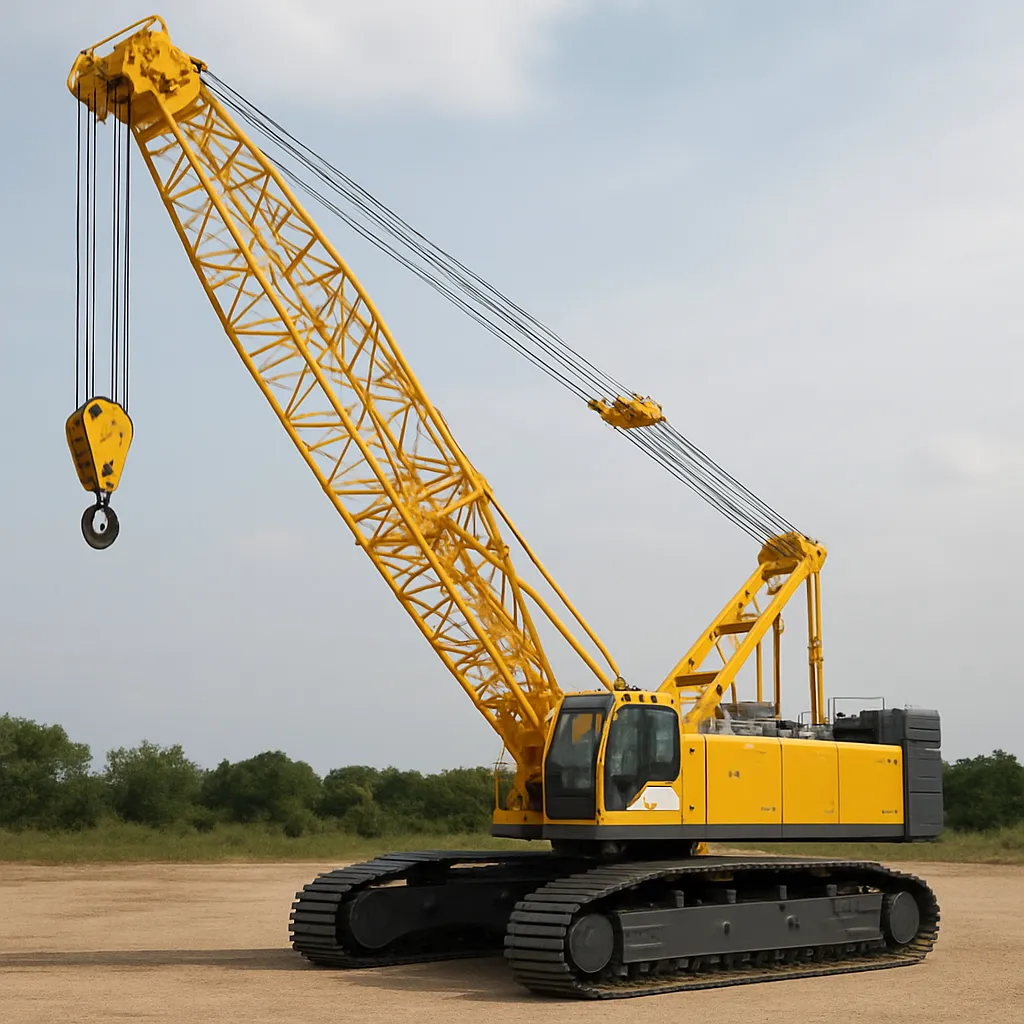
The Demag CC 2000-1 is a high-capacity lattice-boom crawler crane designed for the most demanding heavy lifts in construction, energy, and industrial sectors. Combining immense lifting capacity with modularity and proven engineering, this machine has been a go-to solution where conventional cranes cannot reach required capacities or site conditions demand tracked mobility. The following article explores the CC 2000-1’s design features, typical applications, logistical and safety considerations, and other practical and technical details that make it a cornerstone of heavy lifting operations.
Overview and Historical Context
The Demag CC 2000-1 belongs to a family of large lattice-boom crawler cranes originally produced by Demag (later integrated into larger corporate groups during industry consolidations). The “CC” designation indicates a lattice-boom crawler crane platform, and the model number reflects its position in the 2,000-metric-ton class. These cranes were engineered to address projects requiring extremely high single-lift capacities and the ability to operate on sites with limited ground bearing capacity due to their tracked undercarriage.
Key characteristics of the CC 2000-1 include a robust lattice superstructure, modular counterweight and boom elements, and a design philosophy that emphasizes flexibility in boom and jib combinations. That flexibility allows the crane to be configured for heavy, short-radius lifts as well as extended-reach lifts where height or radius is critical.
Design and Technical Characteristics
The CC 2000-1’s design is centered around heavy-duty structural components and scalable systems that accommodate a wide range of lifting scenarios. Below are the principal technical and design elements that define the machine:
- Lattice Boom System: The crane uses a lattice-type main boom and lattice jibs, allowing high strength-to-weight ratios. Lattice sections are modular and can be assembled in various lengths and angles to suit the lift profile.
- Maximum Lifting Capacity: As a 2,000-tonne class crane, the CC 2000-1 is rated to handle extremely heavy single lifts. This rating positions it for installation tasks involving heavy modules, large transformers, and other oversized components.
- Modular Counterweight: The counterweight system is composed of many individual blocks that can be added or removed to achieve optimal stability and reach for the chosen configuration, which is essential for balancing long-boom or heavy-load lifts.
- Power Unit: The crane is equipped with a powerful diesel engine(s) and hydraulic systems designed to drive winches, slewing mechanisms (where applicable), and track movement. The powertrain provides the torque needed to lift and maneuver heavy loads.
- Undercarriage and Tracks: A heavy tracked undercarriage distributes weight over a relatively large area, permitting movement on prepared or semi-prepared sites and reducing the need for extensive ground reinforcement compared with wheeled or outrigged solutions.
- Load Monitoring and Control Systems: Modern iterations or upgrades typically include electronic load moment indicators, anti-two-block systems, and comprehensive load charts integrated with operator controls to maximize safety and precision.
Because the CC 2000-1 is modular, specific parameters such as maximum boom length or maximum radius depend on how the crane is built up for a particular lift. Typical main boom lengths and jib combinations can vary substantially, and rental or contractor specifications usually include a dedicated load chart for the exact configuration planned.
Typical Applications and Use Cases
The CC 2000-1 is deployed where exceptional single-lift performance or specialized site mobility is required. Frequently encountered applications include:
- Power Plant Installation and Maintenance: Lifting and placing steam turbines, generators, boilers, and heat exchangers weigh hundreds to thousands of tonnes and often require the precision, reach, and capacity the CC 2000-1 offers.
- Petrochemical and Refinery Plant Construction: Erecting large process modules and columns where single-piece lifting avoids time-consuming and costly modular assembly on site.
- Bridge and Civil Engineering: Installation of heavy bridge segments, pylons, and precast elements in locations where road or rail transport limits access or where large spans require massive lifting capability.
- Wind and Offshore Structures: Erecting onshore heavy foundation components or handling large offshore module lifts during yard assembly; for offshore-mounted cranes, such machines are used onshore in staging and load-out operations.
- Heavy Industrial Relocation and Shipbuilding: Moving ship sections, shipyard gantries, or large industrial modules within constrained facilities.
- Salvage and Emergency Recovery: Responding to incidents that require single massive lifts—for example, removing collapsed structures or recovering large pieces of equipment following accidents.
Operators choose the CC 2000-1 when cost-benefit calculations favor a single heavy lift over sectional assembly or when site constraints and ground bearing conditions make a tracked crane preferable.
Transport, Assembly and Site Preparation
Large crawler cranes like the CC 2000-1 are inherently modular to enable transport and assembly. While robust, individual components are sized to be shipped by road, rail, or sea as needed. Successful mobilization and assembly require meticulous planning:
- Logistics: The crane is broken down into components—crawler modules, superstructure segments, boom and jib sections, winches, and counterweights—each transported on heavy haul trucks or special trailers. A typical mobilization may involve dozens to hundreds of truckloads depending on distance and local regulations.
- Assembly Time: Assembly can take from several days to multiple weeks depending on the complexity of the configuration, the number of assembly crews, crane stands used for erection, and site constraints. Heavy-lift contractors often schedule breaks between transport and erection to coordinate permits and ground preparations.
- Ground Preparation: Despite the crawler undercarriage, ground preparation is critical. The crane requires a stable bearing surface, often improved with compacted crushed stone, piled mats, or reinforced concrete pads to prevent differential settlement. For the heaviest lifts, additional measures like steel grillages or timber mats are used under track shoes and counterweight zones.
- Permits and Local Compliance: Oversized transports and on-site assembly require permits, route surveys, and sometimes temporary infrastructure modifications (e.g., removal of signs, temporary power disconnections).
Operation, Safety and Load Control
Safety is paramount in all heavy lifting operations. The CC 2000-1 is typically operated by highly experienced crews and incorporates multiple safety systems and procedural controls:
- Load Charts and Rigging Plans: Each configuration requires an explicit load chart that specifies maximum permissible loads for given radii and boom lengths. Rigging plans detail sling arrangements, spreader bars, and lifting accessories, all verified before lifting commences.
- Electronic Safety Systems: Modern crane control systems include load moment indicators, angle sensors, and anti-two-block devices. These systems provide live feedback to the operator and can intervene to prevent dangerous conditions.
- Personnel and Communication: Large lifts involve multi-disciplinary teams: crane operators, riggers, signalmen, engineers, and safety officers. Clear radio communication and established hand signals are used in conjunction with lift directors to coordinate complex motions.
- Environmental Considerations: Wind speed limits, visibility, and ground water conditions are monitored. Wind can significantly reduce allowable loads as it imposes additional dynamic forces, especially on long-boom or large-surface loads.
All lifts are preceded by a detailed lift plan that documents responsibilities, procedures for unusual events, and emergency shutdown measures. The combination of technical systems and disciplined human procedures minimizes risk.
Maintenance, Lifecycle and Upgrades
Large crawler cranes represent significant capital investments, and lifecycle management is focused on reliability and safety:
- Routine Maintenance: Includes lubrication of wire ropes and mechanical components, hydraulic system checks, engine servicing, and track inspection. Sufficient spare parts inventory is essential given the crane’s operational criticality.
- Structural Inspection: Periodic nondestructive testing (NDT) of lattice members, welds, and critical pins is standard. Fatigue-prone elements are closely monitored, particularly for cranes that perform many lifts at near-capacity.
- Refurbishment and Upgrades: Older CC 2000-1 units can be upgraded with modern electronics, remote diagnostics, and enhanced operator cabins. Refurbishment programs typically extend service life and improve fuel efficiency and control precision.
- Resale and Rental Market: These cranes are often part of rental fleets operated by specialist heavy-lift contractors. Well-maintained units have a robust resale value as demand for high-capacity lifts remains steady across industries.
Economic and Logistic Considerations
Using a CC 2000-1 requires weighing multiple economic factors:
- Mobilization and Demobilization Costs: Transport and on-site assembly are major line items. Depending on distance and jurisdictional requirements, mobilization can exceed the daily rental rate for several weeks.
- Rental vs Purchase: Many construction firms rent heavy cranes from specialist providers rather than own them. Rental allows access to expert crews and avoids long-term maintenance obligations. Purchase is chosen by firms with a consistent pipeline of heavy-lift work.
- Operational Efficiency: A single heavy lift using a CC 2000-1 may eliminate multiple smaller lifts or the need to pre-fabricate components in smaller sections, which can reduce total project time and on-site labor costs.
- Insurance and Liability: The insurance implications for extremely heavy lifts are significant; comprehensive coverage, third-party indemnities, and performance bonds are commonly required.
Performance Data and Statistics
Specific numerical performance metrics for the CC 2000-1 depend on configuration. Below are representative, widely cited characteristics associated with 2,000-tonne class latticed crawler cranes (note that exact values must be verified against the crane’s configuration and the manufacturer’s load charts for any lift):
- Rated Capacity: Approximately 2,000 metric tonnes (varies by configuration and radius).
- Boom Lengths: Main lattice boom configurations are modular and can reach over 100 meters in some builds; combined with lattice jibs and derrick arrangements, working heights can be significantly extended.
- Counterweight: Modular counterweight systems totaling several hundred tonnes are common; the precise amount depends on reach and load.
- Mobility: Tracked mobility allows slow travel on prepared surfaces. Travel speed is low and typically used only for short repositioning on site.
- Typical Crew: A mobilization team may include dozens of technicians, riggers, and transport specialists during assembly and dismantling phases.
For legally binding specifications or to plan a specific lift, the manufacturer’s or rental company’s load charts and engineering assessments must be used. Those documents give precise maximum loads for every radius, boom length, and counterweight configuration and are mandatory for lift planning.
Notable Operational Considerations
Working with a CC 2000-1 introduces some unique operational constraints and advantages:
- Site Access: While the tracked undercarriage enables movement across semi-prepared ground, access routes must support oversized transports. Preparatory surveys are essential.
- Permitting and Community Impact: Large-lift operations often require coordination with local authorities, traffic management for component transport, and community notifications due to noise and prolonged activity.
- Weather Windows: Many heavy lifts are scheduled for precise weather windows to ensure wind and visibility conditions remain within allowable limits.
- Coordination with Other Equipment: Frequently, multiple cranes (including smaller mobile cranes) and temporary supports are used in tandem. Synchronization among machines requires preplanned choreography and experienced lift directors.
Summary
The Demag CC 2000-1 is a specialist heavy-lift crawler crane engineered for projects that demand exceptional single-lift capability combined with the mobility of a tracked platform. Its modular lattice boom, configurable counterweight system, and robust undercarriage make it suitable for power plants, petrochemical facilities, bridge construction, heavy industrial installations, and salvage operations. While the logistical and financial commitments for mobilization, assembly, and ground preparation are significant, the machine’s ability to perform single heavy lifts can dramatically simplify project schedules and reduce on-site assembly work.
Decisions to deploy the CC 2000-1 must be driven by detailed engineering assessments, manufacturer load charts, and comprehensive lift plans developed by experienced heavy-lift contractors. When applied correctly, the CC 2000-1 remains a powerful and reliable tool for some of the most challenging lifting tasks in modern construction and industry.


)
)