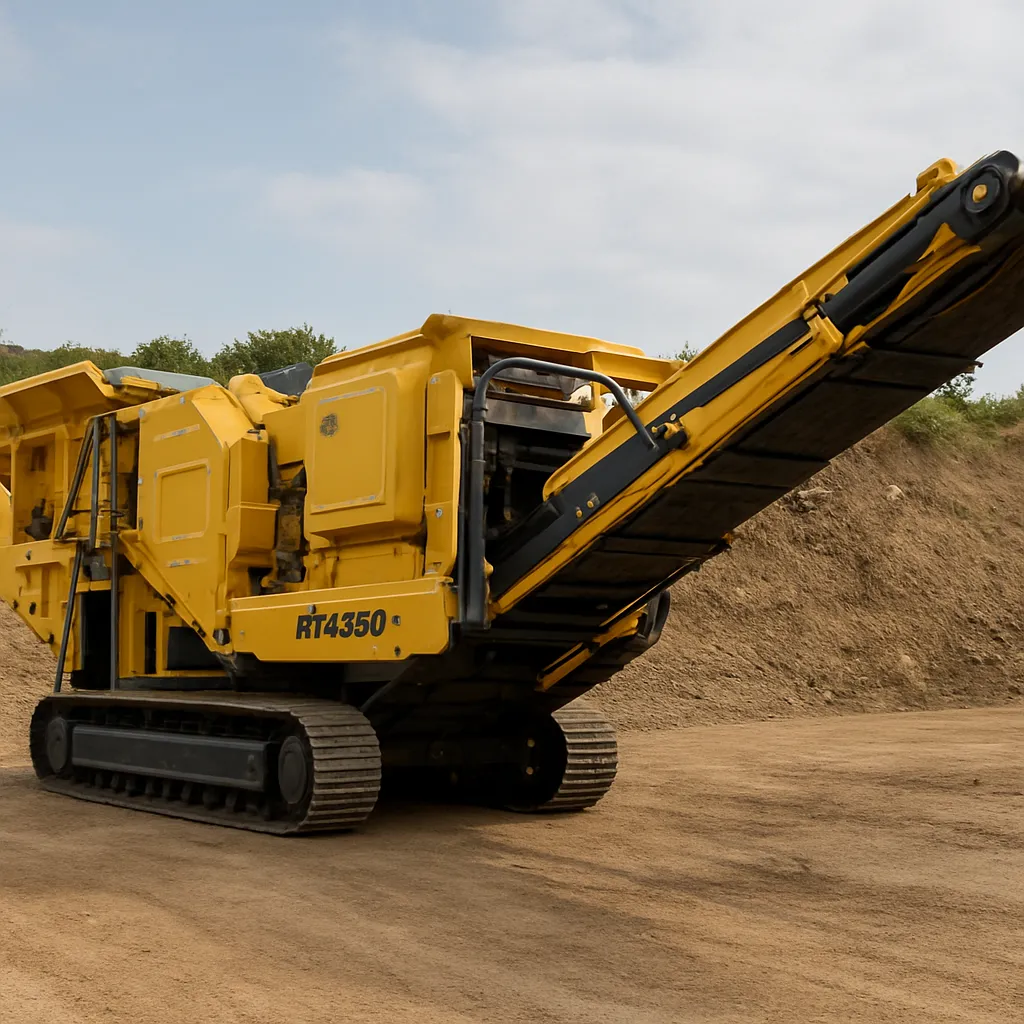
The Astec RT4650 is a powerful example of modern mobile crushing equipment designed to address demanding production needs across a variety of industries. Combining robust mechanical design with advanced control systems, this type of mobile crusher delivers on-site crushing capability with the flexibility to move between jobs quickly. In the following sections, we explore its design, typical applications, operational characteristics, estimated performance metrics, maintenance requirements, environmental considerations, and practical guidance for buyers and operators.
Design and Key Features
The core of the Astec RT4650 lies in its engineering focus on durability, ease of transport, and operational efficiency. While model configurations can vary based on customer needs and regional specifications, the RT4650 family typically features a heavy-duty crushing chamber mounted on a tracked chassis, integrated conveyors, and a power unit that supports continuous site productivity.
Primary components
- Crusher unit — a primary or secondary crusher designed to accept large feed sizes and produce consistent, specified products.
- Tracked chassis — provides portability and rapid set-up across rugged terrain, minimizing the need for additional lifting equipment on site.
- Conveyor system — integrated feed and discharge conveyors allow continuous material flow and can include adjustable heights and folding features for transport.
- Powertrain — typically diesel-hydraulic or diesel-electric systems that balance power output with fuel economy and emissions compliance.
- Control cabin and automation — user-friendly operator interfaces, remote-start capability, and automated feed control to maximize throughput and reduce downtime.
- Wear parts — exchangeable liners, jaw plates or blow bars (depending on crusher type) designed for rapid replacement and long service life.
Several design choices emphasize safety and serviceability: walkways and platforms for safe access, centralized lubrication points, and easy-to-reach inspection doors. Optional features often include screening decks, pre-screening modules, or magnetic separators to enrich product quality and remove contaminants.
Applications and Industry Uses
The RT4650 is engineered for a wide spectrum of applications where mobile crushing capability is an advantage. Typical sectors and use cases include:
- Quarrying — primary and secondary crushing of blasted rock, enabling extraction sites to process materials on-site and reduce haulage costs.
- Construction and demolition recycling — processing concrete, asphalt, and mixed demolition debris into reusable aggregates for backfill, road base, or new concrete mixes.
- Road and infrastructure projects — producing specification aggregates close to paving sites to shorten supply chains and lower project costs.
- Mining operations — smaller-scale mining or supplementary crushing where mobility is required to follow the face or move between pits.
- Environmental remediation — size reduction of contaminated materials prior to treatment or containment, often coupled with dust and water management systems.
Operators value mobile crushers like the RT4650 for their ability to reduce the number of handling stages, decrease truck movements, and enable staged production that adapts to changing site conditions. The machine’s versatility allows a single unit to perform multiple roles, such as switching between primary crushing and secondary reduction, depending on wear parts and chamber geometry.
Performance and Typical Specifications (approximate)
Exact specifications for machines branded RT4650 may vary by configuration, optional packages, and regional emission standards. The figures below are presented as typical ranges to help frame expectations. For certified manufacturer data, consult the official product brochures or factory representatives.
- Throughput: approximately 150–350 tonnes per hour (tph) under standard operating conditions, depending on rock type, feed size, and crusher configuration.
- Maximum feed size: typically in the range of 300–600 mm (12–24 inches) for primary applications; smaller maximum feed for secondary or tertiary setups.
- Final product gradation: adjustable by closed-side setting, operational parameters, and screening; capable of producing a range of aggregate sizes from coarse base to fine material.
- Engine power: commonly between 300–600 kW (400–800 HP) for models in this class, balancing power for crushing with hydraulic systems and conveyor drives.
- Weight: on-track mobile crushers of this scale generally weigh between 30–60 metric tonnes depending on attachments and configuration.
- Dimensions (transport): variable, often engineered to meet regional road-transport restrictions; folding conveyors and compact track arrangements help keep transport width and height within legal limits.
- Fuel consumption: highly dependent on load and duty cycle; typical fuel burn can range from 20–60 liters per hour in heavy-duty operation, with idle and light-load consumption substantially lower.
Performance in practice is influenced by the material’s hardness, moisture content, abrasiveness, and the presence of reinforcing materials (rebar, wire). Throughput will be greatest for friable, uniform rock and lowest for highly abrasive or sticky materials. Optimizing feed distribution, setting correct operating speeds, and choosing appropriate wear materials are essential to achieve the upper end of the throughput range.
Operational Considerations
Efficient operation of the RT4650 revolves around proper site planning, operator competence, and routine monitoring. Key operational considerations include:
Site set-up and mobility
- Position the unit to minimize feed haul distances and allow for unimpeded discharge conveyor routing.
- Track mobility reduces the need for cranes during relocation but still requires flat or prepared access routes for safe movement.
- Consider the location of fueling stations, maintenance areas, and material stockpiles to streamline workflows.
Feed management
- Uniform feed size and a consistent feed rate are critical to maintaining steady throughput and reducing wear parts consumption.
- Pre-screening or scalping of fines can increase crusher efficiency by removing material that would pass through without being crushed.
Control systems
- Modern RT4650 models typically include automation for feed control, overload protection, and remote diagnostics, improving uptime and simplifying adjustments.
- Telematics packages can report hours, fuel use, fault codes, and location, aiding fleet management and preventive maintenance planning.
Maintenance, Wear Parts and Serviceability
Maintenance planning is central to maximizing uptime and extending component life. The RT4650 is designed with serviceability in mind, but wear-intensive environments necessitate regular inspection and parts replacement.
- Wear parts — jaw plates, blow bars, impact aprons, and cheek plates should be inspected for thickness and integrity. Selecting wear materials (manganese steel, high-chrome alloys, ceramic-infused options) depends on feed abrasiveness.
- Hydraulic systems — routine checks of hoses, couplings, and filters prevent leaks and ensure consistent crusher actuation.
- Conveyor belts — attention to idler condition, belt tension, and splice integrity reduces unplanned stoppages. Belt alignment systems and skirt boards help control spillage and fines loss.
- Lubrication — centralized or automatic lubrication systems significantly reduce manual servicing time and help avoid premature bearing failures.
- Inspection intervals — daily visual checks, weekly lubrication and belt adjustments, and monthly in-depth inspections are typical for high-duty operations.
Working with certified service providers or factory-trained technicians ensures that complex repairs, hydraulic calibrations, and control-system updates are executed correctly. Many operators find that an on-site parts inventory of commonly replaced items reduces downtime and supports continuous production.
Environmental and Safety Considerations
Modern mobile crushers including the RT4650 incorporate several design features to mitigate environmental impact and enhance worker safety. Managing dust, noise, and emissions is essential for regulatory compliance and community acceptance.
- Dust suppression — integrated water sprays, misting systems, and enclosed conveyor transfer points help control airborne particulates. Effective dust control improves worker health and prevents fines loss from the product stream.
- Noise management — acoustic enclosures, low-noise fans, and strategically placed mufflers can reduce sound levels around the machine, important in urban or sensitive work sites.
- Emissions — engines meeting Tier/Stage emission standards (where applicable) will reduce NOx and particulate emissions; exhaust after-treatment systems may be available as options.
- Safety — emergency stops, lock-out/tag-out provisions, clear sightlines from operator stations, and guarded access to moving parts are integral to safe operation.
Regulatory reporting, permits for mobile crushing operations, and local environmental controls vary by jurisdiction. Operators should engage early with authorities and communities when planning deployments to ensure compliance and minimize disruptions.
Economic Considerations and Lifecycle Costs
Acquiring and operating a unit such as the RT4650 requires evaluating total lifecycle costs, not just upfront capital expenditure. Important economic factors include:
- Purchase versus rental — short-term projects may favor rental to avoid capital tie-up, while long-term, high-usage deployments typically justify purchase.
- Fuel and consumables — depending on duty cycle, fuel and wear parts often represent a substantial portion of operating costs.
- Resale value — well-documented maintenance histories and factory refurbishments can preserve asset value; tracked, modular units often maintain strong secondary-market appeal.
- Productivity impact — improving on-site crushing capability frequently reduces material transport costs and can shorten project timelines, producing measurable returns on investment.
Operators should model expected production volumes, downtime, parts consumption, and fuel usage over projected ownership periods to determine the most cost-effective procurement strategy.
Tips for Buyers and Operators
Selecting and operating a mobile crusher effectively requires attention to detail and clear objectives. Practical advice includes:
- Clarify feed material characteristics (hardness, abrasiveness, moisture, presence of contaminants) before specifying the machine.
- Match the crusher type and chamber geometry to the desired product size and shape; consider whether downstream screening or washing will be available.
- Request case studies or references from similar operations to evaluate expected throughput and wear patterns.
- Inspect wear part options and ensure availability of spares in your region to avoid extended lead times.
- Train operators on both the mechanical and electronic control systems; many productivity gains come from optimized operation rather than hardware changes.
- Consider telematics and remote diagnostics to monitor performance and schedule proactive maintenance.
Comparative and Market Context
In the broader market, mobile crushers like the RT4650 compete on a combination of mobility, output capacity, fuel efficiency, and integration with screening and washing equipment. Clients increasingly value machines that can be rapidly redeployed across sites, deliver predictable product quality, and come with strong after-sales support networks. Integration with digital tools — condition monitoring, remote diagnostics, and production analytics — is becoming a differentiator for manufacturers and rental fleets.
Regional trends influence equipment choice: in areas with strong recycling mandates, machines configured for processing concrete and asphalt are popular; in high-volume quarry operations, higher-capacity primary crushers and hybrid setups dominate. As environmental regulations tighten, options for low-emission power units and enhanced dust control are more frequently specified.
Conclusion
The Astec RT4650 represents a robust solution for businesses needing flexible, on-site crushing capacity. Its combination of mobility, modular design, and modern control technologies enables operators to respond quickly to changing site requirements while maintaining efficient production. Successful deployment depends on selecting the right configuration for material and product requirements, implementing a disciplined maintenance program, and integrating environmental controls to meet site and community expectations. While exact performance figures depend on configuration and duty, typical machines in this class offer a balance of high throughput, operational reliability, and manageable lifecycle costs that make them valuable assets for quarrying, recycling, construction, and mining operations.


)
)