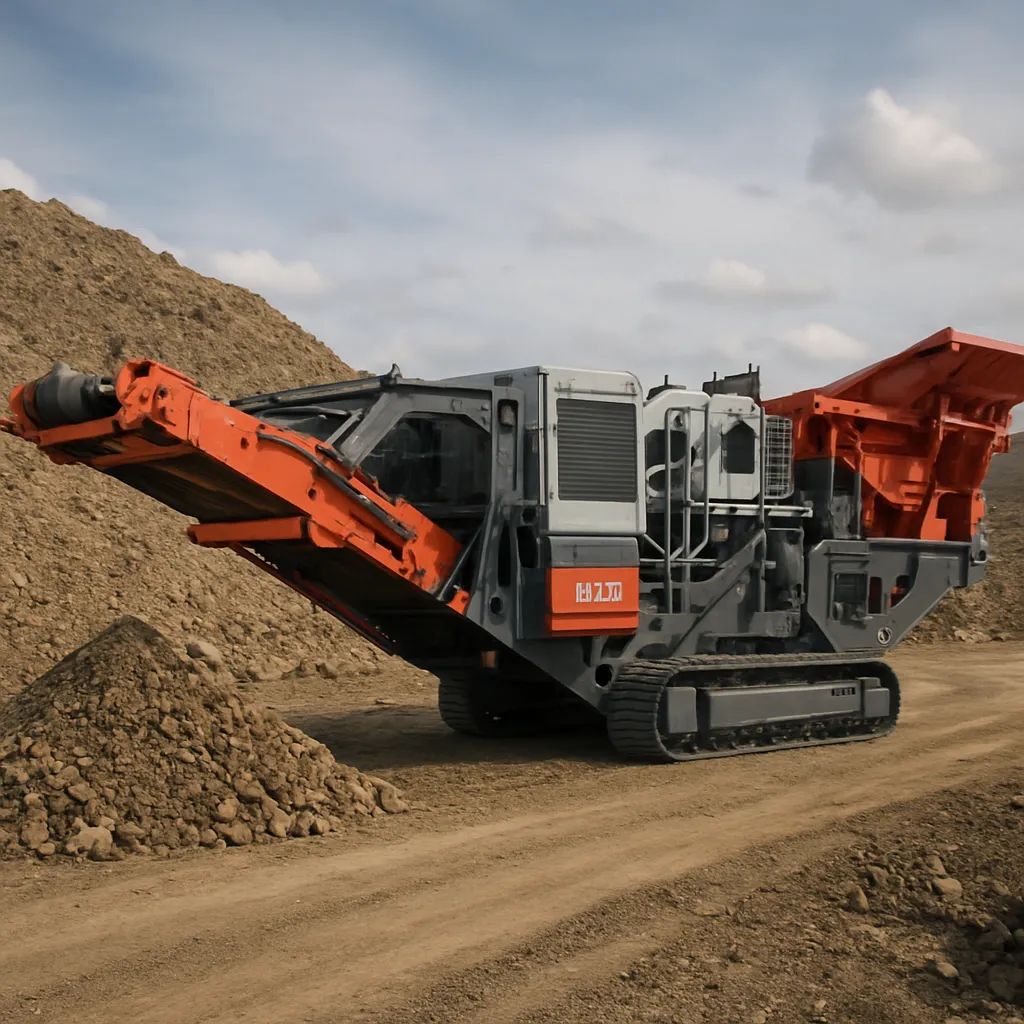
The Sandvik QE442 is a purpose-built, high-performance mobile crusher designed to meet the demanding needs of modern quarrying, mining and recycling operations. Combining robust mechanical engineering with adaptability and advanced automation, this machine answers requirements for efficient secondary and tertiary crushing, on-site mobility and a lower environmental footprint. The following article explores the machine’s design, typical applications, operational advantages, maintenance considerations and practical tips for maximizing productivity. It also outlines typical performance ranges and other relevant technical observations where available.
Design and core features
The QE442 is engineered around a powerful, high-capacity crushing unit mounted on a tracked, mobile chassis. Its architecture emphasizes rapid deployment, operator comfort and serviceability. Key aspects of the design include a compact yet rugged frame, integrated feed and discharge conveyors, and a crusher chamber optimized for consistent particle shape and gradation.
- Mobility: The tracked undercarriage and compact dimensions make the QE442 suitable for frequent repositioning inside quarries, demolition sites and confined urban projects. The machine can be driven short distances on site without the need for additional transport.
- Electric drive options: Many modern units are available with full electric drive or hybrid configurations. An electric drive reduces on-site fuel consumption, lowers emissions and can allow connection to a fixed power source for especially energy-efficient operation.
- Crusher chamber: The heart of the QE442 is a high-performance crushing element designed for secondary and tertiary duty. The chamber geometry and liners are selected to balance throughput, reduction ratio and product shape.
- Integrated screening: In closed-circuit versions, on-board screening and recirculating conveyors allow the machine to deliver a finished product size range without an external screen, improving site logistics and reducing overall plant footprint.
- Automation and control: Modern QE442 units are equipped with advanced control systems for feed regulation, overload protection and automatic clearing of blockages, which improve uptime and protect the crusher from damage.
Applications and suitability
The QE442 finds its primary applications across several sectors where portable, high-quality crushing is required. Its adaptability allows it to perform reliably in varied working conditions and material types.
Quarrying and aggregate production
In quarry operations the QE442 is commonly used for secondary and tertiary crushing stages where product shape and consistent gradation are important. The machine is suited to producing aggregates for concrete, asphalt and other construction materials. Its ability to adjust chamber settings and liner profiles enables producers to optimize product quality while maintaining throughput.
Mining and contract crushing
As a mobile secondary crusher, the QE442 can be deployed to temporary faces or satellite pits to reduce material on-site before hauling. This reduces trucking costs and fuel consumption. Contract crushing companies value the machine for fast setup and the ability to move between sites with minimal downtime.
Recycling and demolition
When configured with specialized liners and wear packages, the QE442 can process demolition rubble, asphalt and concrete. Its electric drive option is particularly attractive for urban recycling applications where emissions, noise and fuel deliveries are constrained.
Infrastructure and road building
On road construction sites the QE442 can produce base materials and graded products for laying foundations and road layers. Its on-board screening and closed-circuit capability allow contractors to create multiple product sizes directly on site.
Performance characteristics and operational data
Exact numerical specifications for throughput, power and feed size vary depending on the installed crushing unit, material hardness and configuration. Below are representative operational ranges and metrics that operators can expect from a typical QE442 installation. These figures are indicative; final performance depends on material properties, chamber selection and operational discipline.
- Throughput: Typical production can range from approximately 150 to 450 tonnes per hour in secondary crushing applications and may vary above or below this range depending on material hardness and configuration.
- Feed size: Designed to accept feed sizes commonly produced by primary crushers, typical feed ranges are in the order of 100–250 mm for secondary duty, with capacity for larger or smaller feeds depending on setup.
- Product sizes: With adjustable settings and appropriate liner profiles, the QE442 can produce a variety of aggregate fractions suitable for sub-base, aggregate blends, and finished construction materials.
- Power requirements: Units with diesel-electric or full electric drives generally operate in the medium power range for mobile crushers; typical installed motor/crusher power ratings are matched to the crusher chamber and throughput goal. Electrified configurations can reduce fuel consumption on site by providing more consistent power delivery.
- Operating weight: As a tracked mobile plant, the QE442’s transport and working weights depend on the chosen module options (screening, conveyors, fuel tanks). Working weight is typically in the mid-tonnage mobile crusher class.
Performance metrics such as specific energy consumption (kWh per tonne) will vary with material type; however, electric-drive QE442 installations often show improved energy efficiency compared with older diesel-only mobile crushers, especially when tied into on-site power sources or hybrid gensets.
Operational advantages and efficiency drivers
Several features of the QE442 contribute directly to improved operational efficiency, reduced costs and safer working conditions. These advantages are central to the machine’s appeal for modern operations.
- Reduced logistics: By performing secondary/tertiary crushing close to the source, the QE442 reduces haul distances and associated transport costs.
- Fast setup and changeovers: The machine is engineered for quick commissioning and easy adjustments, minimizing downtime between shifts or site moves.
- Lower emissions and noise: Electric drive variants and modern engine packages keep emissions and acoustic footprint lower than older machines, which is especially important in urban or environmentally sensitive projects.
- Improved product quality: Optimized chamber geometry and liner options help to produce consistent, cubical material that meets specifications for concrete and asphalt aggregates.
- Safety and remote operation: Modern control systems support remote monitoring, automatic overload protection and safe maintenance access points to reduce hazards during servicing.
Maintenance, wear parts and lifecycle considerations
Like all heavy-duty crushing equipment, the QE442 requires a structured maintenance regime to achieve long service life and economical operations. Preventive maintenance, condition monitoring and timely replacement of wear parts are essential.
Wear parts and liners
Crusher liners, mantles and concaves are the consumable items most directly influencing operating costs. Selection of the correct liner material and profile is crucial for balancing wear life and desired product shape. Keeping a small inventory of critical wear parts on site can avoid extended downtime.
Service access
The QE442 is designed for straightforward access to hydraulic components, the crusher chamber and conveyors. Quick-access panels, centralized lubrication points and modular hydraulic couplings simplify routine servicing.
Monitoring and diagnostics
Integrated sensors for oil temperature, vibrations and chamber level, combined with telemetry-capable control systems, enable predictive maintenance. Early fault detection reduces the risk of catastrophic failures and allows maintenance to be planned during low-production windows.
Economic and environmental considerations
Deploying a QE442 can influence both capital expenditure (CAPEX) and operating expenditure (OPEX) in ways that benefit project economics. The machine’s mobility reduces the need for large fixed installations and consequently decreases initial civil work and transport infrastructure costs. The potential to run on electric power or hybrid systems reduces fuel costs and carbon emissions over the machine’s lifecycle.
- Cost-per-tonne: On-site secondary crushing often reduces the overall cost-per-tonne by cutting haulage and handling operations. The exact savings depend on site layout and material volumes.
- Energy efficiency: Electric driven configurations and optimized crushing regimes can lower energy consumption per tonne, improving margins and supporting sustainability targets.
- Regulatory compliance: Lower emissions and reduced noise levels help operations meet local environmental and community regulations, facilitating permits in sensitive locations.
Best practice operation tips
To get the best results from a QE442, operators and site managers should focus on a few practical areas:
- Ensure consistent and controlled feed distribution to the crusher to avoid uneven wear and intermittent blockages.
- Use the appropriate liner profile for the target product and monitor wear rates to plan replacements efficiently.
- Leverage the machine’s automation and monitoring systems to maintain optimal settings and quickly identify issues.
- Train operators on safety procedures for maintenance and on the specific operational nuances of electric/hybrid drive systems.
- Consider integrating the QE442 into a wider fleet telematics system to track production metrics and maintenance schedules centrally.
Comparisons and market position
Within the market of mobile secondary and tertiary crushers, the QE442 is positioned as a versatile and robust solution that balances mobility with high production capability. Compared to older diesel-only mobile crushers, it generally offers improved energy efficiency, quieter operation and faster redeployment. Against larger stationary plants, the QE442 provides flexibility and lower initial infrastructure requirements while delivering comparable product quality when correctly configured.
Final observations and future trends
The Sandvik QE442 embodies key trends in crushing: electrification, automation and modularity. As operators emphasize sustainability and cost-efficiency, machines that reduce fuel consumption, lower emissions and integrate with site-wide digital systems will become increasingly valuable. The QE442’s combination of mobility, advanced controls and robust crushing capability makes it a compelling choice for many modern aggregate, mining and recycling operations.
With continued innovations in wear materials, sensor-based maintenance and energy management, the next generation of mobile crushers will further narrow the performance gap with stationary plants while offering the operational flexibility that modern sites demand. The QE442 represents a strong example of this evolution, delivering a balance of efficiency, durability and versatility suitable for a broad range of applications.


)
)