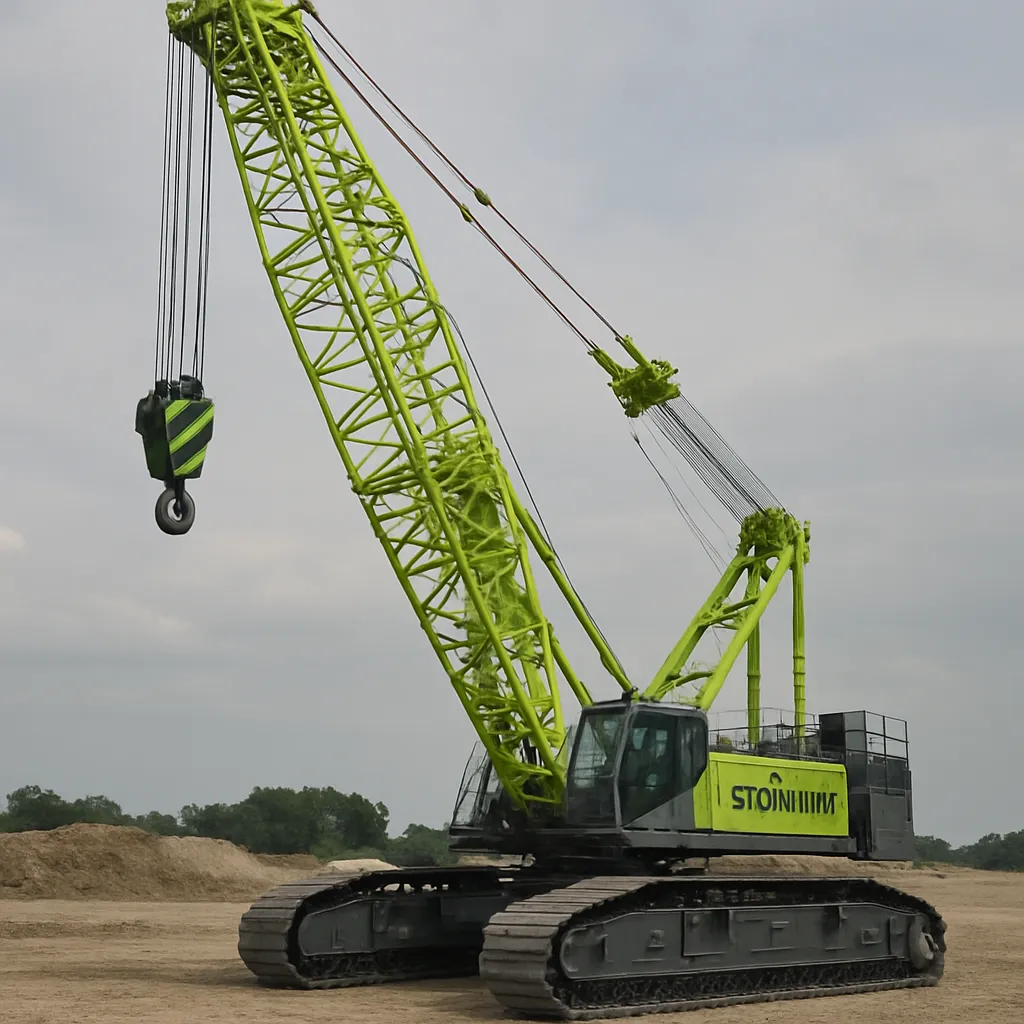
The Zoomlion ZCC13500 is a high-tonnage crawler crane designed for the most demanding heavy lift tasks in construction, energy and industrial sectors. Combining a massive rated capacity with flexible configuration options and modern control systems, this machine aims to deliver safe and efficient lifting solutions for large modules, bridge elements, offshore components and industrial installations. The following sections describe technical characteristics, typical applications, operational considerations and other noteworthy information about this model.
Overview and technical specifications
The ZCC13500 is positioned in Zoomlion’s portfolio as a heavy-duty lattice-boom crawler crane. Its name reflects a nominal rated capacity in the upper range for crawler units (commonly understood as approximately 1,350 metric tonnes). Like other cranes in this class, the machine is built from a set of modular components that permit on-site assembly into multiple lift configurations: main boom, fixed jib, luffing jib or combinations with superlift systems.
- Rated lifting capacity: approximately 1,350 metric tonnes (depends on configuration and radius).
- Main boom: lattice sections that assemble to reach typical lengths in the range of 80–150 meters depending on configuration; exact lengths depend on the selected section count and optional extensions.
- Jib options: fixed and luffing jibs available; combined systems can extend working heights significantly and increase maximum radius for certain lifts.
- Counterweight system: modular counterweight blocks that are added on site to achieve desired stability for a given lift. This allows flexibility in transport and set-up.
- Hoisting arrangement: heavy-duty winches with multiple reeving options for high line speeds and heavy single-line capacities.
- Undercarriage: crawler track frames engineered for heavy ground pressures; outriggers or mats often used for ground load distribution.
- Drive and controls: modern PLC-based control logic, load-moment indicators, anti-two block, swing cut-off and remote diagnostics; operator cabin ergonomics and visibility are optimized for long operations.
- Transportability: modular sections designed for road transport; heavy lifts still require complex logistics planning including special permits and escorts.
Exact specifications vary by sub-model, customer options and regulatory region. Performance charts supplied by the manufacturer should always be used for planning a specific lift: the crane’s safe working load varies with boom length, line reeving, jib configuration and counterweight installed.
Typical applications and industry uses
The ZCC13500 is ideal for projects where extreme single-lift capacity and high reliability are required. Typical applications include:
- Petrochemical and refinery construction — installation of heavy reactors, pressure vessels, columns, and heat exchangers.
- Power plants — lifting turbogenerators, steam turbine casings, and heavy modules during new builds or maintenance outages.
- Bridge and civil infrastructure — placement of large bridge segments, arch elements and precast concrete superstructures.
- Offshore module assembly — onshore construction and load-out of oil & gas topside modules and large subsea structures.
- Shipyards and marine engineering — erection and replacement of marine propulsion units, rudders, and heavy ship blocks.
- Wind energy — installation of very large foundations and nacelles for the latest generation of offshore and onshore wind turbines where heavy lifts are required.
- Mining and heavy industry — erecting shovels, crushers, mills and other oversized equipment.
Large infrastructure projects often prefer a crane like the ZCC13500 when timelines or site constraints make multi-lift strategies impractical: performing a single certified lift reduces assembly steps and can minimize alignment risks and downtime of complex equipment.
Design features, modules and attachments
The machine’s design centers on adaptability. Modular lattice sections, bolted connections and standardized counterweight blocks allow the crane to be reconfigured without custom fabrication. Key features include:
- Modular boom and jib sections: these permit the selection of the ideal balance between height, radius and capacity. Quick-assembly joints and bolting patterns shorten on-site erection time.
- Variable counterweight configurations: counterweight blocks can be stacked or arranged in a variety of positions to optimize stability while reducing transport volume.
- Multi-drum winches: provide flexibility in line reeving and speed vs. power trade-offs depending on the lift.
- Advanced operator cabin: ergonomic controls, multi-function joysticks and integrated displays offering real-time load and configuration data.
- Telematics and diagnostics: remote monitoring of engine, hydraulic systems and structural state; valuable for predictive maintenance and fleet management.
- Optional lifting aids: spreader beams, lifting frames, hydraulically adjustable block and hook units and special load-attachment tools for atypical loads.
Manufacturers supply detailed load charts for each configuration. These charts account for boom geometry, counterweight, and reeving, and are essential for determining the permissible load at any radius or height.
Operational considerations: site setup, transport and assembly
Operating a 1,000+ tonne-class crawler crane demands meticulous planning. The following considerations are critical to safe and efficient use:
- Ground preparation: ground bearing capacity must be evaluated and improved where needed (e.g., via crane mats, piling or reinforced platforms). Ground failures are among the highest risks in heavy lifts.
- Transport logistics: although modular, the crane’s components are large and heavy. Transport requires route surveys, special permits, escort vehicles and often temporary removal of roadside obstacles.
- Assembly time and crew: on-site assembly can take days to weeks depending on configuration and crew experience. Skilled rigging teams and certified assembly supervisors are standard requirements.
- Lift planning: detailed lift plans including rigging drawings, load path analysis, wind and weather limits, and emergency procedures are mandatory for heavy lifts.
- Permits and regulations: large crane operations are subject to local and national safety regulations. Certification of equipment and operators, environmental permits and traffic coordination are common prerequisites.
- Weather constraints: wind speed, icing and lightning present specific hazards. Work windows are often constrained by seasonal weather patterns.
For many projects, the cost and complexity of mobilizing a crane of this size are balanced against savings from reduced assembly steps, faster schedules and minimized number of lifts.
Safety systems and operator aids
High-tonnage cranes integrate multiple safety and monitoring systems to manage the inherent risks of heavy lifts. The ZCC13500 typically includes:
- Load moment indicator (LMI): continuously monitors the moment and prevents operations that would exceed safe parameters.
- Anti-two block protection: prevents the hook block from striking the boom tip.
- Slew and boom angle limiters: prevent accidental over-travel that could cause instability.
- Structural health monitoring: strain sensors and periodic NDT (non-destructive testing) help identify fatigue and stress concentrations early.
- Redundant braking and hydraulic safety circuits: ensure controlled lowering in contingencies.
- Operator training simulators and certification programs: many manufacturers and rental providers insist on simulator-based training for crews handling super-heavy lifts.
Adherence to recognized standards (ISO, EN, national regulations) and the use of independent lift engineers are common practices for critical lifts.
Maintenance, lifecycle and economic aspects
Owning or renting a crane like the ZCC13500 involves significant lifecycle and economic considerations. Routine maintenance, periodic inspections and replacement of wearing components are central to long-term value. Key points include:
- Planned maintenance: scheduled servicing of engines, winches, hydraulic systems, slewing bearings and crawler drives helps avoid costly downtime. Lubrication and hydraulic oil analysis extend component life.
- Structural inspections: periodic detailed inspections of lattice members, welds and pins are required, especially after heavy lifts or exposure to fatigue-inducing cycles.
- Parts and support: availability of spare booms, pins, bearings and electronic modules is essential; OEM or certified part programs reduce lead times.
- Depreciation and resale: these cranes retain value based on hours, maintenance history and configurations. Rental fleets often rotate machines to optimize utilization.
- Operational costs: fuel consumption, crew wages, transport and permit fees are major contributors. Efficiency gains from modern engines and telematics help reduce total cost of ownership.
For many owners, renting such a crane on a project-by-project basis is economically preferable unless utilization is sufficiently high to justify capital investment.
Performance data and statistical notes
Where numeric data is available, it is important to consult the manufacturer’s official charts. Common statistical points associated with a class like the ZCC13500 include:
- Nominal rated capacity: around 1,350 metric tonnes. This is a headline number representing the maximum single-point lift in a particular configuration.
- Typical main boom lengths: commonly in the order of 80–150 m depending on section choice; extensions and superlift systems alter these dimensions.
- Maximum lifting radius at reduced capacities: large crawler cranes trade radius for capacity – at extended radii the permissible load drops significantly per the load chart.
- Transport module weight and dimensions: many sections are sized to comply with heavy-transport limits, but the total number of loads can reach dozens depending on counterweight selection.
- Set-up time: depending on configuration, site conditions and crew, full assembly can require multiple days to weeks; efficient teams and pre-assembly help shorten this window.
Because the crane’s safe working load is highly configuration-dependent, all statistical values should be verified against the supplied load charts for the specific assembled configuration used.
Market position, competitors and industry trends
Zoomlion competes in the heavy-lift crane market with established international and domestic manufacturers. The demand for ultra-heavy cranes is driven by large infrastructure, petrochemical and energy projects, and the market is shaped by:
- Competition: major global competitors include manufacturers from Europe and China offering similar high-tonnage crawlers. Each offers distinct design philosophies, service networks and equipment ecosystems.
- Modularization of projects: as prefabrication grows, the need for single, high-capacity lifts increases, favoring cranes such as the ZCC13500.
- Telematics and digitalization: fleet monitoring, predictive maintenance and remote diagnostics reduce downtime and operational risk.
- Environmental and fuel considerations: efforts to reduce emissions have driven improvements in engine efficiency and interest in hybrid or electrically assisted systems for large cranes.
- Rental market growth: specialized rental fleets and heavy-lift contractors provide access to super-capacity cranes without the capital expenditure of ownership.
Clients typically evaluate suppliers not just on crane specifications but also on after-sales service, spare parts availability and the provider’s ability to support complex lift engineering.
Case examples and practical scenarios
Although specific project names are often subject to contractual confidentiality, generic case scenarios illustrate the crane’s advantages:
- Single-lift module installation: a petrochemical module weighing several hundred tonnes is lifted in one operation from transport skids to foundations, eliminating multi-step assembly and alignment tasks.
- Bridge segment erection: large precast segments weighing tens to hundreds of tonnes are set into place over an extended span with minimal temporary works, accelerating schedule.
- Power plant major component replacement: removing and replacing turbine casings or generator rotors during outages where speed is essential to minimize production downtime.
- Ship block handling and launch: the crane moves very large ship sections in a shipyard environment where precise handling and controlled lifting are necessary.
In each scenario, the ZCC13500’s capacity and configuration flexibility allow project teams to reduce complexity and risk compared with multi-crane lifts or heavy multi-stage assemblies.
Practical tips for project planners and contractors
When considering the use of a crane like the ZCC13500, project planners should:
- Engage lift engineers early to develop an integrated lifting strategy and determine whether single-lift or staged approaches are optimal.
- Perform thorough route and site surveys well before mobilization to identify obstacles, permits and utility conflicts.
- Plan ground improvement and matting in the budget; underestimated ground preparation is a frequent source of cost and schedule overruns.
- Confirm spare parts and service agreements in advance to minimize downtime during critical operations.
- Ensure operators and rigging crew have verified training and certifications relevant to super-heavy lifts.
Good planning and collaboration between owner, lift engineer, crane supplier and rigging contractor are essential for safe and efficient outcomes.
Summary of strengths and limitations
The ZCC13500 offers significant strengths: high single-lift capacity, modularity, and modern control features that make it suitable for complex, large-scale industrial and infrastructure projects. Its limitations are those common to very large crawler cranes: complex transport needs, substantial site preparation, and significant mobilization time and cost. The decision to deploy such equipment is therefore typically driven by the scale of the lift, schedule pressures and a cost-benefit analysis comparing single-lift strategies with multi-lift alternatives.


)
)