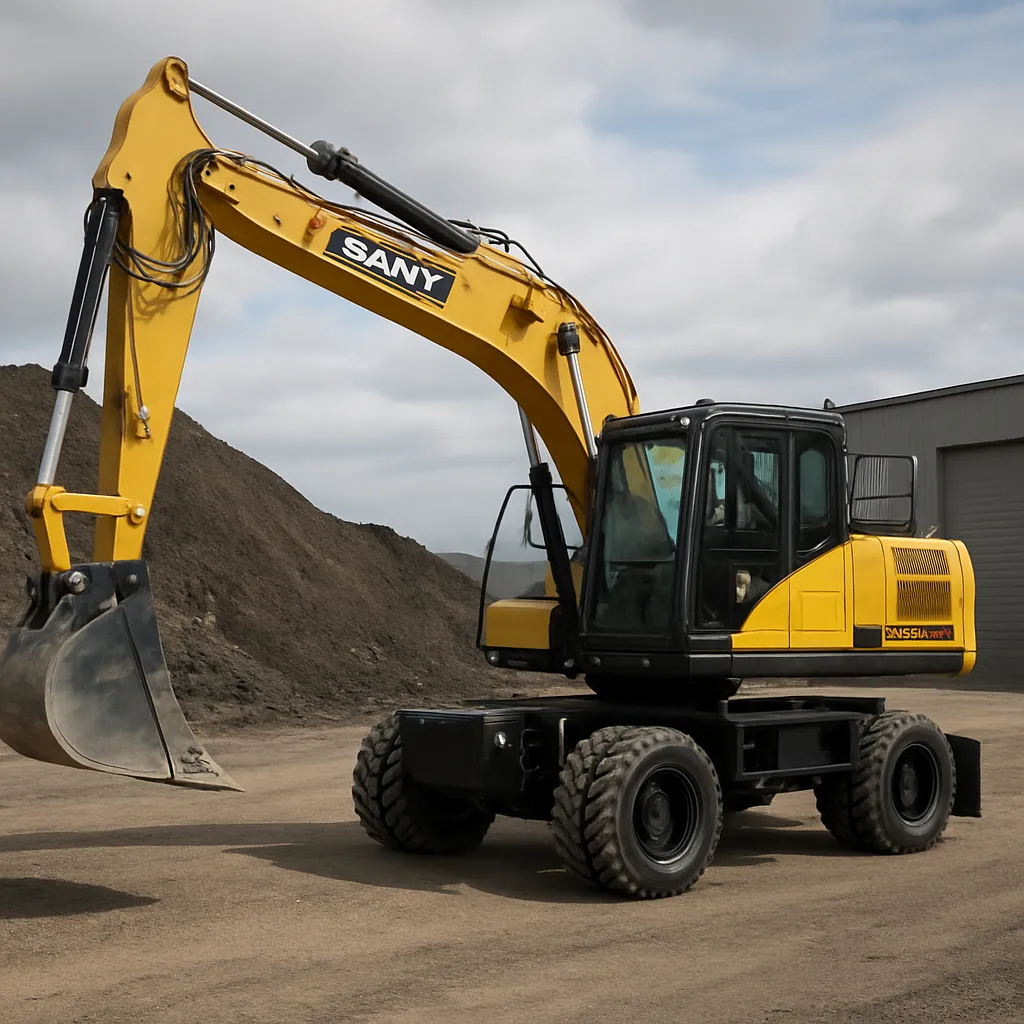
The SANY SMHW40 is a heavy-duty material handler designed for demanding bulk-handling tasks across industries such as scrap recycling, port operations, waste management, and steel production. Combining robust mechanical design with modern hydraulics and operator-focused features, this machine is engineered to move large volumes of material quickly, safely, and with improved efficiency. The following article explores the SMHW40’s design, typical uses, technical characteristics (with typical ranges where exact configuration affects values), attachments, operational best practices, maintenance needs, market context, and considerations for purchase or fleet deployment.
Design and Key Features
The SMHW40 is a purpose-built wheeled material handler that integrates a reinforced undercarriage, a high-torque powertrain, and a fully hydraulic workgroup to support extended booms and heavy attachments. Notable design priorities are durability in high-wear environments, operator visibility and comfort, and modular attachment compatibility to maximize versatility.
Cab and Ergonomics
- The cab is typically elevated, often mounted on a platform with a full 360-degree swing capability that gives operators unobstructed views of loads and surrounding operations. Large windows and optional camera systems further improve sightlines.
- Ergonomic controls, adjustable seating, and climate control are standard on modern SMHW40 variants. Electronic joystick controls often replace older mechanical linkages, improving precision and reducing operator fatigue.
- Safety features commonly include ROPS/FOPS certification, seatbelt interlocks, emergency stop buttons, and load-limiting systems.
Hydraulic and Powertrain
The heart of the SMHW40’s capability is its hydraulic system. High-flow pumps, variable-displacement hydraulics, and multiple hydraulic circuits allow simultaneous functions—slewing, boom movement, and attachment operation—without significant loss of performance. Hydraulic oil cooling and filtration systems are sized to process large volumes continuously, helping maintain uptime in heavy-duty shifts.
Undercarriage and Mobility
- Wheeled chassis enables rapid relocation on paved surfaces and within terminals, unlike tracked machines that excel in soft ground. The SMHW40 offers a balance of mobility and stability for operations such as port quays, scrap yards, and municipal recycling centers.
- Stabilizers or outriggers are commonly fitted to ensure stability during heavy lifts or extended reach operations. Optional hydraulic steering configurations improve maneuverability in tight yards.
Applications and Industry Use Cases
The SMHW40’s primary role is bulk material handling where cycles are repetitive and loads are large and often irregular. Below are core applications where the model is widely deployed:
- Scrap yards: Sorting, lifting, and loading ferrous and non-ferrous scrap into hoppers, grinders, or transport trucks. The machine’s lift capacity and reach translate into faster cycle times and reduced manual labor.
- Ports: Handling breakbulk, scrap exports/imports, and container yard tasks. The mobility of a wheeled handler makes it ideal for quay-side operations where quick repositioning is needed.
- Recycling and waste transfer stations: Moving mixed materials into conveyors, compactors, or balers, often equipped with grapples or magnets for segregation.
- Steel mills and foundries: Managing raw materials (scrap feed) and handling slag or other byproducts requiring heat-resistant attachments.
- Demolition and sorting: With appropriate attachments such as shears or pulverizers, the SMHW40 can be used in selective demolition and downstream material sorting tasks.
Across these applications, the SMHW40 is valued for reducing manual handling, increasing throughput, and improving safety by keeping operators in a protected cab while heavy or hazardous material is moved.
Performance and Typical Technical Data
Specifications for the SMHW40 may vary by year, market, and configuration. Below are typical ranges and common figures for a 40-ton class wheeled material handler, intended as general guidance. For exact numbers, consult the manufacturer’s datasheet for the specific machine build.
- Operating weight: around 30–45 metric tonnes, depending on counterweights and attachment choices.
- Engine power: commonly in the 150–300 kW (200–400 hp) range; engines meet regional emissions standards (Tier/Stage) depending on production date and market.
- Maximum reach: 9–13 meters with standard boom/arm configurations; extended booms reach beyond 15 meters in specialized setups.
- Lifting capacity: at ground level or near the machine, rated lift capacities can range from 8 to 20 tonnes depending on the boom/arm geometry and counterweight. Capacities decrease with increasing reach.
- Hydraulic flow: high-flow systems delivering several hundred liters per minute to simultaneously drive swing, boom, and attachment functions.
- Fuel tank capacity: typically sized to support long shifts—several hundred liters—reducing refueling downtime for continuous operations.
Operational productivity is often measured in tonnes moved per hour or cycles per shift. In practice, a well-configured SMHW40 at a busy scrap yard or port can significantly increase throughput compared to smaller handlers or less specialized equipment. Fuel consumption and cycle times depend heavily on load sizes, operator technique, and attachment efficiency.
Attachments and Configurations
One of the SMHW40’s strongest assets is its compatibility with a wide array of attachments, allowing a single machine to perform multiple roles across a site. Common attachments include:
- Grapples (demolition, orange-peel, sorting grapples): Primary tool in scrap and recycling for grabbing irregular loads.
- Magnets: Electromagnetic or permanent magnets for lifting ferrous scrap and segregating metals quickly.
- Clamshell buckets and tilt buckets: For bulk material handling with better containment for loose materials.
- Shears and pulverizers: For on-site processing and size reduction in demolition or scrap preparation.
- Specialized lifters and spreader bars: For handling long or oddly shaped loads in ports and yards.
Many operators choose modular quick-change couplers and integrated hydraulic circuits that allow rapid swapping of attachments, improving uptime and matching the tool to the specific task for each shift.
Operational Considerations and Best Practices
To maximize productivity and machine longevity, operations should adopt several best practices tailored to material handlers like the SMHW40:
Operator Training and Skills
- Skilled operators who understand load dynamics, attachment control, and safe positioning can reduce cycle times and prevent damage to the machine or material.
- Familiarity with telematics and on-board diagnostics helps operators and supervisors monitor performance and spot developing issues.
Site Layout and Workflow Optimization
- Optimizing stockpile placement, truck loading zones, and conveyor infeed positions reduces unnecessary travel and rehandling.
- Designing ergonomic paths for material flow and machine movement can increase hourly throughput while reducing fuel consumption and wear.
Attachment Selection and Maintenance
- Using the correct attachment—grapple versus magnet, for example—can multiply handling efficiency. Matching the grapple opening size and jaw force to the expected load type is critical.
- Attachment wear parts (teeth, pins, bushings) should be inspected and replaced as part of routine servicing to avoid productivity losses and costly downtime.
Maintenance, Service, and Lifecycle Cost
Material handlers operate in harsh environments and require disciplined maintenance to maintain availability. Key maintenance considerations for the SMHW40 include scheduled engine and hydraulic servicing, greasing of pivot points, inspection of hydraulic hoses, and monitoring of cooling systems.
- Preventive maintenance schedules should be followed based on hours of operation—intervals commonly include daily visual checks, weekly lubrication and filter checks, and comprehensive services at designated hour milestones (e.g., 500, 1000, 2000 hours).
- Telediagnostics and remote monitoring (standard or optional on many modern SANY machines) can preempt issues by alerting fleet managers to abnormal temperatures, pressures, or error codes.
- Lifecycle costs depend on usage intensity, fuel prices, maintenance regimes, and resale value. Bulk handlers can have operational lifespans measured in tens of thousands of hours when well maintained; however, attachments and wear components typically need periodic replacement.
Safety and Environmental Considerations
Safety is fundamental in material handling because of large loads and dynamic site environments. The SMHW40 typically incorporates both passive and active safety systems:
- Structural safety: ROPS/FOPS cabs, reinforced guarding, and robust boom and attachment mounts reduce risk from falling objects or impact.
- Electronic aids: Cameras, proximity sensors, and load moment indicators increase situational awareness and help prevent tip-over or overload scenarios.
- Noise and emissions: Modern engines and exhaust after-treatment systems minimize environmental impact, while sound insulation in the cab reduces operator fatigue. For sites with strict emissions rules, select configurations meet regional Tier/Stage emission standards.
Market Position and Comparative Notes
Within its class, the SMHW40 competes with material handlers made by European and Japanese manufacturers—brands such as Sennebogen, Liebherr, Fuchs, and Caterpillar. Each manufacturer emphasizes particular strengths, such as hydraulic responsiveness, fuel economy, attachment ecosystems, or global service networks.
- Value proposition: SANY often positions machines like the SMHW40 as competitive on price-per-capacity while offering modern features borrowed from high-end peers, making them attractive to operators seeking balance between cost and capability.
- Aftermarket and service: The strength of local dealer networks and spare parts availability is vital. SANY’s expanding global footprint has improved access to parts and service in many regions, though local experiences vary by country.
- Resale and depreciation: Heavy equipment depreciation depends on local demand for used handlers; scrap yards and ports often retain strong markets for well-maintained machines.
Purchasing, Financing, and Fleet Integration
Organizations considering an SMHW40 should evaluate total cost of ownership, not just initial purchase price. Key factors include fuel efficiency, expected utilization rates, attachment investment, maintenance contracts, and resale projections.
- Financing options: Leasing, hire-purchase, and rental-to-purchase arrangements are common, allowing operations to deploy capable equipment without large upfront capital outlays.
- Fleet telematics: Integrating the machine into a central telematics platform offers remote monitoring of fuel use, productivity, idle time, and preventive maintenance reminders—critical for multi-machine operations.
- Operator training programs and manufacturer-backed service agreements improve uptime and ensure safe, efficient operation.
Case Studies and Real-World Outcomes
While specific outcomes depend on site conditions, several broad patterns emerge from operators using 40-ton class material handlers like the SMHW40:
- In scrap processing, replacing smaller excavators with dedicated material handlers often increases throughput by 20–50% due to faster cycle times and better attachment handling.
- At ports handling breakbulk and scrap, wheeled handlers reduce truck turnaround times and improve quay utilization because of their mobility and reach, typically enabling a noticeable reduction in handling costs per tonne.
- Switching to high-flow hydraulics and purpose-built grapples can reduce fuel consumption per tonne moved by improving first-pass pick rates—fewer repositioning cycles and better load consolidation.
Choosing the Right Configuration
Selecting the optimal SMHW40 configuration begins with a clear analysis of material types, expected daily throughput, site layout, and specific attachments required. A brief checklist for spec selection:
- Define peak and average lift weights, and choose a boom/arm combination that keeps most lifts within the machine’s most efficient working envelope.
- Decide between wheeled or optional tracked/dual-mode configurations based on ground conditions and mobility requirements.
- Confirm engine and emissions compliance with local regulations and consider future-proofing for stricter regulation timelines.
- Evaluate manufacturer and dealer support for parts, service, and training in your region.
Conclusion
The SANY SMHW40 stands as a versatile and robust option in the 40-ton class of wheeled material handlers. Its combination of durable design, adaptable attachments—such as grapple and magnet options—operator-centric features, and modern hydraulic systems make it suitable for demanding environments like scrap yards and ports. While exact performance and technical figures depend on configuration, typical machines in this class offer substantial lift and reach capacities, high hydraulic flow rates, and the fuel capacity to operate long shifts. For companies evaluating heavy handlers, the SMHW40 is worth considering as part of a broader fleet strategy, particularly where a balance of capability and cost-efficiency is a priority. Robust maintenance, skilled operators, and the right attachments will unlock the machine’s productivity potential and contribute to lower lifecycle costs over many years in service.


)
)