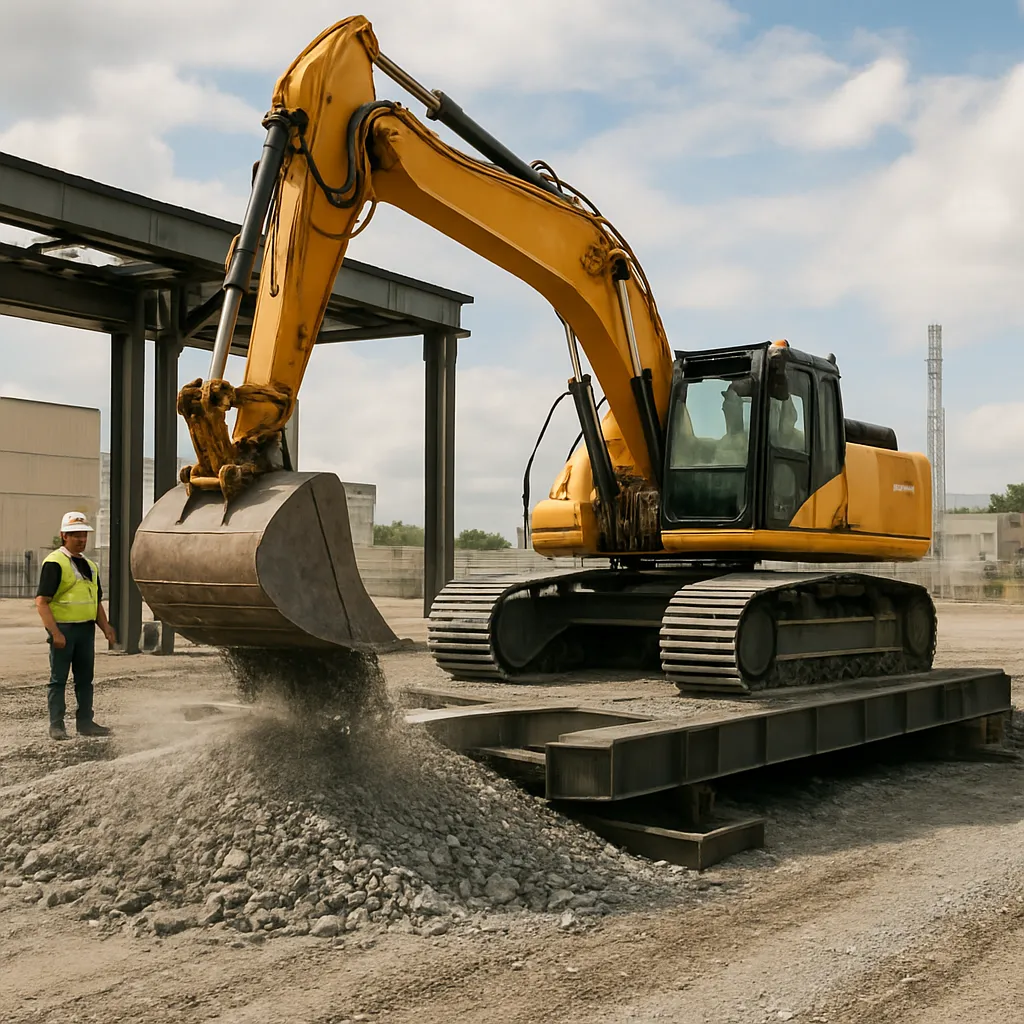
Heavy machines represent the backbone of modern industries, transforming complex tasks into efficient processes. From towering cranes lifting steel beams to massive excavators excavating earth, the journey from concept to market involves rigorous evaluation. Manufacturers must ensure each piece of equipment meets exacting expectations in performance, safety, and reliability. This article explores how industrial giants verify that their creations deliver under demanding conditions and conform to the strictest guidelines before reaching buyers worldwide.
Test Planning and Design
Before any physical evaluation begins, engineers develop comprehensive testing protocols to guide every phase of assessment. This planning stage addresses critical factors:
- Load capacity requirements for different materials and environments
- Defining performance benchmarks based on industry standards
- Outlining safety procedures to protect operators and technicians
- Incorporating relevant regulatory compliance directives
At the heart of this phase lies a robust design of experiments (DOE) framework. Engineers use DOE to identify which parameters—such as hydraulic pressure, engine output, or frame rigidity—most influence the machine’s capabilities. By setting up controlled trials, they isolate variables and ensure that the durability and reliability of components stand up to real-world stresses.
Digital Twin and Initial Simulations
Utilizing advanced software, teams create a digital twin—an exact virtual replica of the equipment. This model undergoes preliminary simulation tests to accelerate development:
- Predicting wear points through fatigue analysis
- Estimating heat buildup in key modules
- Confirming hydraulic flow under peak loads
These virtual trials reduce costly physical prototypes and allow rapid iteration of designs. Early identification of weak links helps manufacturers refine specifications and reinforce critical components.
Field Testing and Performance Evaluation
Once the blueprint passes virtual scrutiny, physical prototypes enter the testing grounds. Here, engineers examine machines under harsh, variable environments to validate performance claims.
- High-altitude trials to assess engine power loss and cooling efficiency
- Extreme temperature chambers ranging from sub-zero to scorching heat
- Soil and debris tests for construction equipment on muddy or rocky terrain
- Salt fog exposure for corrosion resistance in marine applications
These trials simulate years of field use within weeks, pushing components beyond expected limits. Sensors record vibrations, stresses, and load cycles to identify potential failure modes. Operators log feedback on ergonomics and control responsiveness, ensuring user-friendly designs.
Fatigue and Cycle Testing
Structural elements, like booms and frames, endure repetitive motions over a machine’s lifespan. To guarantee endurance, labs perform accelerated cycle testing:
- Cyclic loading of boom sections to detect micro fractures
- Repeated pivoting under full torque to monitor joint wear
- Hydraulic system pressurization for millions of cycles
Data collected from strain gauges and acoustic emission sensors highlight early crack formation. Engineers apply this insight to bolster high-stress areas with reinforced alloys or redesigned geometries.
Quality Assurance and Certification
With successful field tests completed, attention shifts to formal quality checks. Each unit undergoes a multi-step inspection before delivery:
- Non-destructive testing (NDT) methods, such as ultrasonic scanning, detect internal flaws
- Dimensional verifications ensure alignment and tolerance compliance
- End-of-line trials confirm full functionality of electronics and mechanical subsystems
- Documentation reviews certify that maintenance manuals and safety guidelines are complete
Certification bodies may conduct independent audits to validate conformity with global safety standards like ISO 3691 for industrial trucks or ISO 2808 for corrosion testing. Achieving these certifications demonstrates a commitment to excellence and fosters customer confidence.
Environmental and Emissions Testing
Modern regulations demand minimal ecological impact. Heavy machines undergo rigorous emissions testing to limit greenhouse gases and particulates:
- Exhaust gas analysis during full-load operations
- Noise level measurements in open and enclosed environments
- Fuel efficiency trials under varying workloads
Manufacturers integrate advanced after-treatment systems—selective catalytic reduction (SCR) and diesel oxidation catalysts (DOC)—to meet stringent emissions caps. Results are often certified under programs such as EPA Tier 4 or EU Stage V, indicating superior environmental performance.
Ongoing Monitoring and Maintenance Scheduling
Even after entering service, machinery must uphold reliability over years of operation. Manufacturers offer connected solutions that embed sensors and telematics modules to track machine health in real time.
- Remote data analysis flags anomalies in hydraulic pressure or oil viscosity
- Predictive algorithms forecast potential breakdowns before they occur
- Customized maintenance schedule alerts optimize uptime and reduce unplanned downtime
Such proactive oversight extends equipment life, curtails repair costs, and ensures consistent output. Operators receive detailed reports on component wear, enabling timely parts replacement and avoiding major failures.
Continuous Improvement Feedback Loop
Data harvested from customer operations feeds back into development cycles. Insights on actual mission profiles, environmental conditions, and usage patterns help refine future models. This closed-loop process exemplifies a commitment to innovation and sustained product excellence.