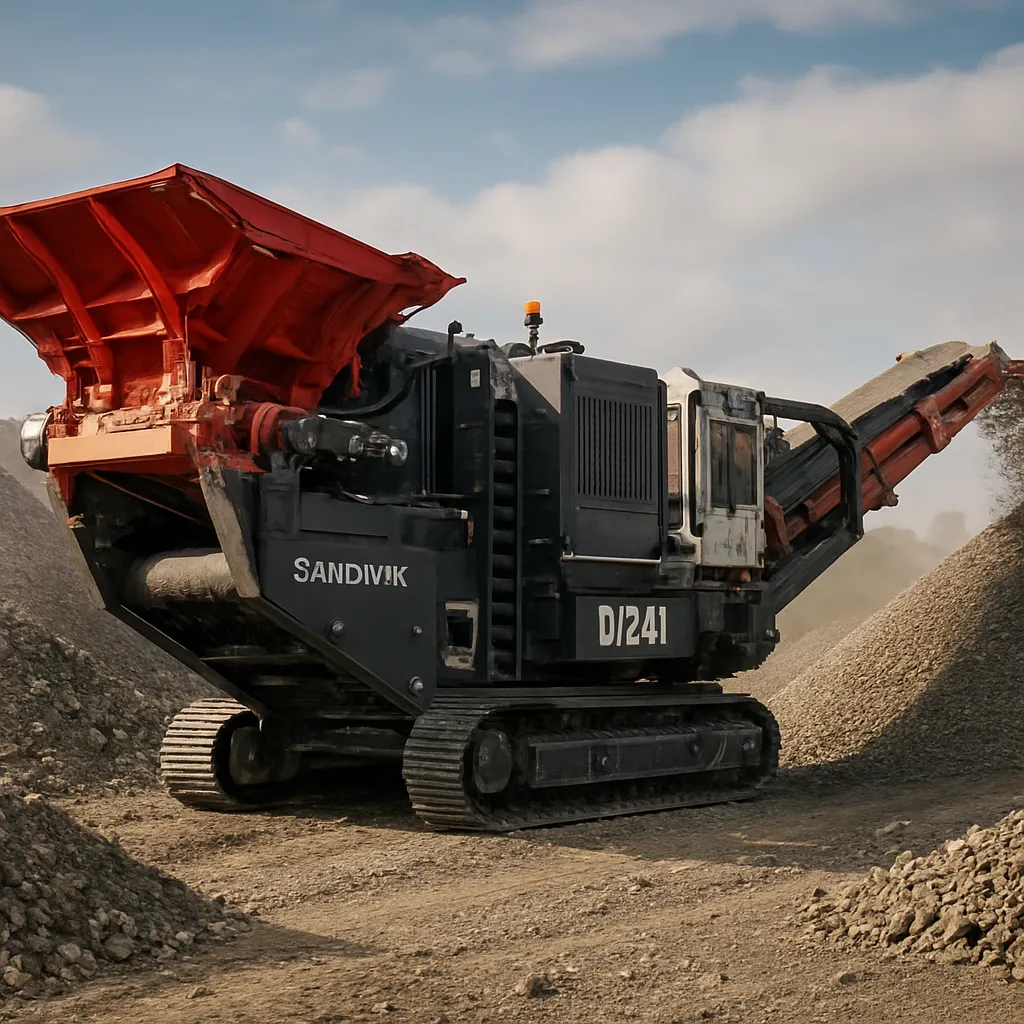
The Sandvik QJ241 is a widely used compact tracked jaw crusher designed for high performance in confined spaces. It combines robust crushing capability with ease of transport and rapid setup, making it a popular choice across a range of industries. This article reviews the QJ241’s design, typical applications, performance characteristics, operational advantages, and practical considerations for owners and operators.
Design and technical features
The QJ241 is engineered as a track-mounted, diesel-powered jaw crusher, optimized for quick deployment and high uptime on site. Its structural design centers on a reliable jaw chamber housed within a compact frame, alongside conveyors and an integrated undercarriage for mobility. Key design objectives include durability, serviceability, and operator safety.
Key components
- Crusher chamber and jaw plates: the heart of the unit, designed to deliver consistent reduction and long wear life.
- Diesel power unit: provides motive power for crushing, conveyors and hydraulics; models vary by market and configuration.
- Feed hopper and vibrating feeder: engineered to accept large feed material and meter it evenly into the jaw chamber.
- Discharge conveyors: convey the crushed product to stockpiles or to subsequent processing stages.
- Tracks and undercarriage: allow on-site relocation without heavy lifting equipment.
- Controls and automation: onboard PLC or control system for monitoring, settings and optional remote operation/telematics.
Build and materials
Major structural elements are fabricated from high-grade steels and the wear components, such as jaw plates and cheek plates, are typically made from manganese steel alloys for improved resistance to abrasion and impact. Hydraulic systems use industry-standard components for ease of maintenance.
Operational features
- Hydraulic adjustment of the crusher setting to control product size and compensate for wear.
- Reversible jaw function on some configurations to extend wear life.
- Integrated dust suppression points to reduce airborne particulate emissions during operation.
- Foldable conveyors and compact transport dimensions for road legal movement in many regions.
- Optional remote control and telematics packages to enable mobility and remote monitoring.
Applications and industries
The Sandvik QJ241 is used across numerous industries thanks to its combination of mobility and crushing power. Its compact footprint and rapid set-up time make it particularly well-suited to sites where space, access or environmental constraints are significant.
Common sectors
- Quarrying and aggregates production — primary crushing at small to medium quarries, producing feeds for secondary crushers or finished aggregates for construction.
- Construction and demolition recycling — breaking down concrete, brick and mixed demolition materials to recover reusable aggregates.
- Mining and small scale surface mining — primary crushing of blasted rock or ore in small operations or remote sites.
- Road building and civil engineering — producing on-site materials for base layers, sub-base and fill, reducing haul distances and costs.
- Utilities and pipeline construction — compact setup is advantageous in constrained right-of-way corridors.
Use cases where the QJ241 shines
- Urban demolition where maneuverability and noise/dust mitigation are important.
- Contract crushing projects that require frequent movement between sites.
- Quarry start-ups and satellite operations where a smaller primary unit is advantageous.
- Sites requiring rapid production ramp-up and flexible sizing of output product.
Performance, statistics and operating data
Performance and output of the QJ241 depend on factors such as feed material properties, feed size, crusher setting and job site logistics. While exact numbers vary by configuration, typical performance ranges and operational statistics are useful for estimating capability.
Typical performance ranges
- Capacity (throughput): commonly ranges from around 100 to 250 tonnes per hour, depending on material hardness, feed size and selected discharge setting. In favourable conditions and with optimal feed management, throughput can be at the higher end of that range.
- Feed size: suitable for large primary feed material; typical maximum feed size handled safely can range from several hundred millimetres down to finer feeds depending on jaw opening and chamber configuration.
- Product size control: hydraulic closed-side settings and toggle configurations allow operators to target a range of product sizes suitable for secondary processing or final sale.
Machine weights and dimensions
Exact weights and transport dimensions depend on specific options (e.g., dust suppression, additional conveyors, fuel tank size). Typical operating weights for compact track jaw crushers like the QJ241 generally fall in the range of 25–40 tonnes. Transport dimensions are designed to be compact enough for road transfer with minimal disassembly in many jurisdictions.
Power and fuel consumption
- Diesel engine power: commonly in the range of 150–220 kW, depending on market and options.
- Fuel consumption: varies with load and duty cycle, with typical operational consumption often quoted broadly as 10–30 litres per hour under normal working conditions. Actual consumption depends on workload (e.g., heavy rock vs. softer material) and ancillary systems such as conveyors and dust suppression.
Availability and uptime metrics
Modern tracked crushers like the QJ241 are designed for high availability. Best practice maintenance regimes, including routine inspections, scheduled component replacement and good site operating procedures, can produce machine availability in excess of 90% on well-managed contracts. Many operators report mean time between failures and service intervals that compare favourably with similar units when proper maintenance is observed.
Noise, dust and emissions
- Acoustic output: jaw crushers generate significant noise during operation. The QJ241 is typically equipped with acoustic damping and engine enclosures to reduce site noise, but compliance with local noise regulations often requires additional measures such as night-time curfews or acoustic screens.
- Dust control: integrated water spray bars and enclosure options help reduce dust; use of conveyors with covers and site-level dust suppression further mitigates emissions.
- Emissions: engine configuration and emission control packages vary by region to meet local standards (Stage V, Tier 4F, etc.).
Operational advantages and maintenance
Owners and operators choose the QJ241 for a combination of productivity, flexibility and relatively low logistical overhead. The machine’s design aims to reduce downtime and simplify routine servicing.
Advantages on site
- Rapid redeployment: tracked undercarriage and folding conveyors enable quick relocation and reduced setup time compared with static plants.
- Compact footprint: suitable for tight sites and urban jobs.
- Flexible product mix: adjustable closed-side settings and feeder control allow operators to produce a range of aggregate sizes from one unit.
- Reliability: robust construction and proven wear materials contribute to consistent performance in heavy-duty primary crushing.
- Fuel efficiency: relatively low fuel consumption per tonne crushed when the machine is well matched to the application.
Maintenance considerations
Routine and preventative maintenance are critical for maximizing availability and minimizing total cost of ownership. Practical maintenance advice includes:
- Establish a daily checklist covering fluid levels, greasing points, conveyor tracking and wear part inspection.
- Maintain a log of jaw plate wear to plan replacements before production is impacted.
- Use OEM or equivalent high-quality wear parts to preserve performance and reduce frequency of change-outs.
- Keep hydraulic filters and cooling systems clean to avoid unscheduled downtime.
- Train operators on correct feed distribution to reduce unwanted stresses on the jaw chamber and to improve throughput.
Service and support
Sandvik and its global dealer network typically provide parts supply, technical support and field service. Many users find that access to quick parts supply and manufacturer-backed diagnostics contributes materially to machine uptime and life-cycle economics.
Safety, controls and automation
Safety and operator ergonomics are integral to machine design. The QJ241 incorporates features to protect personnel and simplify control operations.
Typical safety features
- Emergency stop switches positioned around the machine.
- Interlocks on guards and access panels to prevent operation with hazardous panels open.
- Safe access walkways and handrails for maintenance tasks.
- Overload protection systems to prevent damage to the crusher in the event of uncrushable objects.
Controls and automation
Modern iterations of the QJ241 often include an integrated control panel with diagnostics, alarms and performance readouts. Optional telematics and remote monitoring systems deliver data such as:
- Engine hours and fuel levels.
- Crushing chamber load and throughput estimates.
- Maintenance reminders and fault codes.
- Location and utilization metrics to support fleet management decisions.
These capabilities support safer operation by enabling proactive interventions and remote troubleshooting, which reduces the need for personnel to be near moving machinery during fault finding.
Environmental considerations and site planning
Operators increasingly need to balance production goals with environmental responsibilities and regulatory compliance. The QJ241 lends itself to several measures that reduce the site footprint and environmental impact.
Dust and noise management
- Water spray bars and enclosed discharge conveyors reduce fugitive dust.
- Acoustic enclosures and careful placement on-site help control noise levels; additional screens or berms can be used where required.
- Scheduling of high-noise activities during daytime hours and monitoring of local community impacts are common practices.
Fuel and emissions
Choosing the appropriate engine emission configuration and ensuring proper maintenance reduces airborne pollutants. For long-term environmental planning, consider:
- Using engines compliant with the latest emissions standards available in the operating region.
- Optimizing operations to reduce idling and unnecessary engine run time.
- Exploring electrified or hybrid options where available and practical for reducing diesel consumption on larger sites.
Market considerations: purchase, rental and lifecycle costs
Deciding whether to buy or rent a QJ241 depends on utilization rate, project duration and capital availability. The machine’s versatility makes it attractive for contractors who require a balance between performance and cost-effectiveness.
Buying vs renting
- Short-term projects and sporadic workloads often favor rental, which provides flexibility and removes maintenance obligations from the operator.
- Long-term, high-utilization scenarios can justify purchase, where acquisition amortization over productive life results in lower per-tonne costs.
- Evaluate residual values, as tracked mobile crushers typically retain value if well maintained.
Life-cycle cost drivers
- Wear parts (jaw plates, cheek plates, toggle components)
- Hydraulic and engine consumables
- Fuel costs correlated with duty cycle
- Downtime costs from unscheduled repairs
- Transport and setup costs between sites
Practical tips for operators
- Ensure feed material is well graded to avoid blockages and reduce wear; consistent feed distribution into the chamber improves product quality and throughput.
- Plan plant layout to maximise conveyor flow and minimise material handling steps.
- Use telematics data to monitor utilization and schedule preventative maintenance at optimal times.
- Train crews in basic troubleshooting to resolve minor issues quickly and safely.
- Keep an inventory of high-wear parts on-site or nearby to reduce downtime when replacements are needed.
Operators who combine good feed management, preventive maintenance and modern controls typically achieve the best results in terms of cost per tonne and machine longevity. Attention to maintenance and operational discipline pays dividends quickly in reduced downtime and improved reliability.
Summary and concluding remarks
The Sandvik QJ241 is a compact, agile and capable primary jaw crusher that offers a compelling mix of mobility, versatility and robust crushing performance. It is well suited to a wide range of applications from quarrying and mining to demolition recycling and civil works. Typical throughput ranges, fuel use and weights vary with configuration and duty but the machine is designed to deliver efficient crushing with straightforward maintenance and strong dealer support. For many contractors and site operators, the QJ241 represents a practical solution where footprint, transportability and reliable performance are crucial.
Highlighted terms: mobile, jaw, crusher, throughput, compact, versatility, mobility, reliability, fuel efficiency, safety.


)
)