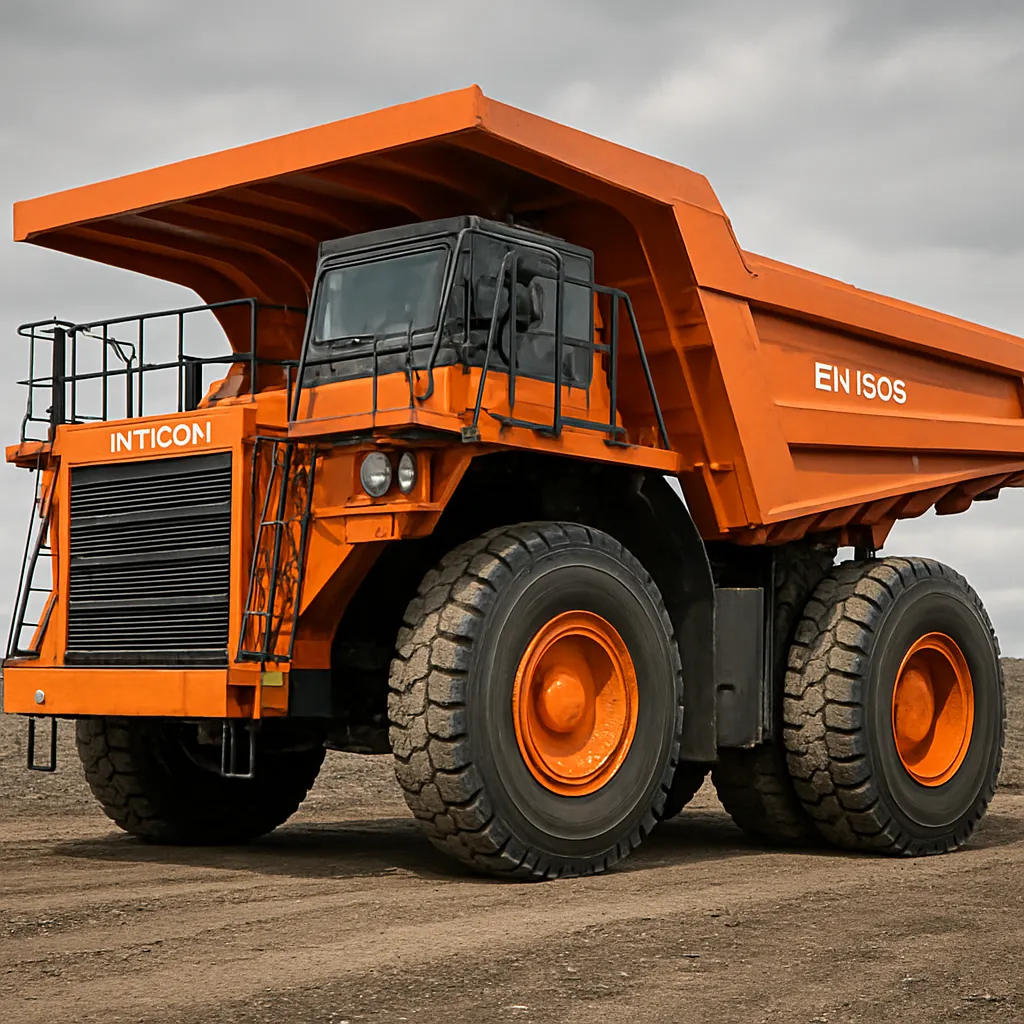
The Hitachi EH1600 is a heavy-duty mining haul truck designed to move large volumes of ore and overburden efficiently in surface mining operations. In this article we will explore the machine’s technical characteristics, typical applications, operational strengths, maintenance considerations, safety features and economic impact on modern mining fleets. The content below draws on industry norms for large rigid-frame haul trucks and practical experience with Hitachi’s EH-series machines while highlighting important aspects that operators, fleet managers and engineers find most relevant.
Overview and design philosophy
The EH1600 is part of Hitachi’s family of electric-drive rigid-frame haul trucks intended for high-production open-pit mines. These machines are engineered to combine high payload capability with durable components and advanced control systems. The design emphasis is on delivering consistent productivity over long operating cycles while minimizing downtime through accessible service points and robust subsystem integration.
Key design features
- Diesel-electric or AC drive systems: Many EH-series trucks utilize a diesel engine to drive an electrical generator feeding traction motors. This layout provides high starting torque, smooth power delivery and effective retarding capability during downhill runs.
- Rigid-frame structure: Optimized for heavy cyclic loading and stability at full payload.
- Large-capacity body: Designed for rapid fill-and-dump cycles while managing material retention and wear.
- Modular components: Engines, electrical systems and axles are designed for modular replacement to speed up repairs.
- Operator-centered cab: Ergonomics, visibility and controls are laid out to support long-shift comfort and effective monitoring.
These features aim to provide a balanced machine that is not only capable of moving significant tonnages per hour but also supports long-term operational reliability.
Typical specifications and performance (typical ranges)
The EH1600 model designation generally indicates a haul truck in the ballpark of roughly 150–170 metric tons of nominal payload capacity, though exact figures vary by specific variant and configuration. Below are typical specification ranges and performance indicators often associated with machines in this class:
- Payload capacity: approximately 150–170 metric tonnes (metric tons)
- Nominal body volume: roughly 60–100 cubic meters depending on material density and body profile
- Gross vehicle weight (GVW) at full load: commonly in the range of 200,000–300,000 kg
- Engine power: diesel prime movers in similar-sized trucks typically range between 1,200–2,200 kW depending on whether the truck uses AC electric drive or mechanical transmissions
- Top speed unloaded: often 50–60 km/h; loaded downhill speeds are governed by retarding systems
- Fuel consumption: highly variable—commonly 100–400 liters/hour depending on duty cycle, load factor and terrain
- Typical cycle productivity: depends on shovel size and cycle time; a fully matched shovel-truck combination in the EH1600’s class can achieve several thousand tonnes per hour per shovel-truck pair under optimal conditions
These numbers should be treated as indicative ranges. Actual performance depends on mine geometry, haul distances, payload targets, material density and operator practices. Nonetheless, the EH1600 is positioned to serve as a mid-to-large capacity workhorse for high-throughput operations.
Applications and operational contexts
The primary application for the EH1600 is large-scale surface mining—iron ore, copper, coal, gold and other bulk commodities where the economics favor high-volume material movement. Typical operational roles include:
- Overburden removal in open-pit mines, where large volumes of waste rock must be relocated.
- Ore hauling from loading points to crushers, primary stockpiles or ore processing facilities.
- Hauling within large-scale construction, quarrying and aggregate operations requiring continuous, heavy-duty transport.
- Specialized contracts such as bulk earthworks for infrastructure projects where high payload capacity reduces cycle count.
Where mine benches and haul roads are compatible with the truck’s size and turning envelope, fleets adopt these trucks to reduce fleet count and consolidate tonnage onto fewer, larger machines. This often results in lower unit costs per tonne moved when operations optimize shovel-to-truck matching, haul road maintenance and shift planning.
Powertrain, traction and braking
Most modern large haul trucks, including EH-series models, favor an electric drive architecture because of its superior control over torque, reduced mechanical transmission complexity and excellent performance under frequent starting and stopping conditions. Key aspects:
- Traction motors: robust, often AC synchronous motors designed for continuous high torque at low speeds.
- Control systems: advanced motor controllers manage traction, implement dynamic braking and allow for regenerative functions in some configurations.
- Retarding and braking: multiple braking methods—mechanical (service/parking), dynamic electrical retarding and hydraulic retarding—are combined to control descent in steep ramps while minimizing brake wear.
- Engine/generator sizing: matched to maintain desired cycle speeds under load while supplying auxiliary systems (hydraulics, air conditioning, lubrication pumps).
The integration of these systems yields improved tractive effort, reduced slip on steep or loose haul roads and predictable handling in various weather conditions—factors critical to high uptime and safe operation.
Operator environment and ergonomics
A major focus for modern haul truck design is the operator cabin. Long shifts with frequent gear changes and monitoring calls for an ergonomic layout that reduces fatigue and improves situational awareness. Common cabin features include:
- High-visibility glazing and camera-assisted blind spot monitoring
- Comfort seating with multi-point adjustment and suspension
- Intuitive human-machine interfaces (HMIs) showing fuel, load, diagnostics and route information
- Climate control and noise/vibration isolation for operator comfort
- Integrated telematics and fleet-management terminals
These features contribute to higher operator performance, fewer errors and reduced turnover by improving workplace conditions.
Maintenance, diagnostics and fleet management
Maintenance strategy determines long-term operating costs and availability. The EH1600’s design supports several practices that mines adopt to maximize lifetime value:
- Condition-based maintenance: sensors and telematics provide data on engine health, drivetrain temperatures, oil contamination and component vibration signatures.
- Scheduled preventive maintenance: modular assemblies and standardized service intervals help maintenance crews perform efficient swaps of high-wear parts.
- Spare parts logistics: commonality within the EH-series reduces inventory complexity and shortens repair lead times.
- Remote diagnostics: many machines ship with telemetry packages that can transmit fault codes and performance data to centralized service centers.
- Component rebuild programs: major components such as engines, axles and electrical generators are often rebuilt to extend service life in a cost-effective way.
By leveraging data-driven maintenance, operators can reduce unplanned downtime and extend component lifecycles—key drivers of total cost of ownership (TCO).
Safety systems and risk mitigation
Safety is paramount in mining. The EH1600 and machines of similar class typically incorporate a layered approach to safety:
- Structural protections such as ROPS (rollover protective structures) and FOPS (falling object protective structures).
- Electronic safety systems: automatic speed limiters, collision avoidance sensors and proximity detection systems that alert drivers to personnel and mobile equipment in blind zones.
- Redundant braking systems and fail-safe controls to maintain safe stopping capability even under partial system failure.
- Onboard cameras and auditor systems to record incidents and support training and investigation.
- Comprehensive training programs for operators and maintenance staff emphasizing safe operating envelopes and emergency procedures.
The integration of electronic aids with robust mechanical design reduces incident rates and improves situational awareness, particularly in complex multi-machine operations on congested benches and ramps.
Environmental and fuel-efficiency considerations
Heavy haul trucks consume significant energy over their service lives. Mines increasingly prioritize fuel efficiency and emissions reduction through several avenues:
- Engine efficiency improvements: modern engines offer higher thermal efficiency and better fuel mapping to match mining duty cycles.
- Diesel-electric architectures: while still using diesel fuel, electric drives often allow more efficient torque delivery and lower fuel use per tonne moved.
- Auxiliary power management: intelligent control over cooling fans, hydraulic pumps and accessory loads reduces idle fuel consumption.
- Alternative fuels and electrification trends: pilot programs in some regions explore biodiesel blends, hydrogenated vegetable oils (HVO) and battery-assisted hybridization to cut net CO2 emissions.
- Route optimization and payload management: minimizing empty travel, controlling speed profiles and maximizing fill factor are operational levers to reduce liters-per-tonne figures.
Transitioning an entire fleet to lower-emission options is capital intensive, but targeted upgrades (e.g., telematics-driven cycle optimization) deliver tangible reductions in both fuel use and greenhouse gas emissions.
Economic considerations and total cost of ownership
When evaluating a truck such as the EH1600, buyers weigh upfront capital cost against lifecycle expenses. Important economic considerations include:
- Initial acquisition cost vs. payload advantage: larger trucks may reduce the number of machines required but raise the capital outlay and require suitable loading equipment.
- Operating cost per tonne: fuel, tires, consumables and labor drive this metric; higher payload and efficient cycles reduce unit costs.
- Maintenance and downtime: predictable maintenance schedules, access to parts and local service networks reduce unplanned stoppages and costs.
- Residual value: machines from established manufacturers with sound service histories typically retain value better on the resale market.
- Financing and fleet management: leasing, trade-ins and fleet standardization strategies affect cashflow and operational flexibility.
Optimizing the mine plan to match shovel sizes with truck capacity and minimizing cycle inefficiencies often yields the best return on investment and the quickest payback on high-capacity trucks.
Case studies and operational examples
While each mine is unique, typical successful use-cases for trucks in the EH1600 class include:
- Large iron ore operations in Australia and Brazil that use high-capacity shovels and trucks to move millions of tonnes per annum.
- Copper and gold open-pit mines where long haul distances are paired with predictable cycle times to maximize hourly production.
- Quarry and aggregate operations where a single large truck replacing multiple smaller units simplifies logistics and reduces labor costs.
In many operations, a single EH1600-class truck can replace two or more smaller trucks in the fleet, reducing the complexity of scheduling and aggregate maintenance hours—provided the site has the necessary loading equipment and haul road geometry.
Common challenges and mitigation strategies
Large haul trucks also present challenges. Being proactive helps operators manage these effectively:
- Tire management: tires are a major consumable. Strategies include tire pressure monitoring, optimized haul-road profiles and staged dumping to reduce impact loads.
- Haul road design: proper gradient, width and maintenance schedules reduce fuel use and component stress.
- Operator training: skilled operators maintain consistent cycle times and reduce unnecessary wear.
- Parts supply chain: stocking critical spares and maintaining supplier relationships prevents extended downtime.
- Weather impacts: dust suppression, drainage and traction management systems help keep operations running during adverse weather.
Addressing these areas through planning and technology adoption helps sustain availability and preserve unit economics over a truck’s lifetime.
Lifecycle, resale and fleet modernization
Large haul trucks often serve for decades with appropriate maintenance and periodic major overhauls. Typical lifecycle stages include:
- Initial deployment and intensive early life service
- Mid-life component rebuilds (e.g., powertrains and axles)
- Refurbishment of cab electronics and safety systems
- Resale on secondary markets or repurposing for less-intensive roles such as contractor hire
Fleets frequently pursue modernization by retrofitting telematics, updating control software and installing advanced safety systems to keep older units competitive. The residual market for well-maintained EH-series trucks is healthy in regions where large open-pit mining remains active.
Statistical and industry context
Here we present generalized statistical context for EH1600-class trucks and like-sized machines. These figures represent industry-typical magnitudes rather than exact model-specific guarantees:
- Annual tonne moved per truck: depending on shift structure and cycle times, a single truck can move 1.5–5 million tonnes per year in high-intensity operations.
- Availability targets: modern large trucks aim for fleet availability in the 90–95% range when supported by strong maintenance regimes and parts supply.
- Fuel consumption per tonne: varied widely, but efficient operations may achieve figures below 0.02–0.03 liters per tonne-kilometer; actual liters per tonne depend heavily on haul distance and grade.
- Major component service intervals: engines may require major overhauls after tens of thousands of operating hours; axle and transmission rebuild cycles depend on duty severity.
These statistics are useful for rough benchmarking when planning fleet capacity, budgeting fuel costs and estimating maintenance resource needs.
Conclusion
The Hitachi EH1600 and similar class haul trucks offer a combination of high payload, robust design and modern controls that make them attractive to large-scale open-pit mining operations. Their strength lies in consolidating tonnage onto fewer machines, improving unit economics when mines properly match shovels, haul roads and operational procedures. Success depends not only on the truck’s inherent capabilities but also on the supporting ecosystem: operator training, maintenance planning, parts logistics and safety systems. When these elements are aligned, EH1600-class trucks can form the backbone of a productive, reliable and increasingly efficient mining fleet.
Key highlighted concepts: Hitachi EH1600, haul truck, payload, diesel-electric, productivity, reliability, operator comfort, safety, maintenance, fuel efficiency.


)
)