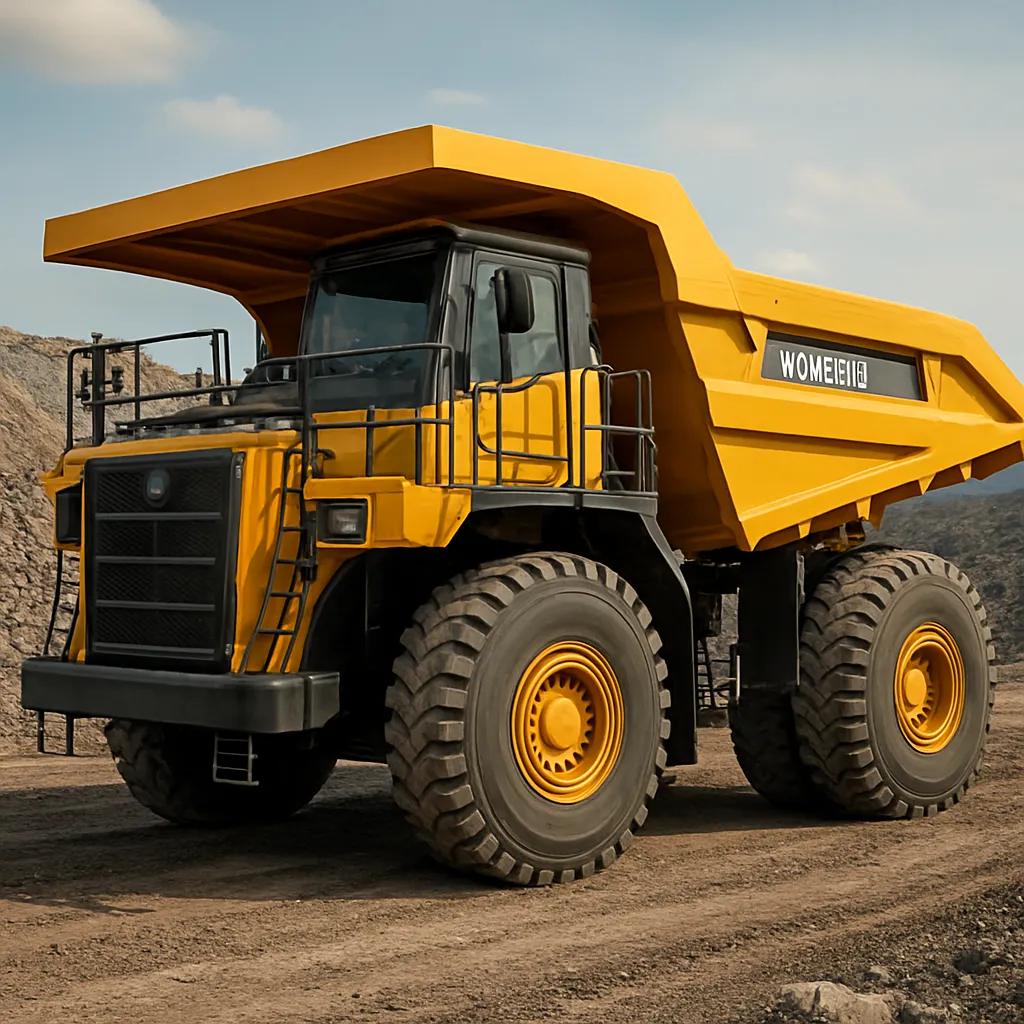
The XCMG XDR80TE is positioned as a heavy-duty mining truck developed to meet the demanding needs of open-pit and underground mining operations, large quarries and bulk-material handling projects. Combining modular design, robust structural components and an emphasis on operational efficiency, this machine aims to deliver high daily tonnage, long service intervals and competitive lifecycle costs. In the following sections we will examine its typical applications, technical characteristics, operational benefits, maintenance considerations and broader market context, highlighting the most important attributes that make the XDR80TE a contender in its class.
Primary applications and operational roles
The XDR80TE is primarily designed for large-scale material haulage where continuous, heavy payload cycles are required. Typical applications include:
- Open-pit mining operations (copper, iron ore, coal and other bulk commodities)
- Large quarry extraction and overburden removal
- Major infrastructure projects involving earthmoving and material relocation
- Stockpile rehandling and port terminal bulk transfer where rigid-frame haul trucks are preferred
In these environments the machine is valued for its ability to sustain high payload cycles under harsh conditions—rocky haul roads, steep grades and long shift operations. The truck is often integrated into fleets that include excavators, loaders and wheel dozers, forming a system optimized for throughput and uptime. For operations seeking to maximize payload per trip while controlling fleet size and operating costs, the XDR80TE’s nominal capacity makes it suitable as a mid-to-large class unit in modern pit fleets.
Technical characteristics and typical specifications
Below are the typical technical characteristics and performance indicators associated with a heavy mining truck in the XDR80TE class. Exact figures depend on configuration, local regulatory compliance, chosen powertrain and optional equipment; the numbers presented are representative approximations.
Capacity and chassis
- Payload: Approximately 80 tonnes (nominal class rating; actual payload may vary by site and material density)
- Body volume: Typically configured to match payload for material density (e.g., ~20–30 m³ depending on bulk density and body design)
- Chassis type: Rigid-frame design with heavy-duty cross-members and reinforced dump body
- Gross machine weight: Varies by configuration; empty operating weight often in the range of 40–60 tonnes
Powertrain and transmission
- Engine options: High-displacement diesel engines compliant with local emissions standards; power usually sized to meet continuous gradeability requirements for loaded and empty cycle operations
- Typical engine power: Often in the mid-hundreds of kilowatts (configurations and ratings vary; many 80-ton class trucks operate in the ~350–600 kW range depending on manufacturer tuning)
- Transmission: Heavy-duty automatic or power-shift transmission optimized for durability and efficient power transfer under heavy loads
- Driveline: Robust axle assemblies with planetary reduction gearing; braking systems include service brakes, auxiliary retarders and emergency systems
Performance and mobility
- Gradeability: Designed to negotiate steep ramps and loaded haul roads; sustained gradients of several percent at rated payload are typical operational targets
- Top speed (unloaded/loaded): Dependent on gearing; typical top speeds can be 40–60 km/h unloaded, lower when fully loaded for safety
- Turning radius and maneuverability: Engineered for optimal turning within pit geometries while maintaining structural strength
Fuel systems, capacities and autonomy
- Fuel tank capacity: Sized to meet long-shift operations; many units in this class have large fuel tanks (hundreds of liters) to minimize refueling downtime
- Fuel efficiency: Heavily influenced by duty cycle, haul road quality and operator behavior; modern machines use electronic engine management and drivetrain optimization to reduce specific fuel consumption
Operator environment and controls
- Cab: Ergonomically designed, climate-controlled, with noise and vibration reduction measures
- Instrumentation: Digital monitoring, fault diagnostics and optional fleet-management telematics
- Safety: Rollover protection, seat belts, visibility aids (cameras, proximity sensors) and emergency egress features
Note on specifications: The XDR80TE’s specific numeric values are influenced by regional configurations, customer options and regulatory constraints. Operators typically select engine emission tiers, tire sizes and payload management systems to match site-specific requirements.
Design highlights and engineering features
The XDR80TE integrates several design features intended to support heavy-duty mining operations:
Structural robustness
Key structural members—frame rails, cross-beams and the dump body—are engineered for high fatigue life and resistance to impact and abrasion. Reinforced castings at high-stress junctions and finite-element-optimized frame geometry reduce the likelihood of structural cracks over long duty cycles.
Modular maintenance access
Engine and major components are arranged to facilitate quick servicing. Features such as ground-level service points, modular electrical harnesses and bolt-on subassemblies reduce mean time to repair (MTTR) and support scheduled maintenance planning.
Cooling and thermal management
Mining environments place heavy demand on cooling systems due to long idle times, dusty conditions and hot ambient temperatures. The XDR80TE typically employs high-capacity cooling packages, dust-separation intakes and maintenance-friendly filters to reduce debris ingress and maintain engine and transmission temperatures within optimal ranges.
Dump body and material handling
Dump bodies can be specified with different liners (wear plates, rubber or composite protection) and tailgate options to control material retention and unloading characteristics. Proper material flow engineering reduces cycle times and minimizes the chance of bridging or carry-back.
Operational efficiency, economics and productivity
When evaluating the XDR80TE or similar trucks, mines focus on productivity per hour and lifecycle economics. Core components of this analysis include:
- Payload utilisation: Maximizing average load per trip while preserving machine life
- Fuel consumption: Measured as liters per tonne-kilometer or liters per hour; influenced by haul profile, operator practices and vehicle tuning
- Total cost of ownership (TCO): Encompasses acquisition cost, maintenance, fuel, tyres, parts and resale value
- Availability: Expressed as percentage of scheduled operational time; influenced by MTTR, parts provisioning and remote diagnostics
Telematics and fleet management systems increasingly play a central role in improving utilization. Real-time monitoring of engine health, fuel burn, cycle times and operator behavior supports predictive maintenance and route optimization, increasing daily tonnage while reducing unscheduled downtime.
Maintenance strategy and serviceability
Effective maintenance strategy for an XDR80TE-class truck typically includes a mix of scheduled preventive maintenance, condition-based monitoring and predictive analytics:
Preventive maintenance
- Regular oil and filter changes for engine, transmission and hydraulics
- Tire inspections and rotation schedules to manage costs and prevent failures
- Brake system inspections, including wear components and retarder functional checks
Condition and predictive monitoring
- Vibration and oil analysis to detect early signs of component wear
- Temperature and pressure sensors for driveline and cooling systems
- Telematics data used to forecast component life and schedule downtime during low-production periods
Spare parts and service support
Local availability of critical spares—axles, transmission modules, hydraulic pumps and electronic control units—significantly impacts fleet availability. Many customers favor maintenance contracts with original equipment manufacturers or certified dealers to guarantee parts supply and factory-level diagnostics.
Safety, operator comfort and human factors
Mining trucks are among the most safety-sensitive assets on site. The XDR80TE focuses on reducing both the frequency and severity of incidents through engineering controls and operator aids.
- Visibility: Large glazed areas, optimized mirror placement and optionally integrated camera systems reduce blind spots
- Collision avoidance: Proximity sensors and radar-based systems can provide early warnings of nearby personnel or vehicles
- Operator ergonomics: Adjustable seats, low-effort controls and reduced vibration levels help minimize fatigue over long shifts
- Fire suppression and emergency systems: Automatic or manual fire-suppression systems and clear egress routes improve survivability in the unlikely event of a fire
Environmental considerations and emissions
Environmental performance is increasingly important to mines and regulators. Relevant aspects include:
- Engine emissions: Compliance with regional emissions tiers (e.g., Stage V, Tier 3/4 equivalents depending on region). Engine selection and after-treatment systems influence NOx, particulate and CO2 emissions.
- Fuel efficiency: Lower fuel burn reduces greenhouse gas emissions per tonne moved.
- Noise and dust controls: Cab seals, quieter powertrain calibrations and dust suppression on haul roads contribute to lower environmental impact.
- Lifecycle recycling: Use of recyclable materials and remanufacturing programs for major components supports circular economy initiatives.
Market position and comparisons
The XDR80TE competes in a global market that includes established truck models from long-standing manufacturers. Buyers evaluate machines based on initial price, reliability track record, service network and parts availability. Important comparative axes include:
- Reliability and uptime: Historical field performance and MTBF (mean time between failures) are key purchase determinants
- After-sales support: Dealer density, remote diagnostic support and guaranteed parts supply
- Customization and configurability: Ability to tailor body design, powertrain and safety systems to site-specific needs
- Resale and residual value: An important factor for lifecycle TCO calculations
Case studies and operational examples
Although individual results vary, representative operational insights from mines deploying similar 80-ton class trucks include:
- Productivity increases when fleets reduce cycle times via improved loading technology and optimized haul routes, often delivering double-digit percentage gains in tonnes moved per shift.
- Fuel savings of 5–15% are achievable with operator training, electronic engine management and optimized gear selection—reducing fuel costs significantly over the truck’s service life.
- Proactive maintenance using telematics can increase availability from mid-80% to mid-90% range, enabling higher throughput without adding trucks.
Procurement considerations and lifecycle planning
When evaluating the purchase of an XDR80TE-class truck, procurement teams should consider:
- Fleet integration: Compatibility with existing loading equipment and maintenance infrastructure
- Payload optimization: Matching truck body volume to excavator bucket sizes and material densities to avoid under- or over-loading cycles
- Warranty and service contracts: Length and coverage of warranty, availability of extended-service agreements and spare parts programs
- Operator training and change management: Ensuring operators and technicians are trained on specific features and new control systems to extract full productivity gains
Summary and outlook
The XCMG XDR80TE represents a class of heavy mining trucks optimized for high-throughput operations where balancing payload, durability and cost efficiency is critical. With a focus on robust structural design, serviceability and operator comfort, this class of truck aims to deliver reliable performance under severe mining conditions. Its suitability for a specific project depends on haul profiles, material characteristics and fleet objectives. Key success factors include proper configuration, effective maintenance strategy, telematics-driven monitoring and operator training. For mines seeking to maximize productivity while managing lifecycle costs, the XDR80TE-style trucks remain an important option in the modern mining fleet.


)
)