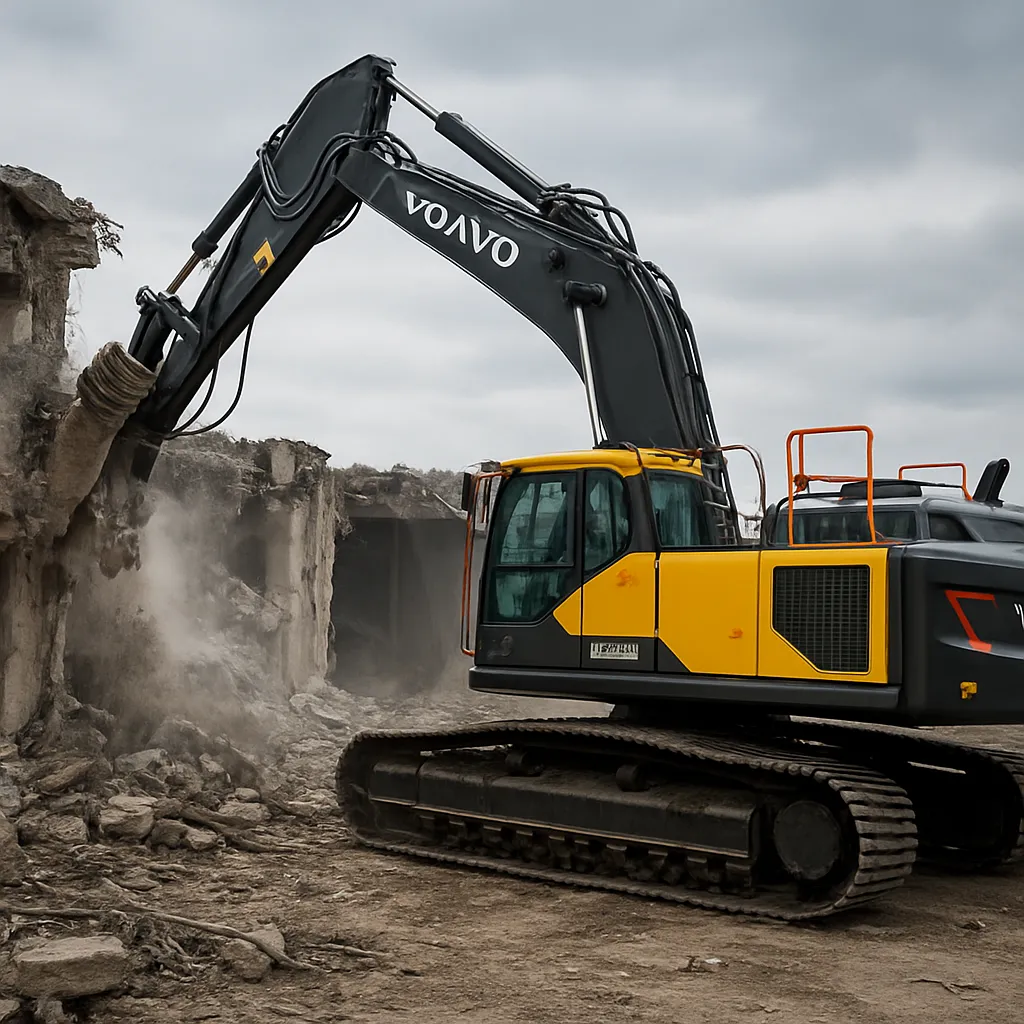
The Volvo EC750E HR is a purpose-built heavy demolition excavator designed to tackle the most demanding dismantling, deconstruction and heavy-duty material handling tasks. In this article you will find an in-depth look at its design philosophy, typical applications, technical characteristics and operational considerations. The content covers practical uses on demolition sites, the machine’s adaptability through attachments, and the maintenance and safety practices that maximize uptime and return on investment. Throughout the text select key terms are highlighted to draw attention to core attributes and capabilities.
Overview and design highlights
The Volvo EC750E HR belongs to Volvo Construction Equipment’s line of large excavators tailored for demolition and heavy civil works. The suffix HR stands for high-reach or heavy-duty demolition configuration, reflecting structural reinforcements, modified hydraulics and purpose-designed upperworks that can accommodate long demolition booms and specialized attachments. The machine combines a heavy undercarriage with a reinforced boom and stick to provide stability and reach, while the cab and control systems prioritize operator visibility and protection.
Key design principles
- Durability — reinforced frames, heavy-duty slew systems and robust attachments points for demolition tools.
- Reach and control — hydraulic circuits and boom geometry designed for extended reach operations while maintaining fine control for delicate dismantling tasks.
- Operator protection — cabs and optional FOPS/ROPS canopies, glazing and screens configured for demolition safety.
- Serviceability — centralized maintenance points and modular components for faster servicing on busy sites.
- Attachment versatility — ability to accept grapples, shears, pulverizers, crushers, and long-reach booms.
Typical applications and jobsite roles
The Volvo EC750E HR is primarily deployed in demolition sectors, but its capabilities extend beyond tearing down buildings. Below are the most common uses where this machine offers a competitive advantage.
Demolition of large structures
In urban and industrial demolition projects, the EC750E HR is often the machine of choice for removing tall concrete and steel structures. The combination of high-reach configurations and heavy-duty attachments makes it ideal for staged deconstruction where controlled dismantling is critical. Typical tasks include top-down dismantling of multi-story buildings, removal of concrete façades, chimney takedowns and selective demolition around sensitive infrastructure.
Secondary demolition and material processing
After primary break-up, the machine equipped with crushers or pulverizers can reduce debris into transportable sizes. When fitted with sorting grapples, the EC750E HR facilitates on-site segregation of recyclable materials such as steel and concrete, boosting recycling rates and reducing landfill costs. Its powerful hydraulics and stable platform support high cycle loads needed in secondary processing.
Heavy lifting and industrial decommissioning
Outside traditional demolition, the Volvo EC750E HR is used in industrial decommissioning to remove heavy machinery, structural steel and plant equipment. The machine’s rugged base and tailored lifting points can handle heavy material handling when paired with specialized jibs or rigging arrangements.
Technical characteristics and performance (typical figures)
Exact specifications may vary by market region and specific configuration, but the EC750E HR family generally shares core performance characteristics that make it suited to heavy demolition roles. Below are typical technical highlights presented as approximate figures; for procurement and project planning always consult current manufacturer specifications.
- Operating weight: approximately 70–90 tonnes depending on counterweight and attachment configuration.
- Engine power: mid- to high-hundred kW range (typical large demolition excavator engines deliver several hundred kW to handle heavy hydraulic demands).
- Hydraulic flow and pressure: high-flow hydraulic systems with multiple circuits to support power-hungry attachments like shears and crushers.
- Maximum reach: in HR (high-reach) configurations boom and stick combinations enable working heights often exceeding 20–30 meters; exact reach depends on boom length specification.
- Counterweight: heavy counterweights designed to stabilize the machine in extended reach tasks; counterweight mass is often adjustable to match attachment load and lift radius.
- Track gauge and undercarriage: wide, heavy-duty tracks to maximize stability and reduce ground pressure on sensitive sites.
Performance on the job is not just about single numbers: the EC750E HR’s blend of torque, hydraulic responsiveness and structural design determines cycle times, attachment productivity and the range of viable demolition scenarios.
Attachments, configurations and versatility
One of the EC750E HR’s major strengths is the ability to be customized for specific tasks through specialized attachments, extended booms and protective equipment.
Common attachments
- Hydraulic shears — for cutting steel beams, rebar and structural members; shears are rated for different material thicknesses and shear forces.
- Multi-processors and pulverizers — designed to fragment reinforced concrete and separate rebar from concrete.
- Sorting grapples — for selective material handling, sorting and loading of scrap or recyclable materials.
- Crushers — for primary and secondary crushing of concrete, reducing spoil size for transport or backfill.
- Extended booms and sticks — to reach higher elevations and increase work envelope for top-down demolition.
- Quick couplers — enable rapid change-out of tools to keep productivity high on multi-phase projects.
Configuration trade-offs
Choosing the right configuration involves trade-offs between reach, lifting capacity and stability. Long-reach booms increase working height but reduce lifting capacity near the tip; larger counterweights improve stability but increase transport and ground pressure considerations. Experienced contractors balance these factors based on project priorities such as speed, safety and cost efficiency.
Operator environment, safety and monitoring systems
Demolition work places unique demands on operator safety and machine protection. The Volvo EC750E HR addresses these through design choices and optional protective systems.
Cab protection and ergonomics
- FOPS/ROPS-certified cabs and optional guarding protect operators from falling debris and rollovers.
- Reinforced glazing, mesh screens and window guards improve safety while maintaining visibility.
- Advanced climate control, ergonomic seating and adjustable controls reduce operator fatigue during long shifts.
Integrated monitoring and telematics
Modern Volvo machines are often supplied with on-board telematics that monitor fuel consumption, hydraulic load, operating hours and fault codes. These systems enable fleet managers to:
- Track machine utilization and productivity in near real-time.
- Optimize maintenance intervals with condition-based alerts.
- Analyze fuel use patterns and identify opportunities to reduce consumption.
Such monitoring is especially valuable in demolition projects, where unexpected loads and impacts can accelerate wear and require prompt inspections.
Maintenance, lifecycle cost and uptime strategies
Maintaining a heavy demolition excavator requires rigorous schedules and proactive parts management. The EC750E HR’s design helps reduce downtime with accessible service points and modular components, but demolition-specific challenges demand additional practices.
Common maintenance practices
- Daily inspections of boom and stick pins for wear, as demolition causes high cyclical loads.
- Frequent hydraulic oil monitoring and filtration changes to prevent contamination from dust and debris.
- Regular inspection of undercarriage components due to high stresses when operating on uneven waste piles.
- Cab and protective screen checks to ensure operator protection remains uncompromised.
Lifecycle cost drivers
Key components that influence total cost of ownership include fuel consumption, attachment wear rates (especially for cutting edges and shear blades), hydraulic pump life and undercarriage replacement frequency. Operators who invest in telematics-driven predictive maintenance typically realize lower unplanned downtime and extended component life.
Environmental considerations and fuel efficiency
Large demolition machines consume significant energy, so environmental performance is an increasingly important selection criterion. The EC750E E-series benefits from engine and hydraulic system optimizations that reduce fuel consumption relative to older models while maintaining productivity.
- Engine management systems — adapt power delivery to load, avoiding wasteful idling or over-revving.
- Hydraulic load-sensing — minimizes parasitic losses by aligning pump output with demand.
- Opportunities for fuel savings through operator training, telematics-guided behavior changes and eco modes.
Recycling of demolition materials facilitated by on-site sorting and crushing further reduces the environmental footprint of a project by lowering transport volumes and encouraging material reuse.
Case studies, productivity benchmarks and real-world performance
Contractors who deploy the EC750E HR regularly report benefits in controlled deconstruction projects where reach and precision reduce the need for temporary works or additional lifting equipment. Productivity benchmarks vary widely by attachment, building type and operator skill, but general observations include:
- High-reach configurations cut dismantling time for upper floors by reducing reliance on mobile cranes or elevated platforms.
- Integrated processing attachments (crushers, pulverizers) accelerate secondary operations and improve throughput of recyclable material.
- Specialized operators can significantly reduce cycle times and material handling costs compared with general-purpose excavators.
While specific production rates depend on variables such as material hardness and structure complexity, a properly equipped EC750E HR can outperform smaller excavators on large-scale demolition tasks both in speed and cost per tonne of debris processed.
Procurement, rental and return-on-investment considerations
Given the EC750E HR’s size and cost, buyers commonly evaluate whether to purchase outright or take machines on long-term hire. Considerations include project duration, frequency of use, transport logistics and availability of trained operators.
- For short-term projects, rental reduces capital commitment and lets contractors access specialized configurations on demand.
- For fleets regularly engaged in heavy demolition, ownership offers lower long-term cost per hour and greater control over maintenance scheduling.
- Resale values for well-maintained demolition machines remain strong, provided wear items and protective systems are documented and replaced as needed.
Comparative context and market positioning
The Volvo EC750E HR competes with other major manufacturers’ large demolition excavators and high-reach conversions. Its strengths are often cited as ergonomic operator aids, integrated telematics, and Volvo’s established dealer support network for parts and service. Buyers should assess total lifecycle cost, availability of certified demolition packages and local dealer capacity to support heavy-duty configurations when comparing machines.
Final observations
The Volvo EC750E HR is a high-capability demolition excavator that addresses the unique demands of heavy, high-reach and industrial demolition work. Its reinforced structure, adaptable attachment interfaces and operator protection systems make it a core asset on projects requiring both power and precision. While the machine represents a significant investment in capital or rental outlay, the productivity and safety advantages in the right applications can deliver compelling returns. For accurate specification and current performance data tailored to a particular configuration, always consult an authorized Volvo Construction Equipment representative or rental partner.


)
)