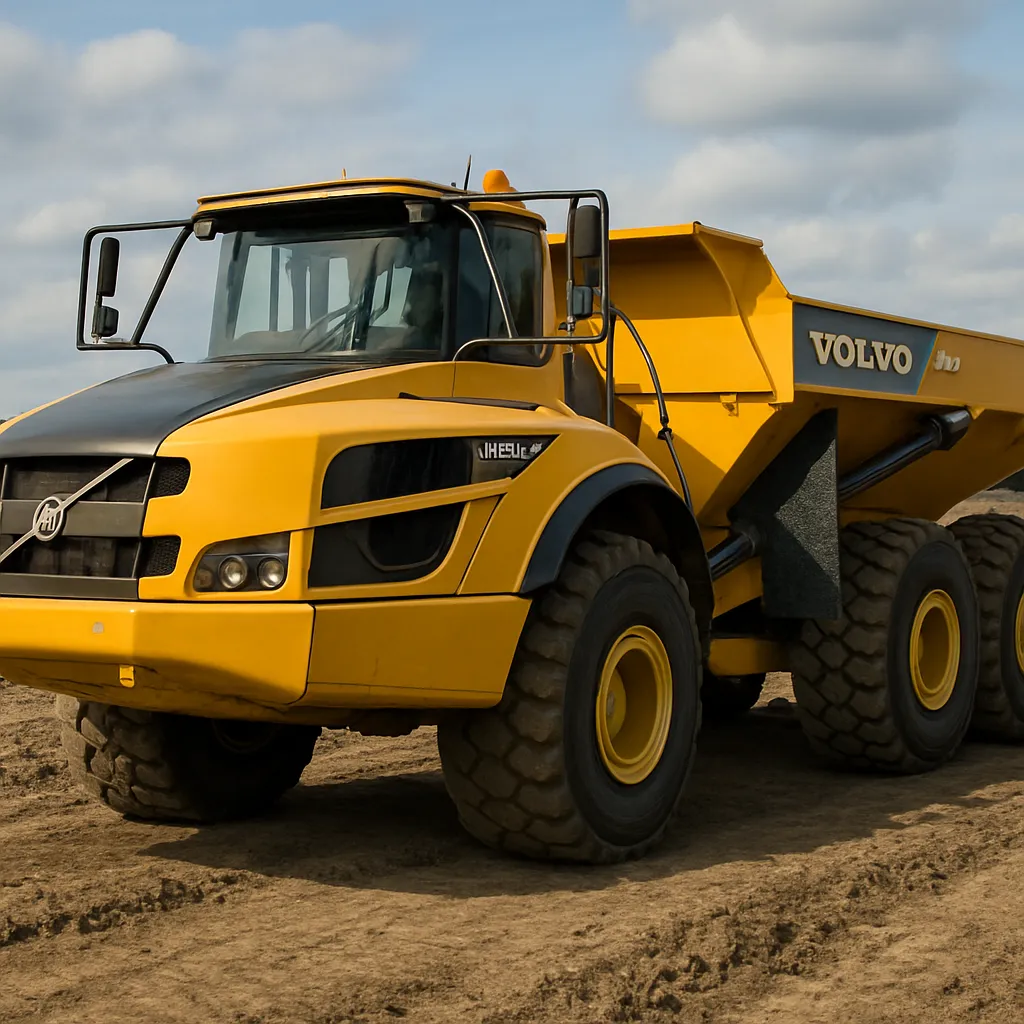
The Volvo A40G is a heavy-duty articulated hauler designed to move large volumes of material across challenging off-road sites. Combining robust mechanical design with advanced electronic systems, the A40G delivers reliable performance in quarrying, mining, large-scale construction, and infrastructure projects. This article examines the A40G’s design, typical specifications, real-world applications, operator features, service and efficiency considerations, and its role in modern heavy earthmoving fleets.
Overview and design philosophy
The Volvo A40G represents a continuation of Volvo Construction Equipment’s emphasis on machines that balance durability, operator comfort, and fuel efficiency. As an articulated hauler, it uses a front tractor unit connected to a rear dump body via a pivoting articulation joint. This layout delivers superior traction and mobility on steep grades, uneven surfaces, and soft ground compared with rigid-frame trucks.
Key design priorities of the A40G include:
- High payload capability while maintaining a manageable footprint for site maneuverability.
- Robust driveline components able to withstand shock loads and continuous heavy operation.
- Operator-focused cab design to reduce fatigue and increase productivity.
- Integrated electronics and telematics to improve fleet management and reduce downtime.
Volvo’s articulated haulers are engineered to tolerate harsh environments with long service intervals and easy access to service points. The A40G integrates these attributes into a package intended to maximize uptime while minimizing life-cycle cost.
Technical specifications and performance
Specifications for the A40G vary by market and configuration, but there are consistent class-leading figures that describe its capabilities. The A40G is commonly recognized in the 30–40 tonne payload class and features drivetrains and chassis components matched to this capacity.
Payload, capacity and dimensions
Typical figures for the A40G include:
- Payload: around 39 tonnes (metric), depending on local regulations and configurations.
- Body volume (heaped): generally in the range of 22–25 cubic metres depending on body design (standard, rock, or high-capacity variants).
- Operating weight: varies with specification but commonly sits in the range of 35,000–42,000 kg.
- Top travel speed: limited by gearing—roughly up to 50–55 km/h on-road in certain configurations.
Engine and driveline
The A40G is powered by a robust diesel engine tuned to the machine’s heavy-duty role. Modern versions conform to applicable emissions standards (Tier/Stage IV or later depending on production year and market) using technologies such as turbocharging and aftertreatment systems (SCR and DPF). Key aspects include:
- High-torque output at low rpm to aid in controlled acceleration and sustained climbing on steep grades.
- Hydro-mechanical transmission systems with torque converters that match engine output to heavy payload demands.
- Locking differentials and advanced traction control systems to maintain forward motion in slippery and uneven terrain.
Chassis, suspension and steering
The articulated design coupled with heavy-duty axles and suspension provides excellent off-road mobility:
- Oscillating rear axle and wide-track design increase stability on cross slopes.
- Articulation joint with robust bearings and seals for longevity under heavy cyclic loads.
- Steer system optimized for low-speed maneuverability in confined quarries and build sites.
Brake and retarder systems
Effective braking on long descents is a safety priority. The A40G typically features:
- Multi-circuit service brakes with redundancy to ensure stopping performance.
- Hydraulic retarders and engine braking functionality to reduce wear on service brakes and provide control on slopes.
Applications and typical use cases
The versatility of the A40G makes it suitable for a wide range of heavy-haul tasks where high payload and off-road capability are essential. Typical applications include:
- Quarrying and aggregate operations — transporting mined rock and aggregate from the extraction face to crushers or processing plants. The A40G’s payload and haulage efficiency reduce the number of cycles and overall haulage cost per tonne.
- Open-pit mining — although larger rigid dump trucks are common in major mines, articulated haulers like the A40G are used for secondary haulage, road construction inside pits, and moving material where flexibility and mobility matter.
- Large earthworks and infrastructure projects — moving bulk soils for road, dam, and rail construction where site conditions are variable and rubber-tyred mobility is preferred.
- Forestry and remote resource development — providing off-road haulage capabilities where tracks and temporary roads dominate. The articulated frame helps reduce ground pressure on softer soils when equipped with appropriate tyres.
- Contractors and seasonal projects — rental fleets favor the A40G because of its balance between capacity and transportability; it can be moved between sites more easily than larger rigid haul trucks.
Operator environment and safety features
Volvo emphasizes safety and comfort in cab design. The A40G cab typically includes:
- ROPS/FOPS-certified cab structure for operator protection.
- Ergonomic seat and controls, with multi-adjustable seating and reduced vibration to lower operator fatigue.
- Excellent visibility with large windows, well-placed mirrors, and optional camera systems to monitor blind spots around the machine.
- Climate control and sound insulation to create a productive operating environment during long shifts.
Safety systems often available or standard include:
- Load and tip monitoring to prevent unsafe dumping operations.
- Automatic traction control and hill assist functions to prevent rollbacks and loss of control on inclines.
- Rear and side alarms, lighting packages for night work, and optional proximity detection for personnel safety on congested sites.
Fuel economy, emissions and environmental considerations
With fuel representing a significant share of operating cost, the A40G is engineered to optimize fuel consumption through drivetrain matching, intelligent shift logic, and engine management systems. Volvo’s approach typically includes:
- Engine calibrations that provide strong low-end torque while avoiding excess fuel use at cruising loads.
- Idle management features to cut unnecessary fuel burn when the machine is not actively hauling.
- Aftertreatment systems that meet stringent emissions standards while minimizing performance compromise.
Environmentally, articulated haulers tend to offer advantages on certain sites by reducing the need for rigid road building and allowing more direct haul routes. Additionally, manufacturers often provide alternative configurations, such as biodiesel compatibility and telematics-based drive coaching, to further reduce emissions and fuel spend.
Serviceability, telematics and uptime
Maintaining high uptime is critical to cost-effective operation. Volvo equips the A40G with features aimed at simplifying maintenance and enabling proactive service:
- Accessible service points with grouped daily checks to reduce downtime during routine maintenance.
- Extended service intervals for certain components to reduce cost per operating hour.
- Comprehensive dealer networks in many regions for parts availability and fast turnaround on repairs.
- Telematics systems (often branded as CareTrack or similar) that collect data on fuel usage, hours, location, diagnostic codes, and operating patterns.
Telematics provides managers with real-time insights to schedule preventative maintenance, analyze fuel consumption trends, and optimize fleet allocation. With remote diagnostics and software updates, many issues can be addressed faster and with fewer site visits.
Economic considerations and total cost of ownership
Purchasing an A40G involves assessing not only the purchase price but the total cost of ownership (TCO). Key cost elements include:
- Fuel consumption — a major ongoing cost affected by machine configuration, operator behavior, and job profile.
- Maintenance and parts — planning for routine service, tyre wear (a significant expense on haul trucks), and major component life cycles (axles, engine, transmission).
- Resale value — Volvo machines traditionally retain strong residual values in many markets due to brand recognition and parts support.
- Utilization — aligning machine capability with the specific job profile ensures that tonnage-per-hour targets are met and that the machine is neither oversized nor undersized for a contract.
Operators often calculate hourly cost rates and evaluate different machine sizes to ensure optimal match to material density, haul distance, and cycle time. In short-haul, high-cycle applications, smaller articulated haulers may suffice; on long hauls with heavy payloads, maximizing payload per cycle becomes paramount.
Variants, options and aftermarket
The A40G can be equipped with a range of factory and aftermarket options to tailor the machine to specific tasks:
- Different body types: standard, rock, high-capacity, and special-purpose bins for aggregate or topsoil.
- Tyre choices based on terrain: general-purpose, rock-resistant, and low-ground-pressure tyre options.
- Protective packages for high-wear environments, including additional guarding and reinforced bodywork.
- Advanced safety packages: camera systems, collision avoidance, and operator assistance features.
- Telematics subscription levels varying from basic location tracking to full fleet management analytics.
Aftermarket support often includes refurbishment programs, rebuilt components to extend life at lower cost than buying new, and certified pre-owned programs that provide predictable service histories and warranty coverage.
Operator training and productivity
Performance of the A40G in the field is strongly influenced by operator skill. Training programs that focus on efficient shifting, load distribution, correct use of engine braking and retarder systems, and economical idling can yield measurable reductions in fuel consumption and component wear.
Best practices for maximizing productivity:
- Match payload to body capacity and keep load distribution even to avoid excess tyre or suspension wear.
- Plan haul routes to minimize empty travel and avoid steep, unnecessary climbs.
- Use telematics to identify inefficient cycles, idling patterns, and maintenance issues before they become costly failures.
Market position and industry reception
The Volvo A40G competes in the articulated hauler segment with machines from other major manufacturers. Volvo’s strengths in this sector are frequently cited as engineering focused on operator safety and comfort, reliable drivetrains, and a robust service network. Many contractors and fleet operators value Volvo’s integrated telematics and the ability to tune machine performance to specific job needs.
Independent reports and user feedback often highlight the following perceived strengths:
- Consistent reliability in harsh environments.
- Low operator fatigue and strong visibility from the cab.
- Comprehensive service support and good parts availability in many regions.
Summary and outlook
The Volvo A40G is a versatile and capable articulated hauler engineered for heavy-duty off-road haulage tasks. Its combination of payload capacity, mobility, and operator-focused features makes it well-suited for quarries, large earthmoving projects, and applications requiring robust off-road performance. While specific numbers such as payload, engine power, and fuel consumption vary with market configuration and model year, the core benefits remain the same: strong hauling capability, proven durability, and integrated tools for managing fleet performance.
Ongoing developments in engine technology, telematics, and operator assistance systems continue to shape the articulated hauler market. For fleet managers and contractors, the A40G offers a balance of performance and lifecycle value, backed by a manufacturer with a long track record in heavy construction machines.


)
)