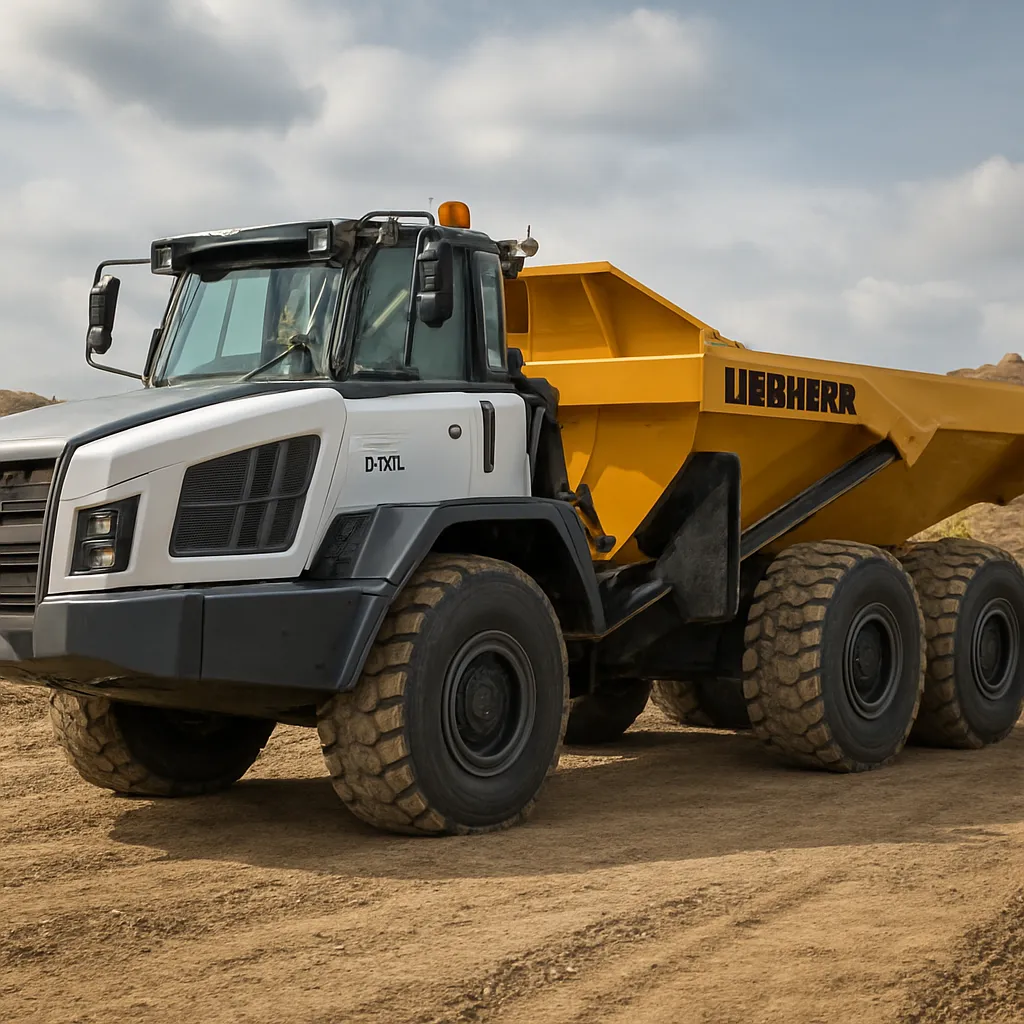
The Liebherr TA 230 Litronic is a compact and robust articulated hauler designed to deliver reliable performance across a wide range of off‑road hauling tasks. Combining Liebherr’s engineering heritage with modern electronics and drivetrain control, the TA 230 is aimed at contractors, quarry operators, road builders and anyone who needs a nimble but capable machine to move **material** efficiently in challenging environments. This article explores the machine’s design, typical applications, technical aspects, operational benefits, and practical considerations for buyers and fleet managers.
Overview and key design features
The TA 230 Litronic sits in Liebherr’s line of articulated dump trucks (ADTs) as a medium‑class model, optimized for a balance of **payload**, maneuverability and fuel **efficiency**. Its articulated chassis gives it excellent off‑road mobility, allowing it to operate on steep gradients, uneven terrain and soft ground where rigid‑frame trucks would struggle. The “Litronic” designation indicates Liebherr’s electronic control systems that manage drivetrain, gear shifting and engine parameters to maximize performance and **reliability**.
Core design highlights include:
- Articulated frame for high maneuverability and reduced track damage on sensitive surfaces.
- Hydrostatic or hydro-dynamic drivetrain management (Litronic control), providing smooth power delivery and automated gear changes.
- Heavy-duty axles and differentials designed for cyclic off-road loads and long service life.
- Comfortable operator cabin with good visibility, ergonomic controls and climate control to reduce operator fatigue.
- Robust tipping body options (steel or optional wear packages) for handling abrasive materials such as rock, ore and demolition debris.
The machine’s compact footprint makes it especially useful in projects with tight workspaces—urban sites, road widening projects, and quarry benches with limited turning room. Compared to larger ADTs, the TA 230 often offers lower operating costs while retaining the ability to carry significant loads.
Technical specifications and performance characteristics
Exact specifications of the TA 230 Litronic can vary by model year and local configuration (emissions packages, optional equipment and regional adaptations). The following figures represent typical values and characteristic performance parameters associated with this model class.
Capacity and weights
- Rated payload: typically around 23 tonnes (model designation often reflects payload class).
- Body volume: depending on body style and material, nominal struck and heaped volumes will vary; typical volumes fall in the medium ADT range suitable for quarry and construction materials.
- Operating weight: varies with configuration and options but generally engineered to balance chassis stability with manageable gross vehicle weight for road travel.
Engine and drivetrain
- Engine type: modern diesel engine meeting regional emissions regulations (Tier/Stage equivalents depending on market), equipped with electronic fuel management for improved fuel economy and reduced emissions.
- Power output: typical power range in this class is between roughly 200–300 kW (270–400 hp), tuned to provide strong torque for heavy hauling and steep grades.
- Transmission: automatic or semi‑automatic transmission controlled by the Litronic system for optimal gear selection and traction management.
- Drive configuration: permanent all‑wheel drive with locking differentials and traction control features for improved mobility on loose surfaces.
Mobility and speed
- Designed for both on‑site and limited on‑road travel, the TA 230 typically reaches useful top speeds for transporting loads between site areas while maintaining off‑road stability.
- Good approach and departure angles, combined with a short wheelbase and articulated steering, allow the machine to negotiate tight corners and variable terrain.
Hydraulics and tipping
- Hydraulic tipping system sized to provide secure and quick dumping cycles, with careful attention to center of gravity and stability during dump operations.
- Optional bodies and wear packages for abrasive materials, including bolt‑on wear plates and high‑strength steels.
Because Liebherr frequently updates drivetrains and emissions controls, prospective buyers should consult local dealers for the exact technical data sheet for a given serial range or year. Nevertheless, this class of ADT is engineered to maximize cycle times and minimize fuel consumption per tonne moved—two metrics that drive fleet profitability.
Applications: where the TA 230 excels
The TA 230 Litronic is versatile and finds application across multiple industries. Its combination of **maneuverability**, robust construction and efficient drivetrain makes it particularly valuable in the following use cases:
Construction and civil engineering
- Transporting fill, aggregate and demolition debris within job sites where space and ground conditions vary.
- Working on road construction and maintenance, including shoulder build-up, sub‑base transport and temporary haulage between staging areas.
- Earthworks on urban projects where the machine’s compact size reduces the need for extensive traffic management for on‑site movements.
Quarrying and mining (small to medium scale)
- Hauling blasted rock, processed aggregate and oversize material across benches and haul roads within quarries.
- Providing an economical option where larger off‑highway dump trucks would be excessive or where bench geometry limits larger equipment.
Landscaping, forestry and agriculture
- Moving soil, mulch, wood chips and other bulky materials in large‑scale landscaping and remediation projects.
- In forestry operations, articulated haulers can move chip and timber loads from skid sites where ground conditions are soft or uneven.
Municipal and utility projects
- Winter operations for snow removal and transport of cleared snow to disposal points.
- Storm cleanup and flood remediation where debris must be cleared from streets and transported to staging areas.
Across these applications, key advantages of the TA 230 are its ability to keep operating where wheeled rigid dump trucks would get bogged down, and its relative affordability and fuel economy compared to larger ADTs.
Operator comfort, cab features and safety
Liebherr places emphasis on the operator environment to improve productivity and safety. The TA 230 Litronic’s cab is typically designed to reduce operator fatigue and increase situational awareness through:
- Ergonomic seating and controls with adjustable settings to suit operators of different sizes.
- High visibility glazing and optimized mirror/camera arrangements to minimize blind spots during loading and tipping.
- Climate control for year‑round comfort, including heating and air conditioning where specified.
- Integrated display for Litronic diagnostics and machine status, allowing quick access to alerts and system information.
- Built‑in safety features such as ROPS/FOPS certified cab structures, seat belts, and optional camera or radar assistance for rear and side monitoring.
Safety systems are often integrated with drivetrain controls—for example, automatic traction control reduces wheel slip without operator intervention, and grade sensing or automatic retardation systems can assist during downhill travel with a loaded body.
Maintenance, serviceability and lifecycle costs
One of the most important factors in fleet decisions is total cost of ownership. Liebherr designs machines like the TA 230 with serviceability in mind to reduce downtime and maintenance labor costs. Typical features that reduce lifecycle cost include:
- Accessible service points for routine checks (filters, fluids, greasing points) to shorten daily inspection times.
- Modular components that can be replaced quickly in the field or at local workshops.
- On‑board diagnostics through the Litronic system, enabling quick fault identification and remote support possibilities through dealer networks.
- Durable components in high‑wear areas (axles, suspension, body liners) and available wear packages to extend service intervals.
Planned maintenance schedules, operator training and the use of recommended lubricants and filters further increase uptime and resale value. Proper tyre management and body protection are also critical—tyre cost and replacement frequency are major operating expenses for any hauler fleet.
Environmental considerations and fuel efficiency
Modern versions of the TA 230 are equipped to meet prevailing emissions regulations with engines that include after‑treatment systems such as SCR (selective catalytic reduction) and particulate filters where required. Electronic engine management (Litronic) optimizes fuel delivery and shifting to reduce consumption during load cycles.
Operators looking to minimize environmental impact should consider:
- Using eco modes when available to reduce idle and partial‑load consumption.
- Regular engine tuning and filter changes to ensure the after‑treatment systems function properly.
- Specifying tyres with lower rolling resistance for applications with significant on‑road travel between sites.
- Implementing fleet telematics to monitor fuel usage per tonne moved and identify opportunities for productivity gains.
Attachments, options and custom configurations
Liebherr and third‑party suppliers offer a range of options to adapt the TA 230 for specific uses:
- Wear packages for bodies that handle abrasive materials—bolt‑on plates, AR steels and reinforced edges.
- High‑capacity bodies or swap‑body arrangements for specialized materials (topsoil, bulk aggregate, demolition waste).
- Telematics and fleet management packages for utilization tracking, preventive maintenance scheduling and remote diagnostics.
- Auxiliary lighting and camera systems for night operations and visibility in confined quarries.
- Cold‑weather packages including heated hydraulics and cab components for operations in sub‑zero environments.
Comparison with competitors and market position
Within the compact to medium ADT segment, the TA 230 competes with offering from other major manufacturers. Buyers typically evaluate machines based on payload per unit cost, fuel efficiency, service network, parts availability and operator comfort. Liebherr’s strengths include a strong engineering reputation, integrated control systems (Litronic) and a dealer network in many regions. Competitive models from other manufacturers might offer slightly different trade‑offs—greater nominal payload, different cabin ergonomics, or manufacturer‑specific telematics platforms.
When comparing models, important metrics include:
- Fuel consumption per tonne moved at typical site cycle times.
- Availability of parts and local service support.
- Residual value and historical reliability in similar applications.
- Operator preferences and training requirements.
Buying considerations and fleet management tips
For procurement professionals and fleet managers, selecting the right TA 230 configuration requires careful analysis of site conditions, haul distances, load types and utilization rates. Useful practices include:
- Conducting a material movement study to calculate required machine hours and payload per hour to size the fleet correctly.
- Specifying options that protect high wear areas and thus reduce total lifecycle costs.
- Investing in telematics for utilization monitoring—machines idling or underused are expensive assets.
- Training operators on fuel‑efficient driving and best tipping practices to reduce cycle time and accident risk.
- Evaluating resale values and warranty packages when negotiating with dealers.
Field performance examples and use case snapshots
In practice, TA 230 machines shine where site geometry limits larger haul trucks or where frequent positioning and short hauls are common. Example scenarios include:
- A municipal road reconstruction project where the hauler moves sub‑base between adjacent staging points, benefitting from short turning radius and quick cycles.
- A quarry bench with narrow roads and frequent loader passes—TA 230 can work efficiently as part of a matched loader‑hauler system, optimizing loader productivity by minimizing cycle time.
- Emergency response and cleanup operations after severe weather, where rapid mobilization and the ability to traverse muddy, debris‑filled zones are priorities.
Conclusion: strengths, limitations and final recommendations
The Liebherr TA 230 Litronic is a well‑balanced articulated hauler for operators needing a blend of **maneuverability**, dependable **performance** and relatively low operating cost. Its electronic controls and robust mechanical systems support efficient hauling in construction, quarrying and municipal applications. While larger ADTs will move greater volume, the TA 230’s advantages are apparent in constrained sites, shorter haul distances and operations where machine agility and fuel economy are important.
Potential buyers should verify exact specifications with local dealers, consider the total cost of ownership (including tyres, wear parts and fuel), and evaluate how the TA 230 fits into their overall operations. Properly specified and maintained, the TA 230 can be a productive, versatile asset delivering strong lifetime value in demanding off‑road environments.


)
)