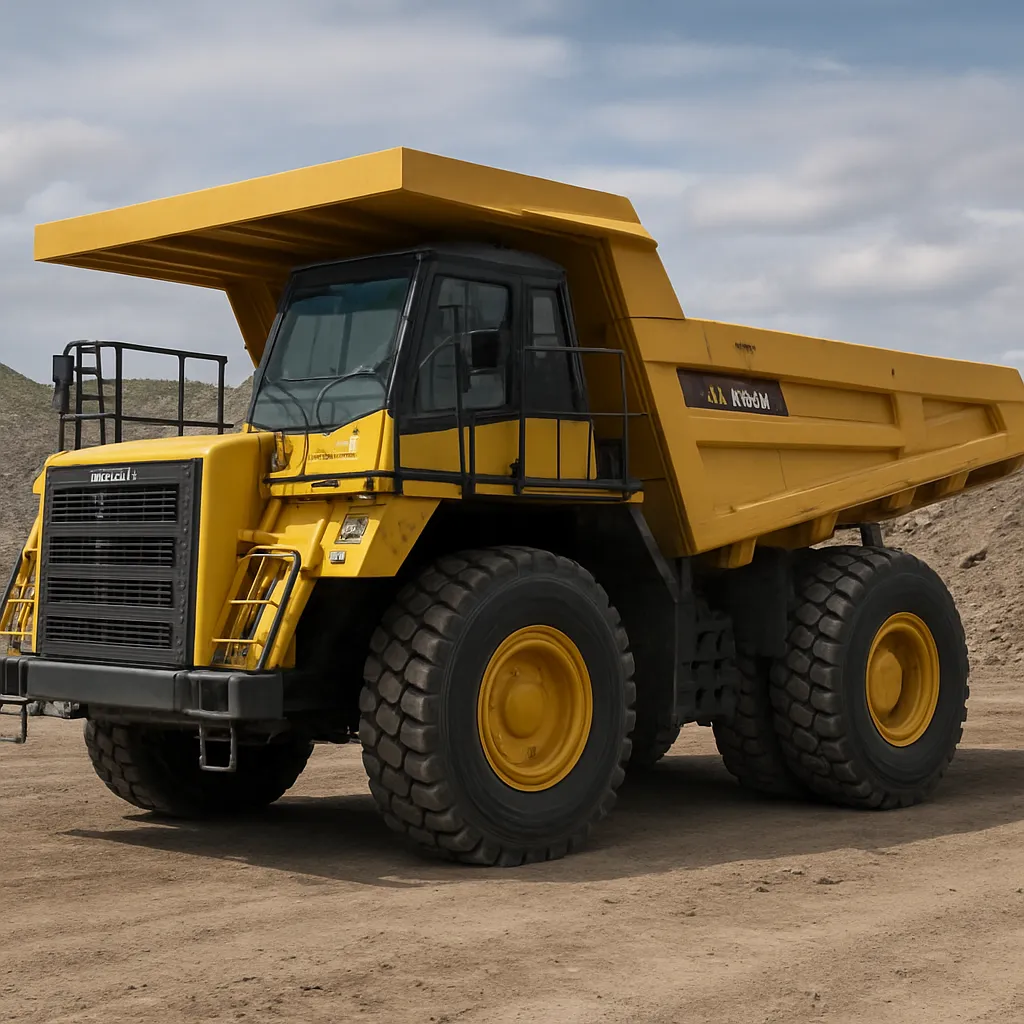
The Komatsu HD405-8 is a robust off-highway rigid haul truck designed for medium-to-large mining and heavy construction tasks. In this article we explore the machine’s design philosophy, typical applications, technical characteristics, operational considerations and market context. Attention is paid both to practical uses on site and to the operational and economic factors that drive purchasing and fleet deployment decisions. Where specific figures are known or commonly reported in industry literature, they are presented as approximate values to help readers understand the truck’s performance envelope.
Overview and design philosophy
The Komatsu HD405-8 belongs to Komatsu’s line of rigid dump trucks often referred to as haul trucks. The model designation HD405 typically indicates a nominal payload class in the ~40 tonne category, positioning the machine between smaller tactical off-highway trucks and the very large ultra-class haul trucks used in major open-pit mines. Komatsu’s -8 series represents a refinement of prior generations focusing on improved reliability, simplified maintenance and enhanced operator comfort.
Key elements of the design include a heavy-duty frame for long life in abrasive environments, an optimized body geometry to maximize loaded payload and material retention, and a driveline tuned for high productivity across typical mine and quarry haul cycles. Komatsu emphasizes system integration—engine, transmission, axles, brakes and body work together to deliver consistent cycle times and reduce total cost of ownership.
Typical applications and jobsite roles
The HD405-8 is widely used in applications where material haul distances, cycle frequency and payload size align with a ~40 tonne capacity truck. Typical roles include:
- Quarry and aggregate operations carrying blasted rock, processed stone and sand to crushers and stockpiles.
- Surface mining (small to medium pits) handling overburden and ore in operations that do not require ultra-class payloads.
- Large civil engineering and infrastructure projects moving fill, demolition debris or excavated material.
- Contract mining fleets where versatility and lower acquisition cost compared with larger trucks is prioritized.
Because of its size, the HD405-8 is often preferred on sites with constrained road widths, tighter ramp geometries and where loading equipment capacities (for example excavators in the 30–60 tonne class) are matched to a 40 tonne truck. Its payload class makes it a very efficient partner for medium-class excavators and wheel loaders, minimizing underloading or overloading inefficiencies.
Technical characteristics and performance (typical figures)
The following technical characteristics are commonly associated with 40-ton class rigid haul trucks like the Komatsu HD405-8. Specific figures may vary by market, regional emissions configuration and optional equipment. Values below are presented as typical ranges or representative figures:
- Nominal payload: around 40 metric tonnes (approximately 44 short tons).
- Body capacity (heaped, loose material): typically in the range of about 22–28 m³, depending on material density and body side/profile options.
- Operating weight: commonly between ~35,000 to 45,000 kg depending on body configuration and additional equipment.
- Engine: turbocharged diesel powerplants in the medium-to-high horsepower band for this class; aggregated installed power commonly falls in the range of roughly 300–400 kW (400–540 hp), depending on tuning and emissions stage.
- Transmission and driveline: heavy-duty automatic or power-shift transmissions, often with torque converters or planetary gear sets optimized for starting on grades and for efficient power transfer at haul speeds.
- Top speed: unloaded speeds on flat roads commonly range 50–60 km/h, with loaded speeds depending on grade, surface and safety settings.
- Turning radius and maneuverability: engineered to match medium-haul operational environments; steering and axle configurations are tuned for stability and predictable handling on ramps and haul roads.
- Braking: multi-stage systems combining service brakes, engine braking/retarder assistance and fail-safe parking brakes to manage braking energy on long descents.
- Fuel consumption: highly variable by duty cycle; typical site reporting indicates fuel burn per tonne-km that is competitive with other OEMs in this class when trucks are matched correctly to excavator loader sizes and haul distances.
These typical numbers help fleet planners determine truck-to-shovel matching and estimate round-trip cycle times for a given pit geometry. A correct match minimizes unit cost per tonne hauled and maximizes machine utilization.
Cabin, operator ergonomics and safety features
Komatsu places emphasis on operator comfort and visibility because these factors directly affect productivity and safety. The HD405-8’s cab is usually designed to provide:
- Excellent forward and side visibility to assist with loading and minimize blind spots around the machine.
- Ergonomically arranged controls and a comfortable seat with suspension to reduce operator fatigue on long shifts.
- Climate control and sound insulation to keep the operator environment manageable in extreme weather or noisy mining environments.
- Modern instrumentation and machine monitoring displays that present fuel consumption, system status and fault codes clearly, allowing proactive maintenance planning and real-time decision-making.
- Integrated safety systems such as rear-view cameras, proximity detection options, and high-visibility lighting for low-light and night operations.
Safety-critical design also extends to serviceability: walkways, handrails and access points are arranged for safe inspection and daily maintenance routines, reducing the risk of slips, trips and falls.
Maintenance, lifecycle costs and uptime strategies
For haul trucks the most important economic indicators are uptime, cost per tonne hauled and predictable lifecycle expenditures. Komatsu’s approach to reducing total cost of ownership typically includes:
- Modular components and accessible service points to reduce service time for common tasks such as oil/filter changes, brake inspections and driveline service.
- Remote monitoring and telematics packages (Komatsu’s fleet management solutions or compatible OEM systems) that provide data on usage, fuel consumption, fault codes and component health so that preventative maintenance can be scheduled during planned downtime.
- Use of wear-resistant materials in high-wear zones (frame rails, body floors, tailgates) to lengthen overhaul intervals.
- Support networks offering local parts availability and scheduled inspection programs—important in remote operations where parts lead times can significantly impact availability.
Well-run fleets typically report that effective telematics and condition-based maintenance reduce unscheduled downtime by a notable margin when compared with time-based maintenance alone. The HD405-8’s systems are designed to integrate into such fleet practices.
Operational considerations and best practices
To maximize the productivity of an HD405-8, operations should consider the following best practices:
- Proper truck-to-shovel matching—underloading wastes truck capacity and overloading shortens component life and increases fuel consumption.
- Haul road design—grades, crossfall, and surface strength have a direct influence on cycle time, braking energy and tire life.
- Tire management—select tire compounds and pressures that balance traction, wear and rolling resistance for the expected duty cycle.
- Operator training—skilled operators who understand eco-driving, shifting strategies and braking techniques can materially lower fuel consumption and brake wear.
- Payload control—onboard weighing or centralized haulage management systems prevent costly overloading and ensure consistent production metrics.
Comparisons with competitors and positioning in the market
In the ~40 tonne class the HD405-8 competes with offerings from other global manufacturers (for example Caterpillar’s 740 class, Volvo’s A40 equivalents in some configurations, and models from Bell and others). The common competitive factors are:
- Initial acquisition cost and financing options.
- Fuel efficiency and typical fuel consumption under site conditions.
- Reliability and the availability of parts and service in the operating region.
- Operator comfort, safety systems and ease of maintenance.
Komatsu’s strength historically lies in integrated product support, global parts networks and a reputation for durable structural components. Decisions between OEMs often come down to local dealer capability, resale value in the market region and how well the truck matches the site’s specific duty cycle.
Environmental aspects and emissions
Modern haul trucks are subject to progressively stringent emissions standards in many markets. For the HD405-8 and comparable machines, environmental considerations include:
- Engine emissions tier/stage compliance—machines sold into different regions may be fitted with engines meeting local regulatory stages (Tier 3, Tier 4i/Stage IIIB, Tier 4f/Stage IV, etc.).
- Fuel efficiency—lower fuel use reduces greenhouse gas emissions per tonne moved; fleet-level strategies like route optimization and eco-driving programs compound benefits.
- Noise reduction features—improved cab insulation and exhaust muffling help lower community and worker exposure to noise.
- Opportunities for alternative fuels—some operators retrofit or specify engines compatible with biodiesel blends or explore hybridization in larger haul truck platforms; while not universal in the 40 t class, interest is growing in decarbonization pathways.
Lifecycle and resale considerations
Because acquisition cost is only one component of fleet economics, operators often evaluate lifecycle value: how long the truck will remain productive before a major overhaul, the cost and availability of replacement parts, and the residual value at fleet turnover. Factors that influence lifecycle performance include:
- Severity of duty (abrasive materials, steep haul roads, frequent starts/stops).
- Maintenance discipline and access to proper servicing intervals.
- Fleet utilization—higher utilization improves capital productivity but increases wear rates.
- Local resale markets—Komatsu machines typically retain favorable resale values in regions where Komatsu has a strong dealer presence.
Examples of typical site performance metrics
Project planners use a set of standard metrics to estimate production and cost. Typical example metrics for a 40 tonne class truck used as the HD405-8 might include (illustrative and dependent on site specifics):
- Cycle time (loaded round trip): 6–15 minutes depending on haul distance and loading time.
- Trips per hour: approximately 4–10, which multiplies by payload to yield tonnes per hour per truck.
- Tonnes per hour (tph) per truck: roughly 160–400 tph depending on cycle time—useful when planning fleet size for a target hourly production.
- Fuel consumption per hour: highly variable but typically in the tens of liters per hour under heavy load; fuel per tonne is the most useful site benchmark.
Upgrades, options and fleet integration
Operators can equip the HD405-8 with a range of factory and aftermarket options to tailor the machine to site conditions and fleet standards. Common options and upgrades include:
- Payload monitoring and onboard weighing systems for accurate load control.
- Heavy-duty bodies or specialized liners for high-abrasion materials.
- Advanced telematics and integration with mine fleet management systems for scheduling and maintenance planning.
- Auxiliary cooling packages for hot climates or heavy idling conditions.
- Enhanced lighting, camera systems and proximity detection for safety in congested sites.
Summary and concluding notes
The Komatsu HD405-8 represents a widely used and versatile choice for medium-capacity hauling tasks across mining, quarrying and large civil projects. With an approximate payload around 40 tonnes, a focus on integrated systems for operator comfort and machine reliability, and support through Komatsu’s dealer and parts network, the HD405-8 is intended to be a workhorse for operations that need dependable, cost-effective haulage without the scale or capital commitment of ultra-class trucks.
Successful deployment depends less on any single machine spec and more on correct matching of truck capacity to site duty cycles, competent operator training, a disciplined maintenance program and effective use of available telematics for predictive upkeep. When these elements are combined, the HD405-8 can deliver strong productivity and favorable lifetime economics in its class.


)
)