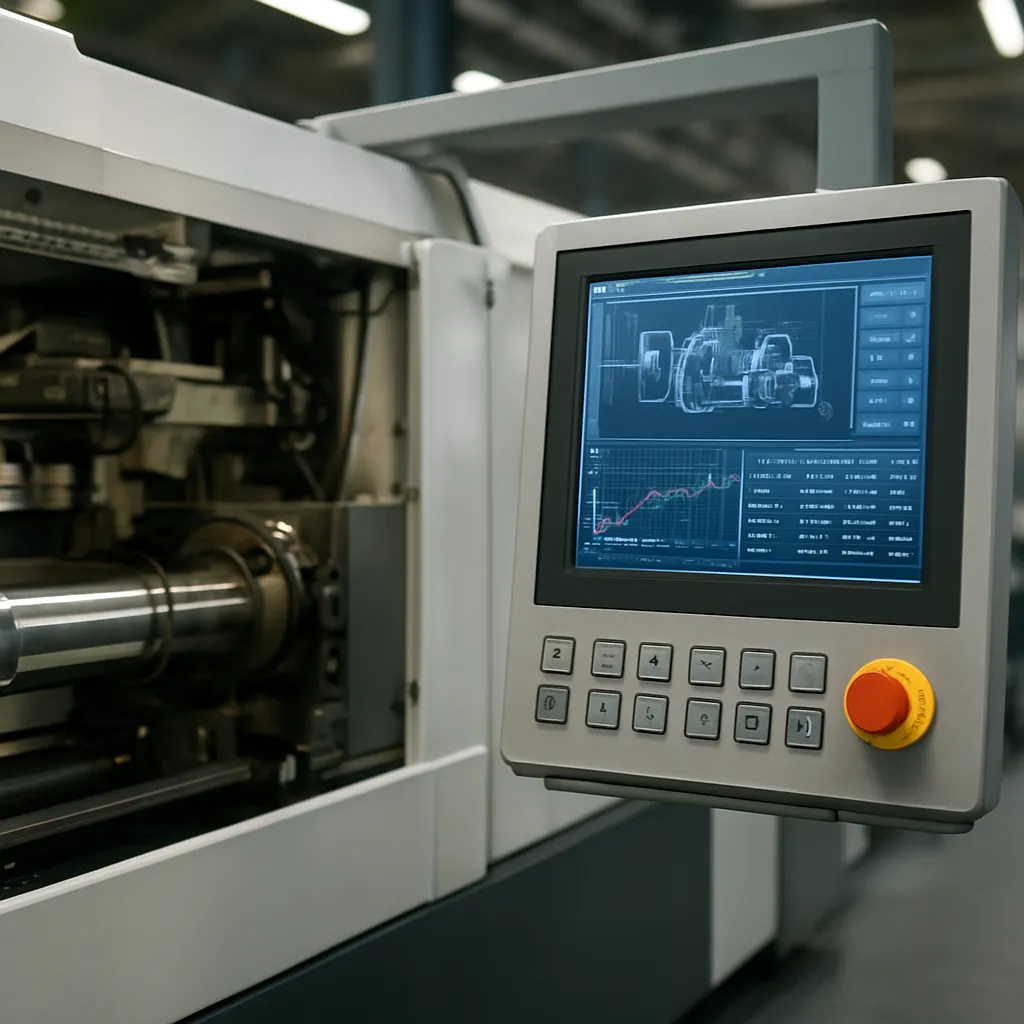
The relentless march of technology has given rise to machine control systems that operate with astonishing accuracy and efficiency. From automated assembly lines to autonomous vehicles, these platforms blend hardware and software to manage complex tasks, ensuring seamless performance across diverse industries. This article explores the innovations behind today’s most advanced systems, examining their architectures, sensory frameworks, and intelligent algorithms.
Control Architectures and System Integration
Modern factories rely on layered control architectures to coordinate thousands of devices. At the core lies the programmable logic controller (PLC), designed for deterministic operation in harsh environments. Above this, supervisory control and data acquisition (SCADA) systems provide real-time monitoring and remote operation, while manufacturing execution systems (MES) handle production scheduling and workflow optimization.
- Automation layers ensure that raw materials flow through each stage without delay.
- Integration of PLCs, SCADA, and MES enables unified oversight.
- High-speed communication buses, such as EtherCAT and PROFINET, provide low-latency data exchange.
Beyond the shop floor, enterprise resource planning (ERP) systems connect production data with supply chain, finance, and quality assurance. This holistic approach fosters reliability by pinpointing bottlenecks and anticipating maintenance needs.
Sensors, Actuators, and Connectivity
Advanced Sensor Technologies
Precise measurements are the foundation of any control system. Machine vision cameras with high-resolution CMOS sensors capture fine details, while LiDAR units map three-dimensional environments in real time. Thermal sensors detect hotspots in equipment, supporting predictive maintenance.
- Ultrasonic sensors measure fluid levels in tanks with millimeter accuracy.
- Fiber-optic sensors monitor strain and temperature along pipelines.
- MEMS-based accelerometers track vibration patterns to avoid mechanical failures.
Actuator Precision and Feedback
Actuators translate digital commands into physical movement. High-performance servo motors, driven by vector control algorithms, achieve sub-micrometer positioning in robotics. Piezoelectric actuators deliver rapid, fine-tuned adjustments for optical alignment and nanopositioning tasks. Closed-loop feedback from encoders and resolvers ensures precision and compensates for nonlinearities or external disturbances.
Networking and IoT Connectivity
The Industrial Internet of Things (IIoT) enables devices to exchange data seamlessly. Edge controllers preprocess sensor signals, reducing network load and latency. They communicate with cloud platforms using MQTT or OPC UA protocols, facilitating connectivity across global operations. This architecture supports:
- Real-time analytics for monitoring equipment health.
- Remote firmware updates to keep devices secure and up to date.
- Event-driven notifications for rapid response to anomalies.
Software and Algorithms Powering Machine Control
At the heart of every advanced system lies a suite of algorithms that translate raw data into actionable commands. These software components must be robust, deterministic, and adaptable to changing workloads.
Deterministic Control Loops
PID (proportional-integral-derivative) controllers remain ubiquitous for regulating temperature, pressure, and speed. Yet, modern applications often require model predictive control (MPC), which forecasts future behavior and optimizes control moves over a prediction horizon. MPC offers superior disturbance rejection and constraint handling, making it ideal for chemical plants and energy systems.
Machine Learning and Adaptive Optimization
Artificial intelligence augments classical control by identifying complex patterns and adapting to new conditions. Reinforcement learning agents can fine-tune parameters on the fly, improving throughput while minimizing energy consumption. Neural networks process high-dimensional sensor data to detect early warning signs of equipment wear.
- Diagnostics AI modules isolate fault root causes in milliseconds.
- Optimization algorithms balance production rate with quality standards.
- Self-tuning routines adjust controller gains for varying loads.
Safety, Redundancy, and Compliance
Safety-critical applications, such as aerospace and medical devices, demand rigorous certification. Dual-channel architectures and fail-safe relays ensure that a single fault cannot compromise the entire system. Software must comply with standards like IEC 61508 for functional safety or ISO 26262 for automotive electronics. Built-in diagnostics continuously verify sensor integrity and actuator responsiveness to meet stringent reliability targets.
Emerging Trends and Future Directions
As machine control systems evolve, several trends are reshaping the landscape:
- Advances in semiconductor technology enable scalability from tiny edge AI modules to powerful cloud servers.
- 5G networks deliver ultra-low-latency links, supporting time-sensitive networking for synchronized motion control.
- Digital twins replicate physical assets in virtual space, allowing engineers to simulate scenarios and optimize performance before deployment.
- Collaborative robotics combine human dexterity with machine strength, requiring real-time safety monitoring and adaptive control.
- Blockchain-inspired ledgers secure data provenance, ensuring tamper-proof audit trails in regulated industries.
By pushing the boundaries of adaptability and integration, the most advanced machine control systems deliver unprecedented performance, setting new benchmarks for efficiency, safety, and innovation.