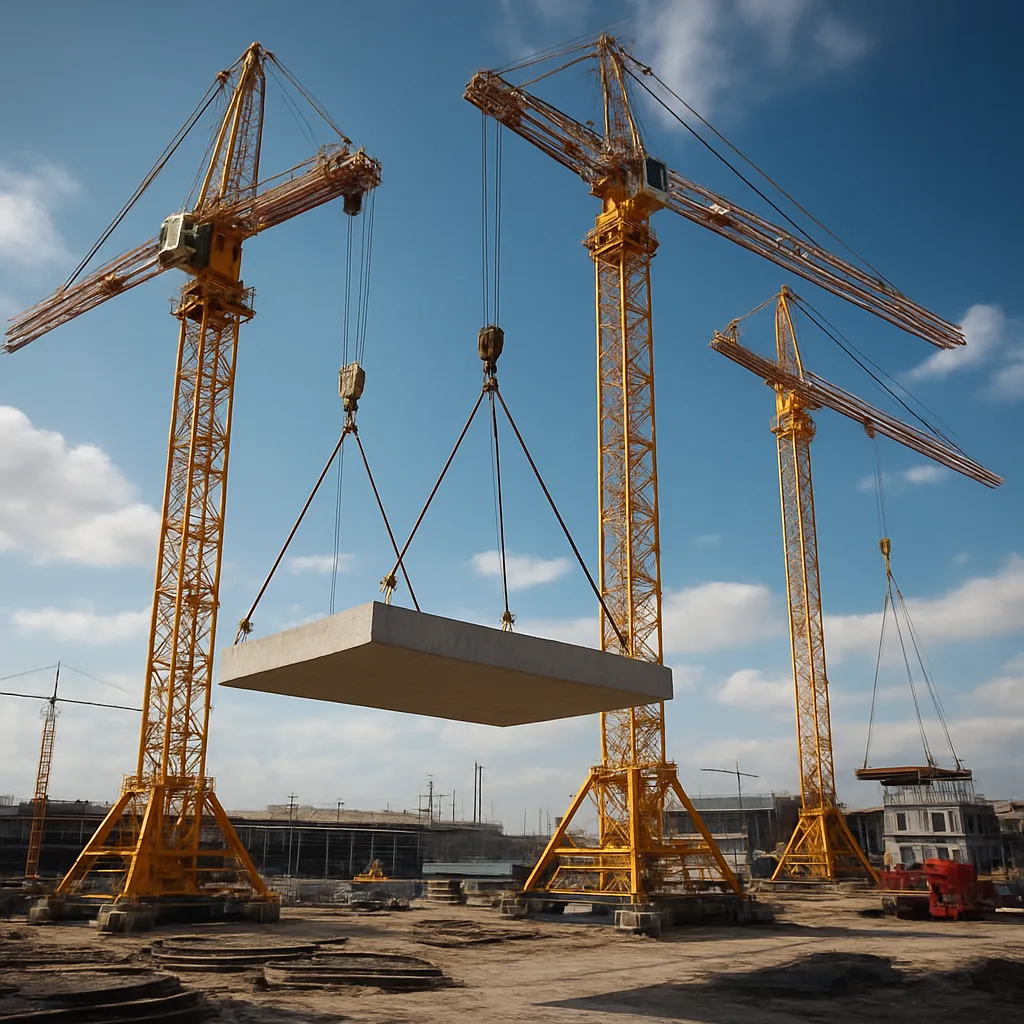
The intricate ballet of heavy machinery on a construction site demands flawless coordination. When multiple cranes lift and position massive loads simultaneously, every movement must be choreographed to ensure precision and safety. This article explores the core principles behind synchronizing cranes, addresses common challenges, and highlights cutting-edge innovations that propel the industry forward.
Coordinating Complex Lifting Operations
Synchronizing cranes involves more than simply operating two or more machines side by side. It requires a unified command structure, continuous real-time monitoring, and an understanding of the physics of each load. Key factors include:
- Load Distribution: Ensuring weight is evenly shared to prevent tipping or overload.
- Timing: Precisely matching boom speeds to avoid sudden shifts.
- Communication: Clear signals between operators and ground personnel.
Effective coordination begins at the planning phase. Engineers use computer models to simulate multi-crane lifts, mapping out load paths, identifying potential interference zones, and calculating the ideal pick points. Early collaboration between riggers, site supervisors, and crane operators fosters a reliable workflow.
Planning and Simulation
Before any hook goes up, project managers employ advanced software to run stress tests on crane components and rigging gear. Virtual reality (VR) environments allow crews to rehearse each lift, refining positioning and movement sequences. By addressing challenges virtually, teams reduce on-site delays and optimize resource allocation.
Role of the Lift Director
The lift director serves as the central point of authority. Responsibilities include:
- Verifying load weights and center-of-gravity calculations.
- Issuing synchronized start and stop commands.
- Conducting pre-lift meetings to confirm contingency plans.
This role demands deep technical knowledge, keen situational awareness, and the ability to make split-second decisions to maintain stability throughout the operation.
Safety Protocols and Regulations
With multiple cranes operating in proximity, adherence to strict safety standards is non-negotiable. International guidelines and local regulations dictate everything from site layout to operator certification. Core elements include:
- Minimum clearance distances between booms.
- Wind speed thresholds to halt lifts.
- Emergency communication channels and evacuation routes.
Failure to comply can lead to catastrophic failures, endangering lives and causing costly damage. A rigorous safety plan integrates redundant systems, such as load moment indicators and anti-collision sensors, ensuring every lift proceeds under controlled conditions.
Obstacle Management
Sites must be surveyed for electrical lines, buried utilities, and other hazards. Risk assessments identify zones where cranes may intersect airspace or ground traffic. Dedicated spotters guide movements, using binoculars or camera feeds to maintain visual contact when direct sightlines are obstructed.
Operator Training and Certification
Competent operators are the backbone of safe crane synchronization. Training programs emphasize:
- Reading load charts and interpreting dynamic load factors.
- Understanding communications protocols including hand signals and radio commands.
- Performing daily inspections and functional tests of crane systems.
Continuing education ensures crews stay updated on evolving standards and technological upgrades, fostering a culture of excellence.
Technological Innovations in Crane Synchronization
The digital revolution has transformed the way cranes collaborate. From advanced control systems to data analytics, technology boosts efficiency and performance in every phase of a multi-crane lift.
Automated Control Systems
Modern cranes are equipped with computerized controllers that link multiple units in a network. Features include:
- Centralized joystick interfaces synchronizing hoist speeds.
- Real-time load sharing adjustments via hydraulic feedback loops.
- Anti-sway algorithms that dampen pendulum motions.
By automating routine adjustments, operators can focus on strategic decisions, minimizing human error and improving overall efficiency.
Anti-Collision and Proximity Sensing
Laser scanners, radar, and LiDAR sensors create a protective bubble around each crane. If two booms approach within a predefined distance, the system issues warnings or auto-corrects motions. This innovation drastically reduces the risk of entanglement and enhances reliability in crowded environments.
Predictive Maintenance and IoT Integration
Internet of Things (IoT) devices monitor vital signs of crane health: hydraulic pressures, engine temperatures, and structural stress. Data streams are analyzed by machine learning algorithms to predict component fatigue or failure. Scheduled maintenance can then be performed proactively, maximizing uptime and extending equipment lifespan.
Best Practices for Multi-Crane Projects
Successful multi-crane operations blend meticulous preparation with agile execution. Recommended best practices include:
- Conducting frequent coordination drills to refine timing.
- Using high-definition cameras for comprehensive site visibility.
- Implementing redundant communication channels (radio, hand signals, and digital messaging).
- Segmenting lifts by weight class to match cranes with optimal capacity.
- Establishing clear chain-of-command protocols.
By institutionalizing these practices, project teams achieve seamless lifts, bolster coordination, and maintain the highest safety standards.
Future Trends and Outlook
The horizon of crane synchronization is illuminated by autonomous systems and augmented reality (AR) support. Engineers envision semi-autonomous cranes that interpret digital lift plans and adjust in real time without constant human input. AR headsets will overlay virtual guidance markers in operators’ field of vision, ensuring pinpoint accuracy during complex maneuvers.
Furthermore, 5G connectivity promises ultra-low latency data exchange between cranes, detectors, and control centers. This network resilience will enable remote operation capabilities, allowing experts to oversee multi-crane lifts from off-site command rooms, reducing onsite manpower and elevating operational flexibility.
Conclusion
Mastering the art of synchronizing multiple cranes on a single jobsite demands a blend of strategic planning, rigorous safety protocols, and cutting-edge technology. As the industry embraces digital transformation, the potential for more ambitious and efficient lifting projects grows exponentially. Through innovation and unwavering commitment to collaborative excellence, construction teams can tackle the most daunting structural challenges with confidence and precision.