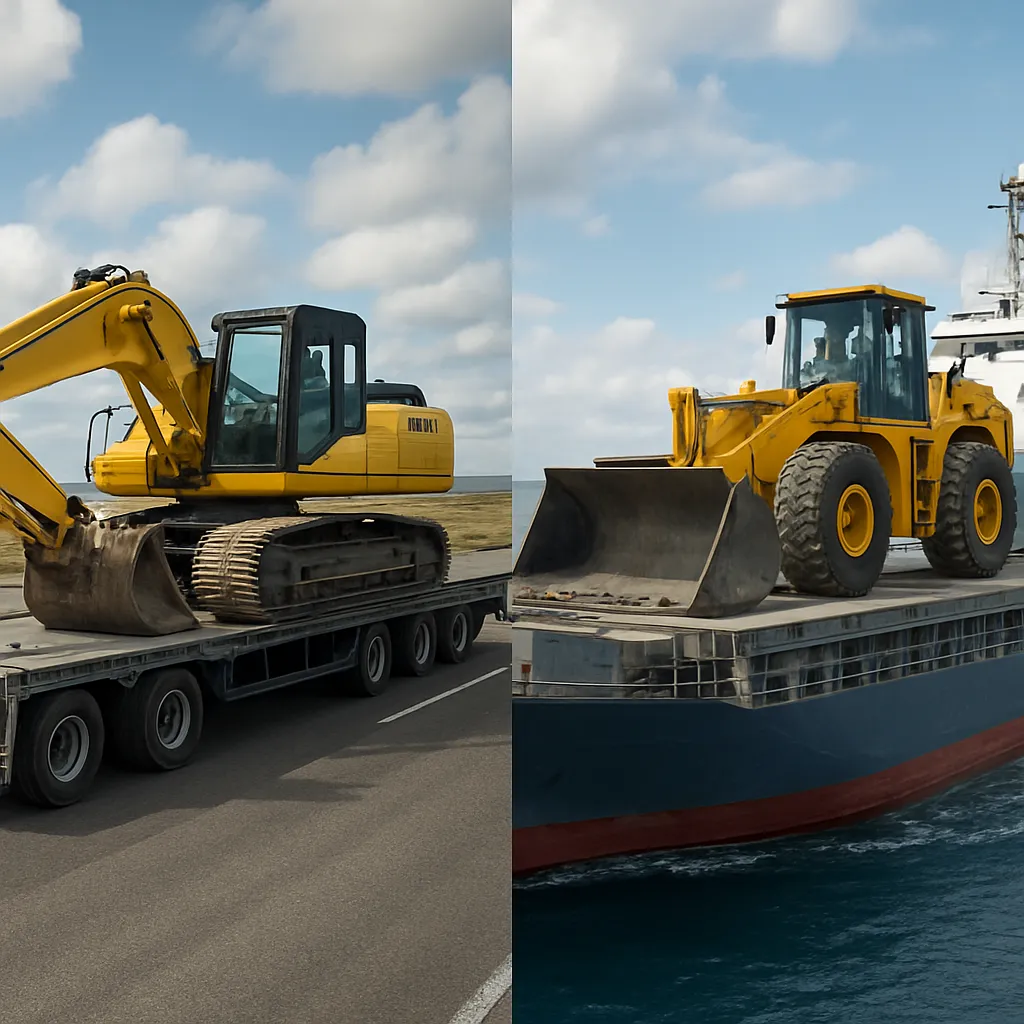
Transporting large-scale equipment across vast distances demands meticulous planning, advanced technology, and seamless coordination. Whether moving an industrial press, a turbine, or a construction crane, every operation hinges on integrating logistics, engineering, and regulatory compliance to ensure the cargo reaches its destination intact and on schedule.
Design Considerations for Heavy Machines
Before any transportation begins, manufacturers and transport planners must evaluate the machine’s dimensions, weight distribution, and center of gravity. These factors influence the choice of vehicles, routes, and lifting gear. Incorporating stability into the initial design phase reduces the need for extensive reinforcement later on.
Structural Reinforcement
- Frame Strengthening: Adding gusset plates or cross-bracing to critical load points
- Base Integration: Designing mounting pads that align with transport supports
- Vibration Damping: Incorporating rubber isolators or hydraulic mounts to protect delicate components during transit
Modular Construction
Many heavy machines are built in modular sections that can be disassembled for transport. This strategy minimizes shipping dimensions, simplifies handling, and can reduce overall costs. Key benefits include:
- Reduced Permitting Hurdles: Smaller loads avoid special permits required for oversized cargo
- Enhanced Flexibility: Modules can travel on diverse transport modes and be reassembled on-site
- Scalability: Manufacturers can design standard modules for multiple applications
Land Transportation Methods
Hauling extreme loads over roads and railways involves specialized equipment and close collaboration with authorities. Most land transports fall into two categories: highway and rail.
Highway Transport
For oversized loads, trucking companies deploy:
- Self-propelled modular transporters (SPMTs): Multi-axle units capable of maneuvering massive weights with precision.
- Extendable trailers: Configurable length and width to match cargo footprint.
- Heavy-haul tractors: Designed with reinforced drivetrains and suspensions for high-torque delivery.
Route surveys are essential to confirm bridge capacities, overhead clearance, and turning radii. Escort vehicles and temporary road modifications—such as traffic signal adjustments or street lamp removal—ensure uninterrupted passage.
Rail Transport
Railways offer cost-effective movement for extremely heavy or bulky machinery over long distances. Key elements include:
- Flatcars with enhanced load-bearing frames
- Ballasting techniques to maintain track stability under irregular loads
- Special permits to occupy multiple track segments or adjust speed restrictions
Coordination with rail operators guarantees track availability, especially in congested corridors. Intermodal yards then serve as transfer points between rail and road or sea legs of the journey.
Sea Transportation Strategies
Moving equipment overseas demands accounting for vessel type, port infrastructure, and maritime regulations. Two prevailing approaches are breakbulk and heavy-lift shipping.
Breakbulk Shipping
Breakbulk vessels handle cargo that cannot be containerized. Advantages include:
- Flexibility: Accommodates irregular shapes and varying weights
- Port Compatibility: Can load in smaller harbors with less specialized gear
- Intermediate Storage: Facilities allow temporary on-deck stowage prior to loading
However, each piece requires individual crane lifts, elongating loading times and elevating labor costs.
Heavy-Lift Vessels
Dedicated heavy-lift ships come equipped with safety-rated cranes capable of lifting hundreds to thousands of tonnes. Key features are:
- Dual-Girder Cranes: Provide wide lifting booms and high load capacities
- Adjustable Deck Strength: Reinforced plating and beams ensure uniform stress distribution
- Dynamic Positioning: Thruster systems maintain vessel stability during offshore lifts
Heavy-lift voyages also involve detailed stowage planning to prevent cargo shifting. Ballast adjustments and chain-mooring patterns secure the load against wave action.
Challenges and Emerging Trends
Despite technological advances, moving massive machinery still faces obstacles. Stricter regulations on emissions, road usage, and maritime ballast discharge require adaptive strategies.
Environmental Compliance
Operators now must address carbon footprints and potential marine contamination. Measures include:
- Low-sulfur fuels for sea vessels
- Route optimization software to reduce idle times
- Emission monitoring systems on trucks and cranes
Digitalization and Automation
The rise of telematics and IoT sensors is enhancing load monitoring in real time. Benefits of digital integration are:
- Predictive Maintenance: Identifying wear on transport modules before failures occur
- Remote Load Visualization: 3D models display stress points during transit
- Advanced Permitting: Automated submission processes accelerate approvals
Infrastructure Development
Expanding ports and upgrading highways is critical to handle ever-growing machine sizes. Investment trends focus on:
- Reinforced bridges with higher weight capacities
- Deepwater terminals for ultra-large vessels
- Intermodal hubs linking road, rail, and sea lanes
Ultimately, the successful transport of enormous machinery hinges on integrating innovative equipment, thorough planning, and collaborative problem-solving across engineering, operations, and regulatory teams. The evolving landscape continues to push the boundaries of efficiency and ingenuity in moving the backbone of modern industry.